Best Views for Your Kathmandu City Tour–Swayambhunath Stupa (Maha Chaitya)
Complete guide: Kathmandu Valley Heritage Guide
🌄 The Legend and Meaning of Swayambhunath
According to legend, the Kathmandu Valley was once a vast lake, and a self-existent flame (Swayambhu) appeared atop a lotus flower. Over time, the waters drained, revealing the hill where Swayambhunath Stupa now stands. Its name, “Swayambhu,” literally means Self-Created, symbolizing enlightenment and eternal wisdom.
The legend is older than the monument. Chinese pilgrim records from the 5th century describe a sacred hill west of the city, and the stupa in something close to its present form is usually dated to around the 5th century CE, with major reconstructions after damage in the 14th century and the 2015 earthquake (which cracked the main dome; the golden spire was re-gilded in a restoration completed in 2024). That lineage makes Swayambhunath one of the oldest religious complexes in Nepal, venerated by Newar Buddhists, Tibetan Buddhists and Hindus alike for well over 1,500 years.
This sacred site blends Buddhist and Hindu influences, where devotees of both faiths come together in harmony, spinning prayer wheels and lighting butter lamps beneath the all-seeing eyes of the Buddha.
🕍 Architecture and Spiritual Symbolism
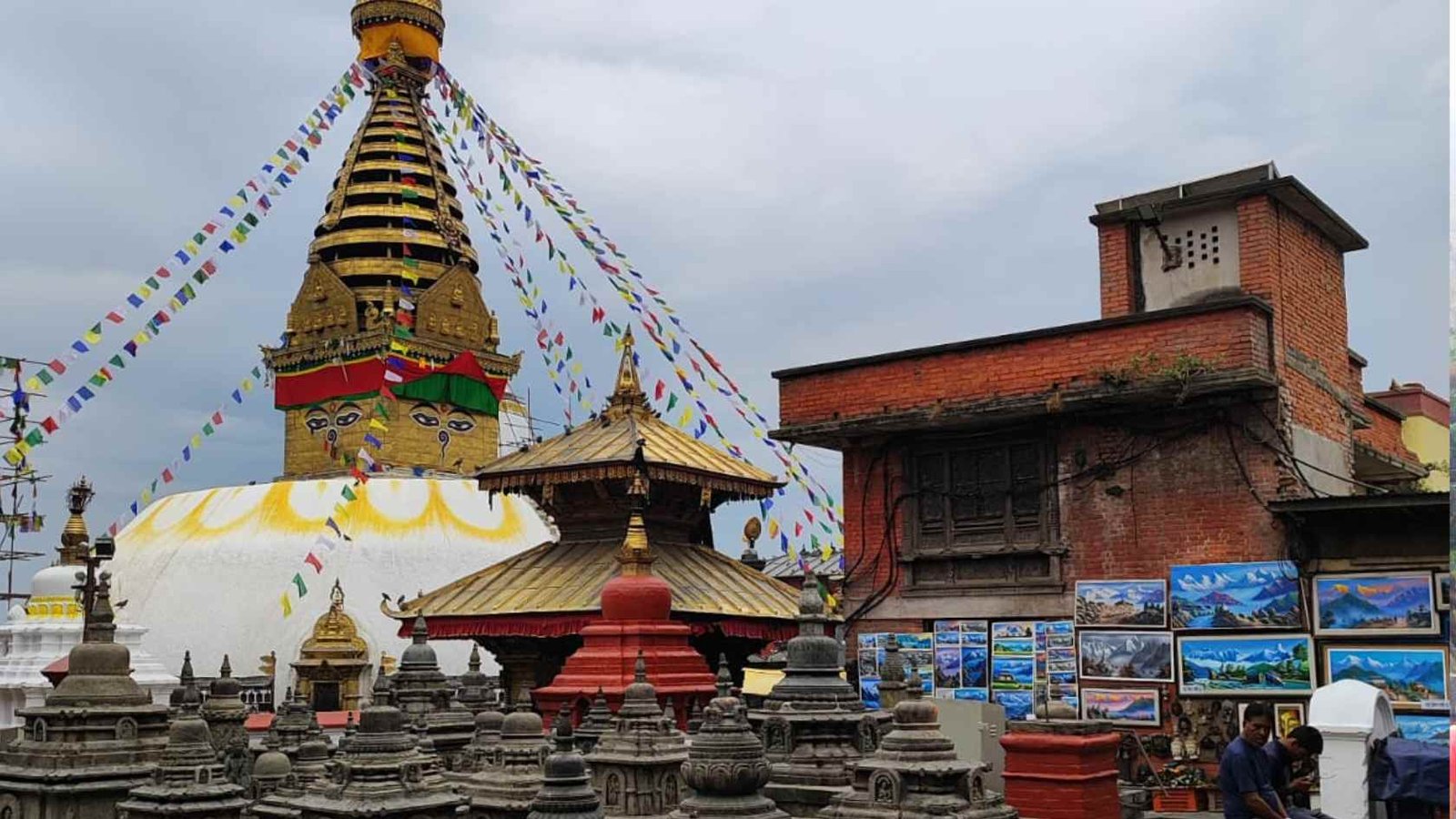
The white dome of the stupa represents the earth, while the 13 golden tiers above symbolize the stages to enlightenment. The four pairs of Buddha’s eyes watch over the valley in all directions, representing awareness and compassion. Between each pair of eyes, where a nose would be, is a curl symbol resembling a question mark; it is actually the Nepali numeral one, standing for the unity of all things and the one path to enlightenment. Above the eyes, the 13 steps of the spire are the 13 bhumi, the stages a bodhisattva passes through on the way to Buddhahood.
Surrounding the stupa are shrines, chaityas, and monasteries adorned with fluttering prayer flags and colorful murals depicting Buddhist deities. Pilgrims and tourists alike circle the monument clockwise, chanting “Om Mani Padme Hum.” Look for three signature pieces of the complex:
- The Vajra (thunderbolt): an enormous gilded thunderbolt set on the east side of the dome, representing the indestructible nature of enlightenment.
- The Sleeping Buddha statue in a niche on the western side, a favourite of photographers at golden hour.
- Shantipur, an underground chamber said to contain the remains of a saint meditating there since the 8th century. Priests still claim to hear movement below.

🐵 The Monkey Temple Experience
Locals affectionately call it the Monkey Temple due to the large number of playful rhesus monkeys that inhabit the complex. The colony numbers in the hundreds, and the animals are considered holy: legend says they rose from the head lice of the bodhisattva Manjushri, who cut his hair after draining the valley lake, and the monkeys are his descendants. Because of that, they are guardians of the sacred site and are never removed.
Practical rules follow from their status:
- Do not feed the monkeys. Feeding encourages aggressive approaches and is discouraged by site staff. Monkeys that associate humans with food snatch bags, sunglasses and phones.
- Hold your belongings. Keep cameras strapped, zips closed and water bottles in hand. Monkeys will take loose items off benches and railings within seconds.
- Do not stare down or corner a monkey. If one approaches, back away calmly rather than holding your ground. Mothers with infants are the most defensive.
- Monkey bites are rare but real. If scratched or bitten, wash the wound immediately and seek medical advice in Kathmandu; rabies post-exposure treatment is cheap and available at any clinic.
Visitors are advised to keep their belongings secure while enjoying the lively atmosphere. The monkeys are most active around the eastern steps in the early morning and at feeding time on the forested slopes below the platform.
🚶 The 365 Steps or the Drive-Up Entrance
There are two ways in, and they feel like two different monuments.
The eastern stairway is the classic approach: 365 stone steps climbing steeply from the bottom of the hill through a treeline of chaityas, prayer flags and monkeys. The number 365 is intentional, one step for each day of the year, and pilgrims count them as an act of devotion. The climb takes 15 to 25 minutes for a reasonably fit visitor and is a genuinely beautiful approach, but it is unshaded and steep in places, so start slow, carry water, and do not attempt it in the midday heat of April or May.
The western (vehicle) entrance is a 10-minute drive or taxi ride from Thamel, ending at a car park about 50 metres below the stupa platform with only a short final flight of stairs. Most tour groups and most older visitors enter this way. There is a small parking fee for cars and taxis.
Many travellers combine the two: taxi up to the western gate, spend an hour at the top, then descend the 365 steps into the old city and walk back through Kathmandu’s backstreets. That route gives you the views and the pilgrimage descent in one visit, and it ends within walking distance of Thamel.
📸 Photography and Etiquette
Swayambhunath is one of the most photographed sites in Nepal, and it rewards patience. The all-seeing eyes framed by the gilded spire are the signature shot; the best light is early morning from the northeast platform, when the sun hits the dome and the valley below is still clear of haze. Sunset shots from the western platform look out over the whole Kathmandu Valley with the mountains behind on clear days from October to February.
- Do not photograph people worshipping without asking. A raised camera pointed at someone deep in prayer is the most common etiquette failure here. A smile and a gesture is usually enough; most locals say yes.
- Do not pose disrespectfully. Sitting on the Vajra, climbing on chaityas or posing with your back to the Buddha’s eyes in a jokey way offends devotees and staff.
- Walk clockwise. Around the main platform, always keep the stupa on your right. Non-Buddhist visitors are not expected to pray, but the direction of travel is observed.
- Drones are prohibited over the complex without a permit from the Department of Archaeology.
- Shoes off at the Harati temple and any shrine interior; the main platform is walked in shoes.
🛪 Harati Ajima: the Hindu-Buddhist Heart of the Site
North of the main dome stands a two-tiered temple to Harati Ajima, the goddess of smallpox and childhood disease, a Hindu deity adopted into the Buddhist pantheon as the protector of children. The story goes that Harati was a demoness who devoured children until the Buddha converted her and made her their guardian instead. Her shrine here is where Newar mothers still bring their sick children to be blessed, and the temple is tended by priests of both faiths.
That is the deeper story of Swayambhunath: not a Buddhist site that tolerates Hindus, but a shared sanctuary where the same hill holds a self-created stupa, a Hindu mother goddess, Shiva shrines on the summit, and a Tibetan monastery community that has grown around the southern slope since 1959. The Kathmandu Valley Heritage Guide covers this syncretic pattern across all seven monument zones of the valley.
📷 Breathtaking Views of Kathmandu Valley
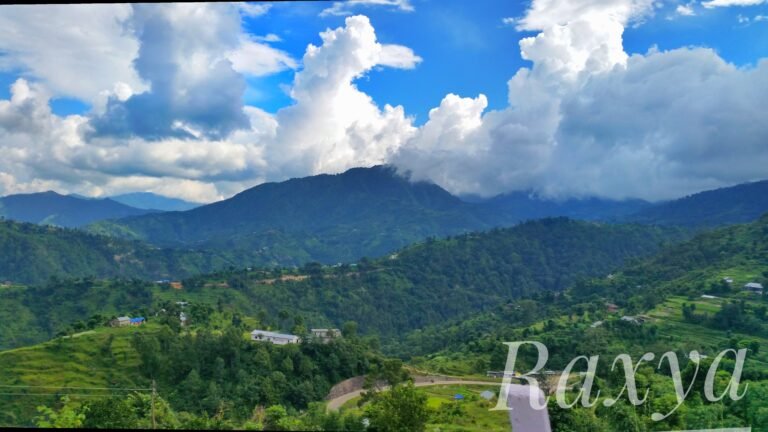
From the top of the 365-step stone staircase, visitors are rewarded with 360-degree views of Kathmandu’s skyline, framed by distant Himalayan peaks on clear days. Sunrise and sunset are magical moments for photography and reflection. On a clear morning between October and February you can see the Langtang range and, on exceptional days, the Annapurna massif far to the west. The valley haze is at its worst from March through the monsoon; go early, because by late morning the pollution layer usually swallows the mountains.
🏟 Nearby Attractions and Pairing Suggestions
- Kathmandu Durbar Square: the royal courtyard of Malla kings, filled with temples and palaces. Pairs naturally with Swayambhunath on the same day; the two are 20 minutes apart by taxi.
- Pashupatinath Temple: sacred Hindu temple dedicated to Lord Shiva, best visited in the late afternoon for the aarti ceremony.
- Boudhanath Stupa: another monumental Buddhist shrine just 8 km away. Doing Swayambhunath at sunrise and Boudhanath at dusk is the classic Kathmandu Buddhist day.
- Patan Durbar Square: across the river, 40 minutes away. For the full valley circuit, see the heritage guide.
- Thamel: Kathmandu’s vibrant hub for travelers, cafes, and shops, 3 km east and the natural base for the night.
A sensible day plan: Swayambhunath at 7 AM, breakfast back in Thamel, Durbar Square mid-morning, lunch, then Boudhanath and Pashupatinath in the late afternoon. All four monument sites are covered in one day if you start early, and a licensed guide makes the symbolism legible in a way signs do not.
🧭 Visitor Information (2026)
- Location: Swayambhu hill, west of central Kathmandu (roughly 3 km from Thamel; the eastern steps start at the end of the Swayambhu road)
- Entry Fee: NPR 200 (foreigners); free for SAARC nationals and children under 10. Tickets are checked at both entrances.
- Opening Hours: 5 AM to 8 PM daily. Ticket counters typically open around 6-7 AM; the site is physically accessible outside those hours and locals use the steps at dawn without tickets.
- Best Time to Visit: Early morning (6 to 8 AM) for clear views, active monkeys and the morning pilgrimage circuit, or sunset for the valley lights. Spring mornings are hazy; October to February mornings are clearest.
- Time needed: allow 90 minutes to 2 hours, longer if you include the monastery museum on the south side.
- Getting there: taxi from Thamel costs NPR 250-400 and takes 15-20 minutes depending on traffic. Public buses to Swayambhu leave from Ratna Park, and it is a pleasant 45-minute walk through old Kathmandu if the air is clean.
- Accessibility: the western entrance avoids the steps and reaches a viewing platform just below the main stupa; full wheelchair access to the upper platform is not possible.
Tips: Carry water for the steps, dress modestly (shoulders and knees covered) since this is an active place of worship, remove shoes before entering shrines, and respect local rituals.
💡 Why Add Swayambhunath to Your Kathmandu City Tour
Including Swayambhunath Stupa in your Kathmandu City Tour connects you deeply with Nepal’s spiritual heritage. Beyond its panoramic views and sacred energy, it represents the unity of Nepal’s cultural and religious harmony.
Whether you’re exploring with Enticing Himalayas Travels or joining a Kathmandu Valley Heritage Tour, this stop offers an unforgettable blend of spirituality, architecture, and breathtaking scenery.
❓ FAQs, Swayambhunath Stupa, Kathmandu
What is the best time to visit Swayambhunath?
Visit early morning (6–8 AM) or at sunset for fewer crowds and clear valley views. Midday is hot, hazy and busiest with tour groups.
Is Swayambhunath a Buddhist or Hindu site?
It’s primarily Buddhist but revered by both Hindus and Buddhists in Nepal. The Harati temple on the platform is Hindu, and Shiva shrines sit alongside the stupa.
How long does it take to explore the site?
Typically 1–2 hours including the climb, photography, and meditation time. Add 30 minutes if you want the monastery and Shantipur legends with a guide.
Are the monkeys dangerous?
They are wild animals but accustomed to people. Do not feed them, hold your bags and phones, and never corner one. Bites are rare and almost always involve food.
Can I climb the 365 steps if I am not fit?
Yes, slowly. Take the steps in three or four rests. Alternatively, use the western vehicle entrance and skip the staircase entirely.
Is there a dress code?
Cover shoulders and knees out of respect. No formal enforcement exists, but shrine interiors require shoes off and modest clothing.
Related guides
Share this content: