Lumbini Travel Guide 2026: Birthplace of Buddha — UNESCO Site, How to Reach, Entry Fees & Tips
Complete guide: Kathmandu Valley Heritage Guide
Key Takeaways
- Lumbini is the birthplace of Lord Buddha (c. 563 BCE) and a UNESCO World Heritage Site since 1997.
- The sacred complex spans 4.8 km × 1.6 km and includes the Mayadevi Temple, Ashoka Pillar, and monasteries from over 20 countries.
- Entry fee: NPR 200 for SAARC nationals, NPR 500 for other foreign visitors (as of August 2026).
- Nearest airport: Gautam Buddha International Airport (BWA) in Bhairahawa, 22 km away — with daily flights from Kathmandu.
- Best visited October–March for pleasant weather; avoid monsoon months (June–September) when the Terai heat and humidity peak.
Why Lumbini Matters
Lumbini is not just another stop on a Nepal itinerary — it is one of the four most sacred sites in Buddhism, alongside Bodh Gaya (enlightenment), Sarnath (first sermon), and Kushinagar (death). For the 500 million Buddhists worldwide, a pilgrimage to Lumbini is a journey to the very spot where Queen Maya Devi gave birth to Prince Siddhartha Gautama under a sal tree in the gardens of Lumbini around 563 BCE.
UNESCO inscribed Lumbini as a World Heritage Site in 1997, citing its “outstanding universal value” as the birthplace of the Buddha and the archaeological evidence — particularly the Ashoka Pillar — that confirms the site’s authenticity. The pillar, erected by Emperor Ashoka in 249 BCE, bears a Brahmi inscription that reads: “The Beloved of the Gods, King Priyadarsin, came here and worshipped, because the Buddha Shakyamuni was born here.”
What to See: The Sacred Garden and Monastic Zone
The Lumbini complex is divided into three distinct areas, each worth at least half a day of exploration.
The Sacred Garden
This is the spiritual heart of Lumbini. Inside the garden you will find:
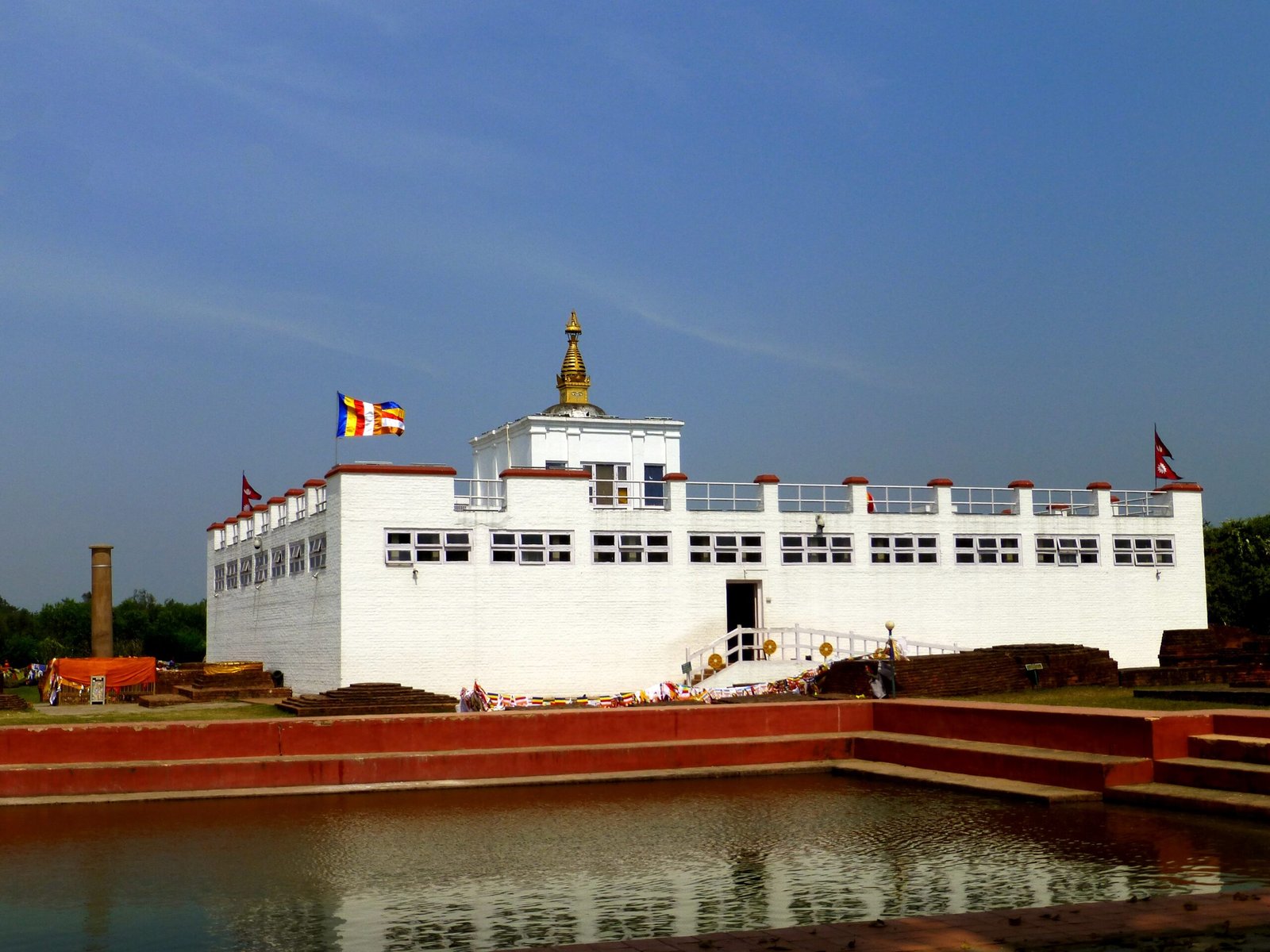
- Mayadevi Temple — a whitewashed structure built directly over the ancient ruins of the original temple. Inside, a glass panel protects the Marker Stone, which pinpoints the exact spot where the Buddha is believed to have been born. The Nativity Sculpture, a 4th-century CE bas-relief, depicts Maya Devi holding a sal branch during childbirth.
- Ashoka Pillar — the 6-metre sandstone pillar erected in 249 BCE. The Brahmi inscription is still legible and is the single most important piece of archaeological evidence confirming Lumbini as the Buddha’s birthplace.
- Puskarini (Sacred Pond) — the pond where Queen Maya Devi is said to have bathed before giving birth, and where the infant Buddha received his first bath. Pilgrims often circumambulate the pond as part of their devotions.
- Bodhi Tree — a large pipal tree draped in prayer flags, under which monks and pilgrims meditate throughout the day.
The Monastic Zone
Stretching north from the Sacred Garden, the Monastic Zone is divided by a long canal into East and West sections. The East Monastic Zone houses Theravada monasteries built by countries including Thailand, Myanmar, Sri Lanka, and Cambodia. The West Monastic Zone features Mahayana and Vajrayana monasteries from China, Japan, South Korea, Vietnam, France, and Germany — among others.
Each monastery reflects its country’s distinct architectural tradition. The Chinese Zhong Hua Monastery is a sprawling complex of pagoda-style buildings. The German Tara Foundation monastery is strikingly modern. The Thai Royal Monastery gleams with white marble and gold trim. Walking the full length of the canal takes about 45 minutes; renting a bicycle (available at the main gate) cuts that to 15.
Lumbini Museum and Research Institute
The Lumbini Museum houses over 12,000 artifacts including terracotta figurines, coins, and manuscripts spanning the Maurya, Kushana, and Gupta periods. The Lumbini International Research Institute (LIRI), adjacent to the museum, holds a collection of over 20,000 books on Buddhism, archaeology, and Asian history — open to researchers and serious visitors.
How to Get to Lumbini
| Route | Duration | Cost (approx.) | Notes |
|---|---|---|---|
| Kathmandu → Bhairahawa (flight) | 35–40 min | NPR 5,000–9,000 | Multiple daily flights via Buddha Air, Yeti Airlines. Airport is 22 km from Lumbini. |
| Kathmandu → Bhairahawa (tourist bus) | 8–10 hours | NPR 1,200–1,800 | Overnight and day buses available. Roads are paved but winding through the Chure hills. |
| Pokhara → Bhairahawa (bus) | 5–7 hours | NPR 800–1,200 | Via the Siddhartha Highway. Scenic but narrow in sections. |
| Chitwan → Lumbini (bus/car) | 4–5 hours | NPR 600–1,000 | A popular add-on after a Chitwan safari. Private car hire is NPR 5,000–7,000. |
| Gorakhpur, India → Sunauli border → Bhairahawa | 3–4 hours from border | INR 500–1,000 | Common route for Indian pilgrims. Sunauli is the nearest India-Nepal border crossing. |
Best Time to Visit
Lumbini sits in Nepal’s southern Terai plains at just 150 metres above sea level. The climate is subtropical — very different from the mountain regions most travellers associate with Nepal.
- October–March (peak season): Daytime temperatures range 20–28°C with cool mornings. This is the most comfortable window for walking the sprawling complex. Buddha Jayanti (April/May, date varies by lunar calendar) draws the largest crowds — book accommodation weeks in advance if visiting during this festival.
- April–May (shoulder): Temperatures climb to 35–40°C. Still manageable with an early-morning start, but the midday heat is punishing.
- June–September (monsoon): Hot (30–35°C) and humid with heavy rainfall. The complex remains open but walking conditions are difficult. Mosquitoes are at their peak — bring strong repellent.
Entry Fees and Practical Information
| Item | SAARC Nationals | Other Foreign Nationals |
|---|---|---|
| Lumbini Development Trust entry | NPR 200 | NPR 500 |
| Mayadevi Temple (inner sanctum) | NPR 100 | NPR 200 |
| Camera fee (still) | NPR 50 | NPR 100 |
| Video camera fee | NPR 500 | NPR 1,000 |
Fees are current as of August 2026 and are subject to change. The complex is open daily from 6:00 AM to 6:00 PM. Dress modestly — shoulders and knees covered — as this is an active place of worship. Remove shoes before entering any temple.
Where to Stay
Accommodation ranges from simple guesthouses to mid-range hotels. Most are clustered in Bhairahawa (Siddharthanagar), 22 km from the complex, or in the Lumbini Bazaar area just outside the main gate.
- Inside the complex: The Lumbini Hokke Hotel (Japanese-managed, mid-range) and a few monastery guesthouses offer basic rooms. Staying inside means you can walk to the Sacred Garden at sunrise — a genuinely magical experience.
- Lumbini Bazaar: A cluster of budget guesthouses (NPR 1,000–2,500/night) within walking distance of the main gate. Lumbini Garden Lodge and Buddha Maya Garden Hotel are reliable options.
- Bhairahawa: More choice including chain hotels. The drive to Lumbini takes 30–40 minutes by taxi (NPR 800–1,200).
Combining Lumbini with Other Destinations
Lumbini works well as part of a broader Nepal itinerary. Common combinations include:
- Chitwan + Lumbini (5–6 days): Fly or drive to Chitwan for a 2-night jungle safari, then continue 4–5 hours west to Lumbini for 1–2 nights. Return to Kathmandu by flight from Bhairahawa.
- Kathmandu Valley + Lumbini (5–7 days): Explore Kathmandu’s seven UNESCO sites, then fly to Bhairahawa for a 2-night Lumbini visit. This is the most popular route for cultural travellers.
- India-Nepal Buddhist Circuit (10–14 days): Start in Varanasi/Sarnath (India), cross to Lumbini, then fly to Kathmandu and continue to the Boudhanath and Swayambhunath stupas. This covers three of the four major Buddhist pilgrimage sites.
Frequently Asked Questions
Do I need a guide for Lumbini?
A guide is not required but highly recommended. Licensed guides (NPR 1,500–2,500 for a half-day) provide historical context that signage alone cannot convey — particularly the significance of the Ashoka Pillar inscription and the archaeological layers beneath the Mayadevi Temple. Guides can be hired at the main entrance gate.
Is Lumbini safe for solo travellers?
Yes. Lumbini is one of the safest destinations in Nepal. The complex is well-patrolled by the Lumbini Development Trust security and tourist police. The surrounding Terai region is generally peaceful, though solo travellers should avoid walking alone on remote roads after dark — standard travel common sense.
How many days do I need in Lumbini?
Two full days is ideal. Day one: Sacred Garden, Mayadevi Temple, Ashoka Pillar, and the museum. Day two: walk or cycle the Monastic Zone, visiting 5–6 monasteries from different countries. One day is enough for a quick visit, but you will miss the Monastic Zone entirely.
Can I visit Lumbini as a day trip from Kathmandu?
Technically yes — the 35-minute flight to Bhairahawa makes a day trip possible. Take the first morning flight (around 7:00 AM), explore the complex from 8:30 AM to 3:00 PM, and catch the last flight back (around 5:00 PM). However, this is rushed and you will miss the peaceful early-morning atmosphere that makes Lumbini special. An overnight stay is strongly recommended.
What is the best time of day to visit the Sacred Garden?
Sunrise. The complex opens at 6:00 AM, and the first hour — before the tour buses arrive — is when Lumbini is at its most serene. The morning light on the Mayadevi Temple and the sound of monks chanting in the surrounding monasteries create an atmosphere that no photograph fully captures.
References
- UNESCO World Heritage Centre. “Lumbini, the Birthplace of the Lord Buddha.” whc.unesco.org/en/list/666/
- Wikipedia contributors. “Lumbini.” Wikipedia, The Free Encyclopedia. Accessed August 2026.
- Lumbini Development Trust. Entry fee schedule and visitor information. Accessed August 2026.
Published: August 5, 2026. All information verified as of this date. Entry fees and flight prices are approximate and subject to change.
Related guides
Share this content: