Everest Base Camp Trek: Complete Guide (2026)
The Everest Base Camp (EBC) trek is the most iconic high-altitude trek in the world. This guide is the full itinerary deep dive: every day of the classic route with walking hours, altitude gains, acclimatisation days, tea house standards, itinerary variations, side trips and training prep. For costs, permits and season planning, start with the companion Everest Base Camp Trek 2026 Guide.
Why trek to Everest Base Camp?
Standing at 5,364 metres on the moraine of the Khumbu Glacier, below the frozen waterfall of the Khumbu Icefall, is an experience no photograph can capture. The trek passes through Sherpa homeland (ancient monasteries, stone villages, prayer-flag-studded passes) and reaches Kala Patthar (5,545 m), a viewpoint closer to the summit of Everest than Base Camp itself. Over 40,000 trekkers make this journey each year.
The classic 14-day route at a glance
The standard route runs Lukla → Phakding → Namche Bazaar → Tengboche → Dingboche → Lobuche → Gorak Shep → Everest Base Camp → Kala Patthar → back via Pheriche and Namche, taking 14 days with arrival, two acclimatisation days and a buffer. The table summarises the profile; the day-by-day sections below explain what each stage looks like on the trail.
| Day | Route | Altitude | Walking hours |
|---|---|---|---|
| 1 | Arrive Kathmandu | 1,400 m | – |
| 2 | Fly to Lukla, trek to Phakding | 2,840 m → 2,610 m | 3-4 hrs |
| 3 | Phakding to Namche Bazaar | 3,440 m | 5-6 hrs |
| 4 | Acclimatisation in Namche | 3,440 m (hike to 3,880 m) | 3-4 hrs |
| 5 | Namche to Tengboche | 3,870 m | 5 hrs |
| 6 | Tengboche to Dingboche | 4,360 m | 5-6 hrs |
| 7 | Acclimatisation in Dingboche | 4,360 m (hike to 5,083 m) | 4-5 hrs |
| 8 | Dingboche to Lobuche | 4,940 m | 5 hrs |
| 9 | Lobuche → Gorak Shep → Everest Base Camp | 5,170 m → 5,364 m | 7-8 hrs |
| 10 | Kala Patthar sunrise, descend to Pheriche | 5,545 m → 4,270 m | 7-8 hrs |
| 11 | Pheriche to Namche Bazaar | 3,440 m | 6-7 hrs |
| 12 | Namche to Lukla | 2,860 m | 6-7 hrs |
| 13 | Fly Lukla to Kathmandu | 1,400 m | – |
| 14 | Contingency / buffer day | – | – |
Day 1: Arrive in Kathmandu (1,400 m)
Arrive at least a day before your trek to collect permits, check gear and attend the briefing with your guide. Kathmandu sits at 1,400 m, so use the day to hydrate and sleep off jet lag, and confirm your Lukla flight departure point now.
Day 2: Fly to Lukla, trek to Phakding (2,840 m → 2,610 m)
The 35-minute flight lands on the short, sloping runway of Tenzing-Hillary Airport. In peak seasons many flights depart from Manthali (Ramechhap), which means a pre-dawn 4-5 hour road transfer; read Lukla Flights 2026: Kathmandu vs Manthali before you book. From Lukla the walk to Phakding is a gentle 3-4 hour descent along the Dudh Koshi river, crossing your first suspension bridges hung with prayer flags. Phakding tea houses are among the best on the route: attached rooms, hot showers and reliable wifi.
Day 3: Phakding to Namche Bazaar (3,440 m)
A 5-6 hour day with one serious climb. The trail enters Sagarmatha National Park at Monjo, where your permits are checked. After the roaring Hillary Suspension Bridge the path climbs a 300 m stone staircase known locally as “Namche hill”. On a clear afternoon you get your first sight of Everest from the viewpoint at Top Danda. Namche Bazaar is the unofficial capital of the Khumbu: bakeries, gear shops, cyber cafes, two banks and a hospital.
Day 4: Acclimatisation day in Namche Bazaar
Acclimatisation days follow the “climb high, sleep low” principle. The standard morning hike climbs to Hotel Everest View (3,880 m) at Syangboche for a panorama of Everest, Lhotse and Ama Dablam, often returning via Khumjung village. Afternoons are for resting with coffee and apple pie at the famous Namche bakery. This is the most valuable rest day of the trek.
Day 5: Namche to Tengboche (3,870 m)
Roughly 5 hours through rhododendron and pine forest (in full bloom in late April) with Ama Dablam dominating the skyline. The trail undulates via Kyangjuma, drops to the river at Phunki Tenga, then climbs steeply for 40 minutes to the Tengboche plateau. Tengboche Monastery is the spiritual centre of the Khumbu; try to catch the 15:00 puja. Rooms are simple and the dining hall is heated by a yak-dung stove after sunset.
Day 6: Tengboche to Dingboche (4,360 m)
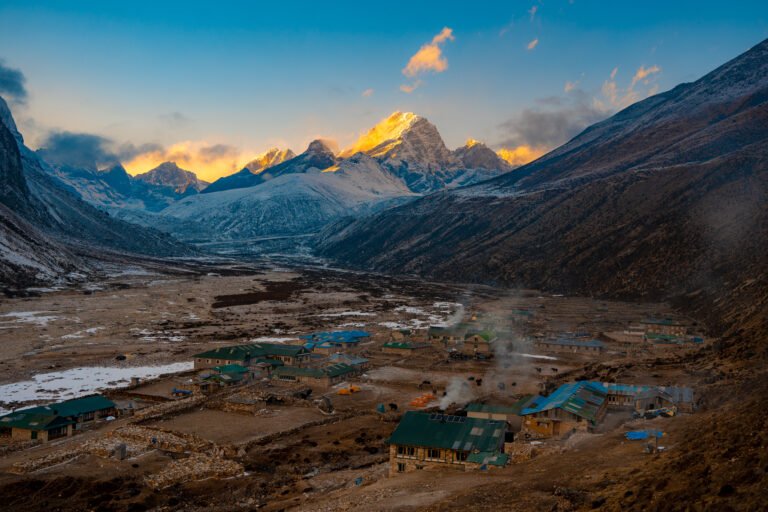
A 5-6 hour day crossing the Imja Khola past the nunnery at Debuche. The tree line ends near Pangboche and the landscape opens into alpine steppe. Dingboche, a village of stone-walled potato fields, is your first night above 4,300 m: expect colder nights, slower walking and shorter menus.
Day 7: Acclimatisation day in Dingboche
The classic morning hike climbs Nangkartshang Peak (5,083 m) for close-up views of Ama Dablam, Island Peak and the Lhotse wall, previewing 5,000 m before the big days. A gentler option is a walk up the Chhukung valley toward Island Peak Base Camp. Spend the afternoon resting and drinking 3-4 litres of fluid.
Day 8: Dingboche to Lobuche (4,940 m)
Only about 5 hours, but thin air makes it feel longer. The route climbs to the memorial chortens at Thukla Pass (4,830 m), honouring climbers lost on Everest, then follows the lateral moraine of the Khumbu Glacier. Lobuche is a strip of basic lodges with shared squat toilets and bucket showers.
Day 9: Lobuche → Gorak Shep → Everest Base Camp (5,364 m)
The longest and most emotional day, 7-8 hours total. The 3-hour walk to Gorak Shep (5,170 m), the last settlement, crosses rugged glacier moraine. After an early lunch most trekkers continue the 2.5-3 hour round trip to Everest Base Camp itself, a jumble of expedition tents beside the dramatic icefall (tents appear mid-April to mid-May in climbing season). Everest’s summit is not visible from Base Camp; it rises behind the Nuptse-Lhotse wall. You sleep at Gorak Shep, the highest bed of the trek.
Day 10: Kala Patthar (5,545 m), then descend to Pheriche (4,270 m)
Start before dawn with a headlamp for the 1.5-2 hour climb of Kala Patthar (“black rock”), the famous 5,545 m viewpoint of the whole trek: sunrise over Everest, Lhotse, Nuptse, Pumori and Changtse. After photos and breakfast, descend to Gorak Shep and continue 4-5 hours through Lobuche to Pheriche (4,270 m). Oxygen feels richer with every hour down.
Day 11: Pheriche to Namche Bazaar (3,440 m)
A 6-7 hour backtrack through Pangboche, Tengboche and the forests above Kyangjuma. The familiar trail now feels easy, and most trekkers celebrate with a hot shower and apple pie in Namche. Watch your knees on the descents and use trekking poles.
Day 12: Namche to Lukla (2,860 m)
The final 6-7 hour day retraces the suspension bridges and ridges of Days 2-3. Reach Lukla by mid-afternoon, settle tea house bills, tip your crew and confirm your flight for the following morning.
Days 13 and 14: fly out, with a buffer
Morning flights are the most reliable. From Lukla you fly back to Kathmandu or to Ramechhap with a road transfer, and even good-weather days produce delays, so keep the afternoon free. Day 14 is a non-negotiable buffer: Lukla weather cancels flights regularly, and a spare day is the difference between a stress-free exit and a rebooked international ticket.
What the tea houses are like on the route
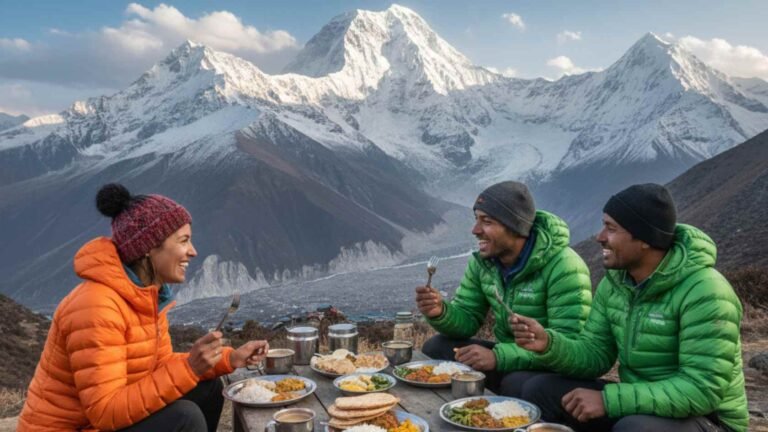
Lodging on the EBC route is basic but sufficient: twin-share rooms with foam mattresses (bring a sleeping bag rated to -10 C), communal dining halls warmed by yak-dung stoves, and shared squat toilets that improve the lower you are. Dal bhat costs around NPR 300 in Phakding but 700-800 in Gorak Shep, because every kilogram of food is carried up by porters and yaks. Hot bucket showers run NPR 300-500, Everest Link wifi works in most villages, and charging costs a small fee above Namche. Learn how the system works in the Nepal Teahouse Trekking Guide.
Itinerary variations: 10, 12, 14 and 16 days
- 10 days: cuts both acclimatisation days. Only sensible for trekkers already acclimatised or with prior high-altitude experience; AMS risk rises sharply.
- 12 days: keeps one acclimatisation day (usually Namche). The commonest budget package and a reasonable compromise if your leave is short.
- 14 days: the classic itinerary described above, with two acclimatisation days and a buffer. The recommended choice for first-time visitors.
- 16-18 days: adds the Gokyo Lakes via the Cho La pass, or the full Three Passes circuit described below.
Side trips and extensions
- Gokyo Lakes and Gokyo Ri, the best single extension: turquoise lakes at 4,700-5,000 m and a 5,357 m viewpoint, reached by branching off at Mong La or crossing the Cho La pass from Lobuche.
- Three Passes trek (Kongma La 5,535 m, Cho La 5,420 m, Renjo La 5,360 m), a challenging 18-20 day circuit that crosses three high passes and includes both EBC and Gokyo.
- Island Peak (6,189 m), a trekking peak added as a 3-day extension from Dingboche via Chhukung, requiring basic crampon skills.
Training and preparation
Start 8-12 weeks out: 3-4 cardio sessions per week (45-60 minutes of running, cycling or hill intervals) plus a weekly long hike with a 5-8 kg pack, building to 6-8 hours. Add stair or incline-treadmill work for leg strength, and practise two long walking days back to back, because the trek demands exactly that. No technical skills are needed, though prior trekking above 4,000 m helps. Full gear details are in the Nepal Trekking Packing List 2026.
Best season
The two peak windows are March to May (spring, rhododendron bloom at lower elevations) and late September to November (autumn, clear skies, the best mountain views). Winter is possible but much colder, with occasional snow blocking high passes: see the Everest Base Camp in December guide. For month-by-month detail read Best Time to Visit Nepal 2026, and for a regional comparison see Annapurna vs Everest Base Camp.
Getting there: Lukla flights
Every itinerary starts with the flight to Lukla (2,860 m), one of the world’s most famous short-runway airports. In peak seasons many airlines shift departures to Manthali Airport in Ramechhap, meaning a pre-dawn 4-5 hour road transfer. The full comparison of departure points, costs, airlines and cancellation tactics is in Lukla Flights 2026: Kathmandu vs Manthali.
Permits and costs
You need two permits: the Sagarmatha National Park Entry Permit (NPR 3,000, available in Monjo or Kathmandu) and the Khumbu Pasanglhamu Rural Municipality permit (NPR 2,000, checked at Chheplung after Lukla). Full details are in the Nepal Trekking Permits Guide, and official information is on the Nepal Tourism Board portal. Estimated total cost: USD 1,200 – 2,500 depending on independent trekking, a porter, or a guided package; the detailed budget breakdown is in the 2026 planning guide.
Altitude and safety
The single biggest risk on the EBC trek is acute mountain sickness (AMS): you gain over 2,500 m from Lukla to Kala Patthar, exactly why this itinerary builds in two acclimatisation days. Read the Altitude Sickness Guide for symptoms, golden rules and when to descend, and carry trekking insurance that covers helicopter evacuation above 5,000 m.
Helicopter option (no trekking required)
If you cannot trek for 12 days, a helicopter tour from Kathmandu gives you a landing at Kala Patthar and breakfast at Hotel Everest View (3,880 m) in a single morning, from USD 1,200 per person shared. See the Nepal helicopter tours overview for all routes.
Everest Base Camp: Nepal vs Tibet
There are two Everest Base Camps: the Nepal side (South, 5,364 m, on foot) and the Tibet side (North, 5,200 m, by vehicle). Compare them in Everest Base Camp: Nepal vs Tibet.
Quick FAQ
How hard is the Everest Base Camp trek?
Moderate to strenuous. No technical climbing is required, but you walk 5-8 hours a day at high altitude for 12 consecutive days, so good fitness and prior hiking experience are essential.
How much does it cost?
Independent trekking: USD 1,200-1,500. With a guide and porter: USD 1,800-2,500. Luxury packages with helicopter return: USD 4,000-6,000.
Do I need a guide?
As of 2024, Nepal requires all trekkers in national parks to have a licensed guide or be part of a registered group. Solo trekking without a guide is no longer permitted in Sagarmatha National Park.
What if the Lukla flight is cancelled?
Weather cancellations are common. Plan at least 2 buffer days at the end of your trek. Alternatively, you can charter a helicopter (USD 500-600 per person shared) or walk from Jiri/Salleri, which adds 4-6 days.
Can I trek EBC in winter?
Yes, but it is significantly colder (-15 to -25 C at night above 4,000 m) and some tea houses close. Read the December EBC guide for full details.
Share this content: