Best Time to Visit Nepal 2026: A Month-by-Month Trekking and Travel Guide
Complete guide: Everest Base Camp Trek: Complete Guide
Direct answer: The best time to visit Nepal is autumn (October and November) and spring (March to May) with clear skies, stable weather, and the best mountain views. Winter (December to February) is cold but excellent for low-altitude and wildlife trips; the summer monsoon (June to September) is green and quiet but brings leeches, clouds, and flight delays.
But here is the honest version: any article that gives you one date range for the whole country is selling something. Nepal spans roughly 150 km north to south yet climbs from 60 m in the Terai to 8,849 m on Everest, and the weather you get depends far more on where you go than on when you go. A monsoon week can be perfect in Mustang and miserable 100 km away in Kathmandu. This guide breaks the question down the way a good local operator would: first by climate, then by month, then by what you actually came to do.
Nepal’s climate zones: why one answer does not fit all
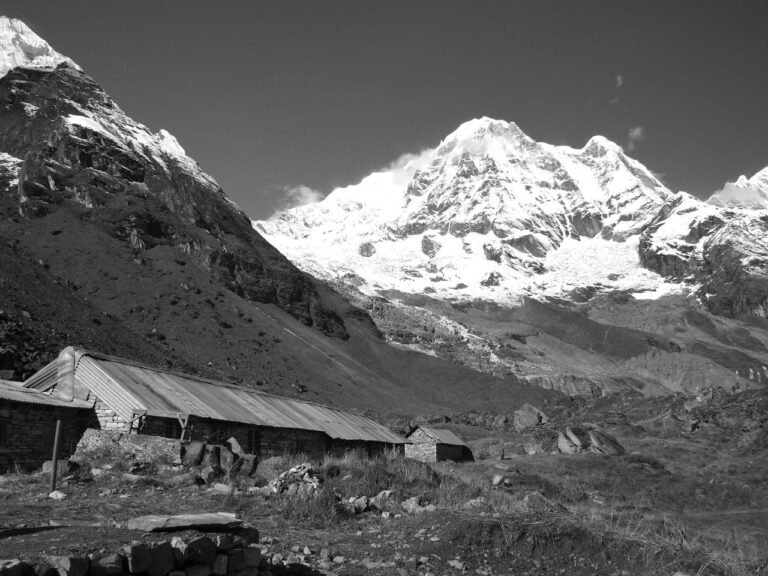
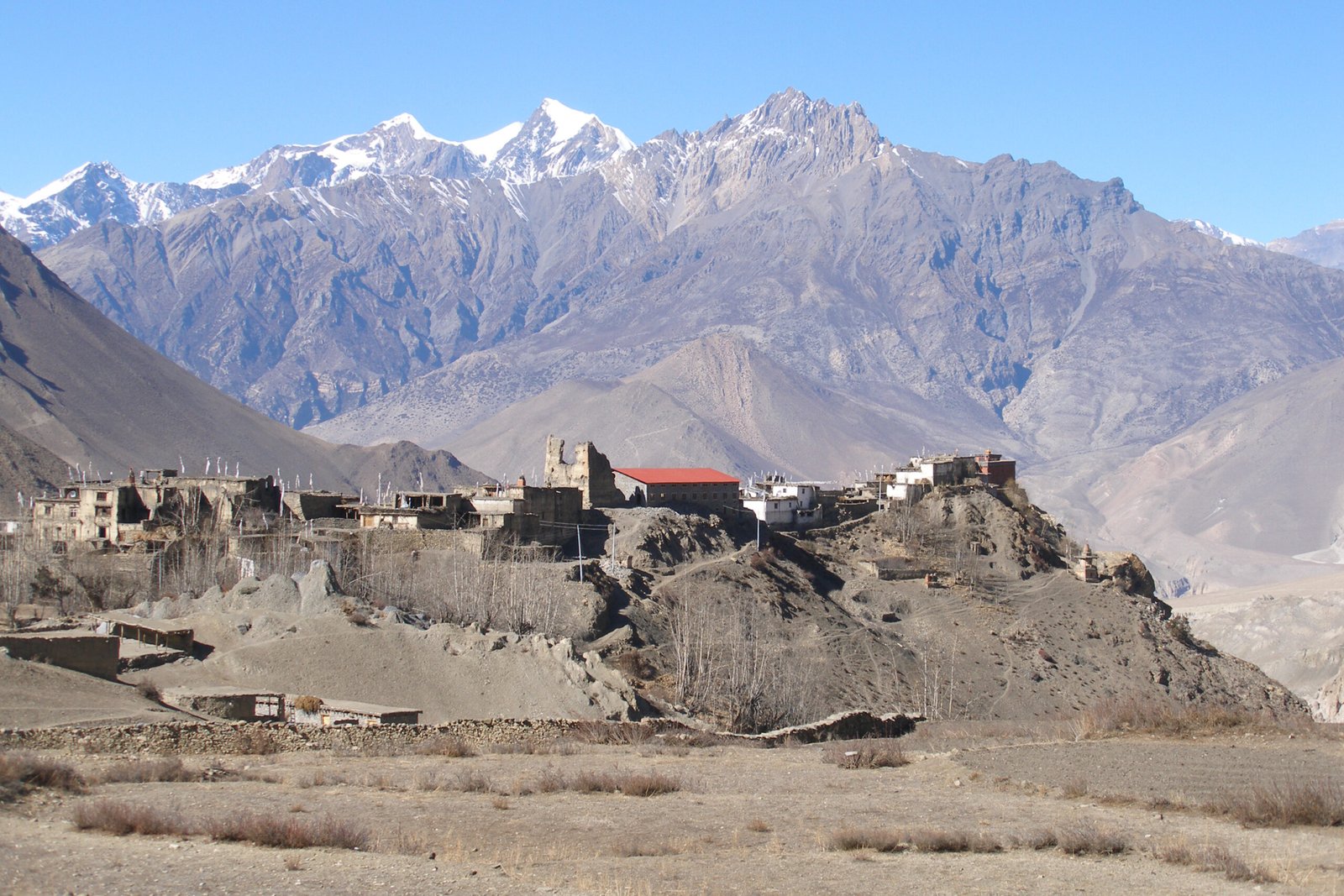
Nepal squeezes five climatic belts into a country you can cross in a single short-haul flight. The southern Terai plain sits at 60-300 m and has a near-tropical climate with hot, humid, wet summers. The mid-hills, including Kathmandu and Pokhara at around 1,000-1,500 m, have a temperate four-season climate similar to a mild version of northern India. The high mountains above 3,500 m are cold year-round, with weather dominated by the jet stream in winter and the monsoon in summer. And in the deep trans-Himalayan valleys north of the main range, Mustang, Dolpo, Nar Phu and upper Manaslu sit in the rain shadow, where the monsoon largely fails and annual rainfall is closer to Tibet’s than to Kathmandu’s.
Two weather systems drive everything. The summer monsoon, which typically arrives from the southeast in mid-June and retreats through September, dumps more than 1,000 mm of rain on the mid-hills but peters out before it can cross the Annapurna and Dhaulagiri massifs. The winter westerly disturbances bring occasional rain to the west and snow to the high country between December and February. The two finest windows, October-November and March-April, are simply the gaps between those systems, when the air is dry, the jet stream has shifted, and the mountains stand out in full definition.
The practical takeaway: pick your season by your destination, not the other way round. The month-by-month and activity tables below do exactly that.
The four seasons with honest pros and cons
| Season | Weather | Best for | Watch out for |
|---|---|---|---|
| Autumn (Oct-Nov) | Clear, dry, stable | Everest and Annapurna treks, festivals | Peak crowds and peak prices; book 2-3 months ahead |
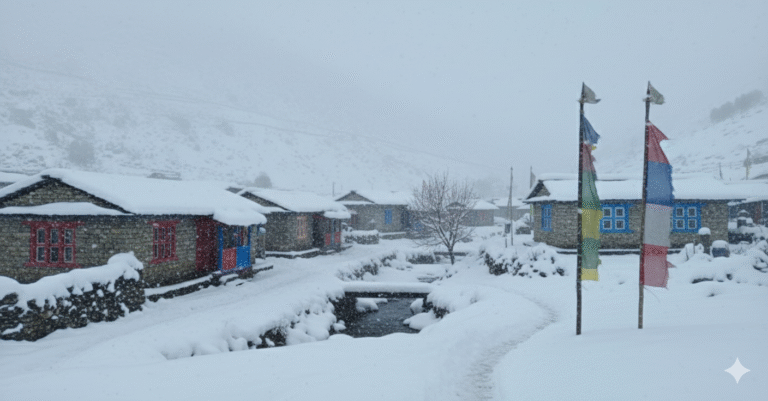
| Winter (Dec-Feb) | Cold, crisp, clear mornings | Chitwan wildlife, low-altitude tours, solitude | High passes snow-bound; short days; lodge heating is basic |
| Spring (Mar-May) | Warm, rhododendrons in bloom | Trekking, climbing, wildlife | Pre-monsoon haze building by late May; busy Everest trails |
| Monsoon (Jun-Sep) | Wet, humid, cloudy | Upper Mustang, Dolpo and other rain-shadow treks | Leeches, slippery trails, landslide risk, flight delays |
Month-by-month quick guide
| Month | Conditions at a glance | Good for |
|---|---|---|
| January | Coldest month; crisp and clear in the hills; fog in the Terai mornings | Chitwan and Bardia safaris, Kathmandu Valley heritage, low-altitude hikes |
| February | Still cold but warming; Losar celebrations | Cultural tours, beginning of the spring season, jungle safaris |
| March | Dry, warm days, rhododendrons starting | Most treks, rafting season opens |
| April | Warm and clear; peak bloom below 3,000 m | Trekking, climbing expeditions arrive, wildlife viewing |
| May | Hottest pre-monsoon month; haze builds late month | High-altitude climbs (Everest summit window), late-season treks |
| June | Monsoon usually begins mid-month | Rain-shadow treks: Mustang, Dolpo; rafting on early meltwater |
| July | Peak monsoon in the hills | Upper Mustang, Dolpo, valley culture, indoor festivals |
| August | Wet and humid; landslide-prone | Rain-shadow regions only; agricultural festivals |
| September | Monsoon retreats; skies clear progressively | Late-month treks, Indra Jatra, rafting on full rivers |
| October | Peak season: clear, stable, warm days | Everything, especially high-altitude treks and Dashain-Tihar festivals |
| November | Still excellent; cooling toward month’s end | Treks at every altitude, mountain photography |
| December | Cold mornings, crystal visibility, quiet trails | Low-altitude treks like Poon Hill, safaris, crowd-free bargain season |
Best time by activity
Trekking, by region
- Everest region: October-November and March-May. Winter is possible to Base Camp for the hardy but Lukla flights face more cancellations; see our Everest Base Camp Trek 2026 Guide for season-by-season planning.
- Annapurna region: The same two prime windows. Thorong La closes most winters. The full loop is covered in our Annapurna Circuit Trek 2026 Guide.
- Manaslu Circuit: March-May and October-November; Larkya La is snow-risky outside these windows. Spring sees roughly half of autumn’s traffic, so choose it if you want solitude with good weather.
- Rain-shadow treks (Upper Mustang, Dolpo, Nar Phu): These run on the opposite calendar. Mustang is at its best June to September, when the rest of the country is soaked. Our Upper Mustang Trek 2026 Guide explains the region’s trekking windows in detail.
Festivals
Nepal’s festival calendar is dominated by the autumn. Dashain, the greatest Hindu festival, falls in September or October; Tihar, the five-day festival of lights, follows weeks later in October or November; both are lunar, so exact dates shift every year. Holi arrives with the full moon in March. Autumn festival crowds mean Kathmandu Valley transport and hotels fill up, but the atmosphere at the Durbar Squares is unforgettable. For the full calendar with 2026 dates, see the Nepal Festivals Guide 2026.
Rafting and kayaking
Rivers peak with monsoon run-off in September and October, when big-water trips on the Bhote Koshi and Sunkoshi are at their most powerful. March to May offers warm, reliable water at friendlier grades as snowmelt feeds the rivers. Avoid monsoon months on most rivers: flows are dangerously high and unpredictable.
Jungle safaris: Chitwan and Bardia
The Terai is at its best in the cool, dry months from October to March, when temperatures are comfortable and wildlife gathers at shrinking waterholes. March to May brings the best tiger and rhino sighting odds as the heat concentrates animals at water, but afternoons are very hot. Monsoon (June to September) is the worst window: parts of the parks close, and heavy rain disperses wildlife and floods grassland tracks.
Helicopter tours
Helicopter tours to Everest and Annapurna run year-round but depend entirely on mountain weather and clear windows. The most reliable months are February to May and October to December, when stable high-pressure systems give the long-range visibility that makes an Everest flight worthwhile. Winter mornings are often the clearest of all, and the classic Everest sunrise flight uses them. For routes, prices and weather-planning advice, see the Nepal Helicopter Tours 2026 Guide.
Crowds and prices: the seasonality of cost
Nepal’s pricing calendar has three tiers. Peak (October-November, and to a lesser degree mid-March to mid-May): teahouse lodges book out on the big routes, guide and porter rates are highest, and domestic flights sell up weeks ahead. Shoulder (September, early December, February): the sweet spot, with most of the good weather at a fraction of the crowds. Off-season (mid-December to January, June to August): discounts of 20-40 percent on tours and lodges, and empty trails in the rain-shadow regions. If your dates are flexible, the first week of December and the last week of September routinely deliver October conditions with June prices.
Three levers to beat the crowd without gambling on weather: start the autumn season on an early-September rain-shadow trek, trek high-altitude routes in late October rather than mid-month, or choose spring over autumn, accepting slightly hazier skies in exchange for empty lodge common rooms.
Climate change is moving the monsoon
The calendar above describes long-term averages, but the averages themselves are shifting. Across the Himalaya, meteorologists and trekkers alike have noted monsoon onset arriving erratically, sometimes early bursts in late May, sometimes a delayed start followed by compressed, heavier rainfall in July and August. Recent Septembers have seen unusual storms during what used to be reliably dry weeks, and autumn seasons increasingly begin with a weather hiccup before settling in.
What this means for planning: treat the classic windows as a base rate, not a guarantee. Build a buffer day into any high-pass itinerary for the first half of September and October; buy flexible domestic flight tickets; and check live forecasts in the week before departure. Our weekly Nepal weather forecast post is updated during the trekking seasons to help with exactly this.
Key takeaways
- Autumn and spring are the premier trekking windows for most of the country.
- Winter suits wildlife and cultural trips; the monsoon suits rain-shadow treks like Mustang and Dolpo.
- Pick your season by your destination: the rain shadow inverts Nepal’s calendar entirely.
- Book autumn trips early, it is peak season, and the best lodges fill months out.
- Build buffer days in shoulder months as monsoon timing becomes less predictable.
Frequently asked questions
Which month has the best mountain views?
October and November: post-monsoon air is clearest, and visibility holds all day. February and March mornings are nearly as crisp, with the caveat of cold.
Can I trek in the monsoon?
Yes, in rain-shadow areas like Upper Mustang, Dolpo and Nar Phu, which stay dry when the rest of Nepal is soaked. Elsewhere expect leeches, cloud, slippery trails and disrupted flights.
When are the big festivals?
Dashain and Tihar fall in the September-November window (dates are lunar and shift yearly); Holi is in March; Losar, the Tibetan New Year, is in February. See the Nepal Festivals Guide for 2026 dates.
Is October really the best month?
For most treks and tours, yes: clearest skies and stable trails. But lodges book out and prices peak, so reserve early or target late September and early December.
Can beginners trek in spring?
March to May is excellent for first treks: warmer days, blooming rhododendrons, and longer daylight than autumn. Choose a teahouse route like Poon Hill or Langtang Valley and acclimatise patiently.
What about the winter?
December and February are underrated: cold nights but the clearest skies of the year, empty trails and low prices. Avoid high passes, which may be snow-bound, and choose low-altitude routes or a jungle safari instead.
Related guides
- Everest Base Camp Trek 2026 Guide
- Annapurna Circuit Trek 2026 Guide
- Upper Mustang Trek 2026 Guide
- Nepal Helicopter Tours 2026 Guide
- Nepal Festivals Guide 2026
Published by the TravellingNepal Editorial Desk. Seasonal patterns reflect long-term climatological norms for Nepal; check live forecasts before travel. For official tourism information see the Nepal Tourism Board.
Share this content: