Everest Base Camp Trek 2026: Route, Cost, Permits & How Long It Takes
Read the complete guide: Everest Base Camp Trek: Complete Guide (2026): routes, seasons, flights and side trips in one place.
How long is the Everest Base Camp trek? The classic Everest Base Camp (EBC) trek takes 12 to 14 days round trip from Kathmandu, covering roughly 130 km with the high point at Kala Patthar (5,545 m) for the closest view of Everest. That route, day by day, lives in our complete Everest Base Camp trek guide. What this page adds is the 2026 planning layer: what permits cost right now, what rules have changed, how the Lukla flight situation actually works, when to go this year and what a realistic budget looks like, based on current Nepal Tourism Board and Khumbu Pasang Lhamu Rural Municipality rules.
Classic EBC route at a glance
Most trekkers fly from Kathmandu to Lukla (2,860 m), then walk through Phakding, Namche Bazaar (3,440 m), Tengboche, Dingboche, Lobuche and Gorak Shep to Base Camp (5,364 m). The standard schedule builds acclimatization days at Namche and Dingboche, and skipping them is the most common cause of altitude sickness.
| Segment | Distance | Sleeping altitude |
|---|---|---|
| Lukla → Phakding | 8 km | 2,610 m |
| Namche Bazaar (acclimatization) | rest day | 3,440 m |
| Namche → Tengboche | 10 km | 3,867 m |
| Dingboche (acclimatization) | rest day | 4,410 m |
| Gorak Shep → EBC | 3 km | 5,164 m |
Permits you need in 2026
- Khumbu Pasang Lhamu Rural Municipality permit: NPR 2,000 per week (approx. from the local ward office in Lukla/Monjo).
- Sagarmatha National Park entry: NPR 3,000 for foreigners.
- TIMS card: required for all trekkers; organized groups use the blue card.
A few practical points that trip people up. The municipality permit is bought in the Khumbu, not in Kathmandu: the checkpoint is at Lukla or Monjo, so carry cash in small notes. Sagarmatha National Park tickets are sold at the park gate in Monjo and can also be arranged in Kathmandu at the Nepal Tourism Board office in Bhrikutimandap, which saves a queue on the trail. TIMS is issued through the Nepal Tourism Board or a registered trekking agency; going with an agency usually bundles all three into your package price. Our 2026 Nepal trekking permits guide covers the full TIMS system, fee tables and every regional permit in one place.
Guide rules for 2026: what actually applies on the EBC trail
Nepal’s solo-trekking rules have shifted several times since 2022, so this deserves precision. The government announced, then walked back, a blanket guide requirement for all national park treks; the current position is that guide-compulsory rules apply to restricted areas such as Manaslu, Nar Phu and Upper Mustang, not to the classic EBC trail. Solo trekking in the Khumbu remains legal in 2026, and the government has separately signalled openness to reopening even more restricted routes to independent trekkers. In practice, the Annapurna region has officially reopened to solo trekkers and the Khumbu never closed to them.
That said, “legal” and “sensible” are different questions. Above Namche the trail splits, weather closes in fast, teahouses fill in peak season, and helicopter evac coordination is far smoother when a licensed guide is making the calls. A guide costs roughly USD 25 to 40 per day plus his own food and lodging; a porter-guide combination runs a bit more. Most 2026 EBC walkers hire one, and insurance claims are easier with a guide’s documentation. For the full risk picture read our trekking insurance guide for Nepal.
Lukla flight logistics in 2026: Kathmandu vs Manthali
This is the single most consequential planning decision for the trek, so it gets its own section. There are two ways to reach the trailhead:
Fly Kathmandu → Lukla. Roughly USD 180 one way, 35 minutes, spectacular, and weather-dependent every single day of the year. Morning flights are far more reliable than afternoon ones: commit to the 6:30 to 8:00 am departures and treat anything after 10 am as a bonus. In October and November, seats need booking weeks ahead, and cancellations ripple for days when the clouds sit on the runway.
Fly or drive to Ramechhap (Manthali), then a short hop to Lukla. During the October to November and March to May peaks, most Lukla operators shift their flights from Kathmandu’s congested airport to Manthali airstrip, about 132 km east. That means a 4 to 5 am road departure from Kathmandu, a 4 to 5 hour drive, and a higher chance your flight actually goes, because Manthali has fewer competing movements. The trade: a brutal pre-dawn start, and the drive eats the morning you saved.
Our dedicated Lukla flights 2026: Kathmandu vs Manthali comparison breaks down prices, schedules and the walking-in fallback. Whichever option you take, the golden rule stands: buffer a spare day on each end of the trek. Every seasoned Khumbu traveller has a story about a two-day Lukla weather hold, and the ones with buffers have funny stories.
EBC trek cost breakdown (2026, per person)
| Item | Typical 2026 cost |
|---|---|
| Permits (municipality + park + TIMS) | USD 55 to 75 total |
| Flights Kathmandu to Lukla return | USD 340 to 400 (booked early) |
| Teahouse lodging and food on trail | USD 35 to 60 per day |
| Guide (if hired) | USD 25 to 40 per day plus expenses |
| Insurance with helicopter evacuation | USD 80 to 200 depending on trip length |
| Kathmandu hotel and meals en route | USD 30 to 60 per day |
Independent trekkers spend roughly USD 35 to 60/day on teahouse lodging and food, which works out near USD 900 to 1,200 for a 14-day walk once permits and flights are added. A guided trek with permits, a guide, and domestic flights typically runs USD 1,400 to 2,200 all-in. Budget more for hot showers, charging ports and wifi above Namche, where every convenience is metered: a hot shower can cost the price of a meal, and charging your phone can cost the price of a coffee. Prices in the Khumbu rise with altitude because everything you consume is carried up on someone’s back or flown in.
Best windows for a 2026 EBC trek
March to early May (pre-monsoon): steadily warmer, rhododendron forests below Namche, long daylight. Afternoon haze builds by late April, so hike early. The Everest region is also busy with spring climbing expeditions heading to Base Camp itself, which turns Gorak Shep into a buzzing base camp city in late April and May.
October to November (post-monsoon): the classic window. The monsoon washes the atmosphere clean, and mid-October to mid-November delivers the clearest, most stable mountain weather of the year. It is also the busiest: teahouses fill, Lukla flights sell out, and you should book the flights and first nights well ahead.
December to February (winter): cold but genuinely quiet, with crisp days and empty trails above Namche. Teahouses at higher villages close some rooms, nights at Gorak Shep fall well below freezing, and you need real sleeping gear. In exchange you get the trail nearly to yourself.
June to September (monsoon): the hardest season. Clouds hide the peaks for days, trails turn slick, leeches appear below 3,000 m, and flight delays compound. It is possible with patience and no peak-viewing expectations, but most trekkers should simply avoid it.
Season depth, month-by-month weather patterns and what each window means for flights are covered in our best time to visit Nepal guide. For current official guidance on permits and conditions, check the Nepal Tourism Board at welcomenepal.com before you travel.
Is the EBC trek right for you?
The trek is strenuous but non-technical, with no ropes or climbing. Solid cardiovascular fitness and prior multi-day hiking help. Travelers wanting a guided, fixed-itinerary version can explore Enticing Himalayas’ 14-day classic EBC trek. For those short on time, the Everest Base Camp helicopter tour reaches Kala Patthar in a day. If you are choosing between the two big-name Himalayan walks, our Annapurna vs Everest Base Camp comparison lays out the honest differences in cost, crowds and altitude.
FAQ
When is the best season for EBC?
Pre-monsoon (March to May) and post-monsoon (October to November) offer the clearest skies and stable trails. December to February is cold but quiet; June to September brings monsoon clouds and leeches at lower elevations.
Do I need a guide?
Solo trekking is permitted on the EBC main trail in 2026; the compulsory-guide rule applies to restricted areas like Manaslu and Upper Mustang. Most trekkers still hire a guide for safety, teahouse bookings in peak season, and smoother emergency coordination.
How hard is the altitude?
Gorak Shep and EBC sit above 5,000 m. Acclimatize properly, hydrate, and know the signs of AMS. Helicopter evacuation is available but costly without insurance, so buy a policy that explicitly covers trekking to 6,000 m and helicopter rescue.
How much cash should I carry?
Nearly everything above Lukla is cash-only in NPR. Budget roughly USD 500 to 700 equivalent for a 12 to 14 day trek independent, more with a guide, and change it in Kathmandu where rates are better. ATMs exist in Namche but are unreliable and fee-heavy.
Do I need to train?
Yes, and it pays off more than any gear purchase. Ten weeks of hill walking with a loaded daypack, plus some cardio three times a week, is the standard preparation. The fitter you arrive, the more you enjoy the wall-to-wall views between villages.
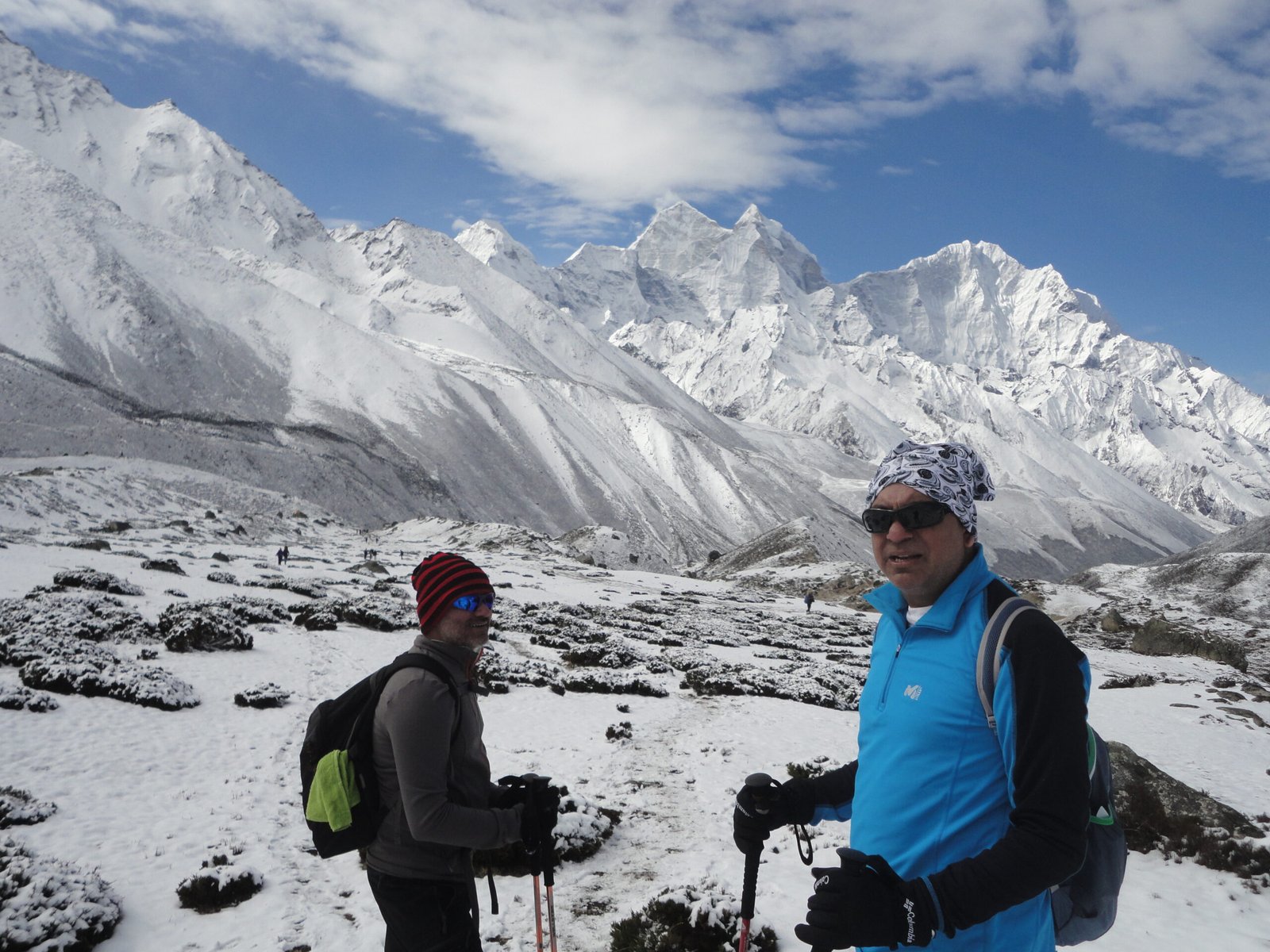
Featured image: Trekkers at Everest Base Camp, via Wikimedia Commons (CC). Source verified against Nepal Tourism Board permit guidance, 2026.
Related guides
- everest-base-camp-nepal-tibet-for-trekking
- gokyo-lake-trek-12-day-itinerary
- lukla-flights-2026-kathmandu-vs-manthali
Share this content: