Pokhara Travel Guide 2026: Lakes, Viewpoints & Gateway to Annapurna
Complete guide: Annapurna Region Treks: Complete Guide
Why visit Pokhara? Pokhara is Nepal’s adventure capital and the gateway to the Annapurna region: a relaxed lake city of Phewa and Begnas lakes with the Annapurna range rising straight behind it, cleaner air and a slower pace than Kathmandu. It is where most Annapurna treks begin and end, and where trekkers come to recover with boat rides, sunrise viewpoints and riverside cafes. Whether you spend two days or two weeks, here is the complete 2026 guide.
Top things to do
- Sarangkot sunrise: the classic Annapurna and Dhaulagiri sunrise viewpoint (1,592 m), reachable by car or a short hike.
- Phewa Lake: boat to the Tal Barahi temple; the reflection of Machhapuchhre is iconic.
- World Peace Pagoda: hilltop stupa with panoramic lake-mountain views.
- Adventure sports: paragliding, zip-lining, and ultra-light flights operate from Pokhara.
| Activity | Where | 2026 cost |
|---|---|---|
| Tandem paragliding | Sarangkot | USD 90-120 / 25-30 min |
| Boating (rowboat, per hour) | Phewa Lake | NPR 500-1,000 |
| Sunrise jeep to Sarangkot | Sarangkot | NPR 2,000-3,500 return |
| Zip-lining | Sarangkot ridge | USD 90-100 |
| Ultra-light flight | Pokhara airport | USD 110-230 |
Paragliding deserves a special note: Pokhara is one of the world’s great sites, with tandem flights launching from Sarangkot and riding the ridge lift before landing beside the lake. See our paragliding guide for season details, and check out more ideas in our top 10 adventures in Nepal.
Viewpoints and lakes beyond the obvious
Sarangkot gets the crowds, and rightly so, but nearby Kaskikot offers the same Annapurna panorama with a fraction of the people, reached by a lovely ridge walk from the Sarangkot road. The World Peace Pagoda (Shanti Stupa) sits on the ridge south of Phewa Lake and is best reached by boat across the lake plus a 40-minute stepped climb, or by taxi from Damside. On clear days the white stupa frames Machhapuchhre, Annapurna South and the whole lake. For a quieter water morning, Begnas Tal and Rupa Tal, 15 km east of the city, are working fishing and farming lakes with lakeside terraces and almost no tourists.
Also worth an afternoon: Devi’s Fall and Gupteshwor Cave (an underground waterfall and sacred cave shrine, walking distance from each other), Mahendra Cave and the Bat Cave in Batulechaur, and the International Mountain Museum in Ratna Mandhir, which tells the story of the Himalaya, its peoples and the great climbing expeditions.
Day hikes and short treks from Pokhara
Pokhara is the best day-hiking base in Nepal. Favourite half and full day routes:
- Lakeside to Sarangkot: 3-4 hours up steep steps and farm trails to sleep at the top and catch sunrise, then walk or jeep back down.
- Australian Camp and Dhampus: 2-3 hours from Kande by taxi and a gentle ridge trail to Gurung villages with front-row Annapurna views.
- World Peace Pagoda circuit: cross the lake by boat, climb to the stupa, then walk the forest ridge and descend into Lakeside.
- Begnas to Rupa ridge: a quiet loop of terraced farmland and the two lesser lakes.
If those leave you hungry for bigger walking, Pokhara is the trailhead for the Annapurna Base Camp trek, the Ghorepani Poon Hill route and the Annapurna Circuit. For permits you will need ACAP and TIMS; our trekking permits guide covers current fees.
Getting there
Pokhara is 200 km west of Kathmandu. Tourist buses take 6 to 8 hours (USD 8 to 25 for deluxe and green-line classes) and leave early morning from Kathmandu. Flights take 25 minutes (USD 50 to 125) and offer a Himalayan view on the left side if you sit by the window. Private jeeps run USD 80 to 120. Most people fly one way and bus the other. The Nepal Tourism Board maintains current transport advisories, and road conditions on the Prithvi Highway can change in monsoon, so check before booking. Pokhara is also the launch point for the Annapurna Base Camp trek and Ghorepani Poon Hill.
Getting around Pokhara
Most of what you need is walkable in Lakeside. Local buses and micros run the main roads for NPR 20-50, taxis anywhere in the city cost NPR 300-600 (agree the price first; meters are rare), and motorbike or scooter rental runs around USD 5-10 per day plus fuel. Bicycles rent cheaply by the lake. For Sarangkot and Peace Pagoda sunrises, jeeps can be arranged through any Lakeside hotel or travel desk.
Where to stay
Lakeside is the main tourist hub: hotels range from budget guesthouses (USD 10-20 per night) to luxury resorts (USD 100+), with restaurants, bars, bookshops and trekking agencies all on one strip. North Lakeside is quieter and better value; central Lakeside is closest to nightlife; Damside (south, near Pardi) is the quiet local-side alternative with lake sunsets. For a local experience, homestays in the surrounding villages around Sarangkot and Astam give you farm food and valley views for USD 15-30 including meals. Book ahead for October-November, when rooms sell out.
Food, cafes and nightlife
Pokhara eats better than anywhere in Nepal outside the capital. Lakeside offers everything from wood-fired pizza and Israeli food to Newari set meals and proper espresso, and the organic salad-and-yoga crowd is well served. Do not leave without trying a Tibetan dinner of thukpa and buckwheat momos, a lakeside grilled fish from Begnas, and the famous chocolate rolls at the German Bakery. Evenings revolve around the lake: rooftop bars in the south of Lakeside for sunset, live music spots on the main strip, and early nights for trek groups with pre-dawn starts.
Wellness, yoga and slow mornings
Pokhara has quietly become one of Asia’s better value wellness stops. Lakeside is dense with yoga studios offering drop-in classes and multi-day courses, meditation centers teach both Buddhist and Hindu traditions, and spa menus run from ayurvedic massage (NPR 800-1,500 per hour) to post-trek deep tissue work that trekkers swear by. The setting does half the work: mist on the lake at dawn, the fisherfolk rowing out, and Machhapuchhre clearing the clouds by nine. If your Nepal trip is a fast circuit of Kathmandu, trekking and Chitwan, a slow morning here is the recovery valve in the middle of it. Many travellers now book a “lake and yoga” buffer week around their trek dates and treat Pokhara as the base rather than the stopover.
Shopping and what to buy
Shopping in Pokhara is cheaper and calmer than Kathmandu. Lakeside stalls sell singing bowls, pashminas (check the weave and burn-test a thread if you want real cashmere), Tibetan carpets, khukuri knives and trekking gear, both genuine and copy; prices are typically 20 to 30 percent below Thamel for the same goods. The bookshops are excellent for trekking maps, guidebooks and second-hand novels to swap along the trail. For a non-touristy experience, the old bazaar in the east of the city around Bindhyabasini Temple is where locals shop for cloth, brass and spices, and it makes a good pairing with a morning visit to the temple itself. Bargain with a smile; the opening price is a starting conversation, not an insult.
A perfect three day Pokhara itinerary
Day 1: Morning boat on Phewa Lake to Tal Barahi, an afternoon at Devi’s Fall and Gupteshwor Cave, sunset drinks on a Lakeside rooftop. Day 2: Pre-dawn jeep to Sarangkot for sunrise, breakfast back in town, then either a tandem paragliding flight or the walk down from Sarangkot, and an evening massage. Day 3: Boat across to the World Peace Pagoda, walk the ridge over to the Australian Camp trailhead area or simply cycle out to Begnas and Rupa lakes for a quiet lunch, with the International Mountain Museum on the way back if weather hides the peaks. It is a rhythm that works for families, couples and solo travellers equally, and it slots neatly ahead of or behind a trek.
Best time to visit
October-November is prime: post-monsoon clarity, warm days, and the mountains out all morning. March-May is the second best window, warming toward hazy pre-monsoon afternoons. June-August is monsoon, when clouds often hide the range, the lake turns moody and green, and accommodation is cheapest. December-February is cold at night but crystal clear by day and often sunny. Our best time to visit Nepal guide compares the seasons month by month if you are fitting Pokhara into a longer trip.
Gateway to Annapurna: logistics before the trek
Pokhara is where trek logistics get done: TIMS cards and ACAP permits from the tourist offices, last-chance gear shopping or rental on Lakeside (our packing list covers what to bring), insurance check-ups, and the airport for flights to Jomsom for Upper Mustang and Muktinath itineraries. Budget one full buffer day here before any trek. After a trek, most people plan two recovery days in Pokhara: massage, lake time and a celebration dinner before returning to Kathmandu or heading on to Chitwan, which pairs naturally as the jungle half of a classic Nepal trip (see our Chitwan National Park guide).
FAQ
How many days in Pokhara?
2-3 days covers the main sights; add 1-2 more if you are paragliding, day hiking or using it as a trek rest stop. Trekkers usually add a buffer day before and a recovery day after.
Best time?
Oct-Nov and Mar-May for clear mountain views; monsoon clouds often hide the range but bring green landscapes, quiet trails and the lowest prices.
Is Pokhara safe?
Yes. It is a major tourist hub with good tourist infrastructure; Lakeside is well lit and walkable late, and solo travellers report few problems. Take normal care with valuables, and swim only in designated lake areas.
Is there an altitude problem in Pokhara?
No. The city sits at around 900 m, so it doubles as an ideal low-altitude stop. Altitude only matters once you climb toward Poon Hill (3,210 m) or higher on Annapurna routes.
Can I get a visa or SIM in Pokhara?
Tourist visas on arrival are available only at the airport, so arrange yours in Kathmandu, but SIM cards, insurance checkups, cash and permits are all easy in Pokhara.
Key takeaways
- Pokhara is Nepal’s adventure capital and the standard base for all Annapurna treks; plan a buffer day before and a recovery day after your trek.
- Sarangkot sunrise, Phewa Lake, the Peace Pagoda and Begnas are the four essential outings; paragliding from Sarangkot is world class.
- Stay in Lakeside for convenience, North Lakeside for quiet, or a village homestay for local life at USD 15-30.
- Reach it by 25-minute flight or 6-8 hour tourist bus; October-November is the clearest season.
- Pair Pokhara with Chitwan or Lumbini for a classic two or three region Nepal itinerary.
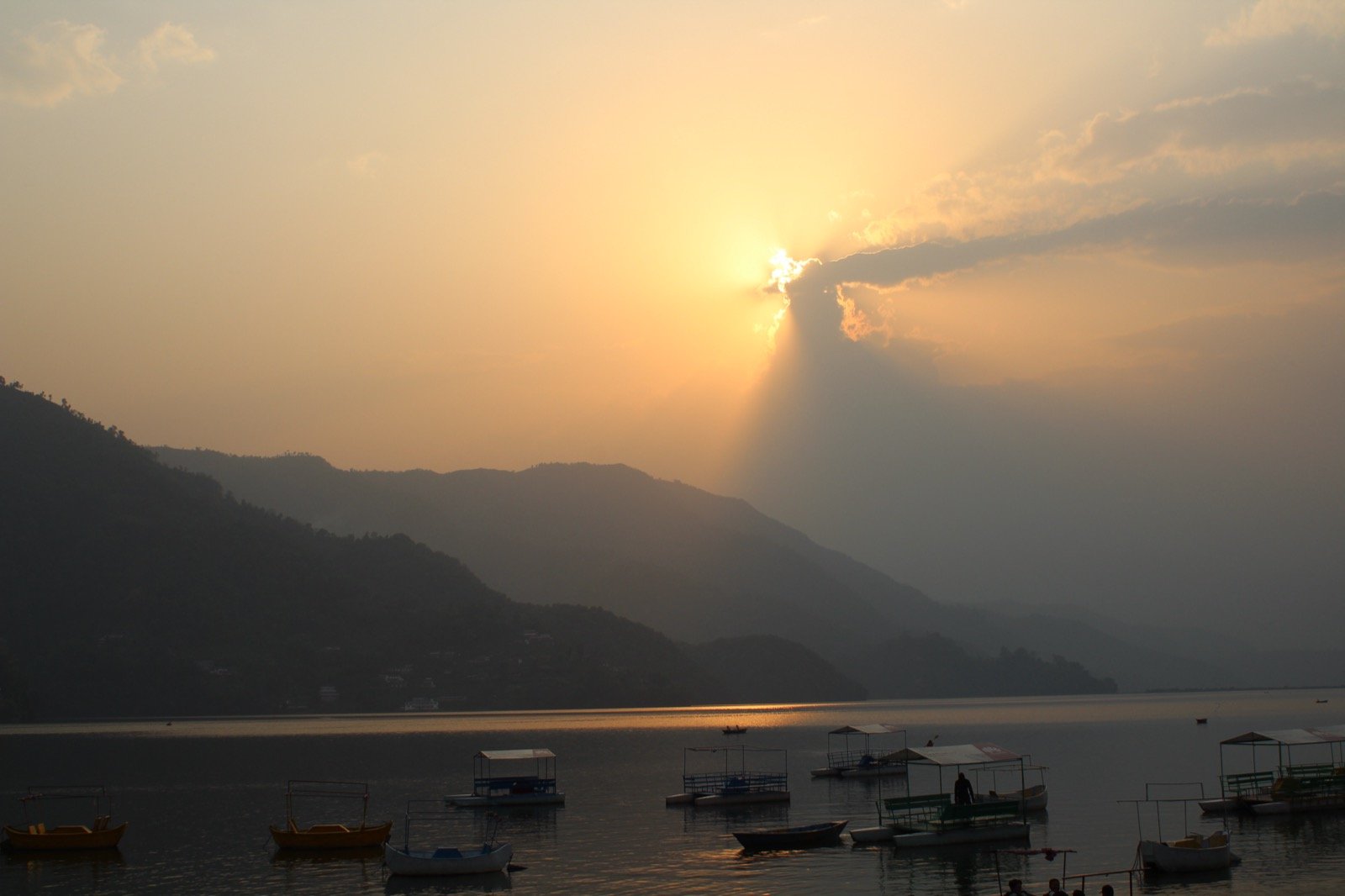
Featured image: Phewa Lake, Pokhara, via Wikimedia Commons (CC).
Related guides
- Annapurna Base Camp trek 2026 guide
- Annapurna region treks: complete guide
- Annapurna Circuit trek 2026 guide
- Best time to visit Nepal
Share this content: