Nepal’s Major Festivals 2026: Dashain, Tihar, Teej & Indra Jatra Guide for Travelers
Complete guide: Kathmandu Valley Heritage Guide
What are Nepal’s major festivals, and when do they happen? Nepal’s four biggest celebrations are Dashain (a 15-day autumn harvest festival, the country’s longest), Tihar (a five-day festival of lights in late autumn), Teej (a women-led monsoon festival devoted to the goddess Parvati), and Indra Jatra (Kathmandu’s largest street festival, featuring the chariot procession of the living goddess Kumari). Most fall between August and November on the Gregorian calendar, following the lunar Bikram Sambat calendar. If you want to experience Nepal at its most vivid, plan around these dates — but book transport and hotels early, because the country moves en masse.
Updated: 19 July 2026. Festival timing below is given as typical Gregorian windows; exact dates shift each year with the lunar calendar. Always confirm the current year’s tithi (lunar day) closer to travel.
Table of Contents
- Why Festivals Matter for Travelers
- Dashain — Nepal’s Longest Festival
- Tihar — The Festival of Lights
- Teej — The Women’s Festival
- Indra Jatra — Kathmandu’s Street Spectacle
- Festival Comparison Table
- How to Travel During Festival Season
- Frequently Asked Questions
- Key Takeaways
Why Festivals Matter for Travelers
Nepal is a secular republic with a deep Hindu and Buddhist heritage, and its calendar is punctuated by celebrations that pause normal life for days at a time. For visitors, festivals are a front-row seat to living culture — but they also reshape logistics. Government offices, banks and many businesses close; domestic flights and buses fill with families returning home; and mountain trekking regions can empty of staff as guides and porters travel to their villages.
The flip side is magic: streets strung with marigolds, temples thronged with devotees, and an openness to guests that is hard to find any other week. Understanding the rhythm helps you decide the best time to visit Nepal for your goals.

Dashain — Nepal’s Longest Festival
Dashain (also called Bada Dashain or Vijaya Dashami, and known as Nauratha from the Sanskrit Navaratri, “nine nights”) is the longest festival in the Bikram Sambat and Nepal Sambat calendars. According to encyclopedic sources, it is a 15-day festival celebrated by Nepali Hindus and their diaspora, and the country’s longest. It begins on the Shukla Paksha (bright lunar fortnight) of the month of Ashwin and ends on Purnima, the full moon — typically falling in September or October on the Gregorian calendar.
The highlights for travelers:
- Ghatasthapana (Day 1): the sowing of barley seeds (jamara) that will be blessed and worn later.
- Fulpati (Day 7–8): a royal procession of flowers and leaves to Kathmandu’s Hanuman Dhoka, still observed with military honors.
- Maha Ashtami & Navami (Days 8–9): the goddess Durga is worshipped; many temples hold animal sacrifices (can be confronting for some visitors).
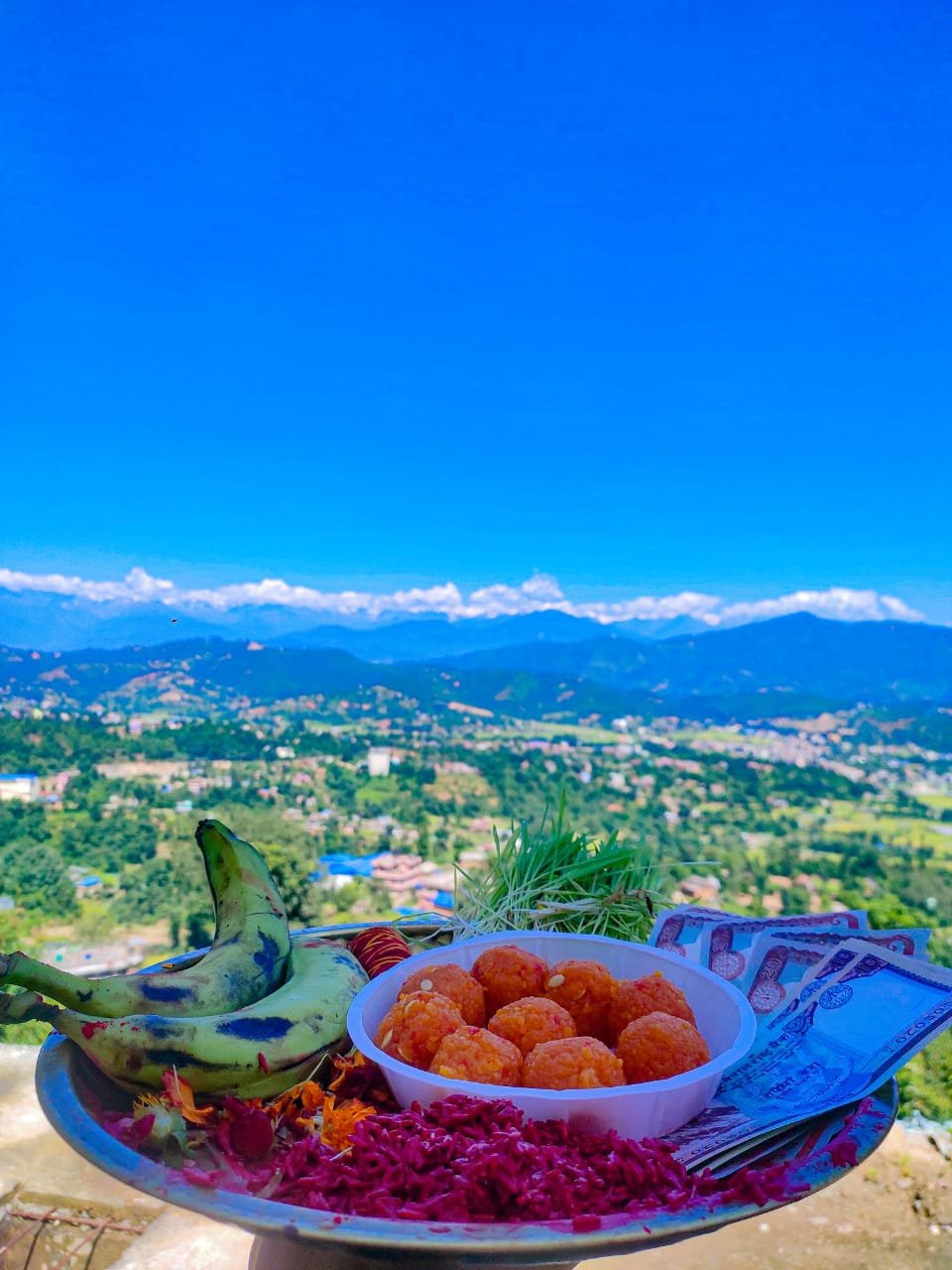
- Vijaya Dashami (Day 10): families gather for tika — a dab of rice, yogurt and vermillion on the forehead — and receive blessings and dakshina (gifts/cash). This is the emotional heart of the festival.
- Kojagrat Purnima (Day 15): the closing full moon.
Traveler note: Dashain is Nepal’s peak “homecoming” season. If you’re in the country, accept any tika invitation graciously — it’s a sign of welcome. If you’re trekking, expect teahouses in popular regions to run on skeleton staff in the festival’s second week.
Tihar — The Festival of Lights
Tihar (also called Yamapanchak by Newar communities of the Kathmandu Valley, and Dipawali in Madhesh Province) is a five-day Nepalese Hindu festival of lights and flowers. Each day honors a different animal or deity:
- Kaag Tihar: crows, messengers of death, are fed.
- Kukur Tihar: dogs — guardians and companions — are garlanded and marked with tika (a favorite with visitors and animal lovers).
- Gai Tihar & Laxmi Puja: cows are worshipped and the goddess of wealth, Laxmi, is welcomed with oil lamps and rangoli.
- Gobardhan Puja & Mha Puja: oxen honored; Newar families celebrate the self (Mha Puja) on New Year’s Day of Nepal Sambat.
- Bhai Tika: sisters and brothers exchange tika and gifts, sealing a bond of protection.
Tihar typically falls between October and November. The imagery — rows of flickering diyo lamps, doorways outlined in colored sand — makes it one of the most photogenic times to be in Nepal.
Teej — The Women’s Festival
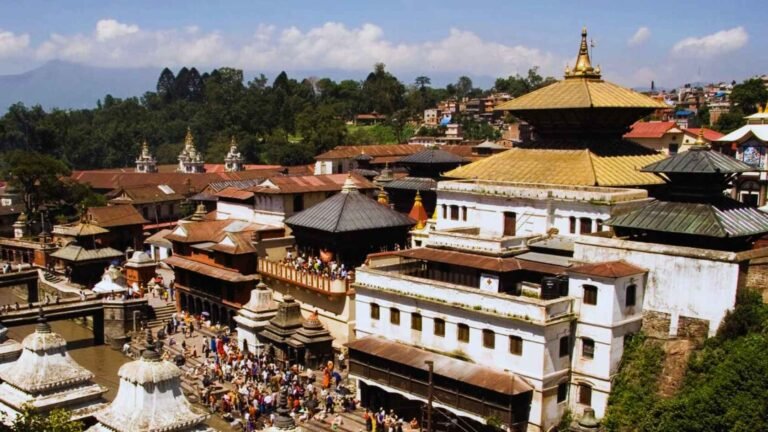
Teej is a collective term for three Hindu festivals dedicated to the goddess Parvati and her consort Shiva. It is mainly celebrated by married women and unmarried girls, who pray for the long life of their husband or future husband and welcome the arrival of the monsoon through singing, swinging, dancing, pūjā, and often fasting. The most visible expression is Haritalika Teej, when women in red saris flock to Pashupatinath Temple in Kathmandu for a day of devotion and night-long singing.
Travelers will see streets of red and hear devotional songs from dawn; it’s a powerful window into Nepali women’s community life, though as a primarily devotional event it’s best observed respectfully from the edges rather than the center of rituals.
Indra Jatra — Kathmandu’s Street Spectacle
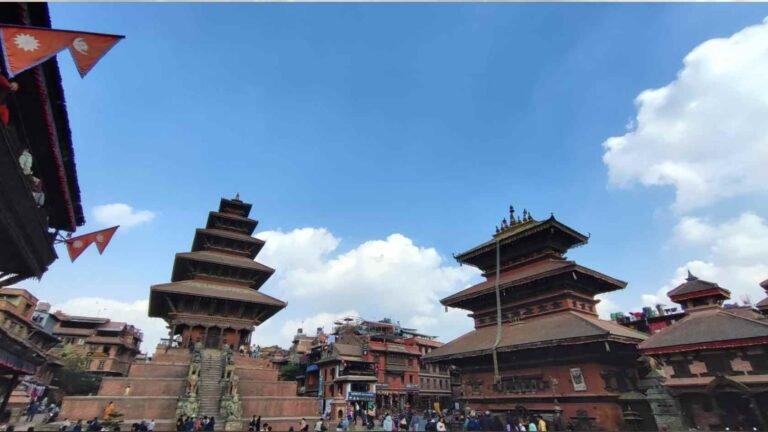
Indra Jatra (also called Yenyā Punhi) is described as the biggest religious street festival in Kathmandu. The celebrations combine two events: Indra Jatra, marked by masked dances of deities and demons and displays of sacred images honoring Indra, king of heaven; and Kumari Jatra, the chariot procession of the Kumari — the living goddess. The festival centers on Kathmandu’s Durbar Square and is a highlight of the Kathmandu Valley cultural calendar, usually held in early autumn (September).
Festival Comparison Table
| Festival | Typical Gregorian Window | Duration | Where Best Seen | Signature Sight |
|---|---|---|---|---|
| Dashain | Sep–Oct | 15 days | Nationwide; villages | Family tika gatherings |
| Tihar | Oct–Nov | 5 days | Kathmandu Valley | Lamps, Kukur Tihar (dogs) |
| Teej | Aug–Sep (monsoon) | 1–3 days | Pashupatinath, Kathmandu | Women in red, fasting & song |
| Indra Jatra | Sep | 8 days | Kathmandu Durbar Square | Kumari chariot procession |
How to Travel During Festival Season
Festival season (roughly August–November) overlaps with Nepal’s most popular trekking and touring weather. A few practical pointers:
- Book early. Domestic flights, tourist buses and hotels sell out as Nepalis travel home, especially around Dashain.
- Carry cash. Banks and ATMs can run dry or close for days during Dashain and Tihar.
- Plan trekking staffing. If you rely on guided treks, note that permits and crew availability can tighten — review Nepal’s 2026 trekking permit rules (TIMS, ACAP, MCAP) before you go.
- Dress and behave modestly at temples; ask before photographing rituals or people, particularly during Teej and animal sacrifices at Dashain.
- Check your visa. If you’ll be in the country for weeks across multiple festivals, confirm your stay limits via our Nepal tourist visa guide 2026.
Frequently Asked Questions
Are Nepal’s festival dates fixed on the Gregorian calendar?
No. Most Nepali festivals follow the lunar Bikram Sambat calendar, so their Gregorian dates shift each year. Dashain typically lands in September or October, Tihar in October–November, Teej in the monsoon (August–September), and Indra Jatra in September. Confirm the exact tithi for the current year before booking.
Is it safe for tourists to visit during Dashain?
Yes. Dashain is a family and homecoming festival, not a public-security risk. The main travel impacts are closed offices, busy transport, and thinner trekking-crew availability in the second week — not safety concerns.
Can tourists participate in festival rituals?
Visitors are often warmly welcomed to observe and, during Dashain, may be offered tika as a gesture of blessing. Active participation in core religious rites (e.g., Teej fasts, temple pūjā) is generally for devotees; observe respectfully and ask before taking photos.
Will trekking be open during festival season?
Yes. Trails stay open, but teahouse and guide staffing can dip when locals return to their villages for Dashain. Build buffer days into your itinerary and secure permits and crew in advance.
Key Takeaways
- Nepal’s four marquee festivals are Dashain (15 days, Sep–Oct), Tihar (5 days, Oct–Nov), Teej (monsoon, women-led), and Indra Jatra (Sep, Kathmandu).
- Dates follow the lunar calendar and move each year — verify before you book.
- Festival season is also peak travel season: book transport and lodging early and carry cash.
- Temples and rituals welcome respectful observers; ask before photographing.
Sources: Festival descriptions and calendar details drawn from Wikipedia entries on Dashain, Tihar, Teej, and Indra Jatra. Featured image: Ankit Jaiswal91, CC BY-SA 4.0, via Wikimedia Commons. Always cross-check current-year dates with the Nepal government calendar or the Nepal Tourism Board before travel.
Related guides
Share this content: