Nepal Helicopter Tours 2026: Everest, Annapurna & Muktinath by Air
Complete guide: Everest Base Camp Trek: Complete Guide
What can you see by helicopter in Nepal? A helicopter tour compresses a two-week trek into a few hours: sunrise over Everest from Kala Patthar, a landing at Annapurna Base Camp, or a same-day pilgrimage to Muktinath. For travelers short on time or unable to trek, heli tours are the fastest route to the Himalayas. This 2026 guide covers every major helicopter route across Nepal, what each costs in a shared seat versus a private charter, how a heli tour compares with a mountain flight, and how to book safely with a licensed operator.
Popular helicopter routes across Nepal
| Route | Duration | Highlight |
|---|---|---|
| Everest Base Camp heli | 4-5 hrs (Kathmandu return) | Kala Patthar landing ~5,545 m |
| Annapurna Base Camp heli | 2-3 hrs | Landing at 4,130 m |
| Muktinath heli (pilgrimage) | same-day | Temple at 3,800 m |
| Gosaikunda / Langtang heli | half-day | Sacred lake fly-over |
Everest Base Camp helicopter tour
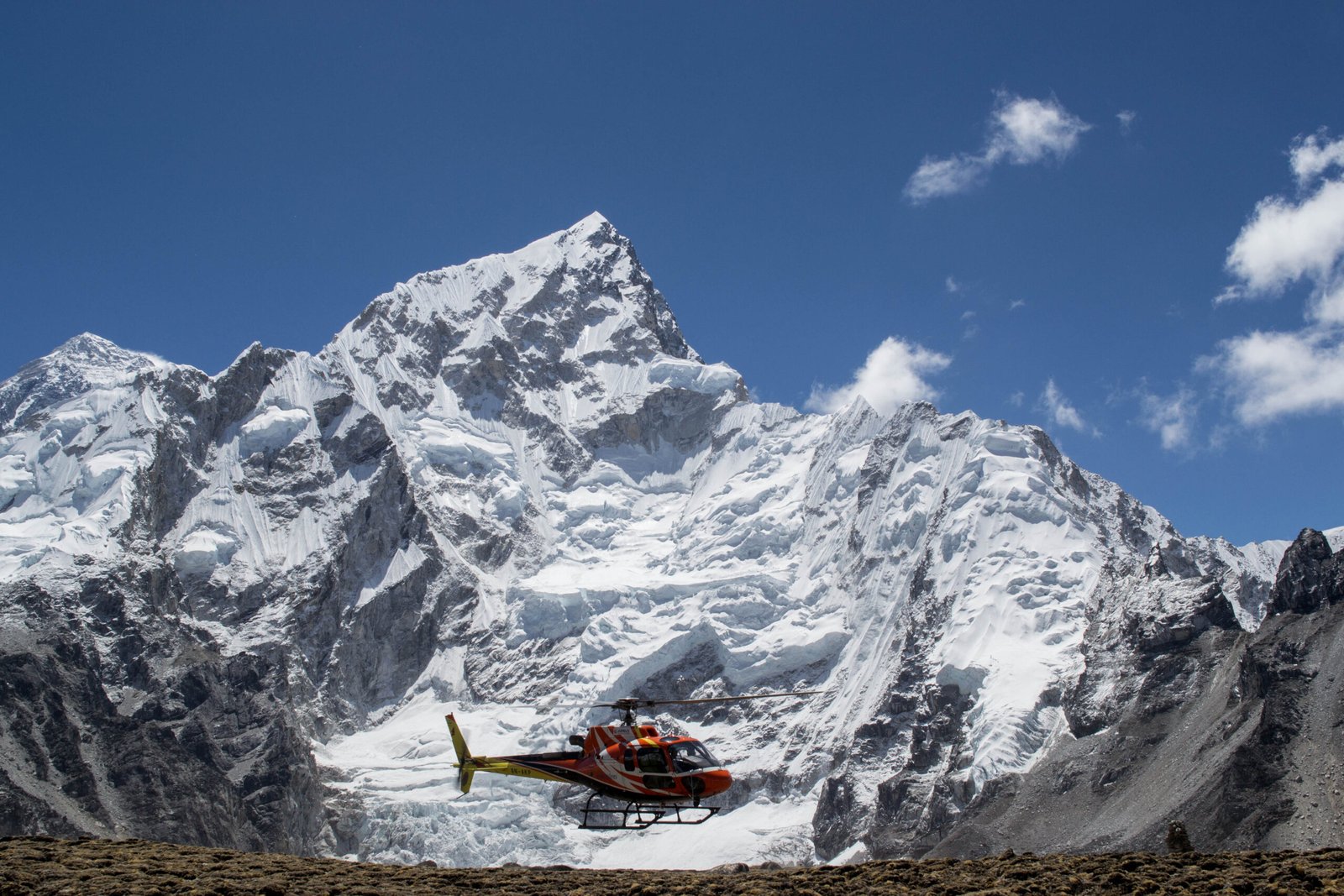
The flagship Nepali heli experience: a 4 to 5 hour round trip from Kathmandu that lifts off before dawn, crosses the terraced hills of the mid-hills, and enters the Khumbu valley within the hour. Most flights include a breakfast stop at Hotel Everest View in Syangboche (3,880 m), one of the highest placed hotels in the world, followed by a short landing at Kala Patthar (5,545 m) or Everest Base Camp itself, depending on ice and wind conditions. Expect panoramic sight of Ama Dablam, Lhotse, Nuptse, and the Everest massif. Our dedicated Everest Helicopter Tours 2026 guide covers operators, exact pricing, and itinerary variations in depth. For the trekking version of this adventure, our Everest Base Camp trek complete guide is the companion read.
Annapurna Base Camp helicopter
A 2 to 3 hour trip from Pokhara that flies the Modi Khola gorge into the Annapurna sanctuary, with a 15 to 30 minute landing at the base camp amphitheater (4,130 m) ringed by 7,000 m plus peaks. It pairs well with time in Pokhara and suits travelers who want high-altitude drama without committing to the six-day Annapurna Base Camp trek. Some operators offer a same-day package: fly up for sunrise views, land, and return to a lakeside breakfast by 10 AM.
Muktinath helicopter tour
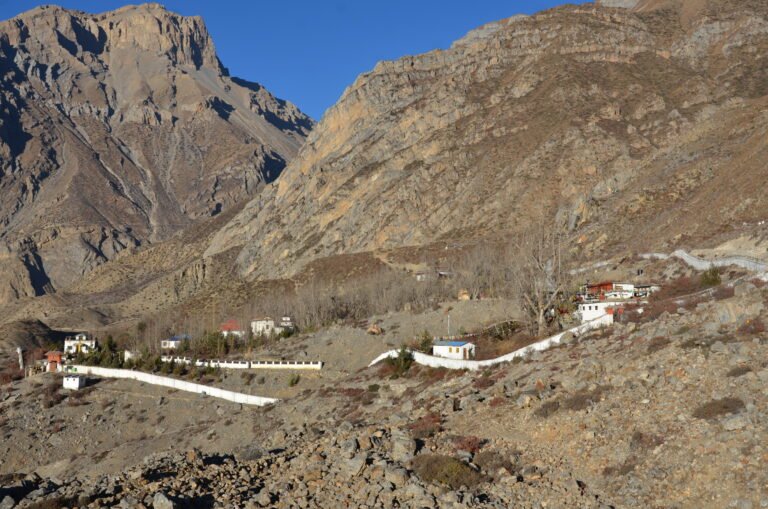
A same-day pilgrimage flight, usually from Pokhara, to the Muktinath temple complex at 3,710 m in Lower Mustang, sacred to both Hindus and Buddhists. The temple is one of the 108 Divya Desams of Vishnu, and pilgrims who cannot manage the long overland drive or the high-altitude hike to the site choose the heli route. This pairs naturally with our full Muktinath Pilgrimage Guide 2026, which covers the temple’s rituals, darshan timings, and road access. Operators typically give 30 to 60 minutes at the temple before flying back, sometimes with a Jomsom or Kalopani stop on the return.
Gosaikunda and Langtang helicopter tours
Half-day trips north of Kathmandu into the Langtang valley and the sacred alpine lakes of Gosaikunda (4,380 m). Flights track the Trishuli river gorge, cross hilltop villages, and land at Kyanjin Gompa (3,870 m) in Langtang for tea with a view of Langtang Lirung, or hover over the 108 lakes of the Gosaikunda basin, a major Janai Purnima pilgrimage site. These are the most affordable heli options from Kathmandu and work well as add-ons to a Langtang Valley trek or the Gosaikunda Lake trek.
Other routes worth knowing
Operators also run Upper Mustang sightseeing charters into the walled city of Lo Manthang, Rara Lake flyovers in far western Nepal, and rescue-and-shuttle charters for trekkers along the Manaslu and Everest trails. Custom itineraries combining two regions in one day are possible on a private charter basis, but weather windows over the high passes are short, so most operators keep combinations conservative.
2026 price ranges: shared seat vs private charter
| Tour | Shared seat (per person) | Private charter (whole helicopter) |
|---|---|---|
| Everest Base Camp heli (Kathmandu) | USD 1,000-1,500 | USD 4,500-6,000 |
| Annapurna Base Camp heli (Pokhara) | USD 400-600 | USD 2,000-2,800 |
| Langtang Valley heli (Kathmandu) | USD 500-700 | USD 2,200-3,000 |
| Muktinath heli (Pokhara) | USD 600-900 | USD 2,800-3,800 |
| Gosaikunda flyover (Kathmandu) | USD 450-650 | USD 2,000-2,600 |
Three factors move the price: the season (spring and autumn command premiums), fuel and helicopter availability, and whether your seat is in a full group of 5-6 passengers or a half-full charter. Group sharing reduces cost significantly because most operators fly Eurocopter AS350 B3 or Bell 407 helicopters that carry a maximum of 5 passengers plus pilot at high altitude. Confirm what is included: some quotes cover only the flight, while others bundle hotel breakfast at Everest View, national park permits, hotel pickup, and insurance. Prices in this table are 2026 market rates compiled from Kathmandu and Pokhara operators; treat them as planning bands, not fixed tariffs, and confirm in writing when booking.
Helicopter tour vs mountain flight: which to choose
Nepal’s airlines also offer the classic mountain flight, a one-hour fixed-wing scenic circuit from Kathmandu along the Everest range with no landing. Here is how the two compare:
- Cost: a mountain flight costs roughly USD 190-250 per person, a fraction of any heli tour.
- Landing: helicopters land at base camps, viewpoints, and temples; mountain flights stay at cruise altitude, typically 7,500 m and no lower.
- Duration and intimacy: mountain flights last about an hour with window views from a larger cabin; heli tours run 2 to 5 hours with a door-seat view and time on the ground.
- Pilgrimage access: only a helicopter can put you at Muktinath’s gates and back the same day.
- Weather flexibility: fixed-wing scenic flights have generous minimums and fly more days per season than landing-dependent heli flights.
The rule of thumb: if your goal is to see Everest’s face on a budget, take the mountain flight. If you want to stand at base camp, touch a temple, or drink tea at 3,880 m, take the helicopter.
Altitude and safety
Heli trips to 5,000 m+ use a short dwell time at altitude (often breakfast at a lower lodge like Syangboche/Everest View) to reduce AMS risk. You ascend rapidly from Kathmandu’s 1,400 m to 4,000 m plus in under an hour, so the exposure is real but brief: 15 to 30 minutes at the landing site, long enough for photos and a short walk, not long enough for altitude illness to develop in most people. Travelers with prior severe altitude sickness, heart conditions, or respiratory issues should get medical clearance first. Operators follow Civil Aviation Authority of Nepal rules on weight and weather windows: passenger weights are verified at check-in because high-altitude performance depends on total load, and flights are cancelled outright when winds or cloud exceed limits. For trek-level altitude planning, see our altitude sickness guide for Nepal trekkers.
Booking safely: operators, weather, and cancellations
- Book through a licensed operator or trekking agency registered with the Ministry of Tourism and holding a valid Civil Aviation Authority air operator certificate. Our partner Everest Base Camp helicopter tour is run under such licensing, and the official Nepal Tourism Board site maintains a register of licensed operators.
- Understand the cancellation policy before paying. Reputable operators offer a full or near-full refund when they cancel for weather. If they fly, you fly; if they cancel, you should not lose your money. Avoid operators that keep large cancellation fees for weather events outside your control.
- Build buffer days. Flights are weather-dependent; 1-2 spare mornings in Kathmandu or Pokhara dramatically raise your odds of flying. Morning flights (6-9 AM) have the best visibility and lowest wind, so book the first available slot.
- Group sharing reduces cost significantly; most operators fill helicopters with 5-6 passengers. Solo travelers can join existing groups instead of chartering.
- Check what is included: permits, hotel transfers, breakfast at Everest View, and insurance coverage vary between quotes at the same headline price.
- Carry your passport: checkpoints and national park offices along the routes require it, and your TIMS or park permit may be checked even on a fly-in landing.
Who should book a heli tour?
- Travelers with limited time (1-2 weeks) who want the Himalayan highlight without a multi-day commitment.
- Seniors or those who cannot trek multi-day distances but want the experience of high altitude.
- Pilgrims wanting Muktinath without the long road journey through Jomsom.
- Trekkers pairing a Langtang or Gosaikunda trek with a scenic flyover of the region.
For a guided trek alternative, see our Langtang & Gosaikunda trek or the Everest Base Camp helicopter tour.
Best time of year for a helicopter tour
October-November and March-May offer the clearest mountain views and the most reliable flying windows. In spring, mornings are calm before the afternoon haze builds; in autumn, post-monsoon air is at its crispest. Winter (December-February) offers stunningly clear mornings and lower prices, but cold temperatures restrict load capacity and some routes. The June-September monsoon grounds helicopters for days at a time; only book in this window if you can be flexible for the whole week. Whichever season you choose, align it with our best time to visit Nepal planning guide.
FAQ
Is it safe?
Commercial heli tours are regulated and weather-dependent; operators cancel for poor visibility. Choose a licensed company with a stated safety record and a clear cancellation-refund policy.
What does it cost?
Everest heli from Kathmandu runs roughly USD 1,000-1,500 per person sharing a charter; private charters cost USD 4,500-6,000. Annapurna and Langtang options start lower, around USD 400-700 per seat.
Best season?
Oct-Nov and Mar-May offer the clearest mountain views. Winter mornings are crisp but cold; monsoon weeks are unreliable.
Is altitude sickness a risk on helicopter tours?
Yes, you ascend rapidly from ~1,400 m to 4,000+ m in under an hour. The short ground time (15-30 min) reduces risk, but those with prior altitude issues should consult a doctor.
Can I book a private helicopter?
Yes, at roughly 5× the shared cost. Private charters offer flexibility on timing and landing spots and suit families and photography groups.
Do I need permits for a heli tour?
Landing inside Sagarmatha National Park or the Annapurna Conservation Area requires the park entry permit, usually arranged by the operator and included in the quoted price. Muktinath and Langtang flights have similar requirements.
Featured image: Helicopter near Everest, via Wikimedia Commons (CC).
Related guides
Share this content: