Everest Helicopter Tours 2026: Prices, Routes, Safety & Booking Tips
Read the complete guide: Everest Base Camp Trek: Complete Guide (2026): routes, seasons, flights and side trips in one place.
How much does an Everest helicopter tour cost in 2026? A shared-seat Everest flight costs USD 1,000-1,500 per person and includes a 15-30 minute landing at Kala Patthar (5,545 m) or beside Everest Base Camp (5,364 m). A private charter for the whole helicopter runs USD 4,000-6,000 total. Tours depart from Kathmandu or Lukla between September and May, last four to five hours door to door, and go early in the morning because the weather window closes by midday.
An Everest helicopter tour compresses the payoff of the 12-day Everest Base Camp trek into a single morning: the Khumbu Icefall, the wall of 7,000 m and 8,000 m peaks above base camp, and a landing at altitude that normally takes a week of walking to earn. This guide is the Everest-only deep dive. For helicopter flights across all of Nepal, including Annapurna, Langtang and Muktinath, start with the Nepal helicopter tours 2026 overview.
Everest helicopter tour options in 2026
Four products are sold under the Everest heli tour label, and they differ more than most buyers expect. The table is the short version; the notes explain what each one feels like on the ground.
| Tour | Landing point | Ground time | Best for |
|---|---|---|---|
| Kala Patthar Express | Kala Patthar, 5,545 m | 15-20 min | The classic Everest photo from the best vantage |
| Everest Base Camp landing | Pad near EBC, 5,364 m | 15-30 min | Touching base camp and seeing the icefall |
| Everest view flight | Air time only, no landing | None | Smaller budgets, avoiding altitude exposure |
| Landing plus breakfast | Kongde or Hotel Everest View, 3,880 m | 30-60 min | Families and relaxed ground time at lower altitude |
Kala Patthar Express. Operators prefer the shelf above Gorak Shep because it is a proven landing site and the morning light hits Everest’s southwest face at the best angle for photographs. The panorama takes in Pumori, Nuptse, Lhotse and the peaks on the Tibetan border. Ground time stays short because of the altitude.
Everest Base Camp landing. In the spring climbing season base camp is a tent city on the Khumbu Glacier, and tours land at a designated pad a short distance from the camps, with the frozen sags of the icefall directly overhead. This is the version for travelers who want to say they stood at base camp itself.
Everest view flight. An air-only circuit of the range with no landing. It costs a fraction of a landing tour, suits travelers who want the panorama without standing above 5,000 m, and is the easiest option for anyone worried about altitude.
Landing plus breakfast at Kongde or Hotel Everest View. Most 2026 packages pair the Kala Patthar stop with breakfast at Hotel Everest View in Syangboche, 3,880 m, or at the lodge on the Kongde ridge above it. The dining room frames Everest, Lhotse and Ama Dablam through panoramic windows, and an hour at 3,880 m is far gentler on the body than 20 minutes at 5,545 m. For many families this is the best value of the four options.
What you see, minute by minute
A same-day tour from Kathmandu runs on a tight clock:
- 06:00: wheels up from the domestic terminal in Kathmandu.
- 06:00-06:45: northeast over the Langtang and Jugal ranges, with Dorje Lakpa and Ganesh Himal sliding past on the left.
- 06:45: brief refuel stop at Lukla, 2,840 m, on most shared itineraries.
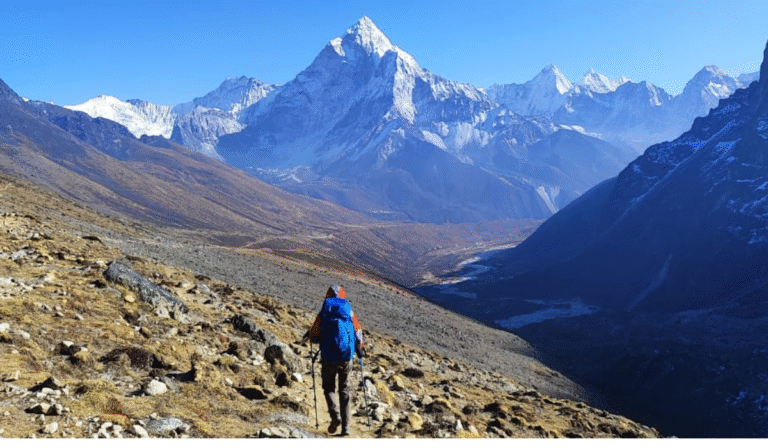
- 07:15: into the Khumbu: Namche Bazaar in its hanging bowl, Thamserku and Kangtega ahead, Ama Dablam on the right.
- 07:30: landing at Kala Patthar or the EBC pad for the ground stop.
- 08:00: short hop down to Syangboche for breakfast at Hotel Everest View, 40-60 minutes on the ground.
- 09:30-10:30: return track over the Jiri hills and back into the Kathmandu valley.
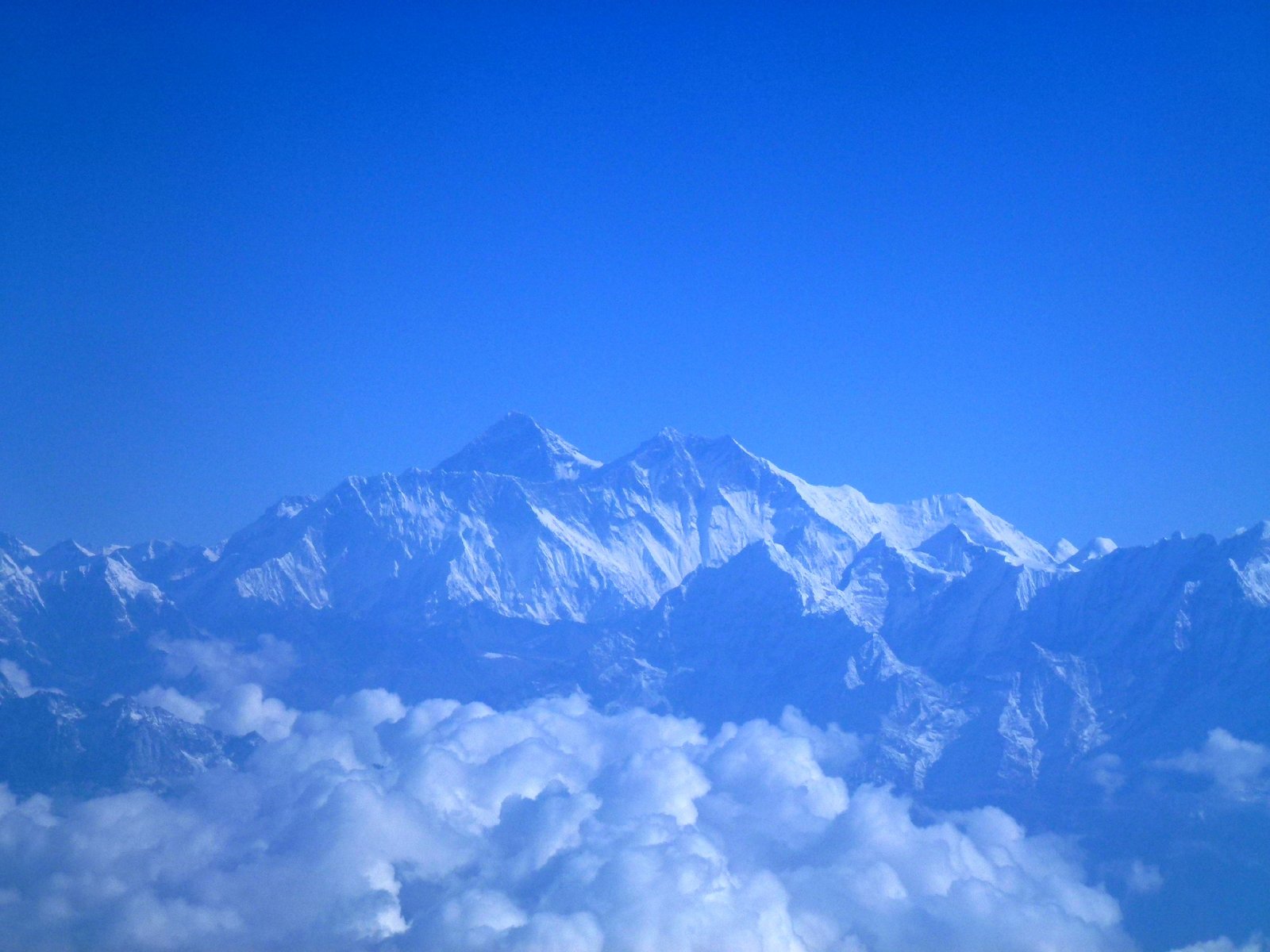
At the high landing the panorama runs from Everest’s southwest face and the Khumbu Icefall across Pumori, Nuptse, Lhotse and Changtse, and in spring you can trace part of the climbing route up the icefall. Pilots keep the engines running at high landings, so passengers stay within a few meters of the aircraft, and the clock, not the camera, ends the stop.
Same-day return or overnight at Syangboche?
The same-day tour is the default: everything above happens between breakfast and lunch, and you are back in Kathmandu with the afternoon free. It is the right choice for almost everyone because it minimizes time spent at altitude.
The overnight version adds a night at Hotel Everest View or a Syangboche lodge. Day 1: fly in, land at Kala Patthar, then breakfast and check-in at 3,880 m, with the afternoon free on the Kongde ridge or the hotel deck. Day 2: sunrise lights Everest from your window, breakfast follows, and you are back in Kathmandu by 10:00. The package costs more than the same-day charter because it adds the hotel night and a second flight window.
One caution: sleeping at 3,880 m after starting the day at 1,400 m in Kathmandu is a rapid altitude gain. The hotel keeps supplemental oxygen on hand. Move slowly, drink water, skip alcohol, and choose the same-day version if you have been altitude sick before.
2026 pricing: shared seat vs private charter
| Package | 2026 price | Notes |
|---|---|---|
| Shared seat, join a group | USD 1,000-1,500 per person | Kala Patthar landing plus Hotel Everest View breakfast; five to six passengers |
| Budget shared seat | Fixed around USD 1,200 per person | Same routing, larger groups, fixed-window departures |
| Private charter | USD 4,000-6,000 total | Whole aircraft, flexible timing, up to five or six seats by total weight |
Charter math: a USD 5,000 charter split five ways is USD 1,000 per head, which matches shared pricing while giving your group full control of the schedule and longer photography stops. Sagarmatha National Park entry, around USD 30, and the TIMS card, around USD 20, are usually excluded from bare flight quotes but folded into package prices, so confirm which version you are paying for before you send a deposit.
The licensed operators quoted between are consistent: Air Dynasty Heli Service (the most reliable fleet, daily fixed-window departures from the Kathmandu domestic terminal), Buddha Air Helicopter (smooth operations and the primary carrier for Manthali-Everest packages), Summit Helicopters (private charters with longer on-ground time for photographers) and Nepal Helicopter Service (budget shared seats at fixed USD 1,200 rates). Before paying, verify the operator is registered with the Ministry of Tourism and holds a current IATA billing code.
Weight limits and how they shape the tour
At Kala Patthar’s altitude an AS350 helicopter lifts only a fraction of its sea-level payload, in practice three or four passengers plus the pilot on the high landing hop. That single fact explains most of the pricing structure: shared tours split across two aircraft or sequence the landing, and charters price by total weight, not by seat count.
Every passenger and bag is weighed at check-in. The published luggage cap for day tours is around 30 kg per group, but you only need a daypack, a warm layer, sunglasses and a camera. Overweight groups buy an extra seat or a second shuttle. If you are chartering, consider leaving a seat empty for camera gear and comfort.
Altitude, oxygen and safety on landing tours
Ground time above 5,300 m is capped at 15-20 minutes for a reason: acute mountain sickness can begin within minutes of landing at that height. Crews keep bottled oxygen on board, Hotel Everest View stocks canisters for guests, and the standard restrictions are a minimum age of 10 and medical clearance for altitude-sensitive passengers. Tell the crew before boarding about heart or lung conditions, recent surgery or pregnancy.
If a headache, nausea or dizziness starts at the landing, sit down, breathe steadily and get back in the aircraft; symptoms usually resolve quickly on descent. For a full briefing on symptoms, prevention and when to descend, read our altitude sickness guide for Nepal trekkers, and see the Nepal Tourism Board’s official safety in the mountains guidance.
The hardware is proven: most operators fly the Eurocopter AS350 B3, a high-altitude-certified airframe, flown by pilots current on Khumbu routes. Statistically, the drive to the airport carries more risk than the flight itself.
Weather, cancellations and refunds
Departures are scheduled at dawn because cloud builds over the Khumbu after mid-morning. Flights are scrubbed when sky cover over the Lukla corridor runs past roughly half, or when winds aloft pick up. The standard terms across licensed operators are a full refund or a free reschedule to the next clear morning for any weather cancellation; get that in writing before paying, and keep a buffer morning in Kathmandu in case you are rolled over a day.
Season by season: autumn, October to December, is clearest and warmest with peak prices about 20% higher; spring, March to May, is nearly as clear and the second busiest window; winter, December to February, is flyable but cold, with snow possible at the high landing sites; the monsoon, June to September, is rarely flown at all. Our best time to visit Nepal guide has the month-by-month detail.
Who should book a heli instead of the 12-day trek?
The helicopter is the right tool for four kinds of traveler. Time-poor visitors on a short Nepal stopover get the marquee views in one morning instead of 12-14 days. Travelers with limited mobility reach the high Khumbu with no walking at all. Families with children over 10 get an altitude-appropriate version of Everest via the breakfast itinerary at 3,880 m. And weather-stranded trekkers use charters from Lukla or Manthali when fog closes the runway; our Lukla flights 2026 guide covers that Kathmandu vs Manthali decision.
The honest trade-off: a tour shows you the Khumbu; the trek lets you live in it. If you have two weeks and the fitness, the Everest Base Camp trek is the deeper experience, and many travelers combine the two by trekking in and flying out.
Booking checklist
- Book at least 48 hours ahead in peak season; morning slots sell out first.
- Confirm the operator’s registration with the Ministry of Tourism and its IATA billing code.
- Get the per-passenger weight allowance in writing before paying.
- Confirm exactly where you land: Kala Patthar, the EBC pad or a view flight.
- Confirm the refund and reschedule terms for weather cancellations.
- Check whether park entry and TIMS are included or billed separately.
- Arrange 05:30 hotel pickup for a 06:00-07:00 departure.
- Carry travel insurance that covers high-altitude helicopter activity.
FAQ
How safe is an Everest helicopter tour?
With a licensed operator flying an AS350 B3 with altitude-certified engines and a pilot current on Khumbu routes, the flight is considered safe. The real physiological risk is the landing stop above 5,300 m, which is why ground time is capped and oxygen is carried on board.
Kala Patthar or Everest Base Camp, which landing is better?
Kala Patthar. It is a proven landing site with better light on Everest for photographs, and it sits higher than base camp so the panorama is wider. Base Camp is the choice only if standing at the camp itself matters more to you than the view.
Do I need travel insurance for the tour?
Yes. Operators require a signed liability waiver, and helicopter rescue cover is either added at checkout or comes from your own policy. Confirm the policy explicitly covers high-altitude helicopter flights, not just trekking.
Can the helicopter land at Everest Base Camp itself?
Tours land at a designated pad a short distance from the expedition camps, not among the tents. In spring the camps are visible from the landing and the icefall fills the skyline above.
Related guides
Share this content: