Everest Climbers Association Elects New Leadership: Divas Pokharel Named President in Silver Jubilee Year
Related guide: Everest Base Camp Trek Complete Guide
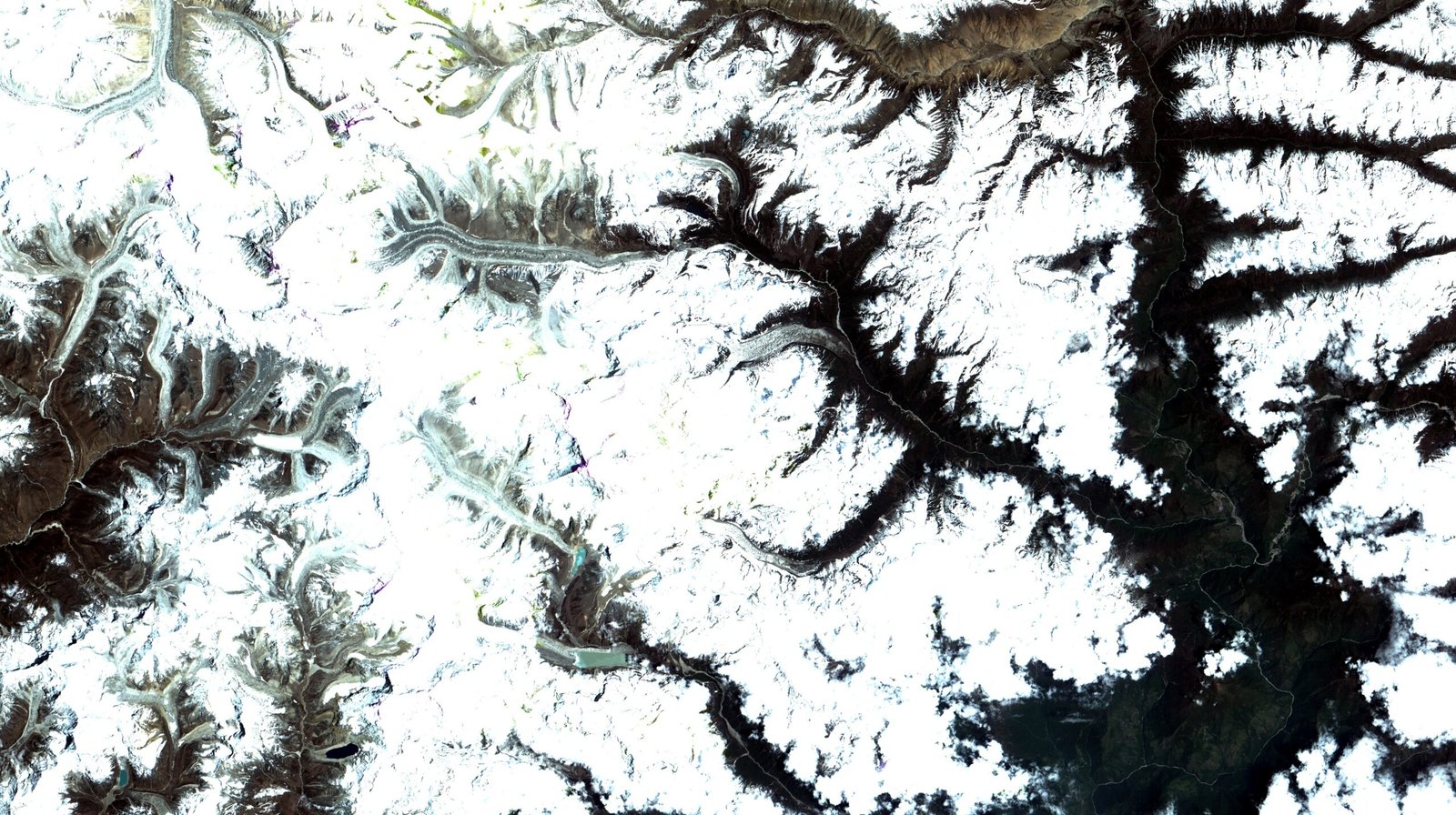
Featured image: Mount Everest seen from space. Credit: Coordenação-Geral de Observação da Terra/INPE, CC BY-SA 2.0, via Wikimedia Commons.

The Sagarmatha Aarohi Sangh (Mount Everest Climbing Association) has elected a new leadership committee, with Divas Pokharel chosen unopposed as president in elections held on Tuesday, 25 August 2026 (9 Bhadra 2083) in Kathmandu. The organization, which celebrates its silver jubilee this year, elected a full executive committee that includes prominent Sherpa mountaineers in key positions — a sign of the community’s deepening role in Nepal’s climbing governance.
Table of Contents
- New Executive Committee Members
- What Is the Sagarmatha Aarohi Sangh?
- Silver Jubilee: 25 Years of Promoting Mountaineering
- Sherpa Representation in Climbing Governance
- Nepal’s Mountaineering Landscape in 2026
- The Tourism Bill and Mountaineering Reform
- What This Means for Trekkers and Climbers
- Nepal’s Mountaineering Organizations: A Quick Guide
- Frequently Asked Questions
- Key Takeaways
New Executive Committee Members
The newly elected committee reflects a blend of experienced mountaineers and administrative professionals. The full roster, announced after Tuesday’s election, is as follows:
| Position | Name |
|---|---|
| President | Divas Pokharel |
| First Vice-President | Diki Sherpa |
| Second Vice-President | Madan Kumar Chudal |
| General Secretary | Shiva Kumar Sapkota |
| Secretary | Chhoki Sherpa |
| Treasurer | Wangda Sherpa |
| Member | Lakpa Yangji Sherpa |
| Member | Pasang Lhamu Sherpa |
Notably, four of the eight committee members are from the Sherpa community — including the first vice-president, secretary, treasurer, and both general members — underscoring the central role Sherpa climbers play in Nepal’s mountaineering institutions. The election was unopposed, meaning all candidates were elected by consensus rather than contested vote.
What Is the Sagarmatha Aarohi Sangh?
The Sagarmatha Aarohi Sangh — literally translating to “Mount Everest Climbers Association” — is a Nepali mountaineering organization dedicated to promoting climbing activities on Mount Everest and other Himalayan peaks in Nepal. The organization serves as a platform for climbers who have summited Sagarmatha (the Nepali name for Mount Everest) and works to advocate for their interests, promote mountaineering safety, and celebrate Nepal’s climbing heritage.
The organization is distinct from the Nepal Mountaineering Association (NMA), which was founded in 1973 as the national mountaineering body. The NMA has historically been responsible for administering climbing permits for Nepal’s “trekking peaks” — 27 mountains between 5,800 and 6,600 metres — until the government transferred that authority to the Ministry of Culture, Tourism and Civil Aviation (MoTCA) in October 2015. The Sagarmatha Aarohi Sangh, by contrast, functions as an association of Everest summiteers rather than a regulatory body.
The election of its new committee was reported by Online Khabar on 25 August 2026. As of this date, the organization is celebrating its silver jubilee — marking 25 years since its founding.
Silver Jubilee: 25 Years of Promoting Mountaineering
The timing of this election coincides with the organization’s silver jubilee, a milestone that places its founding around 2001. Over the past quarter-century, Nepali mountaineering has undergone profound transformation:
- 2001–2010: Nepal’s climbing scene expanded rapidly, with increasing numbers of Sherpa guides supporting international expeditions on Everest and other 8,000-metre peaks.
- 2010–2020: The rise of commercial mountaineering on Everest brought both economic opportunity and safety concerns, culminating in the 2019 “traffic jam” season that saw 11 deaths and widespread media attention.
- 2020–2026: The COVID-19 pandemic paused climbing for two seasons (2020 spring), followed by a record-breaking rebound. Nepal now issues hundreds of Everest permits each spring season, with the 2024 season seeing over 800 summit attempts.
Through all these changes, organizations like the Sagarmatha Aarohi Sangh have served as a voice for Nepali climbers — particularly Sherpa guides who form the backbone of Everest expeditions but whose contributions have historically been underrecognized in international mountaineering media.
Sherpa Representation in Climbing Governance
The strong Sherpa representation in the newly elected committee is significant. The Sherpa people, a Tibetan ethnic group native to eastern Nepal’s Solukhumbu district — where Mount Everest is located — have been central to Himalayan mountaineering since the first Western expeditions of the early 20th century. Tenzing Norgay, the Sherpa mountaineer who became one of the first two people to reach Everest’s summit in 1953 alongside Edmund Hillary, remains the most iconic figure in this tradition.
Today, Sherpa guides and climbers work on every major Himalayan expedition, serving as route-finders, high-altitude porters, and climbing partners. Organizations like the Sagarmatha Aarohi Sangh provide a formal platform for these climbers to advocate for better working conditions, insurance coverage, and recognition — issues that gained urgency after the 2014 Everest ice avalanche that killed 16 Sherpa guides.
The election of Diki Sherpa as first vice-president and Chhoki Sherpa as secretary also represents progress in gender representation within Nepal’s mountaineering governance — a domain historically dominated by men. Women like Lakpa Sherpa, who has climbed Everest more times than any other woman, have demonstrated that Nepali women belong at the highest levels of the sport.
Nepal’s Mountaineering Landscape in 2026
The leadership change at the Sagarmatha Aarohi Sangh comes at a pivotal moment for Nepali mountaineering. Several intersecting developments make this election particularly relevant:
Record permit numbers and safety concerns
Nepal has faced international scrutiny over its approach to Everest climbing permits. The government has been criticized for issuing more permits than guides consider safe, leading to overcrowding on the standard southeast ridge route. In the 2024 spring season, Nepal issued over 460 Everest permits — a record number that raised fresh concerns about safety and environmental impact on the world’s highest peak.
The brain drain of mountain guides
In August 2026, Nepali media reported that skilled mountain guides are increasingly leaving the country for better-paying opportunities abroad, raising concerns about a “brain drain” in the mountaineering sector. The loss of experienced guides poses direct safety risks for the hundreds of international climbers who depend on Sherpa expertise each season. Organizations like the Sagarmatha Aarohi Sangh can play a role in advocating for policies that retain climbing talent.
Mount Everest’s height and identity
Mount Everest, known locally as Sagarmatha in Nepali and Qomolangma in Tibetan, stands at 8,848.86 metres (29,031 feet) — a height jointly measured and confirmed by Nepalese and Chinese authorities in 2020. The mountain lies in the Mahalangur Himal sub-range of the Himalayas and marks part of the China–Nepal border at its summit. Sagarmatha National Park, established in 1976, encompasses an area of 1,148 square kilometres in the Solukhumbu District and includes Mount Everest within its boundaries. The park was designated a UNESCO World Heritage Site in 1979.
The Tourism Bill and Mountaineering Reform
The election also comes as Nepal’s parliament debates the Tourism Bill 2081, which includes 263 proposed amendments targeting mountaineering regulations, casino oversight, and digital tourism frameworks. The bill represents the most comprehensive reform of Nepal’s tourism sector in decades, and mountaineering organizations are closely watching how it will affect climbing permit systems, guide certification requirements, and revenue sharing with local communities.
The Sagarmatha Aarohi Sangh, as an organization of Everest summiteers, is well-positioned to provide input on these reforms. Key issues likely to concern the new committee include:
- Permit fee structures: Whether climbing permit revenues are adequately shared with local Sherpa communities who bear the greatest risks.
- Guide certification and training: Ensuring that Nepali guides receive internationally recognized certification rather than being treated as support staff.
- Insurance and compensation: The families of Sherpa guides killed or injured on Everest have long received inadequate compensation compared to the economic value their work generates.
- Environmental protections: Managing the growing problem of waste and abandoned equipment on Everest, an issue that has led to the mountain being called the “world’s highest garbage dump.”
What This Means for Trekkers and Climbers
For international trekkers and climbers planning expeditions to the Everest region, the leadership transition at the Sagarmatha Aarohi Sangh is a behind-the-scenes development that nonetheless shapes the broader mountaineering ecosystem in Nepal:
- Advocacy for safety standards: Organizations led by experienced climbers tend to push for higher safety standards, which directly benefit foreign climbers who rely on Nepali guides and infrastructure.
- Cultural engagement: Trekkers visiting the Khumbu region can learn about the organizations that represent the climbing community, deepening their understanding of the people who make Himalayan expeditions possible.
- Permit and regulation changes: As the Tourism Bill moves through parliament, mountaineering associations will influence the final regulations — changes that could affect permit costs, guide requirements, and expedition logistics for future seasons.
- Community benefits: Stronger local organizations mean more revenue and recognition flowing to Sherpa communities, which in turn sustains the trekking and climbing economy that visitors depend on.
For those planning a trek to Everest Base Camp — the most popular route in the region — these governance developments may seem distant, but they shape the regulatory environment that determines everything from permit fees to guide requirements to trail maintenance. Our Everest Base Camp Trek Complete Guide covers the practical logistics of planning a trek, while the safety considerations these organizations advocate for are detailed in our Nepal Trekking Safety and Health Guide.
Nepal’s Mountaineering Organizations: A Quick Guide
Nepal has several mountaineering and climbing organizations. Here’s a quick overview for context:
| Organization | Role | Founded |
|---|---|---|
| Nepal Mountaineering Association (NMA) | National mountaineering body; former trekking-peak permit issuer | 1973 |
| Sagarmatha Aarohi Sangh | Everest summiteers’ association | ~2001 |
| Nepal Mountain Academy | Government academic institution for mountaineering education | 2018 |
| Ministry of Culture, Tourism and Civil Aviation (MoTCA) | Government ministry; issues climbing permits (since 2015) | — |
The NMA was a member of the UIAA (International Climbing and Mountaineering Federation) since 1975 and was the primary climbing permit authority until 2015, when the government ended its monopoly over trekking peak permits. The Sagarmatha Aarohi Sangh plays a different role — as an association of Everest summiteers rather than a regulatory or permit-issuing body.
Frequently Asked Questions
What is the Sagarmatha Aarohi Sangh?
The Sagarmatha Aarohi Sangh (Mount Everest Climbing Association) is a Nepali mountaineering organization that brings together climbers who have summited Mount Everest. It advocates for the interests of Nepali climbers, promotes mountaineering safety, and celebrates Nepal’s climbing heritage. The organization was founded around 2001 and celebrated its silver jubilee in 2026.
Who is the new president of the Sagarmatha Aarohi Sangh?
Divas Pokharel was elected unopposed as president of the Sagarmatha Aarohi Sangh on 25 August 2026 (9 Bhadra 2083). The election was held in Kathmandu, and the full executive committee was elected by consensus.
How is the Sagarmatha Aarohi Sangh different from the Nepal Mountaineering Association?
The Nepal Mountaineering Association (NMA), founded in 1973, is Nepal’s national mountaineering body and was historically responsible for issuing climbing permits for trekking peaks. The Sagarmatha Aarohi Sangh is an association of Everest summiteers that focuses on advocacy and community rather than permit regulation. The NMA is a member of the UIAA (International Climbing and Mountaineering Federation).
Why does this election matter for trekkers?
While the Sagarmatha Aarohi Sangh is a domestic mountaineering organization, its advocacy influences the safety standards, guide certification, and regulatory environment that international trekkers and climbers depend on when visiting the Everest region. Strong Sherpa representation in its leadership also signals growing community empowerment in the economic life of the Khumbu.
How tall is Mount Everest?
Mount Everest stands at 8,848.86 metres (29,031 feet) above sea level, as jointly measured by Nepalese and Chinese authorities in 2020. It is the highest mountain on Earth and is located in the Mahalangur Himal sub-range of the Himalayas, on the border between Nepal and the Tibet Autonomous Region of China.
Key Takeaways
- Divas Pokharel has been elected unopposed as president of the Sagarmatha Aarohi Sangh (Mount Everest Climbing Association) in elections held on 25 August 2026.
- The organization celebrates its silver jubilee (25 years) this year, placing its founding around 2001.
- Four of eight committee members are from the Sherpa community, including the first vice-president (Diki Sherpa), secretary (Chhoki Sherpa), treasurer (Wangda Sherpa), and both members.
- The election comes at a pivotal moment as Nepal debates the Tourism Bill 2081 with 263 amendments affecting mountaineering regulations.
- The organization is distinct from the Nepal Mountaineering Association (NMA), which was the national climbing permit authority until 2015.
- Strong Sherpa representation signals growing community empowerment in Nepal’s mountaineering governance.
Source: Online Khabar, 25 August 2026 (Nepali language). Cross-referenced with Wikipedia entries on the Nepal Mountaineering Association, Mount Everest, Sagarmatha National Park, and Sherpa people for background facts. The election results were confirmed as reported; background facts (NMA founding date, Everest height, national park area) are from Wikipedia and have been cross-checked.
Related reading:
- Nepal Warned: Skilled Mountain Guides Leaving Country
- Nepal Tourism Bill 2081: 263 Amendments Target Mountaineering Rules
- Nirmal Purja Confirmed Dead in Broad Peak Avalanche
- Everest Base Camp Trek Complete Guide
Share this content: