Nepal Moves to Decriminalise Cannabis: What Gandaki Province’s New Law Means for Travelers
A historic legal shift in Gandaki Province has revived a national debate on cannabis policy — and tourists are already feeling the change at Thamel’s hemp shops.
Nepal took a significant step toward ending decades of cannabis prohibition in August 2026, when Gandaki Province Chief Dilliraj Bhatt pushed through a landmark law allowing regulated cultivation of cannabis for medicinal and industrial purposes. The legislation, the first of its kind in Nepal, has reignited a national conversation about a plant deeply woven into the country’s history, culture, and tourism economy — and travelers are already noticing the effects.
Table of Contents
- What the New Gandaki Province Law Says
- From Hippie Trail to Prohibition: Nepal’s Cannabis History
- Thamel’s Hemp Boom: What Tourists Are Buying Now
- What Travelers Need to Know About Cannabis in Nepal
- Economic Potential for Mountain Farmers
- Regulatory Challenges and Federal Tensions
- How Nepal Compares Globally
- Frequently Asked Questions
- Key Takeaways
What the New Gandaki Province Law Says
The Gandaki Province legislation, enacted in August 2026, creates Nepal’s first legal framework for regulated cannabis cultivation. The law permits cultivation strictly for medicinal and industrial purposes — not for recreational use. Key provisions include:
- Three-step licensing process: Farmers and businesses must obtain approval through a structured, multi-stage application process before they can legally grow cannabis.
- THC threshold: Cannabis grown for industrial use must contain less than 0.3% tetrahydrocannabinol (THC), the plant’s primary psychoactive compound. This standard aligns with international industrial hemp frameworks used in the United States, China, and the European Union.
- Approved cultivation zones: Cannabis may only be grown in specifically designated areas, not freely across the province.
- Monitoring conditions: The law sets rules for production, storage, processing, and sale, with oversight mechanisms to prevent diversion to the illicit market.
- Minimum land requirement: Applicants must hold at least two ropani (approximately 1,018 square meters) of land to qualify for a cultivation license — a provision that has drawn criticism for potentially excluding smallholder farmers.
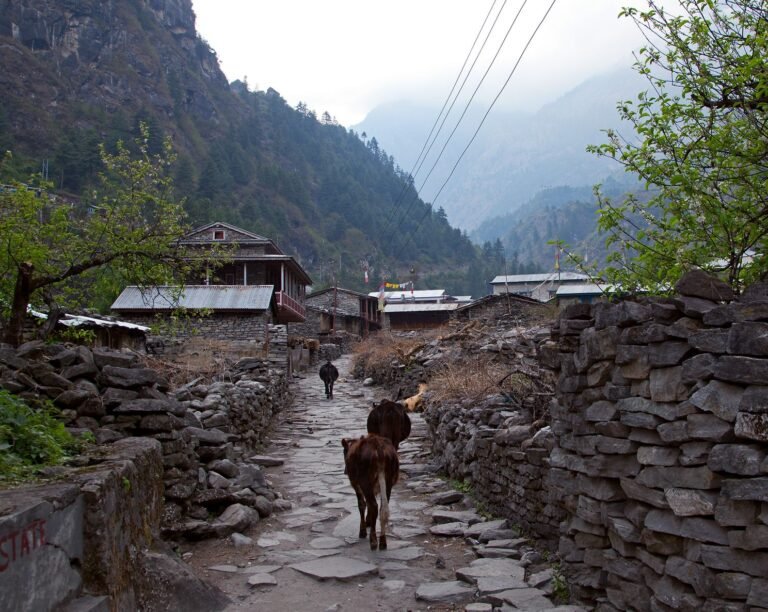
Gandaki Province, whose capital is Pokhara, spans 21,733 square kilometers across central Nepal. It encompasses the Annapurna trekking region, Mustang, and some of Nepal’s most visited tourist destinations. The province was formally named Gandaki in April 2023, replacing its provisional designation as Province No. 4.
According to Nepali Times (August 22, 2026), the law is intended to “support pharmaceutical production, provide raw material for manufacturing, supplement income of farmers, while notably still outlawing recreational use of cannabis.”
From Hippie Trail to Prohibition: Nepal’s Cannabis History
Nepal’s relationship with cannabis long predates the current legal debate. For centuries, cannabis grew wild across the country and was used in Ayurvedic medicine, as a source of fiber, and as a sacred offering to Lord Shiva. As early as the 1700s, Nepalese charas was recognized as among the finest available, and the plant was a common sight across the Himalayan foothills.
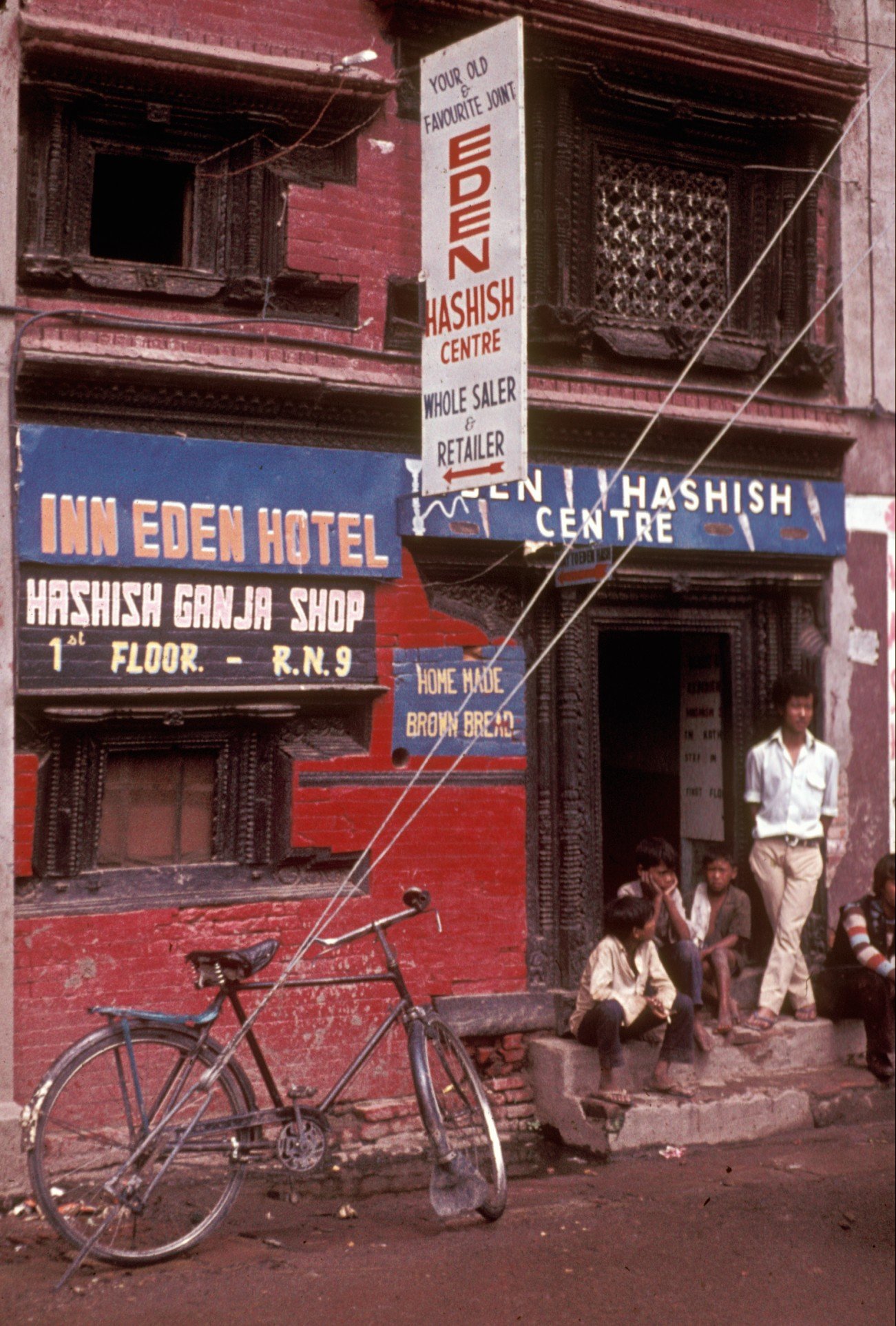
The 1960s brought an influx of Western travelers along the legendary Hippie Trail — an overland route from Istanbul through Iran, Afghanistan, and India to Kathmandu. Travelers ended their journey in Jhochhen Tole, a narrow lane in Kathmandu’s old city that became known worldwide as “Freak Street.” There, government-licensed shops sold marijuana openly. The street, still standing today in front of Basantapur Durbar, remains one of Kathmandu’s most visited cultural landmarks, featured in our Kathmandu Valley Heritage Guide.

The heavy demand from international visitors increased hashish production and established smuggling routes through India. But the era ended abruptly. In 1973, under sustained pressure from the United States and the United Nations as part of the global War on Drugs, Nepal revoked all cannabis shop, dealer, and farmer licenses. The government lost an estimated $100,000 in annual revenue. By 1976, Nepal passed the Narcotic Drugs (Control) Act, which criminalized the cultivation, production, sale, and consumption of cannabis, with limited exceptions for religious purposes.
For nearly half a century since, cannabis has been officially illegal — though, as locals and returning travelers know, it has continued to grow wild across Nepal’s hills and remains an open secret in many rural areas.
Thamel’s Hemp Boom: What Tourists Are Buying Now
While the legal status of cannabis remains in flux, one part of the cannabis economy is already thriving openly in Kathmandu: hemp products. Thamel, Kathmandu’s main tourist district, has seen a surge in shops selling hemp-based bags, clothing, and accessories — and tourists are buying.
According to Nepali Times (August 23, 2026), “cute backpacks, laptop bags, sustainable, cruelty-free shirts and dresses are flying off the shelves this summer.” Several Nepali companies are leading the charge:
- Boho Nepal: Founded by Reyan Ghimire and Rafi Hussain, this Kathmandu-based brand sells hemp bags and accessories designed for daily use rather than tourist souvenirs. Their hemp socks, which resist odor buildup during long wear, have become a customer favorite — particularly among trekkers.
- Hemp House Nepal: A longer-established company that sources raw hemp from farmers in Bajura, Bajhang, and Rolpa, then manufactures bags, shirts, socks, and trousers at its Kathmandu facilities. The company also blends hemp with traditional dhaka and cotton fabrics for export to the United States and Europe.
Hemp fabric is naturally antibacterial, dries quickly, and becomes softer with use — qualities that make it especially appealing to travelers on multi-day treks. For trekkers heading to the Annapurna or Everest regions, hemp clothing and socks are becoming practical gear choices, not just souvenir purchases. Our Nepal Trekking Packing List covers what to bring for high-altitude trails.
What Travelers Need to Know About Cannabis in Nepal
Despite the new Gandaki Province law, cannabis remains illegal at the federal level in Nepal. The Narcotic Drugs (Control) Act of 1976 still applies nationwide, and the provincial law’s relationship with federal restrictions has not been fully resolved. Here is what travelers need to understand:
| Aspect | Current Status (as of August 2026) |
|---|---|
| Recreational cannabis use | Illegal. The Gandaki law explicitly does not legalize recreational use. Possession and consumption can lead to arrest and prosecution. |
| Cannabis cultivation (industrial/medicinal) | Legal in Gandaki Province only, under a licensing system with strict conditions. Still illegal federally and in other provinces. |
| Hemp products (bags, clothing) | Openly sold in Thamel and tourist areas. Products made from industrial hemp (under 0.3% THC) are commercially available and popular with tourists. |
| Purchasing cannabis on the street | Illegal and risky. Street purchases are unregulated, quality is inconsistent, and law enforcement does arrest tourists. Do not assume the new provincial law offers any protection. |
| Religious use (Shiva temples) | Permitted under the 1976 Act for select religious purposes. Sadhus (holy men) may offer cannabis at Shiva shrines, particularly during Maha Shivaratri. |
Travelers should also note that Nepal’s Tourist Police and local law enforcement do not distinguish between Nepali citizens and foreigners when enforcing narcotics laws. A cannabis arrest can result in deportation, travel bans, and serious legal consequences. For general safety guidance, see our Nepal Trekking Safety and Health Guide.
Economic Potential for Mountain Farmers
Beyond tourism, the cannabis debate has significant implications for Nepal’s agricultural economy — particularly in mountain communities where conventional farming is increasingly difficult. Cannabis grows readily on hillsides and barren cliffs with limited inputs, and it fixes nitrogen in soil, improving fertility for subsequent crops.
Saurav Dhakal of Green Growth Nepal, a sustainable agriculture initiative, told Nepali Times that cannabis is “more beneficial than maize and does not face the same threat from monkeys and other wild animals.” For mountain farmers dealing with crop damage from wildlife, labor migration to cities and abroad, and low returns on traditional crops, cannabis could become a viable alternative cash crop.
The plant’s versatility adds to its economic appeal. Beyond fiber and textiles, cannabis can be processed into powder, oil, chocolate, soap, cosmetics, and even construction materials. Hemp bricks, already used for eco-friendly housing in Australia and Thailand, represent another potential market.
Nepal’s altitude, climate, and existing traditional knowledge of cannabis cultivation give the country a comparative advantage. However, experts caution that reliable data on suitable cultivation areas remains scarce, and more field-based research is needed before large-scale commercialization should proceed.
Regulatory Challenges and Federal Tensions
The Gandaki Province law, while groundbreaking, faces significant implementation hurdles. The most fundamental question is how a provincial law permitting cannabis cultivation interacts with the federal Narcotic Drugs (Control) Act of 1976, which criminalizes the same activity nationwide.
“As long as the crop remains illegal at the federal level, whether or not legislation can be implemented smoothly remains a pertinent question,” Dhakal told Nepali Times. This legal ambiguity creates uncertainty for farmers, businesses, and investors who might otherwise participate in the new market.
Previous federal-level attempts to legalise cannabis have stalled repeatedly:
- 2020: Lawmaker Sher Bahadur Tamang registered a private bill in Parliament to legalise cannabis for medicinal and industrial use. The bill never advanced through changes in government leadership.
- 2024: Finance Minister Barshaman Pun announced in his budget speech that the government would legalise and commercialise medicinal marijuana cultivation. The announcement was not followed by implementing legislation.
The two-ropani minimum land requirement for licensing has also drawn criticism. Experts warn it will exclude smallholder farmers, tenant farmers, and marginalised communities — precisely the groups that could benefit most from a new cash crop. Advocates argue that cooperatives and local governments must be included in the value chain for the law to have meaningful impact.
How Nepal Compares Globally
Nepal’s cautious approach mirrors global trends. Countries including India, Thailand, China, and the United States have developed regulatory models for hemp or medical cannabis — most using the same 0.3% THC threshold adopted by Gandaki Province.
Thailand, which legalised cannabis for medical use in 2018 and decriminalised recreational use in 2022, offers both a cautionary tale and a model. The Thai experience shows that rapid liberalisation without adequate regulatory infrastructure can lead to market confusion and public health concerns — a lesson Nepal’s policymakers are reportedly studying.
For Nepal, the stakes are uniquely high. The country’s brand as a trekking and adventure destination, its cultural heritage linking cannabis to Hindu and Buddhist traditions, and its position as a low-cost producer of natural fibers all converge in the current debate. How the government balances economic opportunity, public health, and international obligations will determine whether cannabis becomes Nepal’s next big agricultural export — or remains an untapped resource.
Frequently Asked Questions
Is cannabis legal in Nepal now?
No. Cannabis remains illegal at the federal level under the Narcotic Drugs (Control) Act of 1976. Gandaki Province’s new law permits regulated cultivation for medicinal and industrial purposes only, and the interaction between provincial and federal law has not been fully resolved. Recreational use remains illegal nationwide.
Can tourists buy cannabis in Nepal?
Purchasing cannabis on the street is illegal and carries risks of arrest and prosecution. However, hemp products — bags, clothing, accessories made from industrial hemp containing less than 0.3% THC — are openly sold in Thamel and other tourist areas. These products are legal and popular with visitors.
What was the Hippie Trail?
The Hippie Trail was an overland travel route popular in the 1960s and early 1970s, running from Istanbul through Iran, Afghanistan, and India to Kathmandu. Travelers came to Nepal partly because cannabis was legally sold in government-licensed shops, particularly on “Freak Street” (Jhochhen Tole) near Basantapur Durbar. The trail ended when Nepal criminalised cannabis in 1973.
Will Nepal fully legalise cannabis?
That remains uncertain. The Gandaki Province law has reopened the national conversation, and federal lawmakers have called for a nationwide framework. However, previous legalisation attempts in 2020 and 2024 stalled without implementation. The current debate focuses on medicinal and industrial use, not recreational legalisation.
Is hemp clothing a good purchase for trekkers?
Yes. Hemp fabric is naturally antibacterial, moisture-wicking, quick-drying, and becomes softer with repeated use. Hemp socks are particularly valued by trekkers for resisting odor during multi-day hikes. Several Kathmandu-based brands like Boho Nepal and Hemp House Nepal sell durable hemp gear suitable for trekking.
Key Takeaways
- Gandaki Province enacted Nepal’s first law permitting regulated cannabis cultivation for medicinal and industrial use in August 2026 — but recreational use remains illegal.
- Cannabis is still federally illegal under the 1976 Narcotic Drugs Act, creating legal ambiguity about how the provincial law will operate in practice.
- Hemp products are already a booming tourist industry in Thamel, with brands like Boho Nepal and Hemp House Nepal selling bags, clothing, and accessories popular with trekkers.
- Travelers should not consume cannabis in Nepal — arrests and prosecution remain real risks, and the new provincial law offers no protection for recreational use.
- Nepal’s cannabis history spans centuries, from Ayurvedic medicine and Hindu religious practice to the 1960s Hippie Trail and Freak Street’s government-licensed cannabis shops.
- The economic potential is significant for mountain farmers, but implementation challenges — including the federal-provincial legal conflict and smallholder exclusion — remain unresolved.
Sources: Nepali Times (Sudiksha Tuladhar, August 22 and 23, 2026); Wikipedia (Cannabis in Nepal, Gandaki Province). This article was published on August 26, 2026.
Share this content: