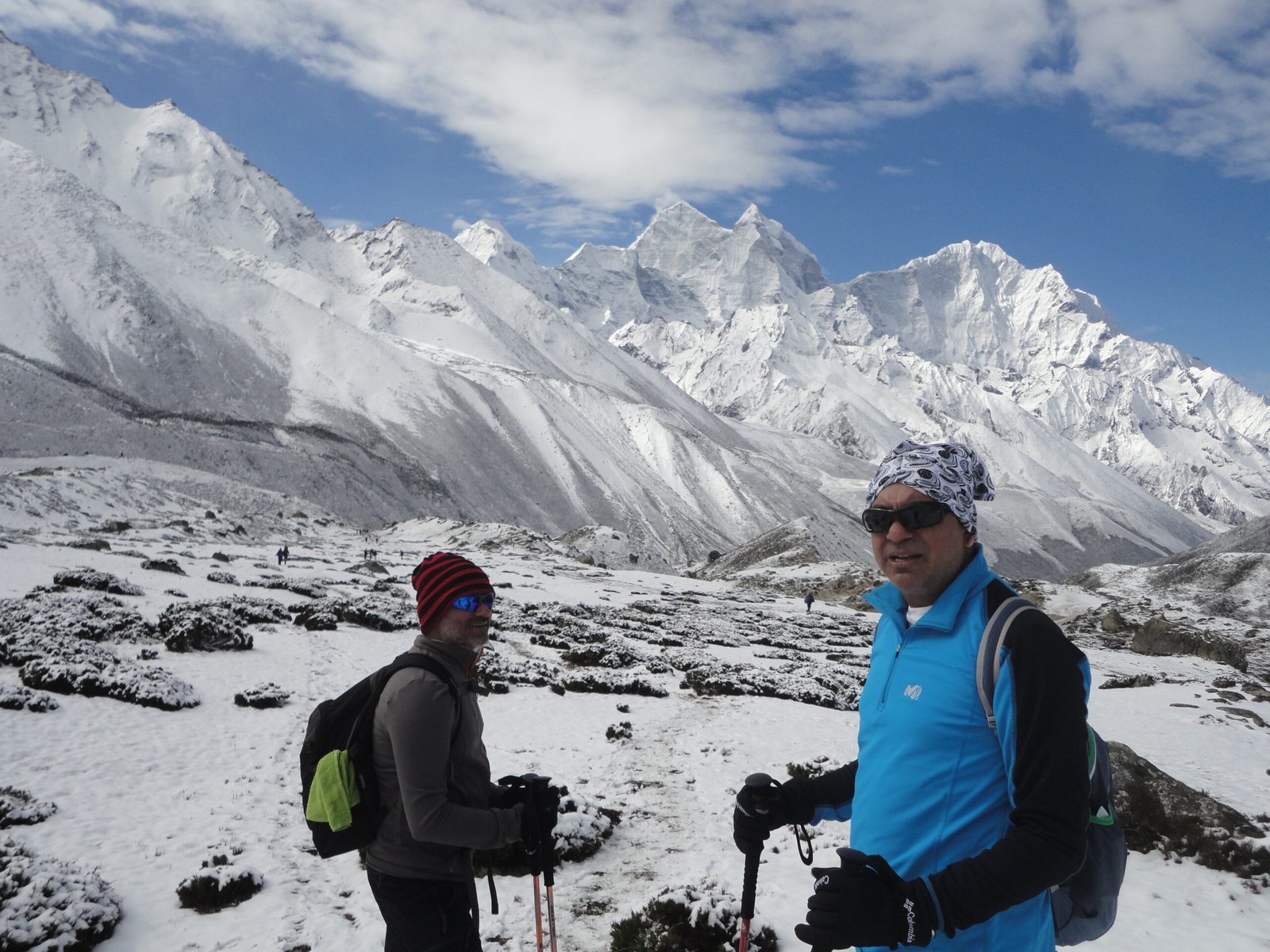
Annapurna vs Everest Base Camp Trek: Which Should You Choose in 2026?
Read the complete guide: Everest Base Camp Trek: Complete Guide (2026) covering routes, seasons, flights and side trips in one place.
Direct answer: Choose Annapurna Base Camp (ABC) if you want a shorter, lower-altitude, forest-and-peak immersion reachable by road; choose Everest Base Camp (EBC) if you want the high-Himalaya flight-in experience and the world’s most famous trekking name. ABC is typically 7-12 days to ~4,130 m; EBC is 12-16 days to 5,364 m with a Lukla flight.
Both are non-technical teahouse treks: you sleep in mountain lodges, eat hot dal bhat every evening, and carry only a daypack. The decision really comes down to how much time you have, how your body handles altitude, what you can spend, and which mountains you want in your photographs. Here is the full comparison, factor by factor.
Head-to-head comparison
| Factor | Annapurna BC | Everest BC |
|---|---|---|
| Max altitude | ~4,130 m | 5,364 m (Kala Patthar 5,545 m) |
| Typical duration | 7-12 days | 12-16 days |
| Getting there | Drive to Pokhara, then Nayapul or Ghandruk | Flight to Lukla (often via Manthali in peak season) |
| Walking distance | ~67-110 km round trip depending on start | ~130 km round trip |
| Difficulty | Moderate | Moderate to strenuous (altitude) |
| Altitude risk | Moderate; a fast profile to 4,130 m | High; several nights sleeping above 4,000 m |
| Signature view | Machapuchhre, Annapurna massif | Everest, Lhotse, Nuptse |
| Best months | March-May, October-November | March-May, October-November |
| Teahouse comfort | Simple to good, hot springs at Jhinu | Wider range, includes luxury lodges |
| Peak-season crowds | Busy but spread across valleys | Very busy; trail queues near Namche |
| Cost (indicative) | USD 600-1,100 with a guide | USD 1,300-2,500 with a guide |
| Permits | ACAP plus TIMS | Sagarmatha NP plus Khumbu permit |
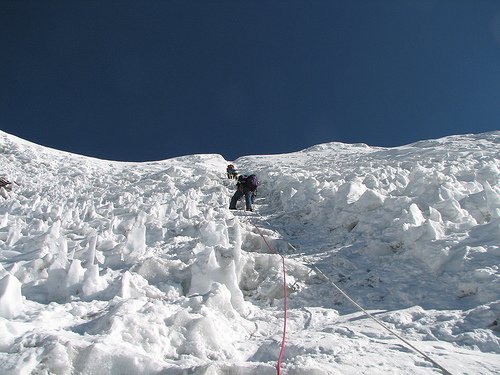
Neither route involves ropes, ice axes or climbing skills, and walkers with solid general fitness complete both every year. The real gap is altitude: on EBC you sleep above 4,400 m for several nights in a row, while on ABC your highest sleeping altitude sits just under 4,100 m. That single difference drives most of the cost, timing and safety decisions below.
Difficulty and altitude, compared
Terrain-wise, ABC is steeper underfoot: the trail climbs and drops endless stone steps around Chhomrong and Sinuwa as it follows the Modi Khola valley through bamboo and rhododendron forest. EBC terrain is gentler per kilometre, with long steady grades, but above Dingboche you walk on glacial moraine and the air is thin enough that a flat 5 km feels like a hill session.
On EBC the standard profile moves from Lukla (2,860 m) up to Namche Bazaar (3,440 m) for a rest day, then Tengboche (3,860 m), Dingboche (4,410 m) for a second rest day, Lobuche (4,940 m), Gorak Shep (5,170 m) and finally Everest Base Camp (5,364 m). Those two acclimatization days are not optional extras; skipping them is how treks end early. On ABC you can start near 1,000 m and reach 4,130 m in as few as five nights, which is quick by Himalayan standards, so altitude sickness is still a genuine risk even though the trek is “lower”. Good itineraries add nights in Bamboo or Dovan to soften the profile.
For training, give yourself 8 to 12 weeks: three cardio sessions a week (running, cycling or swimming), one hill or stair session with a 5-8 kg daypack, and long weekend walks if you have them. Trekking fitness is about legs, lungs and patience, not gym strength. On EBC the Himalayan Rescue Association clinic at Pheriche checks trekkers for free; ABC has no equivalent facility, so know the AMS symptoms yourself, discuss Diamox with a doctor before leaving home, and treat any worsening headache, nausea or dizziness as a signal to descend. Our Nepal Trekking Safety Guide 2026 covers prevention and aid posts in detail.
Cost comparison: what you actually pay
| Expense | Annapurna BC (indicative) | Everest BC (indicative) |
|---|---|---|
| Permits | ~USD 30 (ACAP NPR 3,000 + TIMS NPR 1,000) | ~USD 37 (Sagarmatha NP NPR 3,000 + Khumbu NPR 2,000) |
| Flights | None; tourist bus Kathmandu to Pokhara USD 10-25 | Lukla return roughly USD 340-420 |
| Guide per day | USD 25-35 | USD 30-45 |
| Porter per day | USD 15-25 | USD 20-25 |
| Lodging + food per day | USD 30-45 | USD 40-60 |
| Typical all-in total | USD 500-1,200 | USD 1,100-2,500 |
Two things push EBC’s price up: the Lukla flights and the altitude itself. Everything carried above 3,500 m is priced by the kilogram, so a plate of fried rice in Lobuche can cost double what it does in Namche. ABC, by contrast, starts from Pokhara by road, so there is no flight bill and valley prices stay moderate for most of the route.
Independent trekkers on either route should carry cash in Nepali rupees: ATMs are unreliable above Pokhara and effectively absent in the Khumbu above Namche. Cards rarely work in teahouses. If you book a package, confirm exactly what is included, because “EBC tour” prices from USD 1,300 to USD 2,500 can differ only in Lukla flight class, guide quality and whether meals are covered. Whichever route you pick, carry travel insurance that includes helicopter evacuation to at least 6,000 m; our Nepal Trekking Travel Insurance guide explains the fine print that matters.
What a typical day looks like on each trek
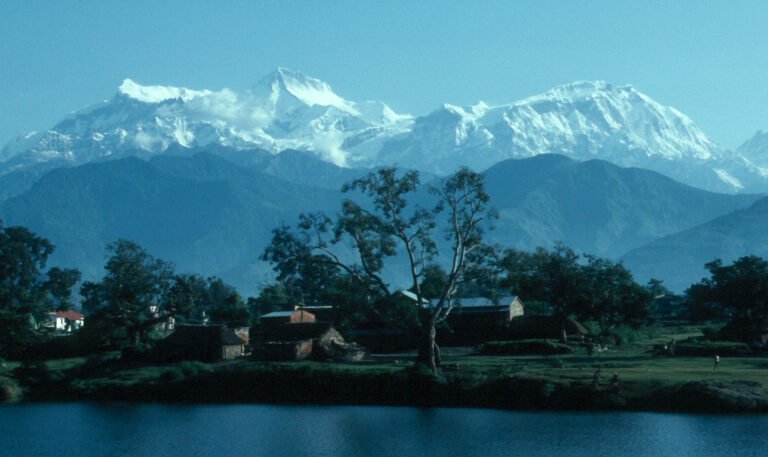
On ABC, days start around 6:30 am with eggs, porridge or Tibetan bread, and you are walking by 7:30 before the valley heats up. Morning is the hard part: stone steps down to a suspension bridge, then straight back up the other side. You reach a lunch stop by 11:30, walk another two hours, and settle into a teahouse by 3 pm with tea on a sun-warmed deck. The finale is pre-dawn at Annapurna Base Camp itself, a 360-degree amphitheater of Annapurna I (8,091 m), Annapurna South, Hiunchuli and the sacred, officially unclimbed Machapuchhre (6,993 m). Most itineraries finish with the hot springs at Jhinu Danda.
On EBC, the adventure begins with the 35-minute flight to Lukla’s cliff-edge runway. Days follow the same teahouse rhythm, but with bigger set pieces: the high suspension bridges over the Dudh Koshi, the first Everest view from above Namche, the monastery at Tengboche, and two acclimatization hikes that pay off with panoramas while your body adapts. Base Camp itself is a rocky moraine field of expedition tents and prayer flags, and the classic summit view is actually the sunrise climb of Kala Patthar (5,545 m) the next morning, when Everest, Lhotse, Nuptse and the Khumbu Icefall turn gold. Nights are cold, dining rooms are heated by yak-dung stoves, and wifi and charging cost small fees.
Best time to trek each route
Both treks share the same two windows: spring (March to May) and autumn (October to November). Autumn delivers the clearest air and the biggest crowds; spring brings rhododendron forests in bloom on the ABC approach and warming days, with a slight haze building in late May. April on EBC also means sharing the trail with climbing expedition teams heading to Base Camp.
Winter (December to February) is workable on both routes if you pack properly: nights fall to around -10 C at ABC and can touch -20 C in Gorak Shep, days are short, and Lukla weather delays are more frequent. The reward is empty trails. The monsoon (June to August) is the weakest season for both: leeches, cloud, slippery steps and landslide-prone approach roads. If you must trek in summer, rain-shadow zones like Mustang and Dolpo are the smarter choice. For a month-by-month breakdown across all of Nepal, see Best Time to Visit Nepal 2026.
Permits and paperwork
For ABC you need the Annapurna Conservation Area Project (ACAP) entry permit, NPR 3,000 for foreign nationals, plus a TIMS card at NPR 1,000 if you are trekking independently. Both can be issued the same day in Kathmandu or Pokhara; bring your passport and two photos. For EBC you need the Sagarmatha National Park entry (NPR 3,000, available in Kathmandu or at the Monjo checkpoint) plus the Khumbu Pasanglhamu Rural Municipality fee (NPR 2,000, collected at Lukla). TIMS is not required in the Khumbu because the municipal permit covers it.
Carry printed copies as well as digital ones, keep them accessible for checkpoints, and check current rates before you travel since fees are revised periodically. The official Nepal Tourism Board portal (welcomenepal.com) lists the latest permit rules, and our Nepal Visa and Trekking Permits guide walks through the full paperwork sequence from arrival to trailhead.
How to choose
- Less time or first trek in Nepal: ABC is faster, with a gentler altitude profile.
- Want the iconic name plus a flight adventure: EBC.
- Altitude concern: ABC stays lower; EBC demands strict acclimatization.
- Budget: ABC avoids the Lukla air cost entirely.
- Fixed flight home: ABC has no weather-dependent airport; EBC can lose days to Lukla delays.
- More than three weeks available: combine both, doing ABC first as a natural acclimatization block.
If you are still weighing how each route fits your fitness, our Nepal Trekking Grades Explained guide places ABC and EBC on the official Nepali difficulty scale next to easier and harder options like Ghorepani Poon Hill and Manaslu Circuit.
Frequently asked questions
Which is harder?
EBC is longer and higher (5,364 m vs ABC’s 4,130 m), but ABC has steeper daily climbs on stone steps. Both are non-technical walks; altitude, not terrain, is the main obstacle.
Which has better views?
EBC delivers Everest, Lhotse and Nuptse from Kala Patthar; ABC sits inside a 360-degree amphitheater of Annapurna peaks with Machapuchhre dominating. Preference is subjective, but ABC’s sunrise at the sanctuary is arguably the more dramatic single viewpoint.
Which is better for first-timers?
ABC is shorter and a gentler introduction to Himalayan trekking; EBC remains the classic for those with the time, fitness and budget for it.
Which is cheaper?
ABC, typically by USD 500 or more, mostly because there is no Lukla flight bill. A well-run independent EBC trip can still come in around USD 900-1,100 if you skip the package.
Do I need a guide for either trek?
No, guides are not legally required on either route for licensed solo teahouse trekking, but a local guide adds altitude awareness, route knowledge and cultural context that most first-time visitors appreciate. Restricted regions like Manaslu and Mustang are different and do require organized permits and guides.
Can I combine both treks in one trip?
Yes, with 20-24 days. Trek ABC first (the lower profile primes your body for altitude), rest two days in Pokhara, then fly back to Kathmandu for the Lukla flight to EBC.
Key takeaways
- ABC means shorter, lower, road access; EBC means longer, higher, flight in.
- Both need permits; both reward you with world-class mountain views.
- Match the trek to your time, altitude comfort and budget, not to what others have done.
- Budget roughly USD 700-1,000 more for EBC, mainly for flights and higher trail prices.
- Never rush either route: acclimatization days are the cheapest insurance you can buy.
Published by the TravellingNepal Editorial Desk. Logistics based on established Nepal trekking routes; confirm permits and conditions with licensed operators.
Related guides
- annapurna-base-camp-trek-2026-guide
- high-altitude-trekking-in-nepal-comparing-manaslu-everest-and-annapurna-in-2026-and-beyond
- Everest Base Camp Trek 2026: Route, Cost and Permits
Share this content: