Boudhanath Stupa — Best for Spiritual Hub on Any Kathmandu City Tour 2025/2026
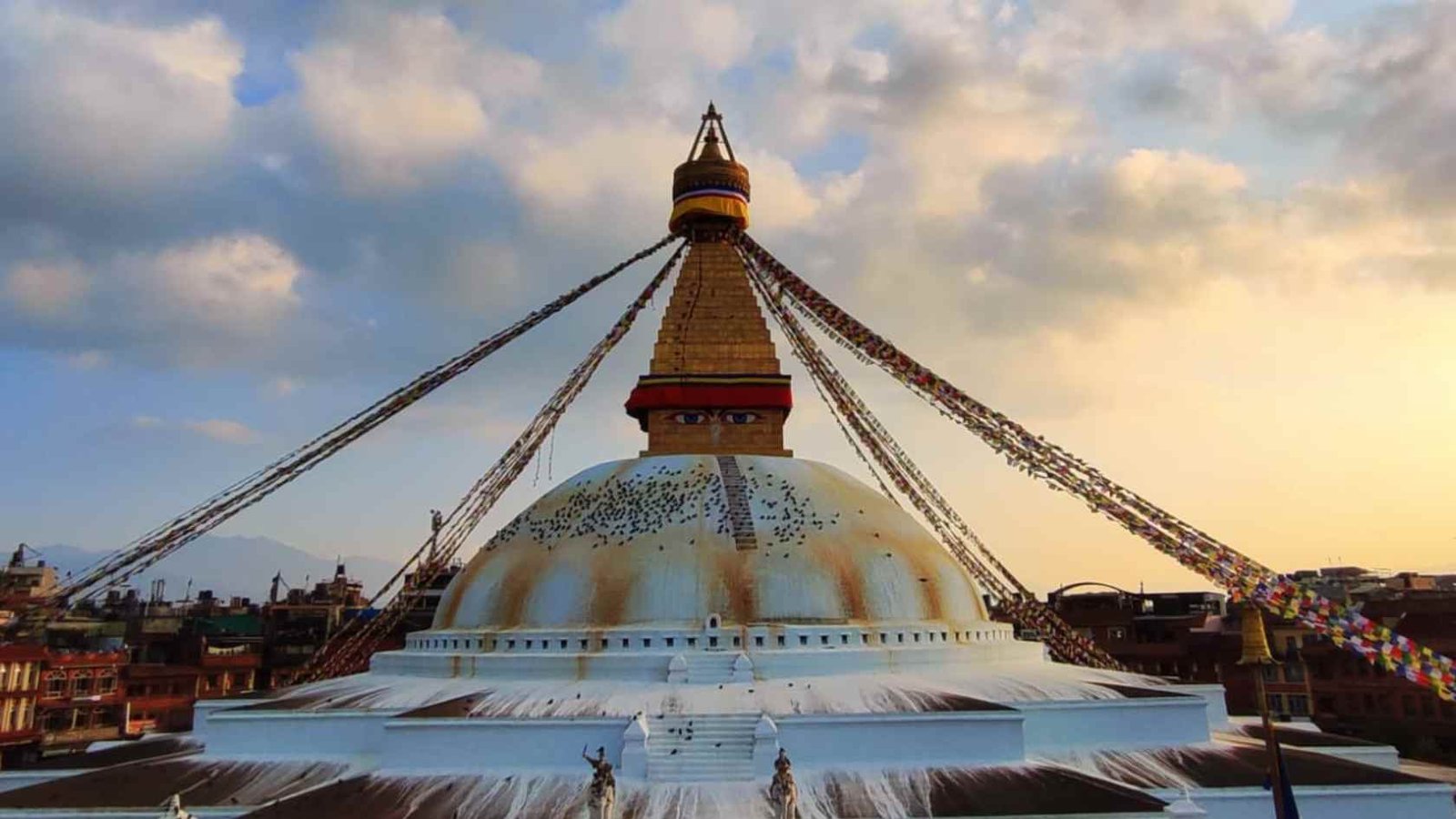
Rising majestically in the northeastern edge of Kathmandu, the Boudhanath Stupa glows like a white dome of peace beneath the Himalayan sky. Encircled by prayer flags fluttering in the wind and watched over by the all-seeing eyes of Buddha, it is more than a monument — it is the living heartbeat of spiritual travel in Nepal.
Recognized as a UNESCO World Heritage Site, Boudhanath stands as one of the world’s largest spherical stupas and an essential highlight of any Kathmandu City Tour. Here, faith and daily life intertwine — Tibetan monks chant sacred mantras, locals perform their ritual koras (circumambulations), and travelers pause to absorb the tranquil rhythm of devotion that defines this sacred site.
History & Spiritual Significance
The Boudhanath Stupa, according to legend, dates back to the 5th century, during the Licchavi period of Nepal. It is said to have been commissioned by a widow who sought to build a shrine dedicated to Buddha’s wisdom and compassion. Over centuries, it became a beacon of Buddhist pilgrimage in Nepal, attracting devotees from across the Himalayas.
After the Chinese invasion of Tibet in 1959, thousands of Tibetan refugees settled around Boudhanath, transforming it into the epicenter of Tibetan Buddhism in Kathmandu. The surrounding area, now known as Boudha, is dotted with monasteries, prayer halls, and schools for young monks, preserving a living Buddhist tradition that continues to flourish.
Every detail of the stupa’s architecture carries spiritual symbolism. The massive white dome represents the world; the 13 steps rising above symbolize the stages of enlightenment; and the pinnacle signifies Nirvana. Most iconic are the Buddha’s eyes, painted on all four sides of the square base, gazing with serene awareness over the valley — a constant reminder of compassion and wisdom.
Daily Life & Atmosphere Around Boudha
At dawn, when the first rays of sunlight kiss the dome, the stupa comes alive. Monks and devotees clad in maroon robes begin their kora, walking clockwise while spinning prayer wheels that line the path. The air fills with the soft hum of chants — Om Mani Padme Hum — echoing through the narrow alleys scented with incense and butter lamps.
By day, the Boudhanath circle blends spirituality with community. Elderly locals feed pigeons, artisans paint intricate thangka scrolls, and travelers sip coffee from rooftop cafés overlooking the stupa. As dusk falls, hundreds of butter lamps flicker against the white dome, transforming the site into a sea of golden light. It is here that one truly feels the meditative stillness — the kind of peace that silences even the most restless mind.
Boudhanath is not merely visited; it is experienced — an immersive spiritual rhythm that continues from sunrise to moonlight.
Monasteries, Shops & Cafés to Visit
The area surrounding the stupa is a vibrant microcosm of Himalayan culture. Within walking distance are some of Nepal’s most revered Tibetan monasteries:
Shechen Monastery — founded by the late Dilgo Khyentse Rinpoche, it’s a sanctuary of monastic learning, art, and compassion.
Ka-Nying Shedrub Ling Monastery — home to hundreds of monks and known for its intricate murals and morning chanting rituals.
Kopan Monastery — located on a nearby hill, this monastery offers meditation courses and retreats for international visitors seeking mindfulness and inner peace.
After spiritual exploration, travelers can unwind at one of Boudha’s rooftop cafés — Roadhouse Café, Himalayan Java, or La Casita de Boudhanath — where fresh coffee and momos are served with panoramic stupa views.
For those wanting to take a piece of Boudha home, the narrow lanes offer Tibetan handicrafts, prayer wheels, singing bowls, and thangka paintings — all crafted by local artisans who carry generations of skill and devotion.
Best Time to Visit & Festivals
The best time to visit Boudhanath Stupa is during the early morning (5:30–8:00 AM) or sunset hours (4:30–6:30 PM), when light and life merge into poetic harmony. Photographers love these golden hours for capturing the stupa bathed in soft Himalayan glow.
Seasonally, autumn (September–November) and spring (March–May) offer the clearest skies and most comfortable temperatures for Kathmandu exploration.
Two festivals, however, transform Boudhanath into a breathtaking spectacle:
Lhosar (Tibetan New Year) — usually celebrated in February or March, when monks perform masked dances, prayer flags are renewed, and the stupa becomes a swirl of color and song.
Buddha Jayanti — the birth anniversary of Lord Buddha, observed on a full moon in May, celebrated with butter lamps, flower garlands, and all-night chanting.
During these times, thousands gather in peaceful reverence — a moment when Boudha truly becomes the spiritual heart of Nepal.
Travel Tips for Visitors
How to Get There:
Boudhanath lies about 7 km northeast of Thamel, Kathmandu’s tourist hub. Taxis, ride-sharing apps, and local buses from Ratna Park provide easy access. Many travelers combine Boudha with nearby Pashupatinath Temple, just 2 km away — making it a perfect half-day Kathmandu City Tour itinerary.
Entrance Fee:
NPR 400 for foreign visitors (subject to change).
Free for Nepali citizens and SAARC nationals.
Opening Hours:
Open daily from dawn to dusk, though early morning and evening are most spiritually immersive.
Cultural Etiquette:
Always walk clockwise around the stupa.
Remove shoes before entering monasteries.
Dress modestly and speak softly within sacred spaces.
Avoid touching prayer wheels or relics unnecessarily.
Ask permission before photographing monks or devotees.
By honoring these customs, you contribute to the respectful preservation of Boudha’s sacred energy.
To visit Boudhanath Stupa is to step into a realm where outer travel meets inner awakening. The gentle murmur of prayers, the scent of incense, and the rhythmic turning of prayer wheels invite travelers to pause — to breathe — to be present.
Whether you come as a pilgrim, a photographer, or simply a seeker of peace, Boudhanath welcomes you with open arms. It stands not only as a spiritual hub on the Kathmandu City Tour, but as a living reminder that enlightenment is found not in far-off temples, but in the quiet moments of awareness within ourselves.
Include it in your Nepal itinerary — and let its calm dome and all-seeing eyes guide you toward your own moment of stillness amid the chaos of the modern world.
🕉️ FAQs About Boudhanath Stupa
What is Boudhanath Stupa famous for?
It is renowned as Nepal’s largest Buddhist stupa and a center for Tibetan Buddhism. Its mandala design, prayer flags, and spiritual energy make it a must-visit heritage site.
How old is Boudhanath Stupa?
Historical records trace it back to the 5th century, making it one of the oldest and most revered stupas in South Asia.
When is the best time to visit Boudhanath?
Visit during sunrise or sunset for serenity and ideal lighting. Seasonally, autumn and spring are perfect for pleasant weather and festivals.
Is Boudhanath open all year?
Yes, Boudhanath is open year-round, welcoming visitors and pilgrims every day from dawn to dusk.
🔗 Related Reads (Internal Links for WordPress)
Pashupatinath Temple — Sacred Heart of Kathmandu City Tour
Ultimate Kathmandu City Tour — Explore Culture, Heritage & Hidden Gems


Post Comment