

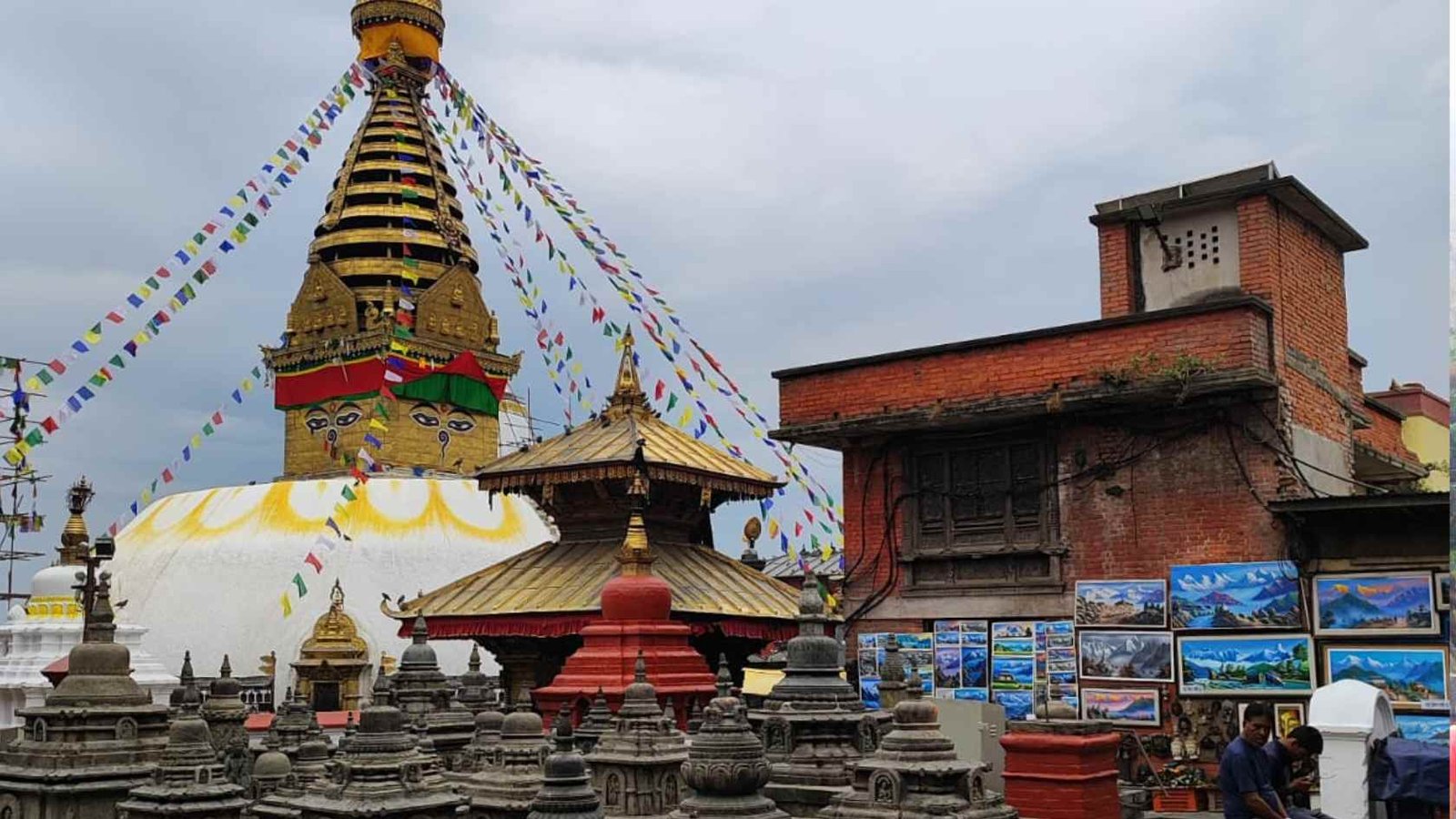
Best Views for Your Kathmandu City Tour–Swayambhunath Stupa (Maha Chaitya)
🌄 The Legend and Meaning of Swayambhunath
According to legend, the Kathmandu Valley was once a vast lake, and a self-existent flame (Swayambhu) appeared atop a lotus flower. Over time, the waters drained, revealing the hill where Swayambhunath Stupa now stands. Its name, “Swayambhu,” literally means Self-Created — symbolizing enlightenment and eternal wisdom.
This sacred site blends Buddhist and Hindu influences, where devotees of both faiths come together in harmony, spinning prayer wheels and lighting butter lamps beneath the all-seeing eyes of the Buddha.
🛕 Architecture and Spiritual Symbolism
The white dome of the stupa represents the earth, while the 13 golden tiers above symbolize the stages to enlightenment. The four pairs of Buddha’s eyes watch over the valley in all directions, representing awareness and compassion.
Surrounding the stupa are shrines, chaityas, and monasteries adorned with fluttering prayer flags and colorful murals depicting Buddhist deities. Pilgrims and tourists alike circle the monument clockwise, chanting “Om Mani Padme Hum.”

🐒 The Monkey Temple Experience
Locals affectionately call it the Monkey Temple due to the large number of playful rhesus monkeys that inhabit the complex. While mischievous, they are considered holy and guardians of the sacred site. Visitors are advised to keep their belongings secure while enjoying the lively atmosphere.
📸 Breathtaking Views of Kathmandu Valley
From the top of the 365-step stone staircase, trekkers are rewarded with 360-degree views of Kathmandu’s skyline, framed by distant Himalayan peaks on clear days. Sunrise and sunset are magical moments for photography and reflection.
🕍 Nearby Attractions
- Kathmandu Durbar Square: The royal courtyard of Malla kings, filled with temples and palaces.
- Pashupatinath Temple: Sacred Hindu temple dedicated to Lord Shiva.
- Boudhanath Stupa: Another monumental Buddhist shrine just 8 km away.
- Thamel: Kathmandu’s vibrant hub for travelers, cafes, and shops.
🧭 How to Visit Swayambhunath Stupa
-
- Location: Western hill of Kathmandu (≈3 km from Thamel)
- Entry Fee: NPR 200 (foreigners); free for SAARC nationals
- Opening Hours: 5 AM – 8 PM daily
- Best Time to Visit: Early morning or sunset for clear views
- Tips: Carry water, remove shoes before entering, and respect local rituals.
💡 Why Add Swayambhunath to Your Kathmandu City Tour
Including Swayambhunath Stupa in your Kathmandu City Tour connects you deeply with Nepal’s spiritual heritage. Beyond its panoramic views and sacred energy, it represents the unity of Nepal’s cultural and religious harmony.
Whether you’re exploring with Enticing Himalayas Travels or joining a Kathmandu Valley Heritage Tour, this stop offers an unforgettable blend of spirituality, architecture, and breathtaking scenery.
❓ FAQs — Swayambhunath Stupa, Kathmandu
What is the best time to visit Swayambhunath?
Visit early morning (6–8 AM) or at sunset for fewer crowds and clear valley views.
Is Swayambhunath a Buddhist or Hindu site?
It’s primarily Buddhist but revered by both Hindus and Buddhists in Nepal.
How long does it take to explore the site?
Typically 1–2 hours including the climb, photography, and meditation time.
Share this content:




Post Comment