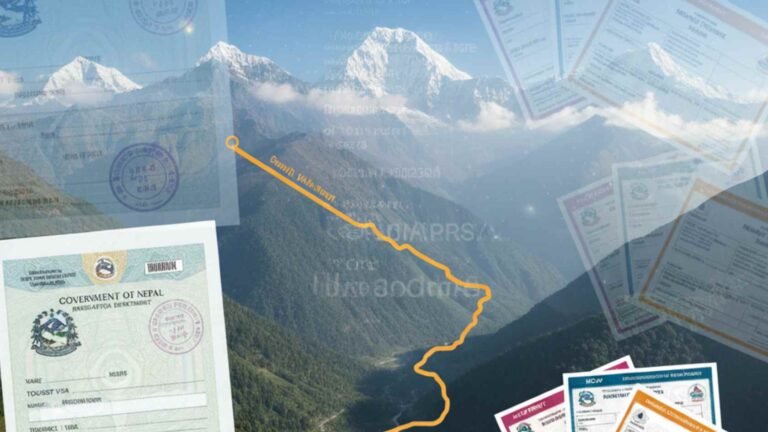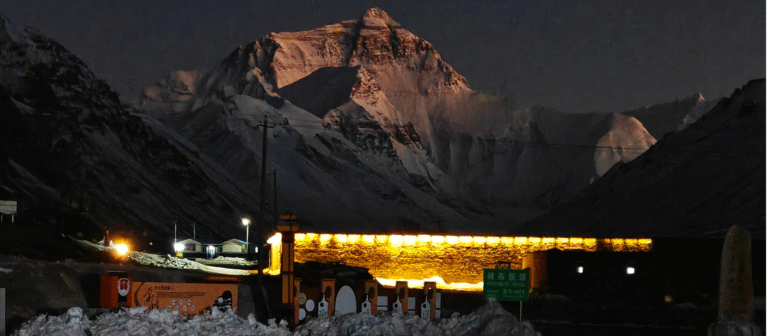
Nepal Trekking Permits, TIMS Card & Tourist Visa: Complete 2025 Guide
Complete guide: Nepal Visa and Trekking Permits: Complete Guide
Quick Answer
As of 2025, all foreign trekkers in Nepal’s restricted areas must obtain a Trekking Permit from the Department of Immigration and carry a TIMS (Trekkers’ Information Management System) card issued through a registered trekking agency. Tourist visas are available on arrival at Kathmandu, Pokhara, and Lumbini airports plus land borders (except for nationals of 13 restricted countries). National park/conservation area entry permits are required separately. This guide compiles the official 2025 fees, rules, and procedures from the Nepal Tourism Board (NTB) and Department of Immigration (DoI).
Table of Contents
- Tourist Visa on Arrival (2025 Fees & Rules)
- TIMS Card: When You Need One & How to Get It
- Restricted Area Trekking Permits (Full 2025 Fee Table)
- National Park & Conservation Area Entry Fees
- FAQ: Top 10 Traveller Questions Answered
- Key Takeaways
Tourist Visa on Arrival (2025 Fees & Rules)
Source: Nepal Tourism Board – Tourist Visa page (official NTB page) and Department of Immigration prohibition notice. Fees current as of 2025; always verify at immigration.gov.np before travel.
| Visa Type | Duration | Fee (USD) | Notes |
|---|---|---|---|
| Multiple Entry | 15 days | US$ 30 | Extendable at DoI Kathmandu/Pokhara |
| Multiple Entry | 30 days | US$ 50 | Most common for trekkers |
| Multiple Entry | 90 days | US$ 125 | Best for long treks / multiple regions |
Visa Extension: Minimum 15 days at US$ 45, then US$ 3 per additional day. Late extension (after expiry) incurs US$ 5/day fine up to 150 days maximum overstay.
Who Cannot Get Visa on Arrival (2025)
\p>Nationals of the following countries must obtain a visa from a Nepali diplomatic mission abroad before travel (DoI prohibition list): Nigeria, Ghana, Zimbabwe, Eswatini, Cameroon, Somalia, Liberia, Ethiopia, Iraq, Palestine, Afghanistan, Iran, Syria, and refugees holding travel documents.
Indian Nationals
Indian citizens do not need a visa. Acceptable IDs: valid passport, Election Commission ID card, PAN card, driving licence, ration card with photo (age 65+), or school ID (under 18). Aadhaar/UID is not accepted. Embassy registration certificates are single-journey only.
Gratis (Free) Visa
- Children under 10 (except US citizens)
- SAARC nationals (except Afghanistan) — first visit per visa year, up to 30 days
- Afghan nationals — on DoI recommendation only
- Non-Resident Nepali (NRN) card holders
- Chinese nationals
TIMS Card: When You Need One & How to Get It
Source: NTB – TIMS Card page (official). The revised TIMS provision took effect March 31, 2023.
Rule: Trekkers entering the protected areas listed below must be accompanied by a licensed trekking guide and carry a TIMS card issued through a government-registered trekking agency. You cannot obtain a TIMS card independently.
Regions & Treks Requiring Guide + TIMS (2025)
| Region | Major Treks Covered |
|---|---|
| Kanchenjunga | Kanchenjunga Base Camp via Sele La, Kanchenjunga Base Camp, Nango Pass, Lumba Sumba Pass |
| Makalu Barun | Makalu Base Camp, Sherpeni Col Pass |
| Everest (Khumbu) | Everest Base Camp, Gokyo Lakes, Cho La Pass, Three Passes, Everest View, Mera Peak, Amphu Labtsa Pass |
| Rolwaling | Rolwaling Trek, Tashi Lapcha Pass |
| Panchpokhari Bhairabkunda | Panchpokhari Trek |
| Helambu | Helambu Trek, Gosaikunda Trek |
| Langtang | Langtang Valley, Langtang Gosaikunda, Tamang Heritage, Tamang Heritage–Langtang, Ganja La Pass, Tilman Pass |
| Ganesh Himal–Ruby Valley | Ganesh Himal–Ruby Valley Trek |
| Manaslu | Manaslu Circuit, Manaslu–Tsum Valley, Tsum Valley |
| Annapurna | Annapurna Circuit, Nar Phu, Mesokanto/Tilicho Pass, Poon Hill–ABC, Khopra, Mardi Himal, Sikles–Tara Hill |
| Mustang | Upper Mustang, Saribung Pass |
| Dhaulagiri | Dhaulagiri Circuit |
| Dolpo | Upper Dolpo–Jomsom, Upper Dolpo, Lower Dolpo, Kagmara Pass |
| Humla | Humla Limi Valley |
How to get a TIMS card: Contact a Government-registered trekking agency in Kathmandu or Pokhara. The agency submits a registration form with trekker details, guide assignment, and route. Cost is typically US$ 10–20 per person (agency service fee) plus the actual TIMS card fee (NRs 1,000 for SAARC, NRs 2,000 for others).
Restricted Area Trekking Permits (Full 2025 Fee Table)
Source: NTB – Trekking Permit page. Permits are issued only at the Department of Immigration, Kalikasthan, Kathmandu. You must apply through a registered trekking agency with a licensed guide. Fees are in USD or equivalent convertible currency.
| # | Restricted Area (Rural Municipalities / Wards) | Permit Fee (2025) |
|---|---|---|
| 1 | Upper Mustang (Lomanthang RM wards 1–5; Lo-Ghekar Damodarkunda RM wards 1–5; Baragung Muktichhetra RM ward 3 & Satang village ward 5) | US$ 50 per person per day |
| 2 | Upper Dolpa (Dolpo Buddha RM wards 4–6; Shey Phoksundo RM wards 1–7; Charka Tangsong RM wards 1–6) | US$ 50 per person per day |
| 3 | Manaslu (Chumnubri RM wards 1–4) | Sep–Nov: US$ 100/week + US$ 15/day after 1 week Dec–Aug: US$ 75/week + US$ 10/day after 1 week |
| 4 | Humla (Simikot RM wards 1,6,7; Namkha RM wards 1–6; Chankheli RM wards 3–5) | US$ 50/week + US$ 10/day after 1 week |
| 5 | Taplejung (Phaktanglung RM wards 6,7; Mikwakhola RM ward 5; Sirijunga RM ward 8) | US$ 20/week (first 4 weeks), US$ 25/week thereafter |
| 6 | Lower Dolpa (Thulibheri Municipality wards 1–11; Tripurasundari Municipality wards 1–11; Dolpo Buddha RM wards 1–3; Shey Phoksundo RM wards 8,9; Jagdulla RM wards 1–6; Mudkechula RM wards 1–9; Kaike RM wards 1–7) | US$ 20/week + US$ 5/day after 1 week |
| 7 | Dolakha (Gaurishankar RM ward 9; Bigu RM ward 1) | US$ 20/week |
| 8 | Tsum Valley (Sirdibas–Lokpa–Chumling–Chekampar–Nile–Chule; Chumnubri RM wards 3,6,7) | Sep–Nov: US$ 40/week + US$ 7/day after 1 week Dec–Aug: US$ 30/week + US$ 7/day after 1 week |
| 9 | Makalu region (Bhotkhola RM wards 1–5; Makalu RM ward 4) | US$ 20/week (first 4 weeks), US$ 25/week thereafter |
| 10 | Everest/Khumbu (Khumbu Pasang Lhamu RM ward 5) | US$ 20/week (first 4 weeks), US$ 25/week thereafter |
| 11 | Rasuwa (Gosaikunda RM wards 1 & part of 2) | US$ 20/week |
| 12 | Manang (Narpa RM wards 1–5; Naso RM wards 6,7) | Sep–Nov: US$ 100/week + US$ 15/day after 1 week Dec–Aug: US$ 75/week + US$ 15/day after 1 week |
| 13 | Bajhang (Saipal RM wards 1–5) | US$ 90/week (first week), US$ 15/day after |
| 14 | Mugu (Mugum Karmarong RM wards 1–9) | US$ 100/week + US$ 15/day after 1 week |
| 15 | Darchula (Vyas RM ward 1) | US$ 90/week + US$ 15/day after 1 week |
Key Rules:
- Trekking outside the specified route/area is a legal violation.
- Permit must be carried at all times and shown to immigration/police on request.
- Minimum group size: generally 2 trekkers + 1 guide (exceptions for some areas).
- Agency handles application; allow 1–2 working days in Kathmandu.
National Park & Conservation Area Entry Fees (2025)
Source: NTB – Park Entry Fees page. Fees are per person, per entry. Children under 10 enter free. Fees paid at Tourist Service Centre, Bhrikutimandap, Kathmandu, or at park entry gates.
| Protected Area | Nepali (NRs) | SAARC (NRs) | Foreigner (NRs) |
|---|---|---|---|
| UNESCO World Heritage National Parks | |||
| Chitwan National Park | 150 | 1,000 | 2,000 |
| Sagarmatha (Everest) National Park | 100 | 1,500 | 3,000 |
| Other National Parks | |||
| Banke National Park | 100 | 750 | 1,500 |
| Bardia National Park | 100 | 750 | 1,500 |
| Khaptad National Park | 100 | 1,500 | 3,000 |
| Langtang National Park | 100 | 1,500 | 3,000 |
| Makalu–Barun National Park | 100 | 1,500 | 3,000 |
| Parsa National Park | 100 | 750 | 1,500 |
| Rara National Park | 100 | 1,500 | 3,000 |
| Shey–Phoksundo National Park | 100 | 1,500 | 3,000 |
| Shivapuri–Nagarjun National Park | 100 | 600 | 1,000 |
| Shuklaphanta National Park | 100 | 750 | 1,500 |
| Wildlife Reserves | |||
| Koshi Tappu Wildlife Reserve | 100 | 750 | 1,500 |
| Conservation Areas | |||
| Api Nampa Conservation Area | 100 | 500 | 2,000 |
| Annapurna Conservation Area (ACAP) | 100 | 1,000 | 3,000 |
| Blackbuck Conservation Area | 100 | 500 | 2,000 |
| Gaurishankar Conservation Area | 100 | 1,000 | 3,000 |
Note: ACAP and TIMS are separate. Annapurna region trekkers need BOTH an ACAP permit (NRs 3,000 for foreigners) AND a TIMS card (if on listed routes).
FAQ: Top 10 Traveller Questions Answered
1. Do I need a guide for Everest Base Camp?
Yes. As of March 31, 2023, the entire Khumbu/Everest region is on the NTB’s guide-mandatory list. You must hire a licensed guide through a registered agency and obtain a TIMS card.
2. Can I get a TIMS card in Pokhara?
Yes. Registered trekking agencies in Pokhara can issue TIMS cards. The agency submits the application online; you collect the card at their office or at the NTB counter in Pokhara.
3. Is the TIMS card the same as a trekking permit?
No. TIMS is a trekkers’ information card for safety monitoring. A Restricted Area Permit (RAP) is a separate permit for specific controlled zones (Upper Mustang, Upper Dolpa, Manaslu, etc.). You may need both.
4. How long does a restricted area permit take?
Typically 1–2 working days at the Department of Immigration in Kathmandu once your agency submits complete paperwork. Apply at least 3 days before your trek start date.
5. Can I extend my tourist visa in Pokhara?
Yes. The Department of Immigration has an office in Pokhara (and Kathmandu) that processes visa extensions. Fee: US$ 45 for 15 days + US$ 3/day thereafter.
6. What if I overstay my visa?
Late fee: US$ 5 per day (on top of extension fee) up to 150 days maximum overstay. Beyond 150 days requires Department of Immigration director approval and possible legal action.
7. Do I need a separate permit for Annapurna Circuit?
Yes — you need both an ACAP permit (NRs 3,000 for foreigners) and a TIMS card (since Annapurna Circuit is on the guide-mandatory list). If you add Nar Phu or Tilicho Pass/Mesokanto, those are restricted areas requiring separate RAPs.
8. Are park fees refundable if I don’t enter?
Generally no. Fees are per entry and non-refundable once issued. Confirm your itinerary before purchasing.
9. Can I pay visa/permit fees by credit card?
At Tribhuvan International Airport visa counter: yes, major international cards accepted. At DoI Kathmandu for permits: typically cash (USD or NPR) or bank transfer; cards not always accepted. Carry crisp USD notes.
10. Where do I get the latest official fee updates get posted?
Primary sources: ntb.gov.np (Tourism Board) and immigration.gov.np (Department of Immigration). The NTB \”Before You Come\” section has clean, guessable URLs for each topic.
Key Takeaways
- Visa on arrival for most nationalities (US$ 30/50/125 for 15/30/90 days); 13 countries must pre-arrange.
- TIMS card + licensed guide mandatory for 18 major trekking regions (effective March 2023).
- Restricted Area Permits (US$ 20–100/week) required for Upper Mustang, Upper Dolpa, Manaslu, Tsum Valley, Nar Phu, Kanchenjunga, Makalu, Humla, and others — only via registered agency.
- National park/conservation area fees are separate (NRs 1,000–3,000 for foreigners); ACAP = NRs 3,000, Sagarmatha = NRs 3,000.
- Always carry passport, permits, TIMS card, and park entry tickets; checks are routine on trails.
- Verify latest fees at ntb.gov.np/en/plan-your-trip/before-you-come before each trip.
Published . All fees and rules current as of this date per official NTB/DoI sources. Trekkers planning travel beyond 2025 should re-verify before departure.

References
- Nepal Tourism Board. \”Trekking Permit.\” ntb.gov.np/en/plan-your-trip/before-you-come/trekking-permit (accessed 21 July 2025).
- Nepal Tourism Board. \”TIMS Card.\” ntb.gov.np/en/plan-your-trip/before-you-come/tims-card (accessed 21 July 2025).
- Nepal Tourism Board. \”Tourist Visa.\” ntb.gov.np/en/plan-your-trip/before-you-come/tourist-visa (accessed 21 July 2025).
- Nepal Tourism Board. \”Park Entry Fees.\” ntb.gov.np/en/plan-your-trip/before-you-come/park-entry-fees (accessed 21 July 2025).
- Department of Immigration, Nepal. \”Prohibition to Visa on Arrival.\” immigration.gov.np/en/post/prohibition-to-visa-on-arrival-1 (accessed 21 July 2025).
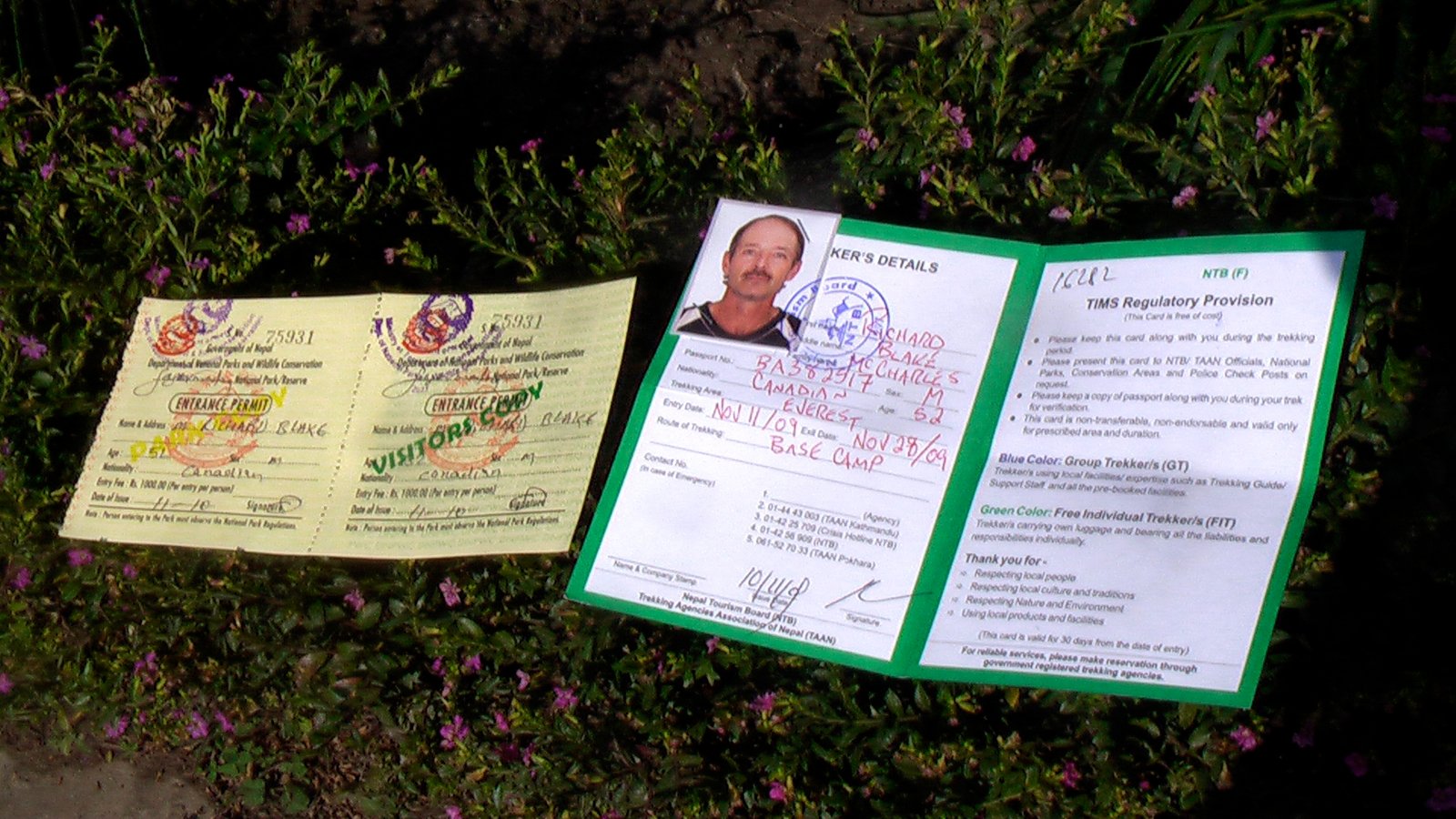
- Rick McCharles. \”Everest National Park permit and TIMS card.\” Wikimedia Commons, CC BY 2.0. commons.wikimedia.org/wiki/File:Everest_National_Park_permit_and_TIMS_card.jpg.
Related guides
Share this content: