Nagdhunga Tunnel Opens to Private Vehicles: Nepal First Road Tunnel Enters Trial Operation
Nepal’s first modern road tunnel — the 2.68-kilometre Nagdhunga–Sisnekhola Tunnel on the Tribhuvan Highway — opened to private vehicles on Monday, August 25, 2026, marking a significant milestone in the country’s transport infrastructure. Cars, jeeps, and vans carrying up to nine passengers can now use the tunnel daily from 9:00 AM to 6:00 PM as part of a trial operation phase, free of toll charges.
The tunnel, which connects Nagdhunga on the Kathmandu side with Sisnekhola in Dhading district, was formally inaugurated on July 27, 2026, but had initially been restricted to emergency vehicles only. The phased opening is being managed by the Nagdhunga Tunnel Road Safety Unit, which plans to gradually expand vehicle access after reviewing the initial trial period.
Table of Contents
1. What Changed: Private Vehicles Now Allowed
2. Nagdhunga Tunnel Specifications and Construction
3. Traffic Rules and Restrictions Inside the Tunnel
4. Toll Rates When Full Operations Begin
5. What This Means for Travelers Heading to Pokhara, Annapurna, and Beyond
6. From Foundation Stone to Opening: A Seven-Year Journey
7. The Tribhuvan Highway: Nepal’s Oldest Road Gets a Modern Upgrade
8. Comparison: Nagdhunga Tunnel vs. Old Road Route
9. Key Takeaways for Drivers and Tourists
10. Frequently Asked Questions
What Changed: Private Vehicles Now Allowed
As of Monday, August 25, private vehicles with up to nine seats — including cars, jeeps, and vans — are permitted to drive through the Nagdhunga Tunnel. Kabiraj Shrestha, deputy chief of the Nagdhunga Tunnel Road Safety Unit, confirmed that the trial operation began immediately, with no toll collected during this initial phase.
The tunnel operates from 9:00 AM to 6:00 PM for now. A flyover near Gurjudhara also came into operation on the same day, improving connectivity to the tunnel’s eastern approach. Authorities plan to analyse the first week of operations, collect driver feedback, and then decide on expanding to additional vehicle categories and longer operating hours.
During the trial period, no toll is charged. This gives drivers an opportunity to familiarise themselves with the tunnel’s layout, lighting, and safety protocols before paid operations begin.
Nagdhunga Tunnel Specifications and Construction
The Nagdhunga Tunnel is a landmark infrastructure project for Nepal. Here are the key specifications:
| Feature | Detail |
|---|---|
| Main tunnel length | 2.688 km (1.67 miles) |
| Emergency/evacuation tunnel | 2.55 km (1.6 miles), parallel to main tunnel |
| Number of lanes | 2 (one in each direction) |
| Carriageway width | 9.5 metres |
| Tunnel height | 8.3 metres |
| Grade | 3.5% |
| Approach road | 2.60 km, 2 lanes of 3.5 m width |
| Total project cost | Approximately Rs 29 billion |
| Financing | Rs 21.5 billion Japanese concessional loans + Rs 6 billion Nepal government |
| Contractor | Hazama Ando Corporation (Japan) |
| O&M contractor | Yusin–ART Joint Venture (5-year contract) |
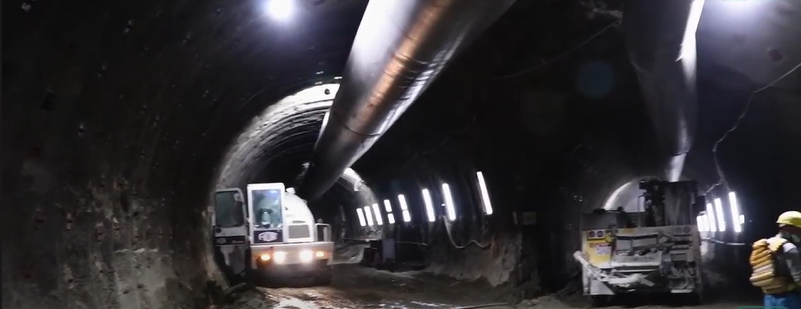
The tunnel features a parallel emergency evacuation tunnel with interconnections at regular intervals, allowing safe evacuation in case of incidents inside the main tunnel. The project also includes one overpass, three underpasses, a flyover at the Balambu interchange, toll facilities on both east and west sides, and a dedicated tunnel management office.
Traffic Rules and Restrictions Inside the Tunnel
Authorities have introduced strict traffic regulations to ensure safety inside the tunnel. These rules are being enforced through a comprehensive CCTV monitoring system:
- Speed limit: Maximum 40 km/h — no exceptions
- Headlights: Must remain on at all times inside the tunnel
- No stopping: Stopping inside the tunnel is strictly prohibited
- No overtaking: Overtaking or lane-changing is not allowed
- Prohibited vehicles: Motorcycles, scooters, three-wheelers (tempos), and pedestrians are banned
- Hazardous materials: Vehicles carrying flammable materials including diesel and petrol are prohibited
The safety unit and toll collection team are preparing for full-scale operation. During the trial phase, staff are monitoring traffic flow, driver behaviour, and any operational issues through the CCTV system. The Yusin–ART Joint Venture, which holds the five-year operation and maintenance contract, is responsible for routine inspections, civil and mechanical system maintenance, safety management, and eventual toll collection.
Toll Rates When Full Operations Begin
While the trial period is free, authorities have announced the toll structure that will apply once regular operations commence:
| Vehicle type | Entry toll (toward Kathmandu) | Exit toll (leaving Kathmandu) |
|---|---|---|
| Cars and vans | Rs 65 | Rs 60 |
| Minibuses and tipper trucks | Rs 115 | Rs 80 |
| Buses and trucks | Rs 260 | Rs 200 |
| Heavy trucks | Rs 600 | Rs 250 |
Toll booths are located on both sides of the tunnel — three booths with three lanes on the west side, and two booths with two lanes on the east side. The asymmetric configuration reflects the expected traffic volume patterns between Kathmandu and Dhading.
What This Means for Travelers Heading to Pokhara, Annapurna, and Beyond
For tourists and trekkers, the Nagdhunga Tunnel opening is significant. The Tribhuvan Highway connects Kathmandu to Naubise, where it intersects with the Prithvi Highway — the main route to Pokhara and the gateway to the Annapurna trekking region. By bypassing the notoriously steep and winding Nagdhunga hill section, the tunnel reduces travel time and improves road safety for anyone heading west from Kathmandu.
Here is what travelers need to know:
- Time savings: The tunnel cuts approximately 7–10 minutes from the drive and eliminates a steep, accident-prone hill climb. During monsoon season, when the old hill road is prone to landslides, the tunnel provides a reliable alternative.
- Current access: Tourists in private cars, hired jeeps, or small vans can use the tunnel during the 9 AM–6 PM window. Tourist buses and larger vehicles are not yet permitted but are expected to be added in later phases.
- Connecting to Pokhara: After exiting the tunnel at Sisnekhola (Dhading side), drivers continue on the Prithvi Highway toward Naubise, Mugling, and onward to Pokhara. The Prithvi Highway itself has experienced landslide-related disruptions recently, so travelers should check road conditions before departing.
- Motorbike restrictions: Trekkers who rent motorbikes in Kathmandu should note that two-wheelers are prohibited inside the tunnel. Motorcyclists must continue using the old hill road via Nagdhunga.
- Fuel restrictions: Vehicles carrying flammable materials, including fuel tankers, are banned. This does not affect standard tourist vehicles with normal fuel tanks — the restriction applies to commercial fuel transport.
For comprehensive information on reaching Nepal and navigating within the country, including flight options and overland border crossings, see our guide to getting to Nepal in 2026.
From Foundation Stone to Opening: A Seven-Year Journey
The Nagdhunga Tunnel project has been years in the making, with several delays along the way:
- October 21, 2019: Then Prime Minister KP Sharma Oli lays the foundation stone. Original completion target: 42 months (April 2023).
- 2020–2022: Construction delayed by the Covid-19 pandemic, local obstructions, compensation disputes, and geological challenges including six shear zones in the bedrock along the alignment.
- August 7, 2023: Breakthrough of the 2.557 km emergency tunnel achieved.
- June 17, 2024: Then Prime Minister Pushpa Kamal Dahal presides over the breakthrough ceremony of the main tunnel.
- May 2026: Final construction work completed and the project officially handed over to the Nepal government.
- July 27, 2026: Formal inauguration by Minister for Infrastructure Development Sunil Lamsal, in the presence of Japanese Ambassador Maeda Toru and JICA President Tanaka Akihiko. Initially limited to emergency vehicles only.
- August 25, 2026: Tunnel opens to private vehicles (up to 9 seats) on a trial basis, 9 AM–6 PM, free of toll.
The project’s cost rose from an initial estimate of approximately Rs 22 billion to a final cost of around Rs 29 billion. Japan provided an additional Rs 5 billion in loan assistance when costs increased during construction, on top of the initial Rs 16.5 billion (later revised to approximately Rs 21.5 billion total) in Japanese concessional loans. The Nepal government contributed approximately Rs 6 billion.
The Tribhuvan Highway: Nepal’s Oldest Road Gets a Modern Upgrade
The Nagdhunga Tunnel is built on the Tribhuvan Highway, Nepal’s first and oldest highway. Named in memory of King Tribhuvan (1906–1955), the highway was completed in 1956 with Indian assistance and became the first serviceable road connection between Kathmandu and India. The highway runs approximately 116 kilometres from Kathmandu’s outskirts to the Sirsiya Integrated Check Post in Birgunj on the Nepal-India border.
At Naubise, 25 kilometres west of Kathmandu, the Tribhuvan Highway intersects with the Prithvi Highway, which continues westward to Pokhara. The Nagdhunga hill section — the steep climb that the new tunnel bypasses — has long been one of the most challenging and dangerous stretches of the highway, particularly during monsoon when heavy rainfall triggers landslides and road subsidence.
Before the Tribhuvan Highway was built, travelers used a historic trade route passing through Kulekhani, Chitlang, Chandragiri Pass, and Thankot. The highway revolutionised connectivity when it opened in 1956, and the tunnel now represents its next major evolution — bringing 21st-century infrastructure to one of Nepal’s most important transport corridors.
Comparison: Nagdhunga Tunnel vs. Old Road Route
| Feature | Nagdhunga Tunnel | Old Hill Road (via Nagdhunga) |
|---|---|---|
| Distance | 2.68 km (direct) | ~7 km (winding hill road) |
| Travel time | ~4 minutes at 40 km/h | 15–25 minutes depending on traffic |
| Monsoon reliability | Not affected by landslides | Frequently blocked by landslides |
| Vehicle restrictions | Motorbikes, 3-wheelers, fuel tankers banned | All vehicles allowed |
| Speed limit | 40 km/h, no overtaking | Variable, steep grades |
| Operating hours | 9 AM–6 PM (trial phase) | 24 hours |
| Toll (trial phase) | Free | Free |
| Toll (regular operation) | Rs 65 (cars, entry); Rs 60 (exit) | Free |
Travelers on motorbikes or carrying flammable goods will continue using the old hill road. For everyone else, the tunnel offers a faster, safer, and more reliable alternative — especially during the monsoon months of June through September when the hill road is most vulnerable.
Key Takeaways for Drivers and Tourists
- The tunnel is now open to private vehicles (cars, jeeps, vans up to 9 seats) from 9 AM to 6 PM, free of charge during the trial period.
- Speed limit is 40 km/h — headlights must remain on, no stopping, no overtaking.
- Motorbikes and three-wheelers are banned — they must use the old Nagdhunga hill road.
- The tunnel bypasses the steep, landslide-prone Nagdhunga hill section on the Tribhuvan Highway, improving safety and reliability for Kathmandu-to-Pokhara travel.
- Tolls will apply once regular operations begin: Rs 65 for cars entering Kathmandu, Rs 60 for cars exiting.
- Tourist buses are not yet permitted — only private vehicles during the trial phase. Larger vehicles will be added in later phases.
- The Prithvi Highway beyond Naubise can still experience landslide disruptions; always check road and safety conditions before departing.
Related guide: Kathmandu Valley Heritage Guide
Frequently Asked Questions
Can tourists use the Nagdhunga Tunnel?
Yes, tourists traveling in private cars, hired jeeps, or vans with up to nine seats can use the tunnel during trial operation hours (9:00 AM to 6:00 PM). Tourist buses and larger vehicles are not yet permitted but are expected to be added in later phases as authorities expand access.
How much does it cost to use the Nagdhunga Tunnel?
During the current trial operation period, the tunnel is free for all permitted vehicles. Once regular paid operations begin, cars and vans will be charged Rs 65 when entering Kathmandu and Rs 60 when exiting. Heavier vehicles pay proportionally more.
Can I ride a motorcycle through the tunnel?
No. Motorcycles, scooters, and three-wheelers are prohibited from using the Nagdhunga Tunnel. Pedestrians are also banned. Motorcyclists must continue using the old Nagdhunga hill road, which remains open 24 hours.
What is the speed limit inside the tunnel?
The speed limit inside the Nagdhunga Tunnel is 40 km/h. Headlights must remain on at all times, stopping is prohibited, and overtaking is not allowed. The tunnel is monitored by CCTV cameras, and violations will be enforced.
Does the tunnel help get to Pokhara faster?
Yes. The tunnel bypasses the steep, winding Nagdhunga hill section on the Tribhuvan Highway, saving approximately 7–10 minutes and improving safety. After exiting the tunnel at Sisnekhola in Dhading, drivers continue on the Prithvi Highway toward Naubise and Mugling, then onward to Pokhara. However, the Prithvi Highway itself can experience landslide disruptions during monsoon, so check conditions before departing.
What vehicles are prohibited from the Nagdhunga Tunnel?
Motorcycles, scooters, three-wheelers, pedestrians, and vehicles carrying flammable materials (including fuel tankers transporting diesel and petrol) are prohibited. Standard tourist vehicles with normal fuel tanks are not affected — the restriction applies to commercial fuel transport vehicles.
When will the tunnel open to all vehicles and 24 hours?
The current phase is a trial operation limited to private vehicles from 9 AM to 6 PM. Authorities will analyse the first week of operations, collect driver feedback, and then decide on expanding vehicle categories and operating hours. Full 24-hour operation with toll collection is expected to follow once the trial phase is successfully completed.
Sources: Kathmandu Post (August 24–25, 2026); Wikipedia (Nagdhunga tunnel, Tribhuvan Highway). Image: Nagdhunga Tunnel by SNOW 977, Wikimedia Commons, CC BY-SA 4.0.
Published: August 25, 2026
Share this content: