Banke National Park Highway Travel Time Reduced: New Time-Card Rules for Mahendra Highway
Table of Contents
- What Changed: The New Time-Card Rules
- Why This Matters for Travelers and Tourists
- Banke National Park: A Protected Area on Nepal’s Main Highway
- How the Time-Card System Works
- Tourism Promotion Plans Along the Corridor
- Road Safety and Wildlife Conservation
- Practical Advice for Travelers on the Mahendra Highway
- Frequently Asked Questions
- Key Takeaways
What Changed: The New Time-Card Rules at Banke National Park
As of August 19, 2026, authorities have reduced the time allotted to vehicles traveling through the Banke National Park section of the East-West Mahendra Highway under a revised time-card system. A coordination meeting chaired by Kohalpur Municipality Mayor Purna Prasad Acharya on Tuesday, August 18, decided to shorten the permitted travel time between the Obhari and Khairi checkpoints — a 14.2-kilometre stretch of highway that cuts through the protected area — while still maintaining traffic flow through the park.
Under the Banke National Park Regulations, 2014, vehicles traveling at a speed of 40 kilometres per hour were previously allowed between 24 and 28 minutes to cover the 14.2-km stretch. The revised arrangement reduces the allotted time to between 21 and 24 minutes, saving travellers at least seven minutes. Ward 12 chair Birendra Shah stated that a scientific assessment demonstrated the distance could safely be covered within the new time frame, prompting the decision to implement the updated limit.
The meeting was attended by Banke National Park Senior Conservation Officer Birendra Prasad Kandel, Ranadhwaj Battalion commander Khim Bahadur Dangi, Kohalpur Municipality Ward 9 chair Opendranath Yogi, and Ward 12 chair Birendra Shah, among other local officials and park authorities.
Why This Matters for Travelers and Tourists
The Mahendra Highway — also known as NH01 or the East-West Highway — is Nepal’s longest highway, stretching over 1,030 kilometres from Mechinagar in the east to Bhim Datta in the west. It is the primary arterial road connecting the entire Terai region, and any change to its traffic rules affects virtually every overland traveller in southern Nepal.
For tourists heading to or from western Nepal — including those visiting Bardia National Park, Banke National Park, Lumbini, or the trekking trailheads of the far west — the Banke section is a mandatory transit point. The seven-minute saving may seem modest, but for long-distance bus travellers already facing 12+ hour journeys across the highway, every minute of reduced delay at park checkpoints adds up. The revision also signals a broader effort to balance transit efficiency with wildlife protection in one of Nepal’s key conservation corridors.
If you are planning an overland journey through Nepal, understanding how the time-card system works at Banke — and at the similar Chitwan National Park crossing — can help you estimate travel times more accurately and avoid unnecessary delays. For a broader overview of travel logistics in Nepal, see our complete guide to getting to Nepal in 2026.
Banke National Park: A Protected Area on Nepal’s Main Highway
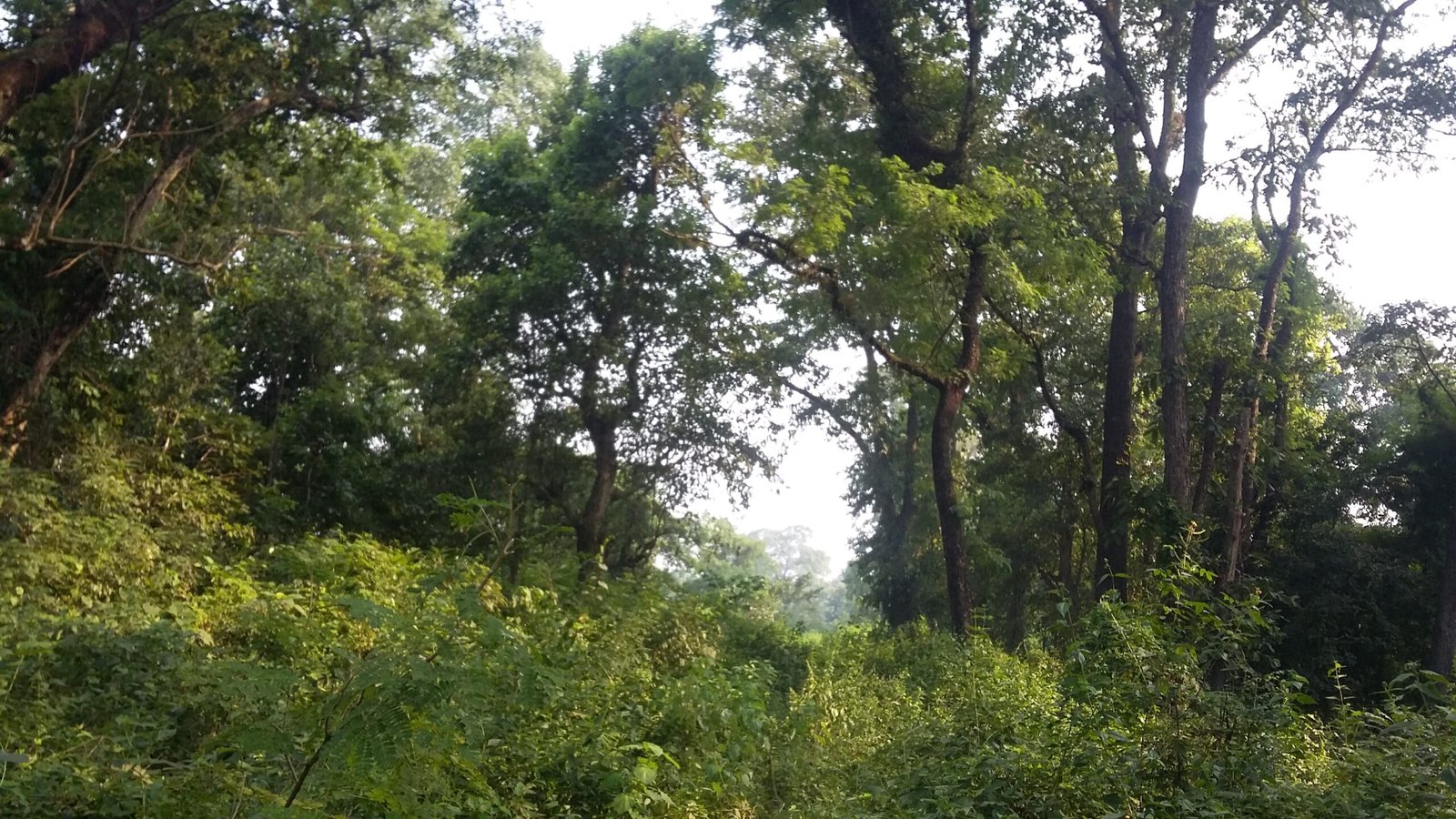
Banke National Park, established in 2010 as Nepal’s tenth national park, covers 550 square kilometres in the Sivalik Hills of Lumbini Province, with a surrounding buffer zone of 344 square kilometres spanning the districts of Banke, Salyan, and Dang Deukhuri. The park was designated after being recognised as a “Gift to the Earth” — a conservation designation from WWF acknowledging its global biodiversity significance.
Together with the neighbouring Bardia National Park, Banke forms a coherent protected area of 1,518 square kilometres known as the Tiger Conservation Unit (TCU) Bardia-Banke — one of Nepal’s most important tiger habitats. The park is home to Bengal tigers, four-horned antelopes, and at least 113 tree species, 107 herbal species, and 85 shrub and climber species. In 2014, a ruddy mongoose was recorded in the park for the first time, underscoring its biodiversity value.
The Mahendra Highway passes directly through this protected area, creating a unique situation where Nepal’s busiest east-west transport corridor intersects one of its most sensitive wildlife habitats. This is why the time-card system exists: to control vehicle speed through the park, reduce wildlife-vehicle collisions, and minimise disturbance to animals crossing the road.
Banke is not as well-known to international tourists as Chitwan or Bardia, but it is increasingly promoted as a wildlife destination. For travellers interested in Nepal’s national parks more broadly, our Chitwan National Park guide covers the most visited of Nepal’s Terai parks.
How the Time-Card System Works
The time-card system is a speed-control mechanism used on highway sections that pass through national parks in Nepal. Here is how it works in practice:
- Entry checkpoint: When a vehicle enters the park section of the highway, it stops at the first checkpoint (Obhari, in Banke’s case). The driver is issued a time-card recording the exact entry time.
- Transit through the park: The vehicle drives through the park section at a controlled speed. The speed limit is 40 km/h — deliberately low to minimise wildlife collisions and noise disturbance.
- Exit checkpoint: At the second checkpoint (Khairi), the time-card is checked. If the vehicle arrives too early — meaning it exceeded the speed limit — the driver is fined or held for the remaining time before being allowed to proceed.
- Minimum and maximum time: The system sets both a minimum (you cannot arrive faster than this) and a maximum (you should not take longer than this unless you stop) travel time. Under the old Banke rules, this was 24–28 minutes. Under the revised rules effective August 2026, it is 21–24 minutes.
The time-card system is also in effect on the Mahendra Highway section through Chitwan National Park, where similar speed limits and checkpoint controls apply. Both systems operate under the respective national park regulations and are enforced by park authorities in coordination with local police and military units stationed near the parks.
| Parameter | Old Rule (pre-Aug 2026) | Revised Rule (Aug 2026) |
|---|---|---|
| Speed limit | 40 km/h | 40 km/h (unchanged) |
| Distance | 14.2 km (Obhari–Khairi) | 14.2 km (unchanged) |
| Minimum time | 24 minutes | 21 minutes |
| Maximum time | 28 minutes | 24 minutes |
| Time saved per vehicle | — | ~7 minutes |
Tourism Promotion Plans Along the Corridor
The coordination meeting did not only revise the time-card system — it also produced a set of tourism promotion decisions that could increase Banke National Park’s visibility as a visitor destination. Key initiatives agreed at the meeting include:
- Information boards and road signs: Kohalpur Municipality and Banke National Park will jointly install information boards and road signs at various locations along the highway. These will promote tourism, encourage coexistence between people and wildlife, and help reduce road accidents.
- Hording boards at key entry points: In coordination with Nepalgunj Sub-Metropolitan City and other relevant agencies, large hoarding boards and information signs will be placed at Jhudwa border point, Ranjha Chowk, Nepalgunj Airport, and Kohalpur Chowk — all major entry points to the Banke district area.
- Park-tourism linkage: The meeting discussed linking park conservation with tourism promotion and local development, with participants agreeing to move forward through greater coordination among local governments and park authorities.
These initiatives are significant because Banke has historically been overshadowed by its more famous neighbour, Bardia National Park, in the western Terai tourism circuit. The new signage and promotion efforts could help position Banke as a complementary wildlife destination, particularly for travellers already passing through on the Mahendra Highway.
Road Safety and Wildlife Conservation
The time-card system serves a dual purpose: regulating traffic flow and protecting wildlife. Nepal’s national parks that are bisected by major highways face a persistent challenge with wildlife-vehicle collisions. The 40 km/h speed limit through Banke is designed to give drivers enough reaction time to avoid hitting animals — particularly at dawn and dusk when wildlife is most active and visibility is reduced.
The decision to install road signs promoting coexistence between people and wildlife acknowledges that the Mahendra Highway is not just a transport corridor but also a shared space with the park’s animal inhabitants. The involvement of the Ranjha Battalion commander in the coordination meeting reflects the military’s role in park security and wildlife protection — Nepal Army units are stationed in national parks to support anti-poaching and conservation efforts.
For travellers, this means that the time-card checkpoint is not an arbitrary delay but a conservation measure. Arriving at the exit checkpoint a few minutes “late” is not penalised — it is arriving too early (speeding) that triggers a fine. For broader safety guidance when traveling in Nepal’s mountain and park regions, see our Nepal trekking safety and health complete guide, which covers road safety, park regulations, and emergency preparedness.
Practical Advice for Travelers on the Mahendra Highway
If you are traveling on the Mahendra Highway through Banke National Park, here is what you need to know:
- Keep your time-card: Do not lose the card issued at the entry checkpoint. You will need to present it at the exit.
- Maintain 40 km/h: The speed limit is strictly enforced through the time-card system. Driving faster will result in a fine and a mandatory wait at the exit checkpoint.
- Do not stop inside the park: Unless there is an emergency, do not stop your vehicle inside the park section. This includes photography stops — the park is a protected area and stopping can disturb wildlife.
- Travel during daylight: Wildlife is most active at dawn and dusk. If possible, plan your transit through the park section during full daylight hours for maximum visibility and safety.
- Expect checkpoints: Factor the checkpoint time (now 21–24 minutes under the revised system) into your travel estimate. During peak hours, there may be brief queues at the entry checkpoint.
- Keep windows up in sensitive areas: While driving through the park, keep windows up and do not throw food or waste — this can attract wildlife to the road and create collision risks.
For those planning a longer Nepal itinerary, the best travel windows are typically outside the monsoon season (June–September) when highway conditions are most reliable. See our guide on the best time to visit Nepal in 2026 for seasonal planning advice.
Frequently Asked Questions
What is the time-card system at Banke National Park?
The time-card system is a speed-control mechanism for vehicles driving through the Banke National Park section of the Mahendra Highway. Vehicles receive a time-card at the entry checkpoint (Obhari) and must arrive at the exit checkpoint (Khairi) within a specified time window. The system enforces a 40 km/h speed limit to protect wildlife and reduce road accidents. As of August 2026, the permitted time is 21–24 minutes for the 14.2-km stretch, reduced from the previous 24–28 minutes.
How much time does the Banke National Park crossing take?
Under the revised time-card system effective August 2026, the 14.2-km park section takes between 21 and 24 minutes to transit. This is approximately 7 minutes faster than the previous rule. Factor this into your overall travel time estimate on the Mahendra Highway.
Is the time-card system also used at Chitwan National Park?
Yes, a similar time-card system is in effect on the Mahendra Highway section through Chitwan National Park. Both systems enforce a 40 km/h speed limit and use entry-exit checkpoints to monitor transit times. The specific time windows may differ from Banke’s, so check locally if you are transiting Chitwan.
Can tourists visit Banke National Park?
Yes, Banke National Park is open to visitors, though it is less developed for tourism than Chitwan or Bardia. The park is home to Bengal tigers, four-horned antelopes, and diverse flora. The August 2026 coordination meeting included plans to promote Banke as a tourism destination, with new information boards and signage to be installed along the highway corridor.
What happens if I drive too fast through the park section?
If your time-card shows you arrived at the exit checkpoint faster than the minimum allowed time (21 minutes under the new rules), you will be fined and/or held at the checkpoint until the minimum time has elapsed. The system is designed to make speeding through the park pointless — you cannot save time by driving faster.
Where is Banke National Park located?
Banke National Park is in Lumbini Province, in the western Terai region of Nepal. It covers 550 square kilometres in the Sivalik Hills, with a buffer zone spanning Banke, Salyan, and Dang Deukhuri districts. The nearest major city is Nepalgunj, which has an airport (Nepalgunj Airport) and is a gateway to the western Terai and far-western trekking regions.
Key Takeaways
- Revised time-card rules: As of August 19, 2026, travel time through Banke National Park on the Mahendra Highway is reduced from 24–28 minutes to 21–24 minutes for the 14.2-km stretch, saving approximately 7 minutes per vehicle.
- Speed limit unchanged: The 40 km/h speed limit remains in place — the revision reflects a scientific assessment that the distance can be safely covered in less time at that speed.
- Tourism promotion: New information boards, road signs, and hoarding boards will be installed at key locations including Jhudwa border point, Ranjha Chowk, Nepalgunj Airport, and Kohalpur Chowk to promote Banke as a tourism destination.
- Conservation focus: The time-card system and new signage aim to balance efficient transit with wildlife protection, as Banke is part of the Tiger Conservation Unit Bardia-Banke.
- Practical impact: Long-distance travellers on the Mahendra Highway will experience slightly reduced delays at the Banke checkpoint. Factor 21–24 minutes into your travel estimate.
Source: Online Khabar English, “Travel time through Banke National Park reduced under revised time-card system,” August 19, 2026. Background facts on Banke National Park and the Mahendra Highway sourced from Wikipedia. This article was published on TravellingNepal.com on August 20, 2026.

Share this content: