Problem Tiger Captured in Bardiya After 19-Day Hunt: What Wildlife Tourists Need to Know
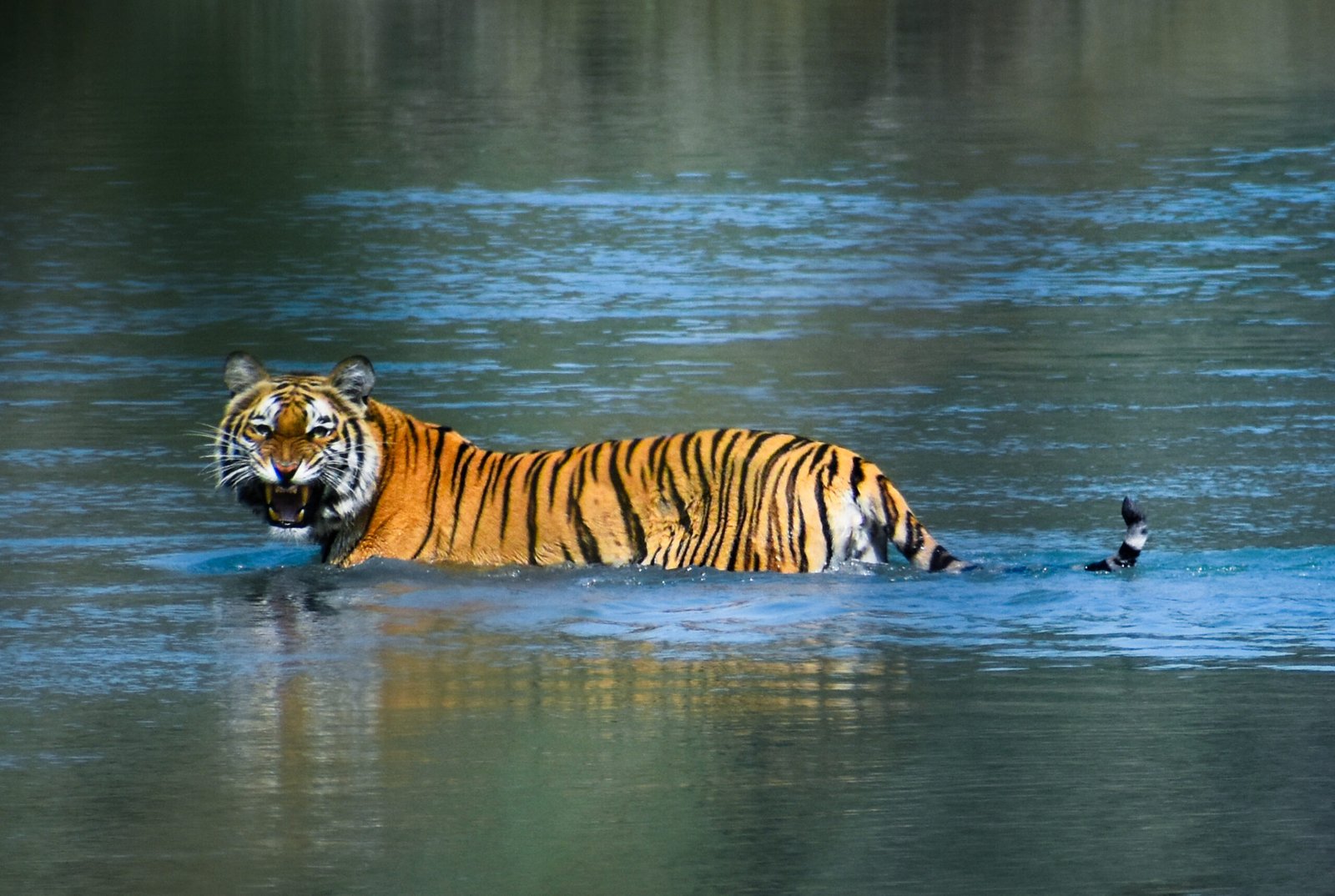
As of August 20, 2026 — A Royal Bengal tiger that had been terrorising settlements near Bardiya National Park for over a month has been captured in a 19-day joint operation led by park authorities, the National Trust for Nature Conservation (NTNC), and the Nepali Army. The tiger was darted and taken into control from the Patalchuli Community Forest in Geruwa Rural Municipality-4, located within the park’s buffer zone.
Complete guide: Nepal Trekking Safety & Health: The Complete Guide
The capture brings relief to local communities who had been living in fear as the tiger repeatedly entered villages, preying on cows, oxen, and goats directly from their sheds. According to Ashok Ram, chief warden of Bardiya National Park, the operation required nearly three weeks of tracking. “Because a ‘problem’ tiger accustomed to eating livestock could attack humans, a search had been ongoing there for 19 days,” he said. “After locating the tiger through camera trapping, we controlled it by darting it.”
The story is a stark reminder that Nepal’s remarkable success in tiger conservation brings with it an escalating challenge: managing the conflict between growing tiger populations and the communities that live alongside them. For tourists planning a wildlife safari in Bardiya, understanding this dynamic is essential.
Table of Contents
- What Happened: The 19-Day Capture Operation
- What Is a “Problem Tiger”?
- Bardiya’s Tiger Population: A Census in Decline?
- Human-Wildlife Conflict in Nepal’s Terai
- What Wildlife Tourists Need to Know
- Planning a Bardiya Safari: Key Information
- The Bigger Picture: Nepal’s Tiger Conservation Story
- Frequently Asked Questions
- Key Takeaways
What Happened: The 19-Day Capture Operation
The tiger was captured on August 19, 2026, from the Patalchuli Community Forest in Geruwa Rural Municipality-4, a buffer-zone area bordering Bardiya National Park in far-western Nepal. The operation was a joint effort involving:
- Bardiya National Park — led by chief warden Ashok Ram, providing technical staff and darting equipment
- National Trust for Nature Conservation (NTNC) — Nepal’s premier conservation organisation, whose Bardiya programme chief Ajit Tumbahangphe coordinated the field operation
- Nepali Army — deployed for security, as problem tigers can be extremely dangerous to approach
The team used camera trapping — a technique where motion-activated cameras are placed in strategic locations to monitor wildlife movements — to locate the tiger. Once its position was confirmed, wildlife technicians moved in and darted the animal with a sedative, allowing it to be safely restrained and transported.
Local residents had been reporting the tiger’s incursions into settlements for over a month. The animal had been entering villages at night, pulling livestock from sheds and killing cows, oxen, and goats. No human casualties were reported, but the psychological toll on the community was significant — villagers were afraid to move outside after dark.
According to Ajit Tumbahangphe, NTNC’s Bardiya programme chief, this is part of a concerning pattern: three problem tigers have been captured from this area over the past two years, and six problem tigers have been taken into control in Bardiya over the past eight years. Among the previously captured tigers, three are currently held at Rammapur within the park, and two are in enclosures at Thakurdwara. One tiger died of natural causes in Rammapur about seven months ago.

What Is a “Problem Tiger”?
In wildlife conservation terminology, a “problem tiger” — sometimes called a “conflict tiger” — is an individual tiger that has developed a pattern of preying on livestock or attacking humans rather than hunting its natural wild prey. This behaviour typically emerges when a tiger’s natural prey base has been depleted, when the animal has been injured or aged past its prime hunting ability, or when habitat fragmentation pushes tigers into closer contact with human settlements.
Tigers are apex predators that require large territories and abundant prey. A single Bengal tiger can consume up to 40 kilograms of meat in a single meal and typically hunts wild deer, wild boar, and other ungulates. When these prey species decline — due to habitat loss, poaching, or competition with livestock for grazing — tigers may turn to the easiest available food source: domestic animals kept in village sheds.
The transition from wild prey to livestock is dangerous because it brings tigers into direct proximity with humans. A tiger that has learned to raid livestock sheds will return repeatedly, and the risk of a human encounter escalates with each visit. This is why park authorities treat problem tigers as a priority: once a tiger has habituated to killing livestock, the likelihood of it attacking a person increases significantly.
Nepal’s approach to problem tigers follows international best practice. Rather than killing the animal, authorities attempt to capture and relocate it. Captured tigers are typically held in specialised enclosures within national parks — at Rammapur and Thakurdwara in Bardiya’s case — where they are monitored, fed, and studied. Some are transferred to zoos or rescue centres. Euthanasia is considered an absolute last resort, reserved for tigers that have killed humans and pose an ongoing, unmanageable threat.
Bardiya’s Tiger Population: A Census in Decline?
One of the most striking details from the Kathmandu Post report is that Bardiya’s tiger population has dropped to 112, down from 125 in 2022. This figure comes from the latest national tiger census and represents a concerning reversal for a park that had been celebrated as one of Nepal’s greatest tiger conservation success stories.
Nepal’s tiger conservation journey has been remarkable. In 2010, Nepal signed the St. Petersburg Declaration, committing to double its wild tiger population by 2022 (the next Year of the Tiger in the Chinese zodiac). At the time, Nepal had approximately 121 tigers. By the 2022 census, the national population had reached 355 tigers — a nearly threefold increase that exceeded the doubling target and made Nepal one of the few countries to achieve this global commitment.
Bardiya National Park was at the heart of this success. The park’s tiger population surged from just 18 individuals in 2009 to 125 in 2022, making it the second-largest tiger population in Nepal after Chitwan National Park. The park’s vast grasslands, riverine forests, and relatively low human disturbance provided ideal habitat for tigers to thrive.
The decline to 112 tigers, while not catastrophic, raises important questions. Possible factors include:
- Natural population fluctuation — tiger populations in protected areas can stabilise or slightly decline as they reach the carrying capacity of the habitat
- Prey base depletion — if wild ungulate populations are declining, tigers may struggle to find sufficient food, pushing them toward livestock
- Habitat pressure — the Nepalgunj-Surkhet highway that forms Bardiya’s southern boundary disrupts the protected area and can cause tiger mortality through vehicle collisions
- Transboundary movement — tigers in the Terai move freely between Nepal and India; some individuals counted in 2022 may have shifted to adjacent Indian reserves
The connection between tiger population density and human-wildlife conflict is complex. While more tigers generally means more potential for conflict, the real driver is prey availability. A park with 125 tigers and a healthy prey base will see less conflict than a park with 100 tigers and a depleted prey base. The fact that three problem tigers have been captured in two years suggests that Bardiya’s prey-predator balance may be under stress.
Human-Wildlife Conflict in Nepal’s Terai
Human-wildlife conflict is one of the most pressing conservation challenges in Nepal’s lowland Terai region, where national parks and community forests sit alongside dense human settlements. The problem is not limited to tigers — elephants, rhinoceros, leopards, and wild boar all cause damage to crops, property, and occasionally human life — but tiger conflicts are the most dangerous because of the sheer power of the animal involved.
According to the Wikipedia article on Bardiya National Park, in 2021 alone, four tigers killed ten people and injured several others in the park area. Three of those tigers were captured and transferred to rescue facilities; two were housed at the rescue facility within Bardia National Park itself. This spike in attacks prompted a major review of park management and community safety protocols.
Several factors drive the conflict:
| Factor | Impact on Conflict |
|---|---|
| Buffer-zone settlement | Villages in buffer zones are directly in tiger territory; livestock is easy prey |
| Prey depletion | When wild prey declines, tigers switch to domestic animals |
| Highway disruption | The Nepalgunj-Surkhet highway fragments habitat and causes vehicle-tiger collisions |
| Climate pressure | Changing rainfall patterns affect grassland and prey species habitat |
| Tiger population growth | More tigers in a finite habitat increases territory overlap with human areas |
Nepal has implemented several strategies to mitigate conflict, including buffer-zone management programmes, compensation schemes for families who lose livestock or property to wildlife, and rapid-response teams that can be deployed when a problem animal is identified. The NTNC, established in 1982 as an autonomous conservation organisation, plays a central role in these efforts, working across the lowland parks of Chitwan, Bardiya, and Kanchanpur as well as the high-mountain regions of Annapurna, Manaslu, and Mustang.
What Wildlife Tourists Need to Know
For tourists planning a wildlife safari in Bardiya National Park, this incident raises a natural question: is it safe to visit? The short answer is yes — with appropriate precautions. Here is what you need to know:
Park Safety Is Well-Managed
Bardiya National Park has a robust safety infrastructure. All safaris — whether by jeep, on foot, or by elephant — are accompanied by trained guides and park rangers. The presence of the Nepali Army within the park provides additional security. The capture of this problem tiger means the immediate threat to nearby communities has been removed.
Buffer-Zone Precautions
If you are staying in lodges in the Thakurdwara area or other buffer-zone locations, follow your lodge’s safety guidelines. Do not walk alone after dark, keep your distance from any wildlife you encounter, and never approach a tiger or other large mammal on foot. The buffer zone is shared space — wildlife moves through it regularly.
Tiger Sightings Are Not Guaranteed
Bardiya is known for offering some of the best tiger sightings in Nepal, but tigers are elusive animals. The park’s tiger density of roughly 112 individuals across 968 square kilometres means there is approximately one tiger per 8.6 square kilometres. Morning and late-afternoon jeep safaris offer the best chances, particularly in the Karnali River floodplain and Babai Valley areas.
The Best Safari Seasons
The optimal time for wildlife viewing in Bardiya is during the dry season (October to March), when grass is shorter, water sources are concentrated, and animals are easier to spot. The monsoon season (June to September) brings lush vegetation that conceals wildlife, and many park roads become impassable. However, the monsoon is when tiger movement can increase as prey disperses.
If you are planning a broader Nepal wildlife itinerary, the Chitwan National Park guide covers Nepal’s other major tiger reserve, which has a higher visitor infrastructure and a larger tiger population. For those travelling through the western Terai, the recent Banke National Park highway time-card rules are also worth knowing about, as Banke adjoins Bardiya to form the Tiger Conservation Unit Bardia-Banke.
Planning a Bardiya Safari: Key Information
Bardiya National Park, established in 1988 as Royal Bardia National Park, is the largest and most undisturbed national park in Nepal’s Terai. Covering 968 square kilometres, it lies along the eastern bank of the Karnali River and is bisected by the Babai River. Together with the neighbouring Banke National Park, the coherent protected area spans 1,437 square kilometres.
Here is what you need to plan your visit:
| Detail | Information |
|---|---|
| Park size | 968 km² (374 sq mi) |
| Established | 1988 (as Royal Bardia National Park) |
| Nearest city | Nepalgunj (about 60 km away) |
| Main entry point | Thakurdwara (park headquarters) |
| Key wildlife | Bengal tiger, Indian rhinoceros, Asian elephant, Gangetic dolphin, gharial, barasingha |
| Bird species | 407 recorded species |
| Best season | October–March (dry season) |
| Tiger population | 112 (latest census, down from 125 in 2022) |
Bardiya is less visited than Chitwan, which means fewer crowds and a more pristine wilderness experience. The park is home to at least 53 mammal species, 642 faunal species, and 407 bird species — including the endangered Bengal florican, white-rumped vulture, and bar-headed geese. The Karnali-Babai river system hosts 125 recorded fish species and a small population of gharials (the narrow-snouted crocodile).
For travellers interested in a guided safari experience, Bardiya National Park tours are available through organised operators who handle permits, accommodation, and guided excursions. The park’s relative remoteness — compared to Chitwan’s easy access from Kathmandu — means most visitors fly to Nepalgunj and drive to the park, making advance planning essential.
For a broader overview of Nepal’s adventure offerings beyond wildlife, see our Top 10 Best Adventures in Nepal guide, which covers everything from trekking to rafting to jungle safaris.
The Bigger Picture: Nepal’s Tiger Conservation Story
Nepal’s tiger conservation programme is widely regarded as one of the most successful in the world. The country’s 2022 census recorded 355 tigers — up from just 121 in 2010 — making Nepal one of only a handful of countries to meet the St. Petersburg Declaration’s goal of doubling wild tiger populations by 2022. This success was achieved through a combination of strict anti-poaching enforcement, community-based conservation programmes, habitat restoration, and transboundary cooperation with India.
However, the success has brought its own challenges. More tigers in a country with a growing human population and limited protected habitat means more opportunities for conflict. The Bengal tiger population across its entire range — India, Nepal, Bhutan, Bangladesh, and southwestern China — was estimated at 3,167–3,682 individuals in India, 316–355 in Nepal, 131 in Bhutan, and around 125 in Bangladesh as of 2022. Nepal’s share of this population, while growing, remains a small fraction of the global total, making every individual tiger significant.
The capture of problem tigers, while necessary for community safety, also represents a loss for the wild population. A tiger in captivity cannot breed, hunt, or contribute to the genetic diversity of the wild population. This is why Nepal’s conservation strategy emphasises prevention — maintaining healthy prey populations, protecting habitat corridors, and managing buffer zones — to reduce the conditions that create problem tigers in the first place.
The NTNC, which played a key role in this capture operation, has been at the forefront of Nepal’s conservation efforts since its establishment in 1982. Originally known as the King Mahendra Trust for Nature Conservation, the organisation works across three geographical zones: the lowlands (Chitwan, Bardiya, Kanchanpur/Koshi Tappu), the mid-hills (Kathmandu Valley), and the high mountains (Annapurna, Manaslu, Upper Mustang). Its Bardiya programme, led by Ajit Tumbahangphe, is responsible for wildlife monitoring, conflict mitigation, and community engagement in the park’s buffer zone.
Frequently Asked Questions
Is Bardiya National Park safe to visit after this incident?
Yes. The problem tiger has been captured and removed from the wild. Park authorities, the NTNC, and the Nepali Army maintain a robust safety infrastructure. All safaris are guided by trained professionals. Standard wildlife safety precautions apply: do not walk alone after dark in buffer zones, follow guide instructions, and maintain distance from all wildlife.
How many tigers are in Bardiya National Park?
The latest census puts Bardiya’s tiger population at 112, down from 125 in 2022. This makes Bardiya the second-largest tiger population in Nepal after Chitwan National Park. The slight decline may reflect natural population stabilisation, prey base changes, or transboundary movement between Nepal and India.
What is a “problem tiger”?
A problem tiger is one that has developed a pattern of preying on livestock or attacking humans instead of hunting wild prey. This typically happens when natural prey is depleted, when the tiger is injured or old, or when habitat loss pushes tigers into human settlements. Problem tigers are captured and held in enclosures rather than killed, whenever possible.
What are the chances of seeing a tiger in Bardiya?
Bardiya offers some of the best tiger-sighting opportunities in Nepal, though sightings are never guaranteed. With 112 tigers across 968 km², the density is roughly one tiger per 8.6 km². Morning and late-afternoon jeep safaris in the Karnali floodplain and Babai Valley offer the best chances, especially during the dry season from October to March.
How do I get to Bardiya National Park?
Most visitors fly to Nepalgunj (daily flights from Kathmandu) and then drive approximately 60 km to the park entrance at Thakurdwara. The drive takes about 2–3 hours. Some visitors also travel overland from Kathmandu, but this is a long journey of 15+ hours.
What other wildlife can I see in Bardiya besides tigers?
Bardiya is home to Indian rhinoceros, Asian elephants, Gangetic dolphins, gharials, mugger crocodiles, barasingha (swamp deer), hog deer, spotted deer, and 407 bird species including the Bengal florican and white-rumped vulture. The park’s river systems are particularly rich in aquatic life.
Has Nepal’s tiger population been increasing or decreasing?
Nationally, Nepal’s tiger population increased dramatically from 121 in 2010 to 355 in 2022, meeting the international goal of doubling tigers by 2022. However, the latest Bardiya-specific figure of 112 (down from 125 in 2022) suggests local populations may be stabilising or slightly declining, which researchers are monitoring closely.
Key Takeaways
- A Royal Bengal tiger was captured after a 19-day joint operation by Bardiya National Park, NTNC, and the Nepali Army on August 19, 2026
- The tiger had been terrorising buffer-zone villages for over a month, killing livestock from sheds
- Three problem tigers have been captured from the area in two years; six in eight years total
- Bardiya’s tiger population has dropped to 112 from 125 in 2022, raising questions about prey base and habitat pressure
- The capture highlights the ongoing challenge of human-wildlife conflict in Nepal’s Terai, even as the country celebrates tiger conservation success
- Bardiya National Park remains safe for tourists; safaris are guided and the park has robust safety protocols
- For safari-goers, the dry season (October–March) offers the best wildlife viewing conditions
Source: Kathmandu Post, August 19, 2026. Additional background from Wikipedia and NTNC publications. Published August 20, 2026.
Related Guides
- Nepal Trekking Safety & Health: The Complete Guide
- Chitwan National Park Guide 2026: Safari, Fees, Best Time & How to Get There
- Banke National Park Highway Travel Time Reduced: New Time-Card Rules
- Nepal UNESCO World Heritage Sites: The Complete 2026 Guide
Share this content: