Autumn Climbing Season Opens in Nepal: 367 Permits Issued
Published: September 5, 2026. Permit figures confirmed as of Thursday, September 3, 2026.
Nepal has opened the autumn 2026 mountaineering season. The Department of Tourism began issuing expedition permits this week, and by Thursday, September 3, a total of 367 climbers from 32 teams had already received permission to climb — 348 of them for Manaslu (8,163 m) alone. The season is opening while the government simultaneously pushes its #NepalCalling campaign to reassure travellers after the late-August monsoon floods, making this one of the most closely watched autumn seasons in recent memory.
Verification note: All permit figures below are CONFIRMED by the Department of Tourism and reported by Online Khabar English (September 4, 2026). Campaign details, arrival statistics and regional status are CONFIRMED by the Kathmandu Post (September 3, 2026). Season-total forecasts do not exist yet and are labelled EXPECTED where mentioned.

Key takeaways
- Nepal’s Department of Tourism has issued autumn climbing permits to 367 mountaineers from 32 teams as of September 3, 2026 — 87 of them women.
- Manaslu attracts 348 climbers from 29 teams — roughly 95 percent of all permits issued so far.
- China is the largest source of climbers (55), followed by Russia (39) and the United States (32).
- September–November normally delivers nearly 40 percent of Nepal’s annual tourist arrivals, so this season carries unusual economic weight.
- The Langtang region’s treks remain closed after the Rasuwa floods; most other major destinations — including the Annapurna and Everest regions — are open.
In this article:
- What the Department of Tourism has confirmed
- Why Manaslu is the star of the autumn season
- Autumn vs spring: how Nepal’s two climbing windows compare
- #NepalCalling: a season opening under recovery pressure
- Which regions are open — and which should you avoid for now
- Climbing permit vs trekking permit: don’t mix them up
- Planning an autumn 2026 expedition
- Frequently asked questions
- Sources
What the Department of Tourism Has Confirmed
The Department of Tourism began issuing permits for the autumn mountaineering season in the first week of September 2026, and the early numbers signal strong international interest despite the monsoon flooding that devastated parts of central Nepal in late August.
As of Thursday, September 3, the confirmed breakdown by peak is:
| Peak | Height | Climbers permitted | Teams |
|---|---|---|---|
| Manaslu | 8,163 m | 348 | 29 |
| Danga Himal | 6,220 m | 16 | 2 |
| Makalu | 8,485 m | 3 | 1 |
| Total | — | 367 | 32 |
Eighty-seven of the 367 permitted climbers are women. The department also released the leading nationalities among permit holders so far — a snapshot of where autumn expedition demand is coming from:
| Country | Climbers with permits (as of Sep 3) |
|---|---|
| China | 55 |
| Russia | 39 |
| United States | 32 |
| France | 27 |
| United Kingdom | 24 |
| Nepal | 15 |
| Poland | 14 |
| Canada | 14 |
| Germany | 14 |
The department listed these as the leading nationalities; the remaining permit holders come from other countries. These are first-week figures only — the department has not issued a forecast for total autumn permits, and any projection of final-season numbers should be treated as EXPECTED, not confirmed.
Why Is Manaslu the Star of the Autumn Season?
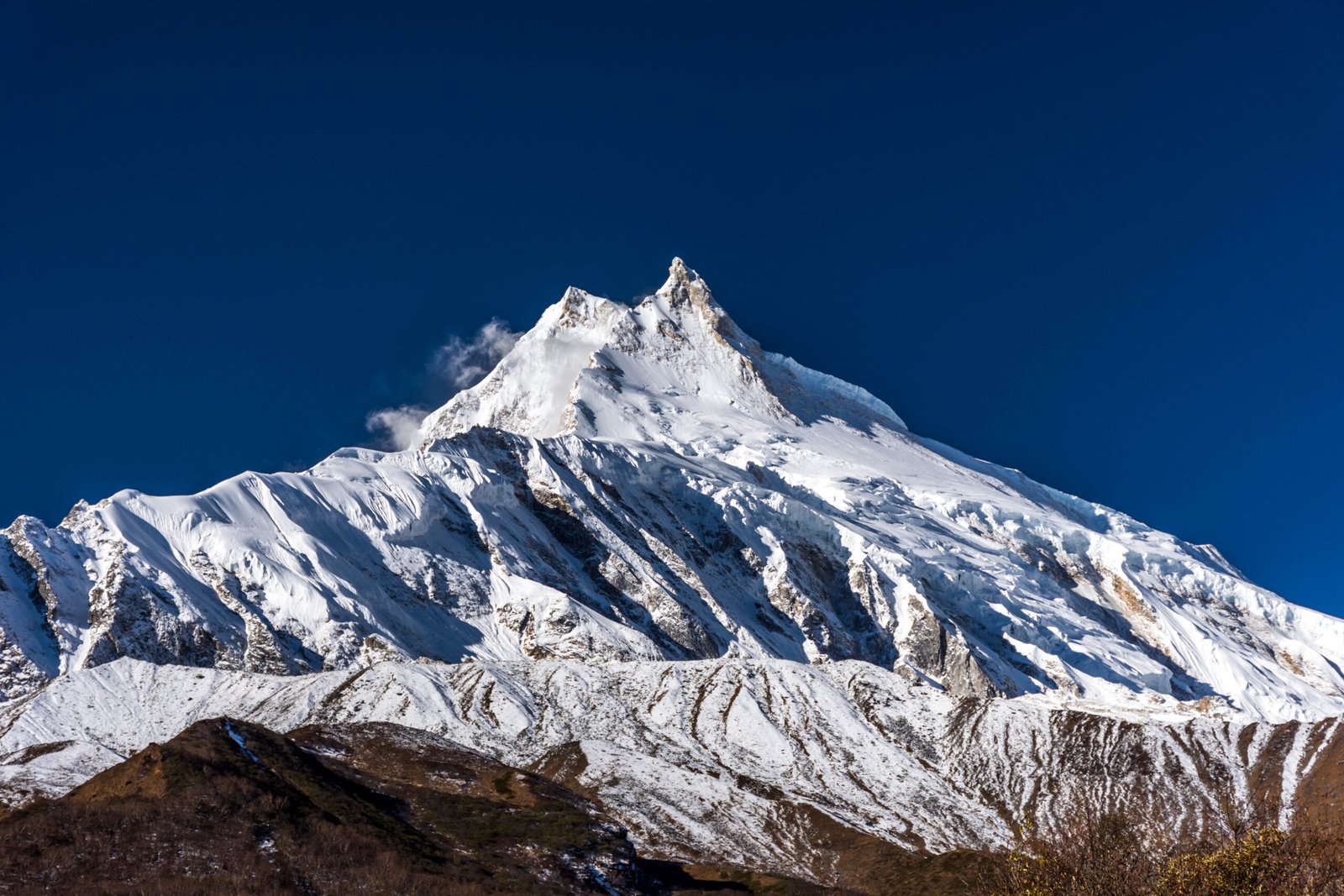
Nearly every permit issued so far — 348 of 367 — points at a single mountain. That is not a surprise to anyone who follows Nepal’s autumn expedition calendar: Manaslu, the world’s eighth-highest peak at 8,163 metres, has become the classic autumn objective for commercial expedition teams.
Some background on the mountain itself, for context the permit numbers don’t provide:
- Geography: Manaslu sits in the Mansiri Himal in west-central Nepal’s Gorkha district, about 64 km east of Annapurna. Its name derives from the Sanskrit manasa — “intellect” or “soul” — and it is often translated as “mountain of the spirit.”
- History: It was first climbed on May 9, 1956, by Toshio Imanishi and Gyalzen Norbu, members of a Japanese expedition — one of the last of the eight-thousanders to fall.
- Seriousness: Manaslu is considered one of the riskier eight-thousanders. Wikipedia’s climbing record, drawn from the Himalayan Database, counted 297 ascents and 53 deaths as of May 2008 — a reminder that its “easier” reputation among commercial operators is relative, not absolute.
- The trek beneath it: The 177 km Manaslu Circuit, which crosses the 5,106 m Larkya La pass and follows an ancient salt-trading route up the Budhi Gandaki valley, was only opened to organised trekking in 1991 and is now one of Nepal’s most sought-after restricted-area treks.
Manaslu’s dominance this autumn also reflects a practical reality: the Makalu permit holders number just three climbers from one team, and Danga Himal (6,220 m) is a niche objective. When one peak takes 95 percent of early permits, the season’s story — and its risks — concentrates on one mountain.
Autumn vs Spring: How Nepal’s Two Climbing Windows Compare
Nepal’s high-altitude activity runs on two main weather windows: the post-monsoon autumn (September–November) and the pre-monsoon spring (March–May). For trekkers, autumn is the single busiest window — the September–November stretch brings in nearly 40 percent of the country’s annual tourist arrivals, according to the Kathmandu Post. Here’s how the two seasons compare for climbers and trekkers:
| Factor | Autumn (Sep–Nov) | Spring (Mar–May) |
|---|---|---|
| Weather character | Post-monsoon clearing skies; crisp, stable days that sharpen through October | Gradually warming pre-monsoon conditions; traditionally rated the least hazardous window for high peaks such as Manaslu |
| Tourist volume | Peak season — nearly 40% of annual arrivals | Second-busiest, with heavy Everest-region traffic |
| Manaslu restricted-area trek permit (per week) | US$100 (autumn rate) | US$70 (other-season rate) |
| Typical expedition focus | Manaslu-heavy commercial programme, as this season’s permits show | Everest and the other big eight-thousanders concentrate in spring |
One nuance worth carrying into your planning: the “least hazardous” label for spring comes from Manaslu’s climbing record (per Wikipedia), which notes that the pre-monsoon season has historically had the fewest bad-weather, snowfall and avalanche incidents on the mountain. Autumn offers the better trekking weather and the biggest crowds on the trails below — but expedition teams accept a trade-off in summit-window stability.
#NepalCalling: A Season Opening Under Recovery Pressure
The permit numbers land in a season unlike any other. On August 26, 2026, flash floods tore through Rasuwa and neighbouring districts in north-central Nepal, and the nationwide death toll reported by the Kathmandu Post had reached 1,342 by September 5. The tourism industry — which had been heading into its most important three months — felt the shock almost immediately.
The Kathmandu Post’s reporting on September 3 captured the damage in concrete terms:
- Mandip Giri, managing director of the Dom Himalaya Hotel in Thamel, had seen September–November bookings pass 90 percent before the flood; within a week, about 20 percent of his bookings — particularly online bookings — had been cancelled.
- Nepal received 85,444 foreign visitors in August, a 3.65 percent decline from the same month a year earlier, with the final week of the month bringing the wave of cancellations.
- The problem, operators say, is perception: images of washed-out roads and collapsed bridges in a single disaster pocket have created an impression abroad that the whole country is affected.
The government’s answer is the #NepalCalling campaign. Tourism Minister Khadak Raj Paudel released a video message on social media with a direct appeal: “Our mountain trails and trekking routes are still waiting for you. Your coming to Nepal this time does not mean only a holiday. It’s a big support to the country fighting this catastrophic tragedy of flash floods.”
Foreign Minister Shisir Khanal told Kathmandu-based diplomats that the disaster was geographically localised, that airports across the country were operating normally, and that Kathmandu, Pokhara, Chitwan, Lumbini, Janakpur, the Annapurna and Everest regions, and Bardiya remain open to tourists. The Nepal Tourism Board is working with the tourism ministry to strengthen the campaign, and its acting chief, Hikmat Singh Ayer, told a parliamentary committee that the recovery plan could include discounts on airfares and hotels if necessary.
The stakes are economic as much as reputational. Tourism contributes around 6.7 percent of Nepal’s GDP, directly and indirectly, and supports more than a million jobs — every cancelled trip ripples through hotels, trekking companies, airlines, restaurants and porters’ wages. The parliament’s International Relations and Tourism Committee, chaired by Sumnima Udas, has called for an immediate confidence-restoration strategy alongside the ongoing rescue work, and industry bodies such as the Hotel Association Nepal and the Nepal Association of Tour and Travel Operators are pressing for the message to be pushed hard through Nepali embassies abroad — with suggestions including free visas and special hotel discounts until conditions normalise.
Which Regions Are Open — and Which Should You Avoid for Now?
This is the question most travellers actually care about, and the answer draws a clean line across the map. Based on the Foreign Minister’s briefing to diplomats and the Trekking Agencies’ Association of Nepal (TAAN), as reported by the Kathmandu Post on September 3:
Open and operating normally:
- Kathmandu and the Kathmandu Valley
- Pokhara and the Annapurna region
- The Everest region
- Chitwan, Lumbini, Janakpur and Bardiya
- All airports across the country
Closed or restricted after the Rasuwa floods:
- The Langtang Valley trek
- Gosainkunda (Gosaikunda Lake) treks
- The Helambu Circuit
- The Tamang Heritage Trail
TAAN has formally warned against travel to the Langtang region for now. “Except Rasuwa, the rest of Nepal is intact,” TAAN president Sagar Pandey told the parliamentary committee. The association’s point is the same one the government is making through #NepalCalling: the damage is real, but it is localised — and travellers who route around the affected districts are both safe and welcome.
The Langtang closure is doubly painful for the region. Langtang had only gradually recovered from the 2015 Gorkha earthquake, when an avalanche off Mt Langtang Lirung buried Langtang village and killed an estimated 300–350 people. For background on the current flood situation in that corridor, see our Rasuwa flood rescue update and what it means for Langtang treks.
Climbing Permit vs Trekking Permit: Don’t Mix Them Up
The 367 permits in this article’s headlines are climbing permits — expedition permits issued by the Department of Tourism to mountaineers attempting summits. They are not the same thing as the permits a trekker needs, and confusing the two is one of the most common planning mistakes in Nepal.
In short:
- Climbing permit (expedition): issued by the Department of Tourism for peak ascents. The figures in this article — Manaslu, Makalu, Danga Himal — all fall in this category.
- Trekking permits: what the vast majority of visitors need. On standard routes this means the TIMS card plus conservation-area or national-park entries such as ACAP (Annapurna) and MCAP (Manaslu) — our guide to TIMS, ACAP and MCAP fees for 2026 breaks down every current cost.
- Restricted-area permits: the Manaslu Circuit additionally requires a Manaslu Restricted Area Permit — US$100 per week in autumn, US$70 in other seasons — plus the US$30 MCAP entry, with trekkers required to travel in groups of at least two with a registered guide. Our Manaslu trek permits and costs guide covers the details.
Complete guide: Nepal Visa and Trekking Permits: Complete Guide (2026)
Planning an Autumn 2026 Expedition? What to Watch
If this season’s opening has you seriously considering a Manaslu expedition or an autumn trek, a few practical points follow directly from this week’s news:
- Permits are moving fast. 367 climbers secured permits in the first days of issuance, and Manaslu’s fixed high camps will be busy. Teams still forming now should expect a crowded mountain and plan accordingly.
- Confirm your trailhead’s status before you travel. The affected districts sit mainly along the Rasuwa–Langtang corridor. If your route starts anywhere near Syaphrubesi or the Trishuli valley, verify current conditions with your operator before committing.
- Autumn permit fees for the Manaslu trek run higher — US$100 per week versus US$70 outside autumn — so budget for the seasonal rate if you are trekking the circuit as well.
- Insurance and rescue arrangements matter more than usual. A season that opens amid a national disaster response is not the season to skimp on high-altitude rescue coverage.
Climbers who would rather not assemble permits, liaison logistics and camp support themselves can look at fully guided mountaineering expeditions in Nepal run by established operators, which handle the Department of Tourism paperwork as part of the package.
Frequently Asked Questions
Has Nepal opened climbing permits for the autumn 2026 season?
Yes. The Department of Tourism began issuing autumn mountaineering permits in the first week of September 2026, and by Thursday, September 3, had issued permits to 367 climbers from 32 teams. The figures are confirmed by the department and reported by Online Khabar English.
Which mountain is most popular for climbers this autumn?
Manaslu (8,163 m), by a wide margin. Of the 367 permits issued as of September 3, 348 — from 29 teams — are for Manaslu. Makalu has three permit holders from one team, and Danga Himal (6,220 m) has 16 from two teams.
Is it safe to visit Nepal after the August 2026 floods?
The government’s position, delivered by the Foreign Minister to diplomats on September 3, is that the disaster is geographically localised and that Kathmandu, Pokhara, Chitwan, Lumbini, Janakpur, the Annapurna and Everest regions, and Bardiya remain open, with all airports operating normally. The Langtang Valley, Gosainkunda, Helambu and Tamang Heritage Trail routes are the exception — TAAN currently advises against travelling there. Check the latest status of your specific route before booking.
Do I need a climbing permit to trek to Manaslu Base Camp or around the Manaslu Circuit?
No — a climbing permit is only for summit expeditions. Trekkers on the Manaslu Circuit need the Manaslu Restricted Area Permit (US$100 per week in autumn, US$70 in other seasons), the US$30 Manaslu Conservation Area entry, and must travel in a group of at least two with a registered guide. Standard routes elsewhere use the TIMS card plus ACAP/MCAP or park entry fees.
How important is the September–November season for Nepal tourism?
Critically important. The three autumn months account for nearly 40 percent of Nepal’s annual tourist arrivals. Tourism supports more than a million jobs and about 6.7 percent of GDP, which is why the government launched the #NepalCalling campaign to counter the post-flood cancellation wave.
Sources
- Online Khabar English — “Nepal begins issuing permits for autumn mountaineering season” (September 4, 2026): english.onlinekhabar.com
- Kathmandu Post — Sangam Prasain, “Nepal launches #NepalCalling campaign to counter flood-driven tourism cancellations” (September 3, 2026): kathmandupost.com
- Wikipedia — Manaslu and Makalu (mountain background: height, first ascents, permit fees, climbing-record statistics as of May 2008)
Related Guides on TravellingNepal
- Nepal Visa and Trekking Permits: Complete Guide (2026)
- Trekking Permits in Nepal 2026: TIMS Card, ACAP, MCAP and Other Fees Explained
- Manaslu Trek Permits: Complete Guide to Costs and Rules
- Manaslu Himal Climbing Season: What You Need to Know
Share this content: