
Bheri Corridor Bridges Unfinished After Six Years: What Dolpa-Bound Trekkers Need to Know
Dolpa road access update, September 2026: Five motorable bridges being built along the Bheri Corridor, the road project connecting Jajarkot with Dolpa district in Nepal’s Karnali Province, remain unfinished nearly six years after their construction contracts were signed, the Kathmandu Post reported on September 11, 2026. Three of the bridges stand at just 6 percent physical progress and the other two at 12 percent, both contract deadlines have been extended to January 14, 2027, and local residents are sceptical the work will finish even by then. For Dolpa-bound trekkers the practical takeaway is straightforward: flights into Juphal, also known as Dolpa Airport, remain the reliable entry point, and overland travel on the corridor should be treated as slow and uncertain while its bridge gaps persist.
Here is what is confirmed about the stalled bridges, why this corridor matters for one of Nepal’s most spectacular trekking regions, and how to plan an autumn 2026 Dolpo trip around it.
Table of Contents
- What Is Confirmed: Bridge-by-Bridge Status
- Why Dolpa Road Access Matters for Trekkers
- How Trekkers Reach Dolpa Now
- Why the Bridges Stalled
- What It Means for Autumn 2026 Dolpo Plans
- Key Takeaways
- FAQ: Bheri Corridor Bridges and Dolpa Access
- Sources
What Is Confirmed: Bridge-by-Bridge Status
The Bheri Corridor, formally the Jajarkot-Dunai-Marim-Tinje Dho Road Project, is being developed to link Jajarkot district with Dolpa. Road construction and upgrading have expanded road access toward Dolpa in recent years, but the corridor’s river crossings remain its weak point: none of the five contracted motorable bridges is anywhere near complete, according to the Kathmandu Post’s reporting from Jajarkot.

The confirmed facts, as reported on September 11, 2026:
- Three bridges, one contract: Rayamajhi Caravan JV of Kathmandu was awarded a contract worth about Rs135.44 million, signed on January 14, 2021, to build bridges over the Maide Khola, Tatrakhola and Taksugad. Nearly six years on, the combined physical progress of the three bridges stands at just 6 percent, and the contractor has received about Rs18.39 million through advance payments and running bills.
- Two bridges, second contract: Caravan Hirachan JV of Kathmandu signed a contract worth about Rs184.30 million on January 15, 2021, to build the bridges over the Jhuprekhola and the Nalagad Khola. Their combined physical progress stands at just 12 percent, and the contractor has received about Rs27.51 million under the contract.
- Status on the ground: Construction has yet to begin at Taksugad and at Jhuprekhola. At Maide Khola, the foundation for one pillar has been excavated. At Tatrakhola and at Nalagad Khola, only half of one pillar has been built at each site.
- Money paid, little built: The five bridges carry a combined contract value of about Rs319.74 million, and the contractors have so far received more than Rs45.90 million in payments, despite minimal construction progress on all five crossings.
- Deadlines extended, not enforced: Both contracts were originally supposed to be completed within three years. Instead of penalties or terminations for the delays, the deadlines have been extended repeatedly, most recently until January 14, 2027.
The picture in table form:
| Bridge (river crossed) | Contractor | Contract signed | Progress | Current state |
|---|---|---|---|---|
| Maide Khola bridge | Rayamajhi Caravan JV | January 14, 2021 | 6 percent (three bridges combined) | Foundation for one pillar excavated |
| Tatrakhola bridge | Rayamajhi Caravan JV | January 14, 2021 | 6 percent (three bridges combined) | Half of one pillar built |
| Taksugad bridge | Rayamajhi Caravan JV | January 14, 2021 | 6 percent (three bridges combined) | Construction not started |
| Jhuprekhola bridge | Caravan Hirachan JV | January 15, 2021 | 12 percent (two bridges combined) | Construction not started |
| Nalagad Khola bridge | Caravan Hirachan JV | January 15, 2021 | 12 percent (two bridges combined) | Half of one pillar built |
The bridges were initially contracted by the Road Division Office in Chaurjahari and were later handed over to the Bheri Corridor Project, and both the contract management and construction monitoring arrangements have faced questions over the prolonged lack of progress, the report notes.
Why Dolpa Road Access Matters for Trekkers
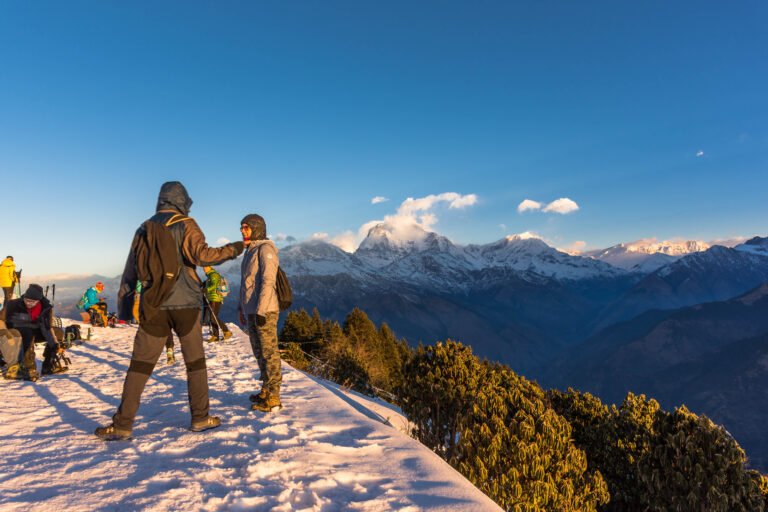
Dolpa is Nepal’s largest district by area, spanning 7,889 square kilometres of Karnali Province across elevations that range from about 1,525 metres up to more than 7,600 metres. A large portion of it lies inside Shey Phoksundo National Park, Nepal’s largest and only trans-Himalayan national park, which protects snow leopards, musk deer and Tibetan wolves, and contains both the 12th-century Shey Monastery and Phoksundo Lake, the deepest lake in Nepal. The district’s tourism economy rests on two great trekking circuits, Upper Dolpo and Lower Dolpo, which are among the most remote and permit-protected walks in the Himalaya.
Reaching this region has never been trivial. Dolpa borders Tibet to the north and is hemmed in by Jumla and Mugu districts to the west, Mustang to the east, and Jajarkot, Myagdi and the two Rukum districts to the south. The Bheri River, a major tributary of the Karnali that drains the western Dhaulagiri range, carves the valley system the corridor follows. The Jajarkot-Dolpa road is one of the few road access routes into the district, which is why its bridge gaps matter: when the corridor is cut, as it was by monsoon debris at Rijegad Khola in Rukum West in August 2026, the district’s small mountain airstrip becomes the only dependable way in.
Permit rules are one reason Dolpo keeps its remote character. Upper Dolpa requires a Restricted Area Permit at US$50 per person per day, arranged only through a registered trekking agency, while Lower Dolpa is charged at US$20 per person per week for the first four weeks and US$25 per week thereafter. Full fee tables and application steps are in our complete Nepal trekking permits guide.
How Trekkers Reach Dolpa Now
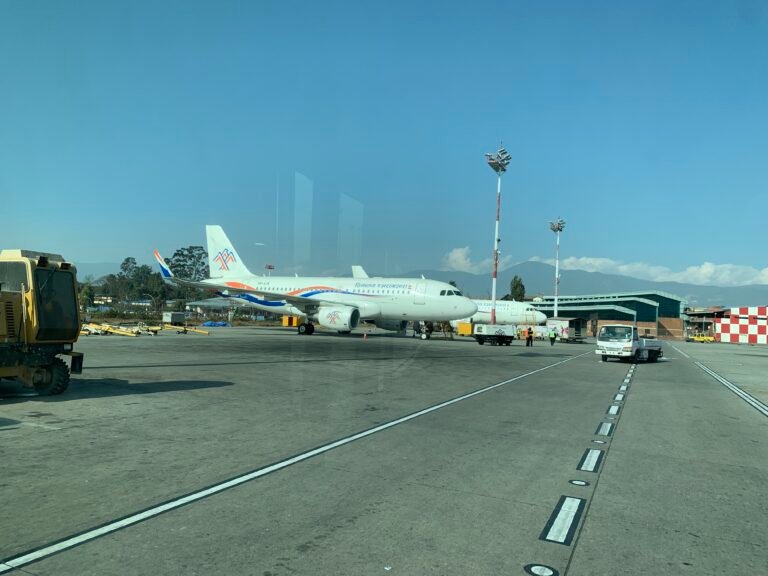
Almost every commercial Dolpo itinerary starts with a flight. Dolpa Airport (IATA: DOP), universally known as Juphal Airport after the settlement it serves on the Thuli Bheri, was established in 1978 and had its gravel runway blacktopped in 2017. It sits at roughly 2,499 metres with a 663-metre runway, and it is reached on short morning flights from Nepalgunj, which is itself a short hop from Kathmandu. Weather in the trans-Himalayan zone can delay these flights for hours or days, which is why experienced Dolpo operators build buffer time into both ends of the itinerary.
Compared with that, the road is a work in progress:
| Access option | Route | Reliability as of September 2026 | Notes for trekkers |
|---|---|---|---|
| Fly to Juphal (Dolpa Airport) | Kathmandu to Nepalgunj, then Nepalgunj to Juphal | The standard, dependable entry | Morning flights only; mountain weather can cause delays, so keep buffer days |
| Road via the Bheri Corridor | Surkhet and Jajarkot toward Dolpa | Uncertain: road surfaces have expanded, but five bridges are unfinished | Passable in stretches in good conditions; river crossings are risky when levels rise |
| Overland approach from Jumla | Jumla district toward Dolpa on foot | Rarely used today | Adds multiple days; of interest mainly to long, expedition-style traverses |
The human cost of the missing bridges falls mostly on locals: when river levels rise, the Kathmandu Post reports, students, patients, elderly people and others travelling for work are forced to cross the rivers at considerable risk. During the monsoon, the lack of bridges frequently disrupts transport on the corridor even where the road itself is intact.
Why the Bridges Stalled
The pattern that emerges from the report is one of repeated extensions rather than enforcement. The contracts carried three-year completion terms signed in January 2021, meaning the original deadlines lapsed around January 2024. Instead of action against the contractors for failing to make progress, the authorities extended the deadlines, first under the Road Division Office in Chaurjahari and then under the Bheri Corridor Project after the handover.
Local residents quoted in the report are blunt about it. “Instead of taking action against the construction companies and terminating their contracts for failing to complete even a single bridge for years, their deadlines have been extended repeatedly,” local resident Ganesh Baniya told the Kathmandu Post. Residents remain sceptical that the bridges will be completed even within the newly extended deadline of January 14, 2027, after the contractors failed to meet their original commitments.
For travellers, the planning implication is clear: treat the corridor’s completion as an open question rather than a fixed date. What is CONFIRMED is the deadline extension to January 2027 and the payment figures above; what is NOT CONFIRMED is any actual completion date for the five bridges.
What It Means for Autumn 2026 Dolpo Plans
Autumn, from late September through November, is peak trekking season across Nepal, and this year it arrives as the industry works to rebuild visitor confidence after the August floods on the central highway corridors. Dolpo itself was not in the flood zone, and its trail network is unaffected by the stalled bridges. The planning points below deal with getting there and back:
- Book flights, not road seats, for the core itinerary. The Nepalgunj to Juphal leg is the entry virtually all Upper and Lower Dolpo treks use. Confirm your seats early for October and November, the busiest weeks.
- Build in buffer days. Juphal flights are short, spectacular and weather-dependent. A one-day delay either side is common enough that tight international connections are risky.
- Do not put a Dolpa road trip on a fixed schedule. If you are travelling overland toward the corridor, treat the Jajarkot-Dolpa section as opportunistic rather than guaranteed, especially for river crossings after rain.
- Sort permits and agency logistics early. Upper Dolpo’s Restricted Area Permit can only be issued through a registered agency, and processing takes time in peak season. Lower Dolpo permits are cheaper but still required.
- Check the current status locally before you commit. Road conditions in Karnali change week to week. Ask your operator, or check with the district authorities in Jajarkot and Dolpa, whether the corridor’s crossings are currently passable.
For broader guidance on monsoon-to-autumn transitions, mountain weather and safety planning, see our complete Nepal trekking safety and health guide.
Key Takeaways
- Five bridges, one unfinished story: none of the five motorable bridges on the Jajarkot-Dolpa Bheri Corridor has been completed nearly six years after the contracts were signed in January 2021.
- Progress is minimal: 6 percent combined on the Maide Khola, Tatrakhola and Taksugad bridges; 12 percent combined on the Jhuprekhola and Nalagad Khola bridges. More than Rs45.90 million of a Rs319.74 million combined value has already been paid out.
- Completion is unconfirmed: deadlines have been extended to January 14, 2027, and local residents are sceptical. Treat the road as a multi-year project.
- Fly to Juphal: flights from Nepalgunj to Dolpa Airport remain the reliable Dolpa entry and are what standard Dolpo itineraries use.
- Permits stand: Upper Dolpo US$50 per person per day via a registered agency; Lower Dolpo US$20 per week for the first four weeks.
- Trekking is unaffected: the stalled bridges concern vehicular road access, not the trekking trails of Shey Phoksundo National Park.
FAQ: Bheri Corridor Bridges and Dolpa Access
Can you drive all the way to Dolpa right now?
Partly, but not reliably. Road construction and upgrading have expanded overland access toward Dolpa, but the five contracted bridges on the corridor remain unfinished, and the lack of bridges frequently disrupts transport, especially during the monsoon when river levels rise. For dependable travel, flights to Juphal are the answer.
Does the stalled bridge work affect Upper or Lower Dolpo treks?
No. Standard Dolpo itineraries fly into Juphal and begin walking from the Dolpa side, so the trekking itself does not depend on the Jajarkot road at all. The bridges matter for overland vehicular travel and for the communities along the corridor.
How do trekkers normally get to Dolpa?
Fly from Kathmandu to Nepalgunj, usually with an overnight stop, then take a short morning flight to Juphal (Dolpa Airport) at about 2,499 metres. Permits, including the Upper Dolpo Restricted Area Permit through a registered agency, should be arranged before the trip.
When will the Bheri Corridor bridges be finished?
The contract deadlines have been extended to January 14, 2027. That is a confirmed deadline extension, not a confirmed completion: the Kathmandu Post’s reporting quotes sceptical local residents, and nearly six years of stalled progress gives little reason for confidence in the new date.
Is the Jajarkot-Dolpa road dangerous during the monsoon?
When river levels rise, crossing the corridor’s unbuilt bridge sections on foot is risky. The report notes that students, patients, elderly people and others travelling for work are forced to cross the rivers at considerable risk when the water is high. Avoid the route after heavy rain.
Related Guides
- Nepal Trekking Permits, TIMS Card and Tourist Visa Guide, including Upper and Lower Dolpa fee tables.
- Nepal Trekking Safety and Health Guide, for mountain weather, altitude and monsoon-to-autumn planning.
- Seven Road Sections Blocked Across Nepal in August 2026, the earlier Bheri Corridor blockage at Rijegad Khola in context.
- Nepal’s Your Visit Matters Tourism Recovery Explained, for this autumn’s wider travel context.
Sources
- Kathmandu Post, “Five bridges on Bheri Corridor remain unfinished after six years”, by Saroj Oli, Jajarkot, published September 11, 2026 and updated the same day at 16:34. Read the original report. All bridge-construction facts in this article come from this report.
- Wikipedia, “Dolpa District”, “Dolpa Airport” and “Bheri River”, accessed September 12, 2026, for background geography, park and airstrip details.
Published on September 12, 2026. Bridge status facts are as reported by the Kathmandu Post as of September 11, 2026. The January 2027 date is a confirmed deadline extension; actual completion of the five bridges remains unconfirmed.
Share this content: