
Pokhara City Guide 2025/2026: Things to Do, Lakeside Vibes and Adventure Add-Ons
Pokhara is the adventure capital of Nepal and the easiest place to soften into Himalayan travel. Lakeside cafés, paragliding takeoffs, sunrise lookouts and slow boat rides make it work both as a standalone stop and as a recovery town after a long trek. The city sits at around 900 metres beside Phewa Lake, with the Annapurna range rising dramatically just to the north, and that mix of calm water, warm weather and big mountains is what keeps travellers here longer than planned. This guide is deliberately about the city itself: what to do, where to eat, which neighbourhood suits you and what each activity costs. For the wider planning picture, including itineraries, transport connections and where Pokhara fits into a Nepal route, read our separate Pokhara travel guide for 2026.
Top Things to Do in Pokhara
Phewa Lake boat ride to Tal Barahi
Renting a wooden doonga boat on Phewa Lake is still the classic Pokhara experience. Row out to Tal Barahi, the pagoda temple on the island near the middle of the lake, ideally in the first hour after sunrise when the water is glassy and the Annapurna range reflects off the surface. Boats cost roughly NPR 500 to 800 per hour depending on the season and your negotiating, life jackets are provided, and a boatman can row for you if you would rather just sit with your camera. Late afternoon works too, when paragliders drift down over the water and land on the southern shore.
Sarangkot sunrise
The ridge at Sarangkot (1,600 m) is the most photographed viewpoint in Nepal for good reason: on a clear morning you look straight along the Annapurna and Dhaulagiri ranges, with the fishtail peak of Machhapuchhre anchoring the middle of the view. Most travellers take a pre-dawn jeep from Lakeside, about 30 to 40 minutes, and arrive to find coffee sellers already open. If you prefer to earn the view, it is a steady two hour hike up from Lakeside, and several homestays at the top let you sleep through the alarm entirely.
Paragliding over the lake
Pokhara is one of the busiest commercial paragliding sites on earth, with tandem flights launching from the Sarangkot ridge and landing on the lakeshore plain below. A 20 to 30 minute tandem flight costs around USD 90 to 120 including photos and video, weight limits usually run to about 100 kg, and flights are best booked a day ahead in the October to March season when the air is clearest. No experience is needed: you run a few steps at takeoff with the pilot behind you, then float above the valley with the lake spread out below your feet.
World Peace Pagoda
The white stupa of the World Peace Pagoda sits on a forested ridge above the south of the lake, built by Japanese Buddhist monks as part of a worldwide series of peace monuments. The trail up from Lakeside takes about an hour to ninety minutes through sal forest, or you can row across the lake and climb the stairway from the far shore, a half-day loop that combines boating and hiking in one outing. The platform delivers a full panorama: the lake, the city, the whole Annapurna skyline and the paragliders turning in thermals below you.
Devi’s Fall and Gupteshwor Cave
A short drive or a 30 minute walk south of the centre, the Pardi Khola river vanishes into an underground chute at Devi’s Fall, and directly across the road Gupteshwor Mahadev Cave runs down toward the same water from the other side. The cave holds a shrine to Shiva and a viewpoint over the roaring fall itself. Do both in one outing; combined tickets are sold at the gate and the whole visit takes two to three unhurried hours.
International Mountain Museum and city museums
The International Mountain Museum, on the road south of the airport, is the best museum in Nepal for anyone with even a passing interest in Himalayan climbing. Galleries cover the geology of the Himalaya, the living cultures of mountain peoples like the Sherpa, Tamang and Thakali, and the written history of Everest and Annapurna expeditions, with original equipment displayed on the walls. Entry is around NPR 500 for foreign visitors. With extra time, the Gurkha Memorial Museum and the small Annapurna Butterfly Museum near the university campus each add an hour.
Annapurna day hikes and side treks
Pokhara is the practical base for every major route into the Annapurna region. If you only have a day, hike to Australian Camp above Kande, walk village to village along the ridge through Dhampus, or ride up to Sarangkot and walk back down. If you have a week or two, the same trailhead culture feeds directly into the Annapurna Base Camp trek and the Annapurna Circuit. Many trekkers spend a rest day in Pokhara after their trek doing exactly the low-effort things above, which is a plan we endorse.
A Neighborhood Guide to Pokhara
Central Lakeside is the strip of bookshops, gear shops, bakeries and bars that most visitors picture when they hear the word Pokhara. It is loud, convenient and where most of the nightlife happens.
North Lakeside is quieter, with leafy guesthouse gardens, yoga studios and cafés where you can happily lose an afternoon. Choose it if you want calm within walking distance of everything.
Damside and South Lakeside sit nearest the paragliding landing zone and Devi’s Fall, with cheaper rooms and long-stay apartments popular with remote workers.
Old Pokhara and the Bazaar, a short drive east, is the real city: Bindhyabasini Temple above the old bazaar, brick lanes, produce markets and the best momo counters in the valley. Come at least once for the Nepal that exists beyond the tourist strip.
Sarangkot and the ridge villages trade convenience for the view. Homestays up here put you above the morning mist line, which is exactly what you want for sunrise.
Adventure Activities and What They Cost
| Activity | Typical price (2025/2026) | Notes |
|---|---|---|
| Tandem paragliding | USD 90 to 120 | 20 to 30 minute flight from Sarangkot, photos and video included |
| Ultralight flight | USD 105 to 220 | 15 to 45 minute circuits over the Annapurna range from Pokhara airport |
| Zip line | around USD 30 | Long, fast descent from a launch above the valley toward the lake plain |
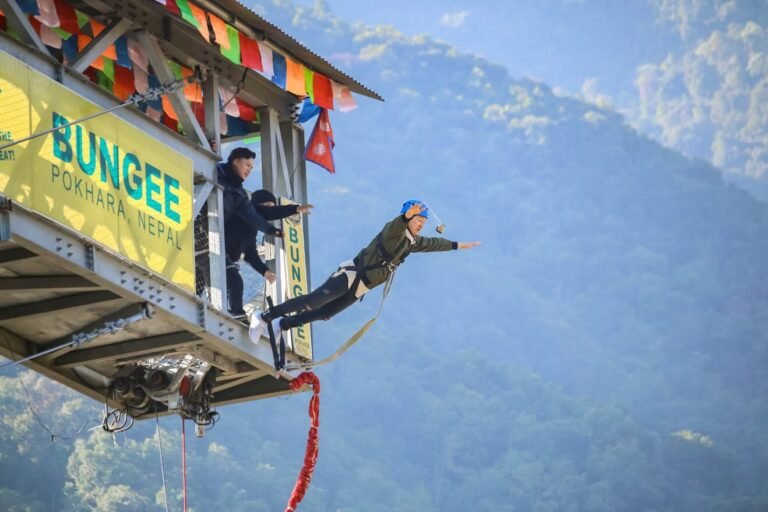
| Bungee jump | from around USD 70 | An 80 metre tower jump on the western edge of the city |
| Boat on Phewa Lake | NPR 500 to 800 per hour | Wooden doonga boats; boatman available for a tip |
| Mountain bike rental | NPR 800 to 1,500 per day | Hardtails mostly; good loops toward Sarangkot and Begnas |
Prices move with the season, and every activity above can be booked from a dozen agencies along Central Lakeside. Tandem paragliding and ultralight seats are the two things that genuinely sell out in October and November, so reserve those first.
Food and Nightlife
Lakeside’s restaurant row is one of the most varied eating streets in Nepal: wood-fired pizza, German bakeries, Israeli and Korean kitchens, Tibetan thukpa and momo counters, and proper Newari set lunches for the price of a coffee back home. Long-running favourites like OR2K and Busy Bee Café have fed a decade of trekkers, and newer rooftop spots along the dam serve dinner with the whole lake in front of you. Portions are trekker-sized because half the clientele is refuelling for the Annapurna Circuit.
At night the tone is relaxed rather than wild: live acoustic sets most evenings, full moon drum circles on the sand, a couple of late bars on Central Lakeside, and everything within a 15 minute walk. The mountain views tend to pull even the party crowd home before midnight, which suits a town that has paragliding clients in the air at 7 am.
Where to Stay
Bed prices in Pokhara are gentle by any standard. Dorm beds run NPR 700 to 1,200, comfortable guesthouses with attached bathrooms go for USD 15 to 30, mid-range boutique hotels around the lake start near USD 40, and the top resorts with Annapurna-facing lawns sit between USD 100 and 250. Book ahead only for late September to November; the rest of the year you can walk in and negotiate. For something quieter than Lakeside, homestays in Sarangkot, Dhampus or the ridge villages include dinner and sunrise for around NPR 2,000 to 3,500 per person.
Day Trips from Pokhara
Beyond the city, Pokhara works as a launchpad. Sarangkot sunrise is the shortest trip. The Australian Camp and Dhampus ridge walk is a full day through Gurung villages. The twin lakes of Begnas and Rupa, 15 km east, give you Phewa’s scenery with none of the crowds, plus excellent fish lunches on the shore. Heading onward, Pokhara is the standard gateway to Mustang and Muktinath in the north, and it pairs naturally with Chitwan National Park to the southeast for a mountains-and-jungle combination, with daily tourist buses linking the two. Our Chitwan National Park guide covers that leg in detail.
Practical Notes
| Category | Details |
|---|---|
| Best time | October to November for the clearest air; March to May for warmth and flowers; June to September is monsoon |
| Airport | Pokhara International Airport; frequent 25 minute domestic flights from Kathmandu |
| Bus from Kathmandu | 6 to 8 hours on comfortable tourist buses, roughly USD 10 to 20 |
| Getting around | Lakeside is fully walkable; taxis, rickshaws and bicycle rental cover the rest |
| Money and wifi | ATMs along Lakeside, 4G across the city, cafés with fast fibre |
| Safety | Very safe; take normal care on dark lakeside stretches after midnight |
Official tourism information for the Gandaki region is published by the Nepal Tourism Board at welcomenepal.com.
Frequently Asked Questions
How many days do I need in Pokhara?
Two to three days covers boating, Sarangkot, the Peace Pagoda and the museums at a humane pace. Add a day if you want to paraglide or do a ridge day hike, and add three or four if Pokhara is your post-trek recovery stop, which is what it is best at.
Is Pokhara safe for solo travellers?
Yes. It is one of the easiest cities in Nepal for solo travel of any kind, with well-lit streets, a tourist police presence and a low-key nightlife scene. The usual precautions apply on the quieter stretches of the lake path after dark.
Can you see Everest from Pokhara?
No. The mountains you see from Pokhara are the Annapurna range, Dhaulagiri and Machhapuchhre, which are closer and in many ways more dramatic. To see Everest you need the Everest region, a scenic mountain flight from Kathmandu, or a helicopter tour.
Do I need to book paragliding in advance?
In October and November, yes, book the day before. Outside peak season you can usually arrange a same-morning flight from any Lakeside agency. Flights run almost year round, but the clearest, most reliable air is October to March.
Plan your Pokhara days with the route, permit and season guides at TravellingNepal.com.
Share this content: