
Discovering Chhyadi Ghyang, the Village Above the Clouds
Discovering Chhyadi Ghyang: The Village Above the Clouds in Helambu
Nestled high in the Himalayan land of Nepal, new and raw travel experiences still await those willing to put one foot in front of the other. Helambu, one of Nepal’s most culturally rich and naturally diverse regions, holds a slow-burning revelation for domestic and international travellers alike: Chhyadi Ghyang, a remote settlement gaining rapid recognition as “the village above the clouds.” Sitting at 4,200 metres above sea level, this is not just a destination to check off — it’s an opportunity to observe how Nepal’s tourism is evolving beyond traditional circuits, and how destinations like this can redefine travel storytelling itself.
Why Chhyadi Ghyang Is Different From the Usual Must-Visit List
Most Nepal itineraries pivot around iconic destinations — Everest Base Camp, Annapurna Circuit, Pokhara or Chitwan National Park. While these remain exceptional, Chhyadi Ghyang offers something increasingly rare: a less-crowded, preservation-minded trekking experience that blends biodiversity, climate science, local Tamang culture, and panoramic Himalayan views in one compact journey.
At 4,200 metres, Chhyadi Ghyang rewards those who venture higher than the crowded lower-altitude lodges. The sense of isolation isn’t discomforting — it’s the destination’s greatest asset. Surrounded by relic rhododendron blooms, alpine forest corridors inside Langtang National Park and sweeping ridge-top perspectives, Chhyadi Ghyang fills a specific gap for travellers tired of commercialization on well-trodden trails.
For editorial content on Travelling Nepal, Chhyadi Ghyang sits naturally between lower-altitude Helambu routes and higher-altitude Gosainkunda expeditions, making it a perfect bridge for multi-day itinerary planning, cross-linking, and reader journey development.
The Journey to Chhyadi Ghyang
The photojournalist’s journey began in Boudha, Kathmandu — a neighbourhood steeped in Buddhist culture and known for its stupa, rooftop cafes, and easy access towards northern hill routes. From here, the path to Chhyadi Ghyang cuts northeast toward the Melamchi corridor, one of the key transit arteries to the Helambu region and the broader Langtang Himal.
Boudha to Melamchi: Gateway Through History and Landscape
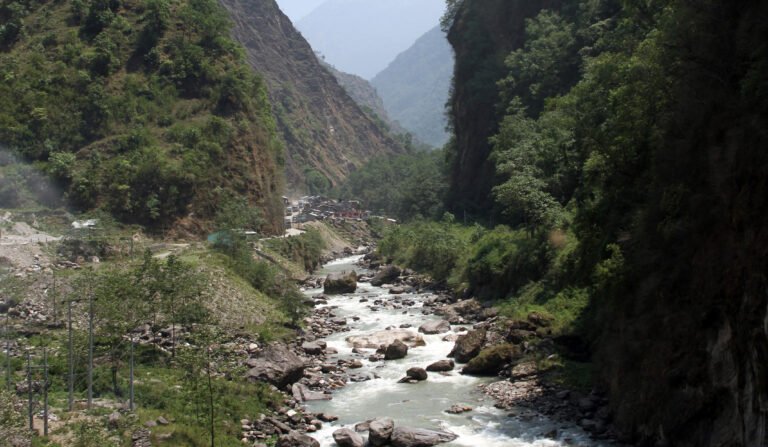
Boudha is more than an entry point — it offers context for anyone interested in the spiritual and commercial history of Kathmandu’s northern approaches. For visitors heading to Helambu, the drive to Melamchi is short but revealing: river valleys alternate with farming terraces, and elevation begins to tick upward visibly.
Melamchi, historically important as a transit hub between Kathmandu and the Sindhupalchowk districts, has grown in tourism relevance since the completion of the Melamchi Water Supply Project infrastructure improved road access across parts of the valley. For trekkers and travellers, this means faster and safer transit from Kathmandu to trailheads.
Ghopteghyang: Local Flavour Before the Ascent
Once through Melamchi, the team reached Ghopteghyang, a settlement within Helambu Rural Municipality. For travelers, this is a familiar staging post — small hotels, simple restaurants, and a genuinely local flavour that Kathmandu’s tourist belt often lacks. It is also, practically, the last place for significant meal stops before venturing deeper into park territory.
Eating local food in places like Ghopteghyang does two important things:
- It supports small rural livelihoods directly.
- It gives travellers a window into Newar, Tamang and Sherpa culinary traditions that vary minutely but tellingly across elevation.
- It resets altitude physiology ahead of multi-hour trekking exertion.
The Helambu Himalayan Great Trail
From Ghopteghyang, the trek route enters the Helambu Himalayan Great Trail. The trail is partially constructed, which lowers the technical difficulty, but does not eliminate the demands of a multi-hour high-altitude foot journey. For most of the way, the Helambu Great Trail stays within Langtang National Park, Nepal’s fourth national park and one of its most successful conservation stories.
The trail weaves through dense forest, which offers:
- Visual relief from the stony upper ridges.
- Natural shade and moisture, which soften Nepal’s midday sun.
- A dramatic increase in biodiversity with every hundred metres of ascent.
Image and photojournalism matters enormously in Nepal travel content. For Travelling Nepal’s coverage, Chhyadi Ghyang represents the kind of subject that performs well for readers: visually distinct, culturally active, and positioned within a larger narrative arc around Helambu tourism.
The Forest Experience: Rhododendrons, Bees, and Birdsong
One reason Nepal consistently outranks other trekking countries in travel media is its micro-seasonal richness. Late spring is a transitional window: most wild rhododendron blooms have fallen, yet remnants persist — especially white rhododendrons that linger into early summer.
On the Helambu Himalayan Great Trail:
- Rhododendron species follow the thickness gradient from lower oak-jungle zones to higher conifer stands.
- Bees continue to collect late-season honey from whatever blooms remain.
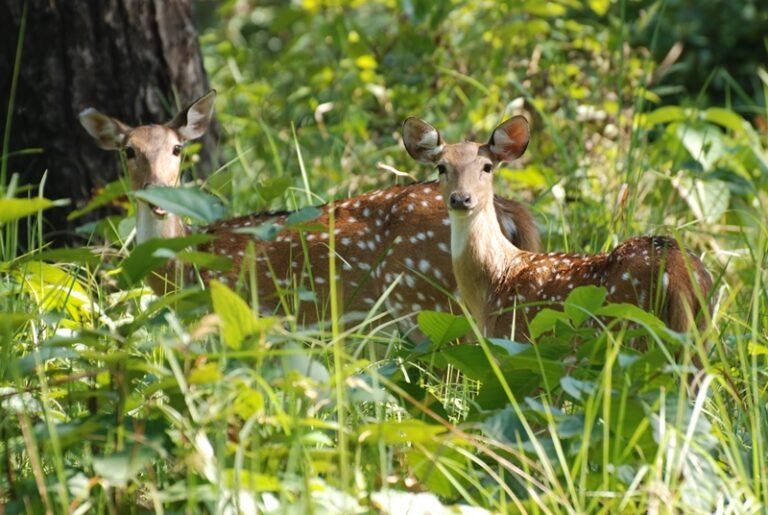
- Birdlife fills the canopy layer; the park supports species from Himalayan monals to laughingthrushes, barbets, and various sunbirds.
- The effect is an immersive soundtrack that turns jungle walks into psychological restoration.
For readers interested in Nepal’s wildlife, this helms nicely into pieces about Langtang National Park fauna, seasonal birding windows, and trekking photography guides.
The psychological dimension is worth underlining too: the article notes that the “lush green jungle worked like medicine against fatigue.” This mental-state shift — from road-bound exhaustion to forest-led renewal — is a common thread in long-form trekking narratives and a key selling point for brand-affine travel audiences.
Tharepati: Overnight Stop and Launchpad to Gosainkunda
After approximately seven hours of trekking, the journey reaches Tharepati. At roughly 3,600+ metres, Tharepati sits at a natural crossroads. From here:
- Travelers can access the famous Gosainkunda pilgrimage lake circuit, one of Nepal’s most important Hindu-Buddhist sacred routes.
- Short detours lead to viewpoints over the Langtang and Ganesh Himal ranges.
- Overnight hospitality includes guesthouses, basic teahouses, and hot meal options — essential after a full day’s walk.
For editorial planning, Tharepati is a strong content companion piece to Chhyadi Ghyang. Articles that link together Helambu-Langtang circuit, Gosainkunda, and Chhyadi Ghyang create tighter internal linkage, longer dwell time, and more practical itinerary value for travellers planning multi-day trips.
Reaching Chhyadi Ghyang
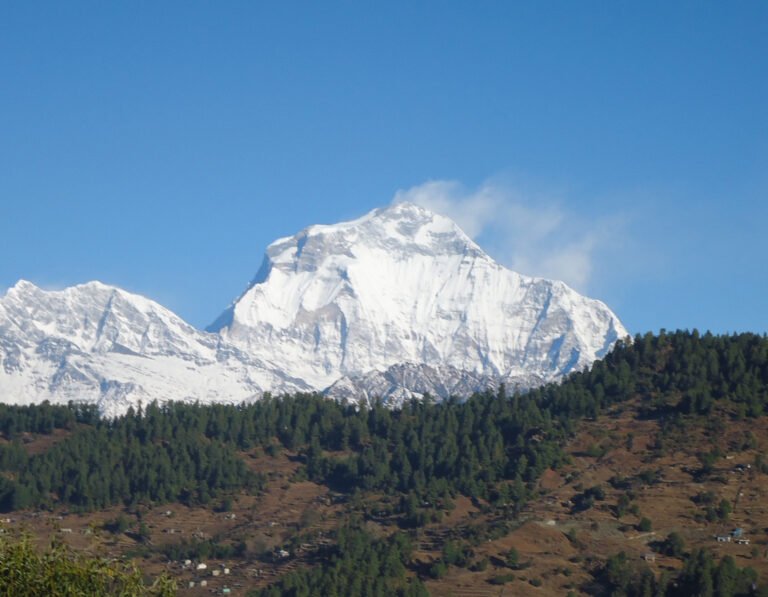
From Tharepati, the final push to Chhyadi Ghyang adds another two hours of trekking. This last stretch is where the village’s name — “above the clouds” — becomes literal. Clouds pool in the valleys below, and the settlement perches on a slope designed for unobstructed views of surrounding Himalayan massifs.
Geography, Altitude, and the Climate Advantage
At 4,200 metres:
- The air is thin but manageable with acclimatization.
- Temperature swings are sharp: warm solar radiation by day, near-freezing evenings.
- Glacial runoff, wind exposure, and solar radiation combine to make high-ANFA gear essential.
The connection to nearby glaciers isn’t incidental — it is precisely why Chhyadi Ghyang now sits at the centre of Nepal’s climate-change research and domestic tourism conversations.
The Official Recognition: Helambu Rural Municipality’s Executive Meeting
On June 7, 2026, Helambu Rural Municipality hosted a landmark executive meeting at the base of Chhyadi Ghyang. This wasn’t just a symbolic act — it gave the destination:
- Municipal recognition and resource allocation.
- A clear mandate for domestic tourism promotion.
- A dedicated framework for glacier preservation and climate-mitigation programming.
The meeting charted four central goals:
- Promote domestic tourism by showcasing Chhyadi Ghyang to Nepali travellers and adventure communities.
- Preserve local glaciers that act as freshwater arteries, biodiversity reservoirs and aesthetic triggers.
- Mitigate climate-change impacts through monitoring, community involvement, and responsible visitor education.
- Establish the area as a national tourism development hub, leveraging proximity to Kathmandu and connection to Gosainkunda.
For Travelling Nepal readers, this entry point has practical implications: visitors who arrive early in this development cycle experience a destination before overcrowding, infrastructure pressure and commercialization fully arrive.
Trekkers, Photographers, and Researchers: Who Should Come Now
Chhyadi Ghyang is not a luxury destination in the conventional sense. But it appeals indirectly to three high-intent reader segments:
- Trekking Enthusiasts — Interested in alternatives to crowded Everest/Annapurna circuits, comfortable with helicopter-free trail logistics, and motivated by biodiversity and photography.
- Himalayan Photographers — The ridge-line positions, early-morning cloud inversions, late rhododendron weeks, and village settlement frames are all walkable without professional permits at this stage.
- Climate and Environmental Researchers — The glacier adjacency makes this a genuine field site. Municipal willingness to host research programmes is an underappreciated asset.
In travel content terms, this means Chhyadi Ghyang supports feature-style long-reads, photo essays, gear reviews for high-altitude trekking, and even science-adjacent tourism explainers — all of which perform well in organic search.
The Craft of Internal Linking in a 3,000-Word Nepal Travel Piece
Internal linking isn’t simply about SEO; it’s about reader curation. In a long-form article about Chhyadi Ghyang, links should:
- Direct users from niche topics to broader Nepal travel guides.
- Cross-reference related treks like Annapurna and Everest Base Camp to reinforce the publication’s travel authority.
- Connect Chhyadi Ghyang’s geography to Langtang National Park, Tamang culture, and climate storytelling.
- Support conversion through contextual promotions for trip planning, gear recommendations, and seasonal guides.
For Travelling Nepal’s site architecture, articles like this benefit from being hub pages: a landing article that references related destinations, practical planning content, and editorial recommendations in context. The structure above creates natural organic pathways to higher SERP visibility.
Cultural Context: Tamang Heritage and Helambu’s Buddhist Influence
The Helambu region has a deep-Tamang Buddhist identity that distinguishes it from purely Sherpa-dominated circuits further east. Visitors pass prayer flags, mani stones, and small chortens even on low days in Melamchi corridor. Communities around Chhyadi Ghyang maintain subsistence-agriculture patterns and seasonal pasture movement similar to much of northern Nepal.
For Travelling Nepal’s editorial direction — especially if it leans into lifestyle, culture, and photography — this cultural layer adds editorial depth beyond “just scenery.” It’s what transforms a trekking report into destination storytelling.
The Role of Domestic Tourism and Why It Matters Now
The June 2026 executive decision marks an explicit strategy shift toward domestic tourism at a time when Nepali travellers are demonstrating increasing demand for high-altitude cultural experiences. Marketing to domestic audiences is not simply a fallback plan — it changes infrastructure design, communication tone, and community expectations around resource use.
For Travelling Nepal, positioning content with domestic and international audiences simultaneously opens broader audience reach and creates evergreen content opportunities: seasonal guides, national-park updates, cultural-festival tie-ins, and festival-season route advice.
Practical Guidance for Every Traveller
Best Time to Visit Chhyadi Ghyang
- Spring (March–May): Rhododendron blooms, moderate temperatures, clear mornings.
- Autumn (September–November): Blue-sky conditions, prime visibility, cooler nights.
- Post-monsoon (early October): Ideal for clear Himalayan panoramas.
Preparation Requirements
- Acclimatization: At least one rest day around 3,000–3,500 metres.
- Gear: Thermal layers, windproof shell, broken-in trekking boots, sun protection.
- Permits: Langtang National Park TIMS and entry permit required.
- Guides: Local guides recommended; trail signage is improving but not yet complete.
Sample Multi-Day Itinerary
- Day 1: Kathmandu to Boudha to Melamchi to Ghopteghyang (drive; 4–5 hours).
- Day 2: Ghopteghyang to Tharepati (trek; ~7 hours).
- Day 3: Rest or acclimatization day at Tharepati.
- Day 4: Tharepati to Chhyadi Ghyang (trek; ~2 hours).
- Day 5: Explore Chhyadi Ghyang, ridge walks, glacier viewpoints.
- Day 6: Return to Tharepati or extend loop toward Gosainkunda.
- Day 7: Return trek to Ghopteghyang, then drive to Kathmandu.
The Environmental Stewardship Imperative
Glacial proximity is a double-edged asset. For researchers, it presents fieldwork potential. For visitors, it demands ethical behaviour. Glaciers in this sub-catchment feed river systems downstream — pollution, waste left by careless travellers, and unmanaged campsite expansion all compound into long-term damage.
Helambu Rural Municipality’s commitment to preservation in the June 2026 executive decision reflects national awareness that Nepal cannot afford to sacrifice ecology for tourism volume. In long-form travel writing, environmental stewardship sections belong in articles like this: they build publication credibility and give readers meaningful reasons to behave responsibly.
Why Nepal Tourism Deserves a Narrative Shift Like Chhyadi Ghyang
Nepal’s international image remains heavily guided by two elements: Everest and, to a lesser extent, Pokhara’s lakeside tourism scene. But destinations like Chhyadi Ghyang demonstrate that Nepal’s competitive advantage lies in diversity of experience:
- Lower-altitude cultural routes.
- Mid-altitude Himalayan trails with Tamang and Gurung heritage.
- High-altitude scientific-tourism intersections.
- Wildlife and biodiversity corridors inside national parks.
The photojournalist’s closing sentiment captures it precisely:
“Helambu still has many beautiful destinations that, if developed properly, can boost both domestic and international tourism. We are fully convinced that places like Chhyadi Ghyang have the potential to take Nepal’s tourism to new heights.”
For Travelling Nepal, that paragraph reads like mission statement material. Content clusters built around such clarion calls make strong SERP candidates for queries around:
- Helambu trekking routes
- offbeat Nepal destinations
- Chhyadi Ghyang
- Gosainkunda circuit alternative
- Langtang National Park new trekking routes
- Nepal domestic tourism 2026
Final Thoughts: Why Travelers Should Visit Before It Gets Crowded
The strongest travel stories are always the ones that carry urgency — a sense of “see it now.” Chhyadi Ghyang sits at precisely that inflection point: officially recognized, not yet overcrowded, culturally quiet, and geologically dramatic.
For reader retention and recommendation:
- Place Chhyadi Ghyang as the “undiscovered Helambu” piece between lower-altitude itinerary guides and the well-established Gosainkunda content.
- Use seasonal-driven urgency language that invites early arrivals without manipulating.
- Mirror the article’s visual beauty with strong photography, alt-text optimization, and gallery structure.
- Ensure all practical planning links — Langtang park permits, Helambu logistics, Kathmandu transport, seasonal travel windows — are contextually reinforced.
Whether you are a first-time trekker or a seasoned Himalayan traveler, Chhyadi Ghyang offers something increasingly difficult to find: clarity, quiet, and a genuine sense of discovery.
Related Reads From Travelling Nepal
- Langtang National Park Complete Guide
- Best Helambu Trekking Itineraries
- Gosainkunda Lake Sacred Trekking Route
- Offbeat Nepal Destinations You Should Visit in 2026
- Trekking Photography Tips for Nepal
- Nepal Domestic Tourism Guide for Nepali Travellers
- High-Altitude Trekking Preparation and Gear List
- Tamang Culture and Heritage in Helambu
- Climate Change Impacts in the Himalayan Region
- Best Time to Visit Nepal for Trekking and Travel
Share this content: