Altitude Sickness in Nepal: Symptoms, Prevention, and the Golden Rules for Trekkers
Complete guide: Nepal Trekking Safety and Health Guide
Direct answer: Altitude sickness (acute mountain sickness, AMS) in Nepal is caused by ascending too fast above ~2,500 m. Prevent it by climbing high but sleeping low, gaining no more than ~500 m of sleeping altitude per day above 3,000 m, and drinking 3–4 litres of water daily. The golden rule: if symptoms worsen, do not go higher. Descend immediately.
This guide is the clinical companion to our overall Nepal trekking safety and health guide: it goes deep on altitude physiology, symptom recognition, staged acclimatization, the evidence on acetazolamide (Diamox), and exactly when to turn around or call a rescue. Everything here follows wilderness-medicine consensus used by Nepal’s high-altitude clinics and helicopter rescue physicians.
What altitude sickness is and why it happens
At altitude, air pressure falls and every breath delivers less oxygen to your blood. Above roughly 2,500 m, if you climb faster than your body can adapt, blood vessels in the brain dilate and fluid begins to shift in the wrong direction. That mismatch is acute mountain sickness. Severe forms, HAPE (high-altitude pulmonary edema, fluid in the lungs) and HACE (high-altitude cerebral edema, brain swelling), are medical emergencies that can kill within hours.
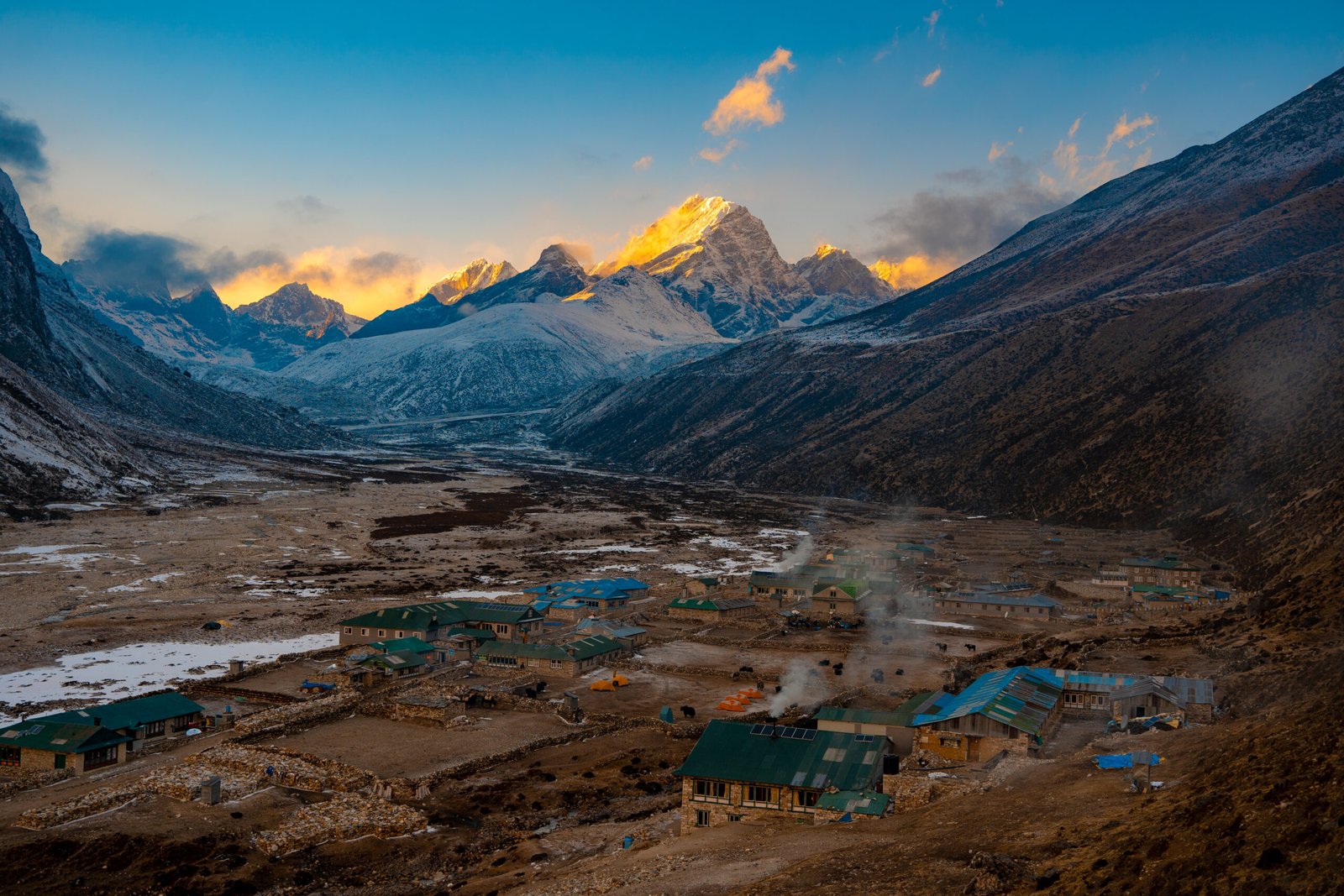
Severity tracks elevation, not difficulty. On the Everest trail, Lukla (2,860 m), Namche Bazaar (3,440 m), and Everest Base Camp (5,364 m) all sit inside the risk zone, and the summits of Kala Patthar (5,545 m) and the 5,416 m Thorong La on the Annapurna Circuit are points where unacclimatized bodies genuinely struggle. The key fact is that AMS is a disease of rate, not of fitness, not of age, and not of willpower. Someone who flies to Lukla and power-walks to Namche in one day is at far higher risk than a slower walker who pauses to look at the mountains.
AMS, HAPE and HACE: know the difference
- AMS feels like a bad hangover combined with a migraine at altitude: headache plus nausea, fatigue, dizziness, poor sleep. Common above 3,000 m, uncomfortable but treatable by stopping ascent or descending.
- HAPE announces itself through the lungs: breathlessness that persists at rest, a wet cough, crackling breath sounds, blue lips, declining stamina. It can develop with or without AMS warning signs and needs immediate descent, oxygen, and evacuation.
- HACE announces itself through the brain: a stumbling, drunk-like gait, confusion, irrational behaviour (“I feel fine, keep going” said by someone who cannot tie their boots), severe headache that ignores painkillers, and finally unconsciousness. Descent is urgent and immediate, even at night.
Every year in Nepal a small number of trekkers die because headache and nausea were dismissed as jetlag and a drunken stumble was laughed off. Learn the three names before the trail, and share them with your companions and guide.
Early symptoms to watch
- Headache, the most common first sign, typically evening or night
- Nausea or loss of appetite (barely touched dinner is a classic red flag)
- Fatigue out of proportion to the day’s effort
- Dizziness or light-headedness on standing
- Trouble sleeping, frequent night-time waking, or an unsettled, air-hungry feeling
- Shortness of breath at rest, a cough, gait changes, or confusion (these are severe, not early)
Use the daily ritual that guides use: every evening ask each member of the group three questions. How is your head? How did you eat? How did you sleep? A headache that improves overnight means you can probably continue carefully tomorrow; a headache that worsens after dinner means no. Our fitness and acclimatization guide for the Manaslu Circuit shows how to structure a whole trek around this nightly check-in.
The self-test that catches severe illness early
Two simple tests separate concerning illness from ordinary tiredness. First, the resting breathing test: sit quietly for five minutes; if you are still breathless at rest, suspect HAPE. Second, the heel-to-toe walk test: walk a straight line heel to toe; if you or a companion cannot do it sober, treat it as HACE and start descending. Both tests take two minutes and have saved lives on Nepal’s trails.
How to prevent AMS: a staged plan
- Acclimatize with rest days. Build in a rest day every 3-4 days of climbing above 3,000 m: Namche (3,440 m) and Dingboche (4,410 m) on the Everest route, Manang (3,540 m) before Thorong La on the Annapurna Circuit.
- Climb gradually. Gain no more than 500 m of sleeping altitude per day above 3,000 m; several authorities advise 300-400 m as the comfortable target.
- Climb high, sleep low. On rest days, walk up 200-300 m above your lodge, then come back down to sleep. This is the single most effective acclimatization trick.
- Hydrate. 3-4 litres of water daily; altitude air is dry and you lose fluid with every breath. Avoid alcohol, especially in the first 48 hours at a new altitude.
- Eat well. Carbohydrates fuel altitude exertion efficiently; dal bhat is genuinely the ideal altitude meal, and lost appetite is a symptom to log, not ignore.
- Plan the profile before you fly. Choose itineraries with acclimatization days built in; our comparison of high-altitude treks in Nepal ranks routes by how gently they gain altitude.
- Consider medication. Acetazolamide (Diamox) can aid acclimatization, but only with a doctor’s advice; details below.
Acetazolamide (Diamox): the evidence-based view
Acetazolamide is the most studied drug for altitude illness. It works by making your blood slightly more acidic, which drives faster and deeper breathing, especially at night. Wilderness-medicine guidelines commonly recommend 125 mg twice daily (some use 250 mg), starting the day before you go above 3,000 m and continuing 2-3 days at maximum sleeping altitude. Important truths about Diamox:
- It is a preventive aid, not a shield: it speeds acclimatization but does not overwrite a reckless ascent profile.
- It makes your fingers and toes tingle (harmless, common) and carbonated drinks taste flat.
- It is a mild diuretic: expect more urination and keep drinking.
- People with sulfa allergies need medical advice before use.
- It is not a treatment for worsening AMS: the treatment is descent.
Discuss Diamox with a travel-medicine doctor before leaving home, and buy the tablets there: pharmacy quality and availability vary. Dexamethasone and nifedipine have roles in HACE and HAPE treatment, but they belong in the hands of doctors and trained expedition medics, carried on prescriptions with clear instructions, never self-prescribed from a blog post. The Nepal Tourism Board website carries official travel-health advisories worth reading alongside your doctor’s advice.
The golden rules
- Do not ascend with symptoms. A headache at this altitude means your body is asking for time, not another 400 m.
- Descend if symptoms worsen. Even 300-500 m lower can transform how you feel by morning.
- Never leave a sick person alone. Severe illness can progress to confusion and collapse in hours; someone must watch and decide.
- Never ascend at night to “sleep it off higher”. Sleep altitude is where AMS deepens; night is when breathing slows further.
- Know the evacuation plan (helicopter, insurance, your rescue phone numbers) before you need it.
Evacuation criteria: when to call a rescue
Call for help when any of the following is true:
- Symptoms worsen despite a full rest day, or HACE signs (gait change, confusion) appear.
- Breathlessness persists at rest, a wet cough develops, or lips go blue (suspected HAPE).
- The sick person cannot descend safely on their own legs.
- Any severe illness above 4,500 m where weather or terrain makes self-evacuation dangerous.
At Everest Base Camp (5,364 m), the Himalayan Rescue Association clinic at Pheriche (4,371 m) is staffed in season by doctors who treat altitude illness daily; on the Annapurna side, the Manang clinic serves the same role. Both are worth a visit even when well. A helicopter evacuation from remote Nepal to Kathmandu costs USD 3,000-5,000, which is why insurance that explicitly covers helicopter rescue at trekking altitudes is non-negotiable; our Nepal trekking travel insurance guide explains exactly what your policy must say. Your guide carries the evacuation numbers for your region; make sure you carry them too, in paper and phone.
Frequently asked questions
Does fitness prevent altitude sickness?
No. Marathon runners and elite athletes develop AMS at the same rate as anyone else. What protects you is pace: slow ascent, rest days, and honest nightly assessments. Fitness lets you walk faster, which can actually increase risk if you let it.
Is Diamox required for Everest Base Camp or Thorong La?
No, it is optional, and plenty of trekkers complete both without it. But it measurably reduces AMS incidence on rapid profiles such as flying to Lukla then reaching Base Camp in 8-10 days. Consult a physician before your trip.
How fast should I descend if symptoms worsen?
At the first sign of severe symptoms, descend at least 500-1,000 m without delay, ideally in daylight and accompanied. Descent is the only cure; medication only buys time.
Can I take Diamox to treat a headache at altitude?
Preventive doses help acclimatization, but if you already have worsening symptoms the correct action is to stop ascending or descend, not to medicate and push on.
Are children or older trekkers at higher risk?
Age itself is not a strong risk factor; rate of ascent is. Children cannot always articulate symptoms, so watch appetite and playfulness. Older trekkers with heart or lung disease should get a pre-travel medical review.
What is the safest ascent rate above 3,000 m?
A common rule is no more than 500 m of sleeping-altitude gain per day above 3,000 m, with a rest day every 3-4 days. At these gains most people acclimatize comfortably.
How do I know if my headache is altitude or dehydration?
Drink 500-1,000 ml of water and take plain paracetamol. If it settles within an hour or two you were likely dehydrated. If it returns or you add nausea and poor sleep, treat it as AMS: no further ascent today.
Key takeaways
- AMS hits above ~2,500 m from ascending too fast, regardless of fitness.
- Prevent with gradual ascent, acclimatization days, climb-high-sleep-low walks, and hydration.
- Diamox helps some trekkers acclimatize faster; it is optional, doctor-guided, and never a license to rush.
- HAPE and HACE are emergencies: breathlessness at rest, gait changes, or confusion mean descend now and call for rescue.
- If symptoms worsen: stop, descend, get help. Altitude illness is cured by going down, not by pushing up.
Published by the TravellingNepal Editorial Desk. Health guidance summarized from standard wilderness-medicine acclimatization principles; consult a travel-medicine doctor before high-altitude treks.
Related guides
- Nepal Trekking Travel Insurance Guide
- Nepal Trekking Packing List
- Manaslu Trek Fitness and Acclimatization
Share this content: