Western Border Tourism Rising: Gaddachauki Crossing Sees 223% Growth in Foreign Tourist Arrivals
Related guide: Nepal Visa and Trekking Permits: Complete Guide (2026)
As of August 26, 2026 — The number of foreign tourists entering Nepal through the Gaddachauki border crossing in Kanchanpur district has been rising steadily over the past four years, offering a glimpse into an overlooked gateway to the Far West. According to the Immigration Office at Gaddachauki, 1,753 foreign tourists entered Nepal through this western land border in the most recent fiscal year, a more than threefold increase from the 542 recorded in 2022.
The data, released by the Immigration Office’s information officer Navaraj Bhatt and originally reported by RSS (Rastriya Samachar Samiti, Nepal’s government news agency) via Online Khabar on August 26, 2026, reveals a consistent upward trend in overland tourist arrivals through a crossing that has historically been overshadowed by Nepal’s more prominent airports and northern border points.
Table of Contents
- The Data: A Steady Rise in Western Border Arrivals
- Gaddachauki: Where Is It and Why Does It Matter?
- Where Are These Tourists Going? (Hint: Not Far West)
- Sudurpashchim: Tourism Potential vs. Reality
- Key Destinations in Far West Nepal
- What Needs to Change: Infrastructure and Promotion
- How to Enter Nepal Through the Western Border
- Frequently Asked Questions
- Key Takeaways
The Data: A Steady Rise in Western Border Arrivals
The Immigration Office Gaddachauki tracks every foreign national crossing the Nepal–India border at this checkpoint. The year-by-year data tells a clear story of gradual but sustained growth:
| Year | Foreign Tourists Entering via Gaddachauki | Trend |
|---|---|---|
| 2022 | 542 | Baseline |
| 2023 | 983 | +81% increase |
| 2024 | 1,154 | +17% increase |
| 2025/26 (fiscal year) | 1,753 entered / 1,534 exited | +52% increase in entries |
In the most recent fiscal year (2024/25 in Nepal’s calendar, corresponding roughly to mid-2025 to mid-2026), the crossing generated NPR 10,518,119 (approximately USD 79,000) in revenue for the Nepali government. While these numbers are modest compared to the hundreds of thousands who arrive via Kathmandu’s Tribhuvan International Airport, the growth trajectory is significant for a border point that most international tourists have never heard of.
Gaddachauki: Where Is It and Why Does It Matter?
Gaddachauki is a border town in Kanchanpur District, part of Sudurpashchim (Far West) Province in southwestern Nepal. The district headquarters is Bhimdatta (also known as Mahendranagar), located just a few kilometers from the Indian border. Kanchanpur covers an area of 1,610 square kilometers and borders India to the south and west, Kailali district to the east, and Dadeldhura to the north.
The Gaddachauki crossing sits on the Nepal–India border in the Terai plains, roughly 700 kilometers west of Kathmandu by road. It is one of the primary land border checkpoints between Nepal’s Far West and the Indian state of Uttarakhand. For overland travelers coming from India — particularly from Delhi, Uttarakhand, and Uttar Pradesh — Gaddachauki is a natural entry point into western Nepal.
The crossing’s significance lies in its proximity to Indian tourist hubs. As tourism entrepreneur Jagdishchandra Bhatt told RSS, “Gaddachauki is a major border crossing where foreign tourists enter — it is close to Indian tourist cities.” This geographic advantage is what drives the growing numbers, yet the question of what happens after tourists enter remains the central challenge.
Where Are These Tourists Going? (Hint: Not Far West)
Despite entering through Gaddachauki, the vast majority of these tourists do not stay in Sudurpashchim. According to the RSS report and local tourism entrepreneurs, most travelers pass straight through to Kathmandu and Pokhara, the two cities that dominate Nepal’s tourism circuit.
This pattern reflects a structural problem: Far West Nepal has remarkable destinations but lacks the infrastructure, promotion, and visitor information systems to capture tourists who are already physically in the region. Tourists entering at Gaddachauki could theoretically visit world-class wildlife reserves, sacred lakes, and alpine meadows within a few hours’ drive — but without signage, information desks, or organized transport, they simply continue eastward.
The irony is sharp: a tourist who has already crossed into Nepal through the western border, incurring visa fees and travel time, is more likely to visit destinations 700 kilometers away than the wildlife park 50 kilometers from where they entered.
Sudurpashchim: Tourism Potential vs. Reality
Sudurpashchim Province covers approximately 19,999 square kilometers — about 13.55% of Nepal’s total area. It borders China’s Tibet Autonomous Region to the north and the Indian states of Uttarakhand and Uttar Pradesh to the west and south. The province’s three major cities are Dhangadhi, Bhimdutta (Mahendranagar), and Tikapur.
The region contains some of Nepal’s most underexplored tourism assets:
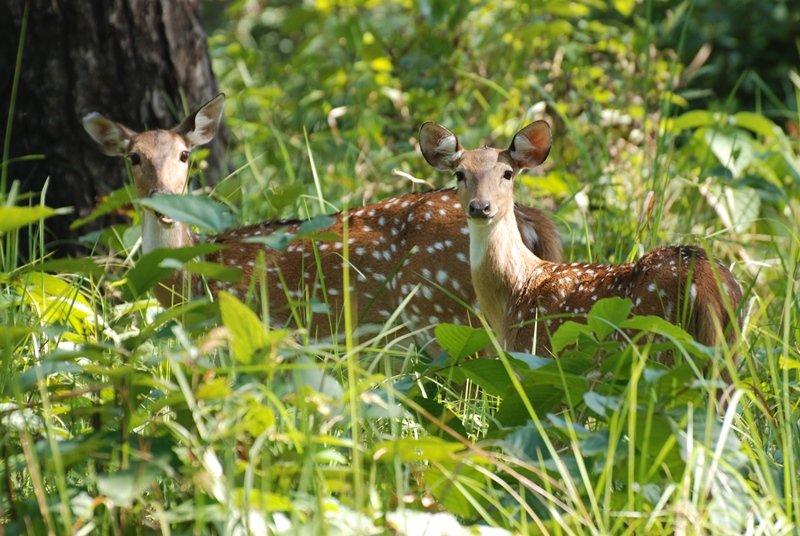
- Shuklaphanta National Park — A premier wildlife reserve in the Terai, known for its population of swamp deer (the largest herd in Asia), Bengal tigers, and one-horned rhinoceros. The park spans grasslands and forests in Kanchanpur District.
- Khaptad National Park — Established in 1984, this 225-square-kilometer park stretches across four districts (Bajhang, Bajura, Achham, and Doti) at elevations ranging from 1,400 to 3,300 meters. It features moorland, steep slopes, and streams, with 567 floral species and 23 mammal species including Indian leopard, Himalayan black bear, and Alpine musk deer. The park is also a sacred site associated with the Hindu sage Khaptad Baba.
- Badimalika — A sacred alpine lake and pilgrimage site in Bajura District, increasingly visited by domestic tourists but still largely unknown to international travelers.
- Ramaroshan — A high-altitude wetland area in Achham District with twelve interconnected lakes and rolling grasslands.
- Lakes of Kanchanpur — Jhilmila Lake, Bedkot Lake, Bandatal, Shovatal, and Ranital are local attractions near the border district, offering birdwatching and scenic beauty.
Yet despite this portfolio, the province captures a tiny fraction of Nepal’s tourism revenue. The problem, as identified by the Kanchanpur Industry and Commerce Association, is twofold: insufficient infrastructure to reach destinations comfortably, and inadequate promotion to make travelers aware these places exist.
Key Destinations in Far West Nepal
For travelers willing to venture beyond the Kathmandu–Pokhara corridor, Sudurpashchim offers experiences that are distinctly different from the better-known trekking and safari routes in central and eastern Nepal. Here is a comparison of the main attractions:
| Destination | District | Type | Best For |
|---|---|---|---|
| Shuklaphanta National Park | Kanchanpur | Wildlife safari | Swamp deer, tigers, rhinos |
| Khaptad National Park | Bajhang/Bajura/Achham/Doti | Alpine meadow trek | Off-the-beaten-path hiking, meditation |
| Badimalika | Bajura | Sacred lake pilgrimage | Cultural trek, spiritual journey |
| Ramaroshan | Achham | Wetland grassland | Lake trekking, birdwatching |
| Jhilmila/Bedkot Lakes | Kanchanpur | Lakeside relaxation | Easy day trips, birdwatching |
Each of these destinations is accessible from the Gaddachauki border or from Dhangadhi, the province’s largest city, within a few hours by road. None requires the multi-day trekking commitment of Everest or Annapurna, making them ideal for travelers seeking shorter, less physically demanding experiences in Nepal.
What Needs to Change: Infrastructure and Promotion
Local tourism entrepreneurs and business leaders are not waiting silently. The RSS report quoted two key voices calling for specific interventions:
Jagdishchandra Bhatt, a tourism entrepreneur in the region, called for a tourism information desk to be established at the Gaddachauki border crossing itself. “A tourism information desk should be set up at the crossing,” he said, arguing that tourists arriving at the border should immediately receive information about Sudurpashchim and Nepal’s tourist destinations. Currently, tourists enter with no guidance and head straight for Kathmandu or Pokhara by default.
Dinesh Mall, president of the Kanchanpur Industry and Commerce Association, identified the core problem: “We have attractive destinations, but there is a lack of easy infrastructure and other facilities to reach them.” He called for promotion of the region’s destinations and creating an environment where tourists stay “even one night” in the area.
The asks are concrete and practical:
- Tourism information desk at Gaddachauki — A staffed desk at the border crossing where entering tourists can get maps, brochures, and recommendations for Far West destinations.
- Infrastructure investment — Road improvements, signage, and accommodation upgrades for routes to Khaptad, Badimalika, Ramaroshan, and Shuklaphanta.
- Promotion campaigns — Marketing Sudurpashchim’s destinations to international tourists, particularly those already entering via the western border.
- Public-private coordination — Bhatt emphasized that the government and private sector must work together on tourism promotion rather than operating in silos.
How to Enter Nepal Through the Western Border
For travelers considering the Gaddachauki route, here is what to know:
The crossing is open to foreign nationals who hold a valid Nepal visa or are eligible for a visa on arrival. Travelers coming from India can reach the border by road from Uttarakhand or Uttar Pradesh. The nearest major Indian city is Tanakpur in Uttarakhand, from where the border is a short drive. On the Nepali side, Bhimdatta (Mahendranagar) is the nearest town, with onward bus and flight connections to Dhangadhi, Kathmandu, and Pokhara.
Nepal’s visa-on-arrival system is available at designated land border crossings, though travelers should verify current entry requirements with the Nepal Tourist Visa Guide before departure. The Department of Immigration processes arrivals at Gaddachauki, collecting visa fees and recording entry data — the same data that revealed this growth trend.
For those who do enter through Gaddachauki, the opportunity is to explore Sudurpashchim before continuing east. Shuklaphanta National Park is less than an hour from Bhimdatta, and Dhangadhi Airport offers flights to Kathmandu for onward connections. The complete guide to getting to Nepal covers all overland border crossing options, including the eastern Tatopani crossing which recently reopened after a month-long landslide blockage on the Araniko Highway.
Why This Matters for Nepal Tourism
The Gaddachauki data point matters for three reasons:
1. Geographic diversification. Nepal’s tourism is heavily concentrated in Kathmandu, Pokhara, Chitwan, and the Everest-Annapurna trekking corridors. The Far West represents the country’s least developed tourism region, and growth at Gaddachauki signals latent demand from overland travelers — particularly from India and transit visitors — that could be redirected into local destinations with the right investment.
2. Regional balance. Sudurpashchim is one of Nepal’s poorest regions in tourism infrastructure terms. Tourism development here would spread economic benefits beyond the already-saturated central corridor and create jobs in hospitality, guiding, and transport in communities that currently see almost no international visitors.
3. The Indian market. The Gaddachauki crossing primarily serves Indian tourists and overland travelers from India. India is Nepal’s largest source market for tourist arrivals, and border crossings like Gaddachauki are the primary channel for this segment. Improving the experience at these crossings — with information, facilities, and onward connections — directly serves Nepal’s most reliable visitor demographic.
Nearby national parks have also been making news. Banke National Park, just east of Sudurpashchim in Lumbini Province, recently revised its highway time-card system to reduce travel delays, while Buddha Air resumed Nepalgunj-Pokhara flights from September 2026, improving regional connectivity. And further south, Chitwan National Park remains Nepal’s most visited wildlife destination — a model that Shuklaphanta could emulate with proper investment.
For travelers interested in trekking safety and health in Nepal, the Far West offers lower-altitude options that avoid the altitude sickness risks of high Himalayan routes, while still delivering wilderness and cultural immersion.
Frequently Asked Questions
What is the Gaddachauki border crossing?
Gaddachauki is a land border checkpoint in Kanchanpur District, Sudurpashchim Province, on Nepal’s western border with India. It is one of the main overland entry points for travelers coming from the Indian states of Uttarakhand and Uttar Pradesh.
How many tourists enter Nepal through Gaddachauki?
According to the Immigration Office Gaddachauki, 1,753 foreign tourists entered through this crossing in the most recent fiscal year (2025/26), up from 542 in 2022. The crossing also generated NPR 10,518,119 in revenue. In the same period, 1,534 tourists exited Nepal through Gaddachauki.
Can I get a Nepal visa at the Gaddachauki border?
Nepal’s visa-on-arrival system is available at designated land border crossings. Travelers should verify current entry requirements before departure, as visa policies and border crossing statuses can change. Check the complete Nepal visa and permits guide for the latest information.
What tourist destinations are near the Gaddachauki crossing?
Shuklaphanta National Park (known for swamp deer and tigers) is less than an hour from Bhimdatta. Other Far West destinations include Khaptad National Park, Badimalika sacred lake, Ramaroshan wetlands, and the lakes of Kanchanpur (Jhilmila, Bedkot). However, most tourists currently pass through to Kathmandu or Pokhara instead of visiting these local attractions.
Why don’t tourists stay in Far West Nepal?
Local tourism entrepreneurs cite two main reasons: lack of infrastructure (roads, accommodation, signage) to reach destinations comfortably, and inadequate promotion. There is no tourism information desk at the Gaddachauki crossing, so entering tourists receive no guidance about nearby destinations and default to the established Kathmandu-Pokhara circuit.
Is Shuklaphanta National Park worth visiting?
Yes. Shuklaphanta is home to the largest herd of swamp deer in Asia, along with Bengal tigers, one-horned rhinoceros, and over 350 bird species. It offers a less crowded alternative to Chitwan National Park, with similar grassland and forest safari experiences. The park is located in Kanchanpur District, close to the Gaddachauki border.
How do I get from Gaddachauki to Kathmandu?
From Bhimdatta (Mahendranagar, near the border), travelers can take a bus to Kathmandu (approximately 18-22 hours) or fly from Dhangadhi Airport (about 1 hour flight). Buses to Pokhara are also available. Buddha Air and other airlines operate flights from Dhangadhi to Kathmandu.
Key Takeaways
- Western border tourism is growing — from 542 tourists in 2022 to 1,753 in the latest fiscal year, a 223% increase over four years.
- Most tourists pass through — they enter at Gaddachauki but continue to Kathmandu and Pokhara, bypassing Far West destinations.
- Far West has untapped potential — Shuklaphanta National Park, Khaptad National Park, Badimalika, and Ramaroshan are underexplored gems.
- Infrastructure and promotion are the bottlenecks — local entrepreneurs are calling for a tourism information desk at the border and coordinated promotion.
- The Indian overland market is key — Gaddachauki primarily serves Indian tourists, Nepal’s largest visitor segment.
- Geographic diversification matters — spreading tourism beyond the Kathmandu-Pokhara corridor would benefit Nepal’s poorest regions.
Source: RSS (Rastriya Samachar Samiti) via Online Khabar, August 26, 2026 (Nepali language). Additional background: Wikipedia (Kanchanpur District, Khaptad National Park, Sudurpashchim Province). Data confirmed by the Immigration Office Gaddachauki.

Share this content: