
Everest Empties While Annapurna Fills as Winter Closes Season
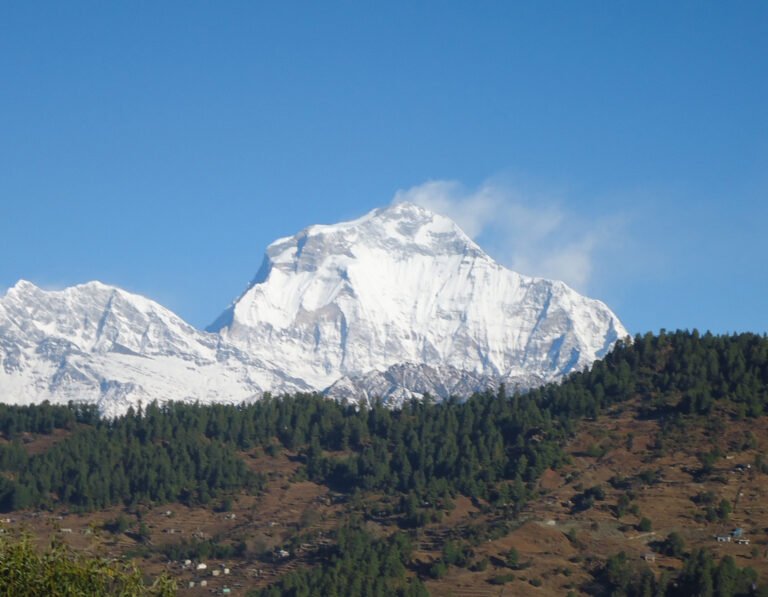
KATHMANDU, November 23, 2026 (7 Mangsir 2083) — For the past week, more people have flown out of the Everest region than into it. Police in Solukhumbu counted 1,180 tourists leaving by air in the seven days to Sunday, against 529 arriving — a net loss of 651, roughly two departures for every arrival. In Namche Bazaar, the main trading village on the way to Base Camp, overnight temperatures have slipped below zero and standing water is freezing before dawn.
On the same weekend, at the other end of Nepal’s trekking map, the traffic ran the other way. Sikles, a Gurung village 38 km north-west of Pokhara, logged 1,532 visitors on Saturday alone, of whom 1,527 were Nepali. One region is emptying; another is being filled by weekend travellers. Together the two datasets describe the handover that happens every year in the last week of November — and this year it is sharp on both sides.
Key facts
- 1,180 tourists flew out of the Khumbu region in the seven days to November 22; 529 flew in, according to the District Police Office, Solukhumbu.
- Departures included 877 foreign nationals and 303 Nepalis; arrivals included 374 foreigners and 155 Nepalis.
- 69 fixed-wing and 28 helicopter flights operated in the region during that week.
- Four days earlier, Tenzing-Hillary Airport at Lukla was handling about 200 flights a day including helicopters, with more than 500 tourists arriving daily.
- Namche Bazaar is now below freezing overnight, with water freezing in the late night and early morning.
- Sikles in Kaski recorded 1,532 visitors on Saturday, November 21 — 1,527 of them domestic tourists, on Annapurna Conservation Area Project (ACAP) counts.
What the police figures actually show
The weekly air-movement count is kept by the District Police Office in Solukhumbu and released through its information officer, Inspector Mausam Tamang. The Himalayan Times and myRepublica carried the same numbers on Sunday, agreeing down to the sub-totals: 1,180 out, 529 in, a gap of 651. The counts cover air travel only; overland exits via Salleri or Jiri are not included, so the real outflow is probably larger.
The composition is more telling than the total. Of the foreigners who left, 550 were men and 327 women; among Nepalis, 257 men flew out against 46 women. Police do not explain the split, but it matches the end-of-season movement of trekking staff — guides, porters and kitchen crews walking down to Lukla and flying home after the last groups have gone.
Why the exodus began this week
The trigger is temperature, not policy. Namche sits at about 3,440 m, and residents say the cold has arrived on schedule. “Temperatures in Namche have started dropping below zero at night. Water has begun to freeze as temperatures fall below freezing during the night and early morning,” Dali Sherpa, a local resident, told myRepublica.
Lama Kaji Sherpa, who chairs the Sagarmatha Pollution Control Committee and runs tourism businesses in the region, told the same outlet that late-season visitors plan around “weather conditions, temperatures, the possibility of snowfall and trekking conditions”, and that this is what pushes departures up at the end of November.
Tourism expert Ang Tshering Sherpa told myRepublica that Khumbu has two windows — spring from February to May, and autumn from late August into November, with October and November the busiest weeks of the second. Laxman Adhikari, ward chair of Khumbu Pasang Lhamu Rural Municipality-4, said the season ends not because a date has passed but because the mountain has become uncomfortable.
From 200 flights a day to 97 in a week
On November 18, Nepalnews reported that Tenzing-Hillary Airport was recording about 200 flights a day, helicopters included, with more than 500 tourists landing daily. Acting airport chief Nawaraj Katuwal gave the figure; Tara Air, Summit Air and Sita Air were all running rotations, and tickets between Lukla and Kathmandu were hard to find. The police count for the week to November 22 puts total movements in the region at 97 — 69 aeroplane flights and 28 helicopter flights, roughly 14 a day.
The two figures are not strictly comparable: the airport’s number counts movements, including helicopter shuttles and multi-sector rotations, while the police number counts flights operated across seven days, and the window overlaps the very peak it is compared with. What can be said without overreach is that the week began at full autumn volume and ended with a net outflow of more than 600 people. Neither the police statement nor the operators attribute the drop to a shutdown; Amrit Magar, Tara Air’s station manager at Lukla, told myRepublica that weather governs operations and traffic rises and falls with the trekking calendar.
The other side of the map: Sikles fills up
Several hundred kilometres west, in Kaski, the movement runs the opposite way. ACAP data reported by Nepalnews shows 1,532 people entering Sikles on Saturday, November 21 — 796 men and 736 women. Ward chair Devijang Gurung confirmed that 1,527 were domestic visitors and five were foreign. That is a step change on the numbers the same ward office gave earlier in the month: OnlineKhabar reported on November 8 that 3,146 tourists reached Sikles between November 1 and 6, an average of 524 a day with a single-day high of 719 on November 4. Saturday’s count more than doubled that high in one day, well after the international autumn season had peaked.
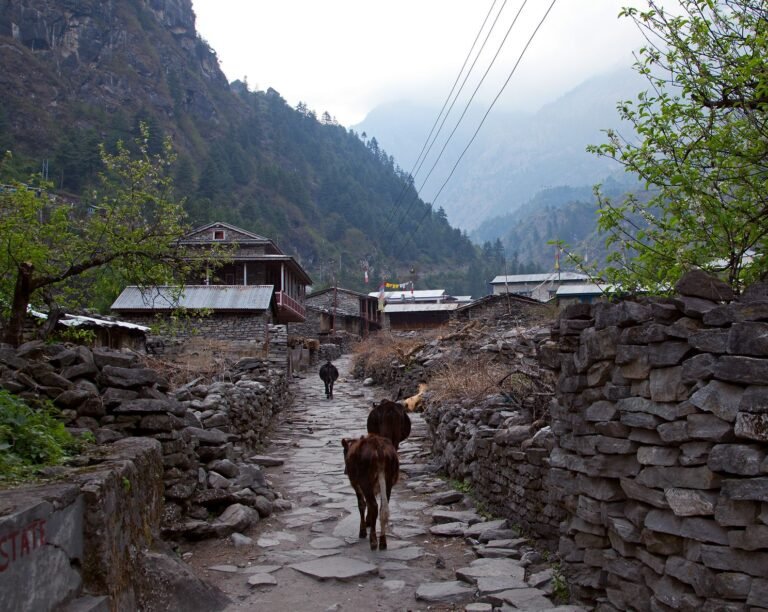
Most visitors use Sikles as a base for Kori and the Kapuche glacial lake. It is a compact village of roughly 400 households, and the ward office and ACAP have responded to the crush with a familiar set of requests: do not litter, use designated waste points, and book before travelling. “The pressure of tourists has increased. If you come without booking, you might not find a hotel,” Gurung said, according to Nepalnews. Tangting, Ghandruk and Luwang are absorbing the overflow, with Fridays and Saturdays the heaviest days. Nepalnews attributes the surge to the government’s two-day weekend; earlier this year the same outlet reported that domestic arrivals at Chitwan National Park had nearly doubled after the policy took effect.
What it means if you are flying to Lukla before mid-December
- Build slack into both ends. With roughly 14 flights a day instead of the autumn peak, one lost weather day can cost two or three. Book morning rotations and keep at least two buffer days before an international departure.
- Confirm your lodges, not just your route. Services above Namche thin out as crews leave; ask whether the teahouse you plan to use in Deboche, Pheriche or Gorak Shep is open and staffed for your dates.
- Plan for ice, not just cold. Frozen water points and shaded trail sections are the practical hazards now; carry traction aids and a sleeping bag rated well below the overnight lows you expect.
- Check high passes with a guide. Cho La, Renjo La and similar crossings are the first to become unsafe; ask the Sagarmatha Pollution Control Committee and your agency, not a Facebook group.
- Insurance must cover helicopter evacuation and altitude. Fewer aircraft in the region means an evacuation can take longer to arrange, and the bill lands on you if the policy excludes it.
- Permits stay mandatory. Sagarmatha National Park entry, the Khumbu rural municipality fee and a TIMS card are all still checked in winter; see our visas and permits guide and the Everest region hub for counters and current rates.
What it means in the Annapurna foothills
- Treat Friday and Saturday as peak season. Book homestays in Sikles, Ghandruk, Tangting and Luwang several days ahead, and expect walk-in beds to be gone by mid-afternoon.
- Shift your week. Sunday to Thursday is markedly quieter on the same trails, with the same views; our Annapurna region hub lists the quieter alternatives.
- Carry cash and pack out plastic. ACAP and the ward office are asking visitors to use designated waste points; the villages have limited capacity to handle a weekend’s worth of bottles.
What comes next
Khumbu now enters its quiet months. Trekking continues — December and January are cold, clear and thinly serviced, and the high passes are a guide’s call — but volume does not return until the spring window opens in February. The domestic flow is likely to keep running the other way, toward lower hills and lake towns within a weekend’s drive of Kathmandu and Pokhara.
For operators that means two different winters: an Everest corridor at minimum capacity, and Annapurna foothill villages that need crowd management on a 48-hour cycle. For travellers, the map inverts in the last week of November, and the advice inverts with it. Go high and slow in Khumbu, or go mid-week in Annapurna — but do not assume the season you read about in October still applies.
Sources: The Himalayan Times, myRepublica, Ratopati, Nepalnews, OnlineKhabar English. Police and ACAP figures as reported by those outlets.
Share this content: