
Five Airports Closed in Nepal as Weather Disrupts Flights
Direct answer: Domestic flights across Nepal were disrupted on Friday, 25 September 2026, after poor weather and low visibility forced the closure of five airports, including Lukla. According to Tribhuvan International Airport authorities, flights could not operate from Bharatpur, Pokhara, Lukla, Simara and Surkhet from early Friday. Kathmandu airport stayed open but was running under Instrument Flight Rules (IFR), so services that depend on Visual Flight Rules (VFR) were the ones hardest hit. If you are flying to Lukla for an Everest trek, or to Pokhara for the Annapurna region, build in buffer days and check your flight status before you leave for the airport.
Which Airports Are Closed and Why?
Five airports were shut to flight operations from early Friday because of poor visibility and continuing rain. The closures were confirmed by Tribhuvan International Airport authorities, and they cover a wide arc of the country: the Chitwan lowlands, the Annapurna gateway, the Everest gateway and the far-west.
| Airport | Region | Status on Friday | Why it matters to travellers |
|---|---|---|---|
| Lukla (Tenzing-Hillary) | Solukhumbu, Everest region | Closed to flights | Main gateway for Everest Base Camp treks and the autumn climbing season |
| Pokhara | Kaski, Annapurna region | Closed to flights | Arrival point for Annapurna treks, Mustang and city breaks |
| Bharatpur | Chitwan | Closed to flights | Serves Chitwan National Park and the Prithvi Highway corridor |
| Simara | Bara | Closed to flights | Access to Birgunj and the southern plains |
| Surkhet | Karnali | Closed to flights | Access to Rara Lake and the far-west hills |
The cause was the same at every site: rain and low visibility. At Kathmandu, visibility was around 3 kilometres at 6am and stayed at roughly the same level by 10am, airport officials said. That is workable for aircraft with instrument approach capability, but not for the visual approaches that most domestic STOL (short take-off and landing) operations rely on.
What Is the Difference Between IFR and VFR, and Why Does It Ground Flights?
Instrument Flight Rules (IFR) allow an aircraft to navigate and approach using instruments and radio guidance, so a flight can proceed even when the pilot cannot see far ahead. Visual Flight Rules (VFR) require the pilot to keep the ground and horizon in sight, and they impose minimum visibility limits.
Nepal’s domestic fleet, especially the Twin Otters and Dornier 228s that serve mountain strips, flies VFR into terrain where cloud can sit on the hillside. When visibility drops to a few kilometres and rain reduces contrast, VFR flights simply cannot legally or safely depart. That is exactly what happened on Friday: Kathmandu itself was functioning under IFR, but the VFR services that connect it to the hills were not.
Why Does Lukla Matter Most Right Now?
Late September sits inside the busiest window of Nepal’s autumn trekking and climbing season. Tens of thousands of trekkers and expedition teams arrive in this period, and almost every Everest Base Camp trek begins with the same 30-minute flight from Kathmandu to Lukla.
Flights to Lukla were particularly affected on Friday, with tourists and other passengers left waiting at Tribhuvan International Airport. Sita Air cancelled all of its flights for the day. Tara Air and Summit Air were holding their aircraft on the ground and waiting for conditions to improve before operating services to Lukla.
The practical consequence is a backlog that does not clear the moment the weather does. When flights to Lukla resume, the airlines have to work through a queue of displaced passengers, and seats go to whoever is first in line and holds a confirmed booking. Trekkers with fixed international connections on both ends of a trip feel this the hardest.
What Are the Airlines Doing, and How Many Flights Are Affected?
According to the domestic flight schedule, 134 domestic departures were planned for Friday. The load was spread across the carriers as follows:
| Airline | Scheduled domestic departures on Friday |
|---|---|
| Buddha Air | 58 |
| Yeti Airlines | 27 |
| Shree Airlines | 23 |
| Summit Air | 10 |
| Tara Air | 10 |
| Sita Air | 4 |
| Nepal Airlines | 2 |
The airport authority warned that some scheduled flights could be cancelled, delayed or rescheduled because of the adverse weather. Passengers have been advised to check the latest status of their flight with their airline or the airport before travelling. That advice matters more than usual in a monsoon-tail week, because conditions can improve or collapse within the same hour.
Are the Roads Affected as Well?
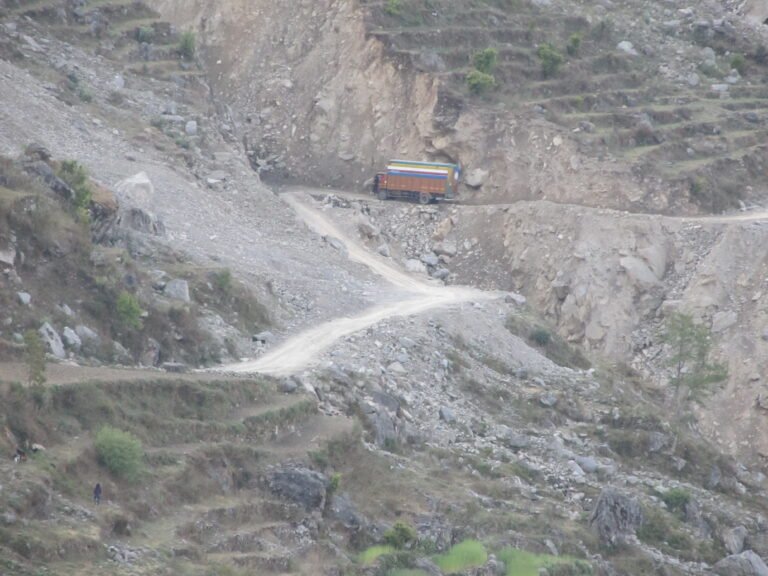
Yes. The same weather system blocked or restricted several major highways on Friday, so switching from air to road was not a clean fallback. Persistent rain triggered landslides at multiple locations and disrupted road connections between Kathmandu and the rest of the country.
BP Highway
The BP Highway was blocked early Friday after landslides fell at Charsayabensi in Roshi Rural Municipality-7 and Gimdi in Roshi-8 in Kavrepalanchok district, at around 4:30am, police said. Authorities also imposed overnight restrictions on the Kavrepalanchok section in response to the weather forecast: vehicles are barred from using the road between 5pm and 5am until Sunday morning, while daytime traffic could also be stopped depending on flood and landslide conditions. Chief District Officer Gopal Kumar Adhikari said authorities would assess conditions before deciding whether to extend the closure to daytime hours. Police have urged travellers to check road conditions before setting out.
Prithvi Highway and Narayanghat-Muglin Road
In Chitwan, the Prithvi Highway and the Narayanghat-Muglin road were closed until further notice because of landslides and the risk of further incidents following continuous rain. Chief District Officer Ganesh Aryal said traffic had initially been stopped overnight from 8pm Thursday to 5am Friday, but the closure was extended as the rain continued. The Chitwan section of the Prithvi Highway has been hit by landslides at several locations.
The scale of the disruption is easy to underestimate. According to district authorities, more than 10,000 vehicles normally use the Narayanghat-Muglin road each day, while more than 14,000 travel along the Prithvi Highway. Those are the two main arteries between Kathmandu and Pokhara, so a closure there affects buses, jeeps, fuel tankers and freight alike.
Update, 25 September, 12:20pm: The Chitwan district administration has since cleared the landslide on the Narayangadh-Muglin section and reopened the Narayangadh to Pokhara route from midday on Friday, according to Online Khabar. Travel between Narayangadh and Kathmandu remained closed, because landslides came down at seven locations in the Dhading section of the Prithvi Highway. Dhading police said some of those sites had been cleared while work continued at others. Road conditions are changing through the day, so check the latest status before travelling. (Source: Online Khabar, 25 September 2026.)
Dhading and the Kanti Lokpath
In neighbouring Dhading, landslides were reported at seven locations along the Prithvi Highway: Krishnabhir, Parewabhir, Jyamireghat, Jahare, Jabangkhola, Tigraang Khola and Kamerebhir. Two sections, at Krishnabhir and Tigraang Khola, are completely blocked, while traffic remains restricted to one lane at the other five locations. Authorities have begun clearing debris at Krishnabhir using two pieces of equipment, but continued rain and repeated landslides have made the work difficult.
Traffic along the Kanti Lokpath, another key road linking Kathmandu with Makwanpur and Hetauda, has also been disrupted. Landslides at three locations on the Lalitpur side have blocked the route, according to Makwanpur police chief Shyam Bahadur Khati.
Authorities are warning people living along rivers and in landslide-prone settlements to remain alert, and are continuing to issue weather and disaster information through local media.
What Should You Do If Your Flight Is Cancelled?
- Contact your airline before leaving for the airport. The airport authority’s own advice is to confirm the status of the flight with the airline or the airport first. Turning up at the domestic terminal in hope rarely helps when five airports are shut.
- Get onto the rebooking list early. Seats on the first flights after a weather clearing go to the earliest confirmed bookings. If you are booked with an airline that cancelled everything, ask about moving to another carrier that is still holding aircraft ready.
- Keep a buffer of at least two days before any international departure. A delayed Lukla flight can cascade into a missed international connection. Two spare days is the working rule for autumn trekking arrivals.
- Do not start driving as a substitute without checking roads. The same rain that grounded flights closed the Prithvi Highway, the Narayanghat-Muglin road and the Kanti Lokpath on Friday.
- Keep your trekking operator informed. Permit timings, guide rosters and domestic connections are all affected by the same delay.
How Long Will the Disruption Last?
That depends entirely on the weather, and no authority has published a reopening time for any of the five airports. The airline position on Friday was that carriers would operate as soon as conditions allow. During the tail of the monsoon, visibility in Kathmandu can improve within a few hours and then deteriorate again, so a flight that operates in the morning does not guarantee one in the afternoon.
For travellers the useful signal is not a forecast but your airline’s live status page plus your operator on the ground. Plan on the assumption that you may lose a day, and you will rarely be caught out.
What Does This Mean for Autumn Trekking Plans?
Autumn is the most popular trekking window in Nepal for good reason: stable air, clear mountain views and the post-monsoon green. But the season change itself is the risk factor. The last storms of the monsoon can still deliver the kind of rainfall that closed five airports on Friday.
If your trek starts with a Lukla flight, budget the buffer days and treat them as part of the trip rather than as spare time. If you are flying to Pokhara for an Annapurna trek, note that Pokhara airport was among the five closed on Friday, so overland alternatives through Chitwan may also be cut. Trekkers heading to Rara Lake through Surkhet face the same combination: a closed airport and landslide-blocked highways.
Useful preparation material before you travel: the Everest Base Camp trek complete guide covers the Lukla flight in detail, and the Nepal trekking safety and health guide explains how to plan for weather delays. If your schedule shifts and you end up with extra days in the capital, the Kathmandu Valley heritage guide is a practical way to use them.
Frequently Asked Questions
Is Lukla airport open today?
On Friday, 25 September 2026, Lukla was closed to flights along with Bharatpur, Pokhara, Simara and Surkhet. No reopening time was announced. Check with your airline or with Tribhuvan International Airport before travelling, because conditions change through the day.
Can I fly to Everest Base Camp instead of Lukla?
The usual alternative is a helicopter, which can sometimes operate when fixed-wing VFR flights cannot. During a widespread weather closure, however, helicopters face the same visibility limits, and demand from displaced passengers pushes prices up sharply. Do not treat a helicopter as a guaranteed workaround.
Are international flights to Kathmandu affected?
Kathmandu airport remained open and was operating under Instrument Flight Rules, which is how international carriers normally operate. The disruption hit domestic services that require visual approaches. Always confirm your specific flight status, because low visibility can still cause delays on any route.
Should I travel to Pokhara by road if my flight is cancelled?
Partly. The Narayangadh to Pokhara route reopened from midday on Friday, 25 September, after the Narayangadh-Muglin landslide was cleared. Travel between Narayangadh and Kathmandu was still closed because of seven landslide locations in the Dhading section. Overnight travel on the BP Highway was banned between 5pm and 5am until Sunday morning. Check road status before setting out.
How much notice will I get if my flight is cancelled?
Sometimes very little. On Friday, Sita Air cancelled all its flights and other carriers held aircraft waiting for conditions to improve. Build your plans around the possibility of a same-morning cancellation rather than expecting advance warning.
Key Takeaways
- Five Nepali airports were closed to flights on Friday, 25 September 2026: Lukla, Pokhara, Bharatpur, Simara and Surkhet. The cause was poor weather and low visibility.
- Kathmandu airport stayed open under Instrument Flight Rules, but VFR-dependent domestic services were the ones grounded.
- Lukla was the most disruptive closure because it is the start point for Everest Base Camp treks during the peak autumn season.
- 134 domestic departures had been scheduled for the day. Sita Air cancelled all flights; Tara Air and Summit Air waited on the weather.
- Roads were hit by the same system: the BP Highway, Prithvi Highway, Narayanghat-Muglin road and Kanti Lokpath were all blocked or restricted, although the Narayangadh to Pokhara route reopened from midday on Friday.
- Travellers should confirm flight status directly with the airline, rebook early, and keep at least two buffer days before any international departure.
Sources: The Kathmandu Post, “Adverse weather disrupts domestic flights as five airports remain closed”, 25 September 2026 and The Kathmandu Post, “Major highways hit by landslides as heavy rain persists”, 25 September 2026, and Online Khabar, “नारायणगढ–पोखरा सवारी आवागमन खुला” (Narayangadh-Pokhara traffic reopened), 25 September 2026.
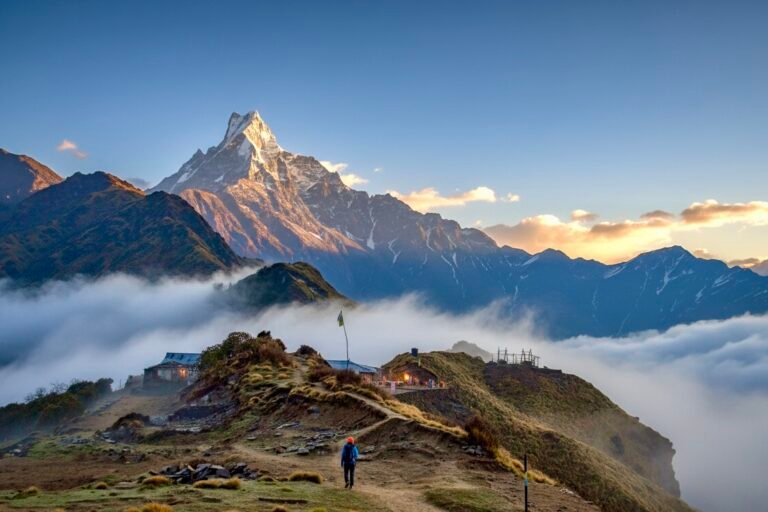
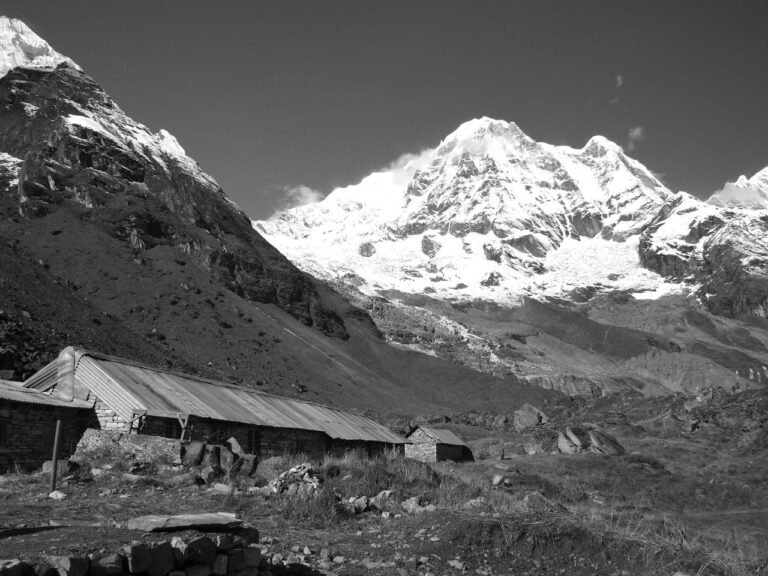
Lukla Airport (Tenzing-Hillary Airport), Solukhumbu, the gateway to the Everest region, was one of five Nepali airports closed by poor visibility on Friday, 25 September 2026. Photo: Vyacheslav Argenberg, CC BY 4.0, via Wikimedia Commons.
Share this content: