Nepal Trekking Travel Insurance: What Every Trekker Must Know in 2026
Complete guide: Nepal Trekking Safety and Health Guide
Do you need travel insurance to trek in Nepal? There is no law that stops a tourist at the airport for lacking a policy, but on the ground the picture is different: most Himalayan trekking routes now require a licensed guide and a TIMS card issued through a registered agency, and those agency-arranged treks effectively require insurance. More importantly, if you are airlifted off a 5,000-metre pass or treated for altitude sickness, the bill is yours to pay — and it can run into thousands of US dollars. A good policy is the cheapest insurance you will ever buy against a ruined expedition.
As of July 2026. Cover rules and permit fees change; confirm specifics with the Nepal Tourism Board (NTB) and your embassy before you fly.
Table of Contents
- Why insurance matters more in Nepal than almost anywhere else
- The five things your policy must cover
- Altitude and the evacuation reality
- How the guide-and-TIMS rule changes the game
- How to choose and what it costs
- Frequently asked questions
- Key takeaways
Why insurance matters more in Nepal than almost anywhere else
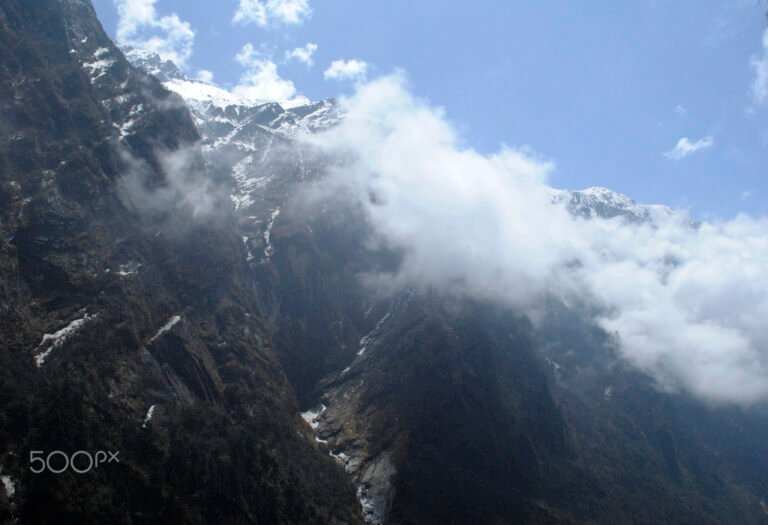
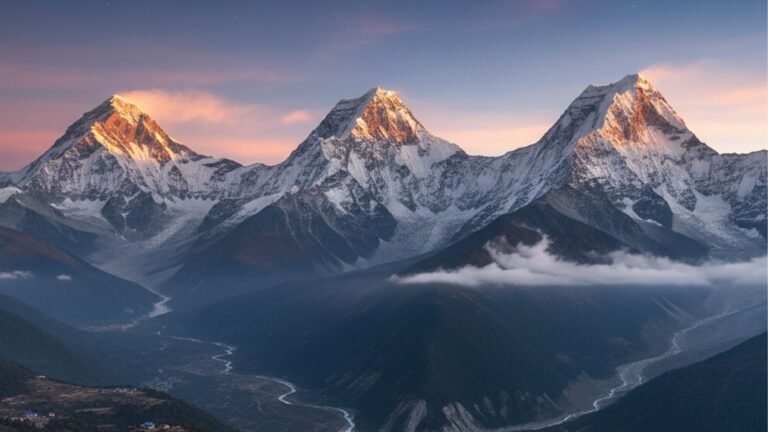
Nepal’s trekking infrastructure is improving fast, but the terrain is unforgiving. Popular routes such as the Annapurna Circuit, Manaslu, Langtang, and the Everest region climb well above 3,000 m, where altitude sickness becomes a daily risk and roads are scarce to non-existent. When something goes wrong, the default evacuation is a helicopter — and helicopter rescue in the Nepalese mountains is not free. Hospitals, clinics, and rescue operators expect payment or proof of insurance before they commit aircraft and beds.
Unlike a city break where your main risk is a cancelled flight, a Nepal trek layers three hazards: altitude illness, remote trauma (a twisted ankle on a cliff-edge trail), and weather-driven isolation. A single policy has to absorb all three.
The five things your policy must cover
| Coverage | Why it matters in Nepal | What to check |
|---|---|---|
| Emergency medical expenses | AMS treatment, infection, gastroenteritis at altitude | Minimum US$50,000; higher is safer |
| Helicopter / air evacuation | Most high passes have no road; rescue is by air | Explicitly included; no altitude cap below your max height |
| Repatriation | Flying you home if you cannot continue | Coverage to your home country, not just to Kathmandu |
| Trip cancellation / curtailment | Flight cancellations, family emergencies, injury before trek | Non-refundable flights and agency deposits covered |
| Personal liability & belongings | Lost gear, third-party accidents on shared trails | Gear replacement and liability limits |
Altitude and the evacuation reality
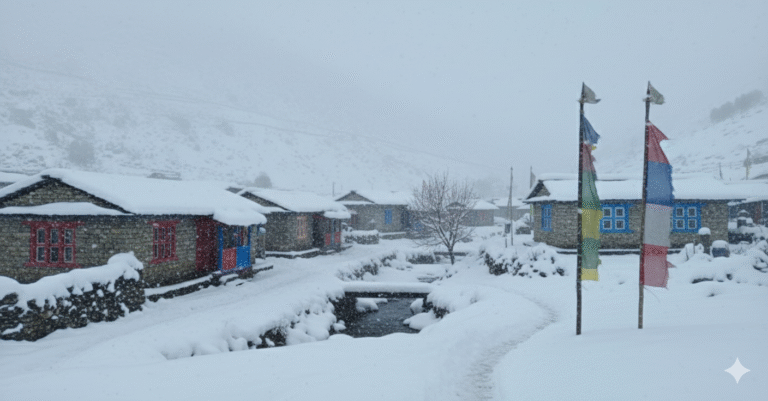
The Nepal Tourism Board’s safety guidance, produced with the Himalayan Rescue Association (HRA), is blunt: “If you are not feeling well above 2,500 m, it may be AMS until proven otherwise.” Early AMS symptoms — headache, nausea, fatigue, dizziness — demand that you stop, rest, and descend if they worsen. The HRA runs aid posts at Pheriche (4,250 m) on the Everest trail and Manang (3,550 m) before the Thorung La on the Annapurna Circuit, plus the Everest ER clinic at Everest Base Camp (5,350 m) in season.
Here is the hard part: if descent and the aid posts are not enough, evacuation is by helicopter, and the higher you are, the more it costs. Many budget travel policies quietly exclude evacuation above 4,000 m or 5,000 m. If you are attempting a pass like Thorung La (5,416 m), Renjo La, or the Three Passes, your policy’s altitude ceiling must sit comfortably above your highest night’s sleep — not just your highest viewpoint.
How the guide-and-TIMS rule changes the game
Under NTB’s Revised Provision for Trekking in Nepal, effective 31 March 2023, most Himalayan trekking routes require a licensed guide and an agency-issued TIMS card. The covered regions are extensive: Everest (including EBC, Gokyo, Three Passes, Mera Peak), Annapurna (Circuit, ABC, Mardi Himal, Khopra), Manaslu (Circuit, Tsum Valley), Langtang (including Gosainkunda and Tamang Heritage), Mustang (Upper Mustang), Kanchenjunga, Makalu, Dhaulagiri, Dolpo, Humla, Rolwaling, and Helambu, among others.
The practical effect: a growing share of treks are now booked through registered agencies, and agencies routinely require proof of insurance before they will issue a TIMS card or accept you on a guided trek. Even on the few routes still open to independent trekkers, going without insurance means a single bad night at altitude could become a five-figure expense. Treat insurance as part of the paperwork, alongside your TIMS and permit documents.
How to choose and what it costs
1. Match the altitude ceiling to your itinerary. List your highest overnight stop and add a buffer of at least 1,000 m. If the policy caps evacuation at 4,500 m and you sleep at 5,000 m, you are self-insuring the worst-case scenario.
2. Confirm helicopter rescue is named, not implied. “Emergency evacuation” alone can be interpreted as ground transport. Look for the words “helicopter” or “air ambulance.”
3. Check the exclusions. Mountaineering, “peak climbing,” and “technical” activity are commonly excluded. A standard trek on formed trails is normally fine; a peak like Mera or Island may trip an exclusion unless you buy an adventure rider.
4. Carry proof everywhere. Save the policy number, the 24-hour assistance line, and your certificate offline on your phone and as a paper copy. At a tea house at 4,000 m, mobile data is unreliable.
5. Tell the truth on the form. Pre-existing conditions (heart, lung, blood-pressure issues) must be declared. A claim refused for non-disclosure is worse than no policy at all.
Costs vary by age, duration, and coverage level, but a dedicated Nepal/”hazardous activity” trekking policy for a multi-week expedition typically runs from roughly US$100 to US$300 for the trip, scaled to the medical and evacuation limits you choose. Cheaper annual multi-trip plans exist but read the altitude fine print carefully — many cap evacuation far below where you will actually be walking.
Frequently Asked Questions
Is travel insurance mandatory to enter Nepal?
No. Immigration does not ask for it at the airport. But it is effectively required for agency-guided treks under the TIMS system, and it is essential in practice given evacuation costs.
Does my credit card or home health insurance cover me?
Sometimes partially. Many credit-card travel benefits exclude altitudes above 3,000–4,000 m and do not cover helicopter rescue. Home health insurance almost never covers evacuation abroad. Verify the altitude ceiling before relying on either.
What altitude should my policy cover?
At least 6,000 m if you will sleep above 5,000 m (Everest Base Camp, Thorung La, High Camps). For most teahouse treks peaking below 4,500 m, a 5,000–6,000 m ceiling is a safe choice.
Will insurance pay the hospital directly?
Evacuation and assistance lines usually arrange and guarantee payment with the rescue operator. For hospital bills you may pay upfront and claim reimbursement — keep every receipt.
What if I get altitude sickness but no injury?
AMS treatment and descent are medical expenses, covered under the medical section. Severe AMS requiring evacuation falls under the helicopter/air-ambulance cover.
Key Takeaways
- Insurance is not legally required at the border, but it is effectively required for guided/TIMS treks and vital given Nepal’s air-evacuation costs.
- Your policy must name helicopter evacuation and set an altitude ceiling above your highest overnight stop.
- Carry at least US$50,000 medical cover; repatriation to your home country matters more than evacuation to Kathmandu.
- The 2023 guide-and-TIMS rule pushes most Himalayan treks through agencies that expect proof of cover.
- Declare pre-existing conditions and read the exclusions — a refused claim is no better than none.
Sources: Nepal Tourism Board — Safety in the Mountains and Revised Provision for Trekking in Nepal (ntb.gov.np); Himalayan Rescue Association Nepal (himalayanrescue.org.np). Verify current fees and rules with NTB and your embassy before travel.
Related reading on TravellingNepal.com:
- Nepal trekking permits 2026: TIMS, ACAP, MCAP explained
- Altitude sickness: a trekker’s guide to staying safe
- Langtang Valley trek 2026 guide
- Annapurna Circuit trek 2026 guide
Share this content: