Nepal-China Border Crossings: Korala Snow Update 2026
Update (November 6, 2026): Also on the Kaligandaki Corridor today, a dry landslide blocked the Rudrabeni-Purtighat section at Rakse in Gulmi, cutting the road toward Beni and the Annapurna and Mustang access routes. See our report: Kaligandaki Corridor blocked by dry landslide in Gulmi.
Travellers heading for Upper Mustang, or hoping to cross overland between Nepal and China, should build extra time into their plans this week. Heavy snow dumped by a late-October storm has blocked the Korala (Kora La) border crossing north of Lomanthang in Upper Mustang, and about 1,700 vehicles were still waiting on the Nepal side to clear customs as of 5 November 2026. Crews from Lomanthang Rural Municipality have been clearing the road for four days, helped by a bulldozer supplied by China’s Zhongba County, and officials say conditions are slowly easing. The crossing is not formally closed, but movement has been stop-start because cleared snow keeps refreezing overnight.
Key takeaways
- Snow from a late-October storm has blocked the Korala (Kora La) crossing at the top of Upper Mustang; crews have been clearing it for four days.
- Around 1,700 vehicles were queued on the Nepal side awaiting customs clearance as of 5 November 2026.
- Korala has become Nepal’s busiest active northern vehicle crossing since flooding took out Rasuwagadhi and disrupted Tatopani.
- Upper Mustang remains a restricted area: trekkers need a permit and a registered guide, and the main access road runs up the Kali Gandaki from Beni.

What happened at Korala?
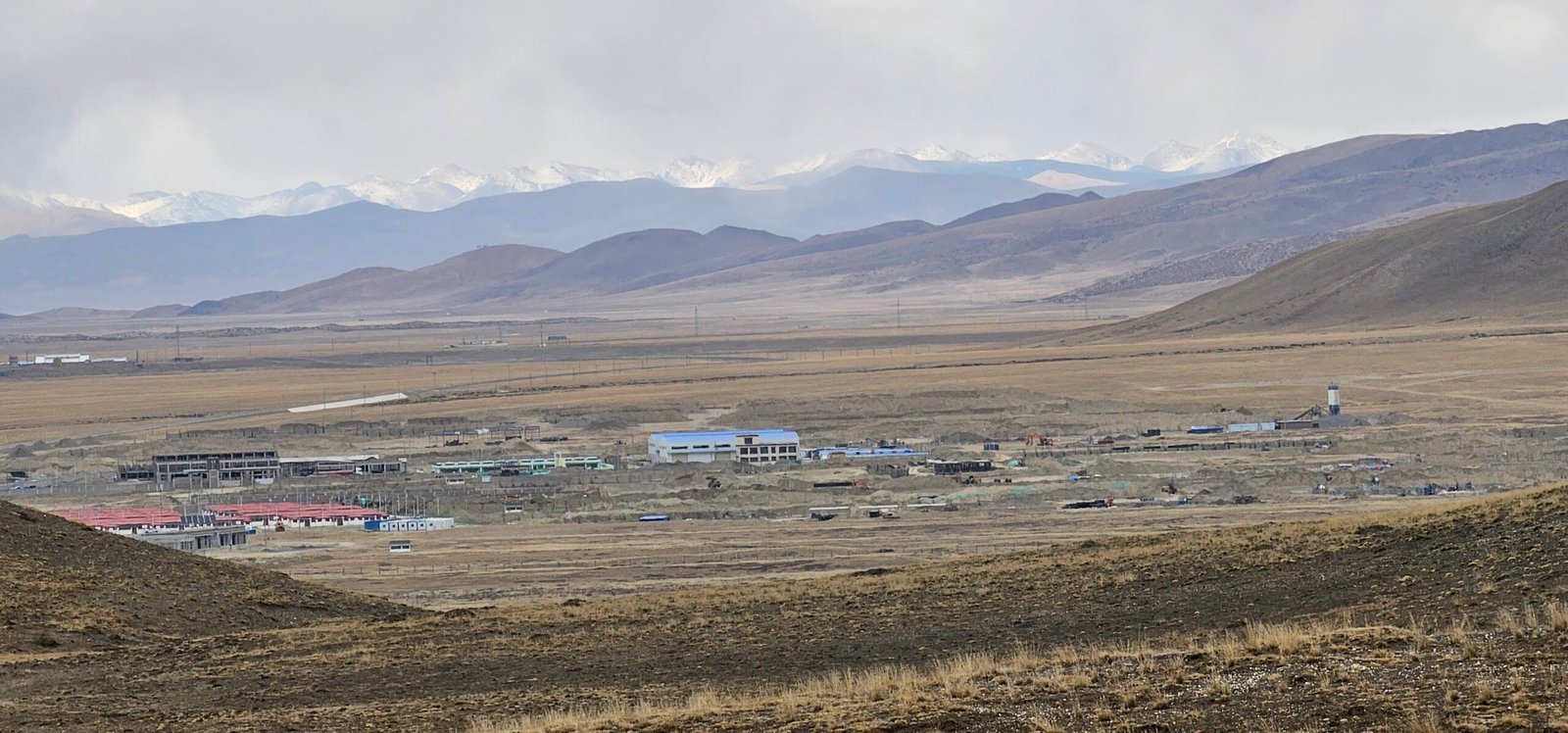
Cyclone Arnob, which crossed into Nepal around 12 Kartik (late October 2026), pushed heavy snow onto the high valleys of Upper Mustang. Up to two feet fell around Korala, the 4,660-metre pass on the Nepal-China border, and the drift blocked the road from the border post roughly 14 kilometres south to Nhechung, in ward 4 of Lomanthang Rural Municipality. With the road buried, movement of goods, containers and vehicles came to a halt.
Lomanthang Rural Municipality has led the clearance effort. Its chair, Tasinarbu Gurung, described a running battle with the weather. “It has been four days since we started removing snow. We clear it and it freezes again. We send vehicles through and they get stuck again,” he told Online Khabar. He added that Korala had become the fallback after problems at Rasuwa: “Sometimes floods and landslides cause trouble here, sometimes snow blocks it.”
China’s Zhongba County People’s Government supplied a bulldozer at the municipality’s request, and a second machine belonging to the municipality has also been working the pass. “Our own dozer is clearing snow, and we have also used the dozer provided by the Chinese local government,” Gurung said, adding that he expected conditions to become much easier from Thursday.
The Mustang Chief District Officer, Parshuram Pokharel, said the damage caused by the Kaligandaki flood had been repaired and the Beni-Korala road was open, but that snow and intense cold were still hindering full operation of the crossing. Teams from the rural municipality, the Armed Police Force and Nepal Police have been working on the pass daily. Temperatures at Korala have ranged from minus 5 to minus 11 degrees Celsius.
According to the Armed Police Force’s No. 33 Gulm, about 1,700 vehicles were stuck on the Nepal side awaiting customs clearance as of 5 November. The Gulm’s information officer, Inspector Bishnu Poudel, said 7,100 electric vehicles had been imported through Korala so far in the 2083/84 fiscal year, and that 4,437 vehicles came through after the road reopened following the autumn floods. The Gulm chief, Deepak Koirala, warned that the cold will make it harder to start vehicles and that the container queue had only recently begun to shrink.
Why Korala matters right now
Korala is not Nepal’s traditional main border gate, but in late 2026 it is doing far more work than usual. The Rasuwagadhi (Kerung) crossing in Rasuwa was washed out by the Bhotekoshi flood, and the Tatopani-Khasa crossing in Sindhupalchok has been disrupted by flood and landslide damage. With both of those northern gates out of action, goods and vehicles have been pushed to Korala, turning a high, weather-exposed pass in remote Mustang into the busiest functioning vehicle crossing on the Nepal-China frontier.
The pass itself is unusual. At 4,660 metres, Korala is regarded as the lowest drivable route between the Tibetan Plateau and the Indian subcontinent. Its Lektse Port is the fourth land port China has opened with Nepal, following Tatopani-Khasa (Zham), Rasuwa-Kerung (Gyirong) and Yari (Humla)-Purang (Burang). Traffic through Korala has been rising year on year, and the surge in 2026 has exposed how thin the state’s presence on the Nepal side remains.
An immigration office building with ten rooms was built at Korala by the Gandaki provincial government and inaugurated in Kartik 2081, but regular service only resumed in Kartik 2082 and it still opens and closes intermittently. The Mustang customs office sits about 13 kilometres below the border at Lomanthang ward 4, Nechung, operating out of five old buildings, without an integrated customs and quarantine facility on the frontier itself. A long-planned integrated customs office and dry port, for which roughly 1,000 ropani of land has reportedly been acquired, has not been built.
Nepal’s northern crossings at a glance
| Crossing | Location | Status (Nov 2026) | Notes |
|---|---|---|---|
| Korala (Kora La) | Upper Mustang, Lomanthang | Open but snow-affected; about 1,700 vehicles queued | Busiest functioning vehicle crossing; weather-dependent |
| Rasuwagadhi (Kerung) | Rasuwa | Reported out after the Bhotekoshi flood | Vehicle traffic diverted to Korala |
| Tatopani-Khasa (Zham) | Sindhupalchok | Reported disrupted by flood and landslide damage | Nepal’s traditional main trade gate |
| Yari (Humla)-Purang | Humla | Remote and seasonal | Far-western crossing; limited capacity |
Statuses reflect reporting as of 5 November 2026 and change quickly; confirm the current position with local authorities or a licensed operator before travelling.
What it means for trekkers and overland travellers
For most trekkers, the Korala crossing is a headline rather than a route. Upper Mustang treks typically run up the Kali Gandaki valley to Lomanthang and back, or finish with a flight out of Jomsom. Very few visitors continue north over the border, because Korala is oriented to trade rather than to tourism and is not a regular tourist port of entry. Overland travellers hoping to cross into Tibet there should expect to arrange it well in advance through a licensed operator and to confirm current immigration rules directly.
The bigger practical effect on trekking is indirect. The Beni-Korala road doubles as the supply and evacuation route for Lomanthang and the upper villages. When it is blocked by snow, flood damage or landslides, fuel, food and transport in Upper Mustang become scarcer and more expensive, and contingency options narrow. Winter travel beyond Kagbeni, and especially around Lomanthang, is reliably cold and frequently disrupted.
Travellers who want the cultural highlights of the old Kingdom of Lo without the frontier complications can plan a standard Upper Mustang trek, and those assembling a wider itinerary should match it against our Annapurna region treks guide.
The Beni-Korala road and Upper Mustang access
The overland artery into Upper Mustang is the Beni-Korala road, which climbs the Kali Gandaki valley through Myagdi and Mustang, passing Jomsom and Kagbeni on the way to Lomanthang and, ultimately, the border pass. In 2026 the road has taken repeated hits. The Kaligandaki flood of 11 Asoj (late September 2026) damaged the Beni-Korala road in several places, and the route only reopened towards the end of Asoj once repairs were completed. Korala’s dependence on a single valley road is the region’s central weakness: one flood or one heavy snowfall can cut the lifeline to Lo Manthang for days.
Because the same corridor carries pilgrims and trekkers bound for Muktinath and the lower Mustang villages, disruption ripples well south of the border. Anyone planning a Mustang itinerary in the coming months should treat road and pass status as a live variable and check it close to departure. For travellers weighing up how to reach the region in the first place, our guide to getting to Nepal by air or overland covers the wider entry picture, while the reopening of the Tatopani border crossing on the Arniko Highway earlier in 2026 shows how quickly these gates can change.
Practical advice for the 2026-27 season
If your plans touch Upper Mustang or the northern border this winter, the following will save trouble.
- Confirm the current status of the Beni-Korala road, the Korala pass and your chosen crossing with a licensed trekking agency or the Mustang district administration before you set out.
- Build slack into your itinerary. Snow closures at the top of the valley can add days, and flights out of Jomsom are themselves weather-dependent.
- Carry enough cash. Banking and ATM options are limited north of Jomsom, and card payment is unreliable in the upper valley.
- Pack for real cold. Temperatures near Korala have dropped to minus 11 degrees Celsius, and the wind in the Kali Gandaki valley makes it feel colder.
- Remember the paperwork. Upper Mustang is a restricted area, so a restricted-area permit and a registered guide are required; our Nepal visa and permits guide explains how the permit system fits together.
Frequently asked questions
Is the Korala border crossing open?
It is not formally closed, but heavy snow has made movement stop-start. As of 5 November 2026 crews were clearing the road and about 1,700 vehicles were waiting on the Nepal side. Confirm the current position locally before travelling.
Can tourists cross into Tibet at Korala?
Korala is primarily a trade crossing and is not a regular tourist port of entry. Overland travellers should arrange any crossing in advance through a licensed operator and check the current rules with immigration.
Which is the main Nepal-China border crossing for travellers?
Historically Tatopani-Khasa (Zham) and Rasuwagadhi-Kerung (Gyirong) have been the principal gates. Both have been disrupted by flooding and landslides in 2026, leaving Korala as the busiest functioning northern vehicle crossing.
Do I need a permit to visit Upper Mustang?
Yes. Upper Mustang is a restricted area. Trekkers need a restricted-area permit and must travel with a registered guide.
When is the best time to travel to Upper Mustang?
The dry post-monsoon and pre-monsoon windows are the most reliable for the upper valley. Winter brings snow, sub-zero temperatures and a greater chance of road and pass closures.
Sources
- Online Khabar, “Korala border: sometimes blocked by floods and landslides, sometimes by snow”, 5 November 2026 (Nepali language).
- Wikipedia, “Korala” and “Upper Mustang” (background on the pass, its ports of entry and the region’s geography and history).
- Armed Police Force No. 33 Gulm and Mustang district administration figures, as reported by Online Khabar, 5 November 2026.
Related guides on TravellingNepal
- Upper Mustang Trek 2026 Guide
- Annapurna Region Treks: Complete Guide
- How to Get to Nepal in 2026: Flights, Airports and Overland Routes
- Tatopani Border Crossing Reopens on the Arniko Highway
- Nepal Visa and Permits: Complete Guide
Share this content: