
Nepal’s Permit Crackdown Widens: Agency and Four Mexican Trekkers Fined Over Lower Dolpa
KATHMANDU, November 7, 2026 (21 Kartik 2083) — Nepal’s Department of Immigration has fined another trekking company and four foreign trekkers over unauthorised travel in Dolpa, the third permit case in a week and the clearest sign yet that enforcement in the country’s restricted areas has tightened.
Mount Rose Tours & Travels Pvt Ltd was fined Rs 50,000 under Section 10(4) of the Immigration Act 1992 (2049 BS) for taking four Mexican nationals into the restricted area of Lower Dolpa without trekking permits. The four Mexicans were fined Rs 10,000 each under the same provision, and each was required to pay the applicable permit fee of USD 20 per week.
The department acted on a letter from the District Administration Office, Dolpa, which asked it to take action after the group was found trekking in restricted Lower Dolpa without authorisation. It cited Rule 32 of the Immigration Regulations 1995, under which permits are mandatory in restricted areas.
Three cases, one week
| Case | Where | Penalty |
|---|---|---|
| Garima Voyage Travels (agency), two Belgian trekkers | Dolpo Buddha Rural Municipality | Rs 50,000 fine; guide’s licence referred for investigation |
| Six Indian trekkers (no agency, no guide) | Upper Dolpa, Numala–Bungla pass | At least Rs 20,000 each plus USD 40 permit fee — Rs 160,000 total, after a rescue costing about Rs 1 million |
| Mount Rose Tours & Travels (agency), four Mexican trekkers | Lower Dolpa | Rs 50,000 agency fine; Rs 10,000 each on the trekkers; USD 20 per week permit fee |
The pattern across the three is consistent: the district administration reports, the Department of Immigration decides, and the penalty falls on both the operator and the traveller. The two agency cases carry the same Rs 50,000 fine; the independent group in Upper Dolpa paid more per head, and the state carried a seven-figure rescue bill.
What the department is now asking for
In the Mount Rose decision, the department went beyond the fine and set out what it expects from the industry. It urged all foreign nationals, trekking and travel agencies and other stakeholders to comply fully with Nepal’s trekking permit requirements, describing the goal as making trekking tourism “safe, systematic and well-regulated”.
More concretely, it instructed agencies arranging trips for foreigners in restricted areas to register with the department’s online system and to ensure every necessary permit is obtained before entry. That is an operational requirement, not a courtesy: it means the agency’s registration record must match the actual trip, and it gives the department a paper trail to check against district reports.
The department also repeated that violations of immigration and trekking regulations will invite legal action.
Why Dolpa keeps producing cases
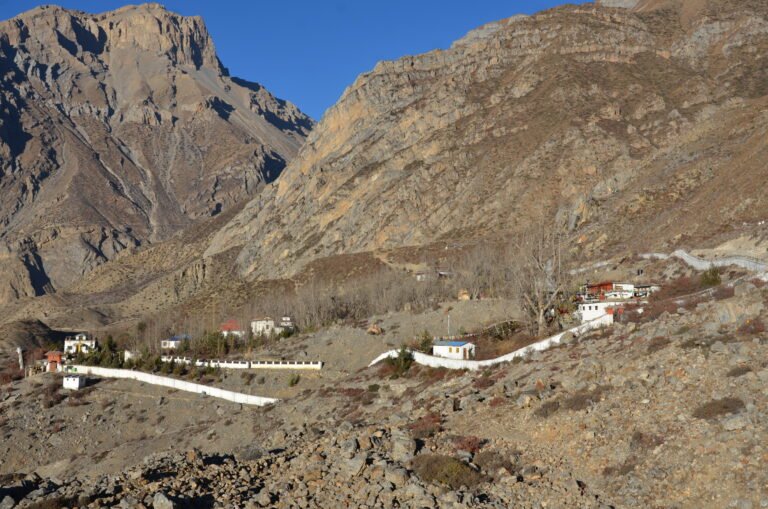
Dolpa is the largest district in Nepal and one of the hardest to police. The restricted zones — Upper Dolpa around Shey Phoksundo and the old trade routes to Tibet, and the Lower Dolpa valleys to the south — are reached by air to Juphal or by days of road, and the trails run through gorges where a checkpoint is a single post on one path, with alternatives around it.
That geography makes Dolpa attractive to travellers who want remoteness, and tempting to those who want to avoid fees. The permit system is what stands between those two impulses: it registers who is inside, on which route, and for how long, and it is the record rescue coordination uses when weather closes in.
This year the stakes have been visible. Cyclone Arnab brought heavy rain from October 28 to 30, districts issued warnings ahead of it, and the Upper Dolpa group that ignored those warnings had to be lifted off a 4,500 m pass in snow after a porter walked down to raise the alarm.
What it costs an operator to get this wrong
For an agency, Rs 50,000 is not the real penalty. The larger risk sits with the licences: in the Voyage Travels case the department asked the Department of Tourism and the Bagmati Province ministry to examine the guide’s professional conduct and licence. A second finding can put an operator’s ability to obtain restricted-area permits at risk, which is the part of the business that commands the highest margins.
For trekkers, the arithmetic is even blunter. The Mexican group’s fines of Rs 10,000 each plus the USD 20-per-week permit fee they should have paid at the start will exceed what the permit would have cost. In the Upper Dolpa case the six travellers paid Rs 160,000 between them — and the rescue they needed cost the state about Rs 1 million.
What trekkers should do
- Check the permit against your route, not just the district. Restricted-area permits name the area and the dates; a Dolpa permit for one zone does not cover another.
- Confirm your agency is registered with the Department of Immigration’s online system — the department now explicitly requires it for restricted-area trips.
- See the permit before you walk. Ask for a copy at least a week before departure, and check the names, nationalities, route and dates.
- Never accept a detour around a checkpoint. In the Upper Dolpa rescue, officials said the group had deliberately taken alternative routes to avoid park and district posts. That detail is now part of the public record of the case.
- Budget the permit properly. Upper Dolpa is USD 500 per person for the first ten days; Lower Dolpa and other restricted zones carry their own weekly fees. If a quote looks like it skips them, it does.
Sources: Department of Immigration press release as reported by Everestpedia, Tourism Mail and The Himalayan Times; District Administration Office, Dolpa; The Kathmandu Post. Earlier coverage: Voyage Travels fined over Dolpo permit violation and six trekkers rescued and fined in Upper Dolpa. Permit fees and rules: visas and permits guide.
Share this content: