Six Indian Trekkers Rescued From Upper Dolpa Snow — Then Fined for Skipping Permits
DOLPA, November 4, 2026 (18 Kartik 2082) — Six Indian trekkers who entered Upper Dolpa without permits or a guide, and ignored weather warnings issued ahead of Cyclone Arnab, were rescued by helicopter from deep snow at around 4,500 metres — and then fined, the District Administration Office, Dolpa, said.
The group was airlifted on Monday from the Numala–Bungla pass area in Shey Phoksundo Rural Municipality-8, after losing contact on October 31. Nepal spent roughly NPR 1 million — about USD 6,600 — from its disaster management fund on the operation, which required two shuttle flights from the pass to the district headquarters at Dunai after an initial flight from Pokhara.
Key facts
- Who: Momita Haldar, Piyali Kole, Jajala Trived Kumar, Aditya Singh, Dipalina Biswas and Rajesh D — six Indian nationals.
- Where: Numala–Bungla pass, Shey Phoksundo Rural Municipality-8, Upper Dolpa, at about 4,500 m.
- Why they were stranded: heavy snowfall after entering the restricted area without permits, without a guide, and against warnings issued before Cyclone Arnab brought rain to Nepal from October 28 to 30.
- How they were found: no phone network — a porter travelling with the group descended to a nearby village and alerted local authorities.
- Cost of the rescue: about NPR 1 million (USD 6,600), paid from the disaster management fund.
- Penalty: at least NPR 20,000 each plus a USD 40 permit fee, NPR 160,000 in total.
How it unfolded
The group had been in Upper Dolpa for close to two weeks. Officials say they deliberately took alternative routes to avoid the checkpoints operated by national park authorities and the district administration — the mechanism by which restricted-area trekkers are registered, counted and tracked.
Weeks earlier, the district administration had instructed security agencies to stop trekkers entering high-altitude areas ahead of Cyclone Arnab, and had issued warnings about possible snowfall and hazardous conditions in Upper Dolpa. The group went in anyway, and on October 31, in snow, they lost contact.
With no telephone network in the area, the alarm was raised the slowest possible way: a porter from the group walked down to a village and told the authorities. A helicopter was dispatched from Pokhara, and the six were lifted from the pass to Dunai in shuttle flights.
“Fortunately, they had found a safe place and were in good health,” Dolpa’s Chief District Officer, Junu Hamal Dhakal, said.
The fines — and why they were reduced
Foreigners entering Upper Dolpa without the required permit face a fine of NPR 50,000 under Nepali regulations. The district reduced that penalty, citing the group’s limited knowledge of the terrain and of local rules, and instead levied at least NPR 20,000 per person, plus a USD 40 permit fee for nearly two weeks inside the restricted area without notifying the authorities.
That makes the total cost to the group NPR 160,000 — against a rescue bill to the state of roughly NPR 1 million. The arithmetic is the point. In restricted areas, the permit is not a revenue line; it is the registration that tells authorities who is inside, where, and when to start looking.
Why Upper Dolpa is a restricted area
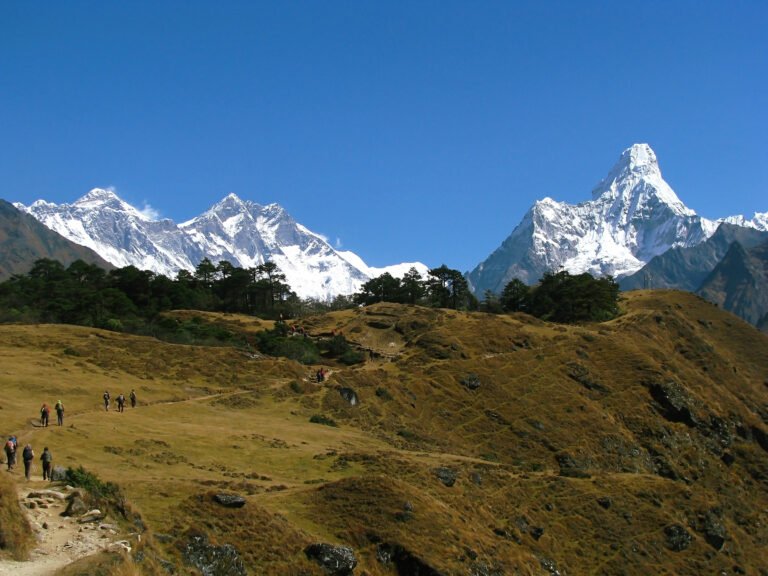
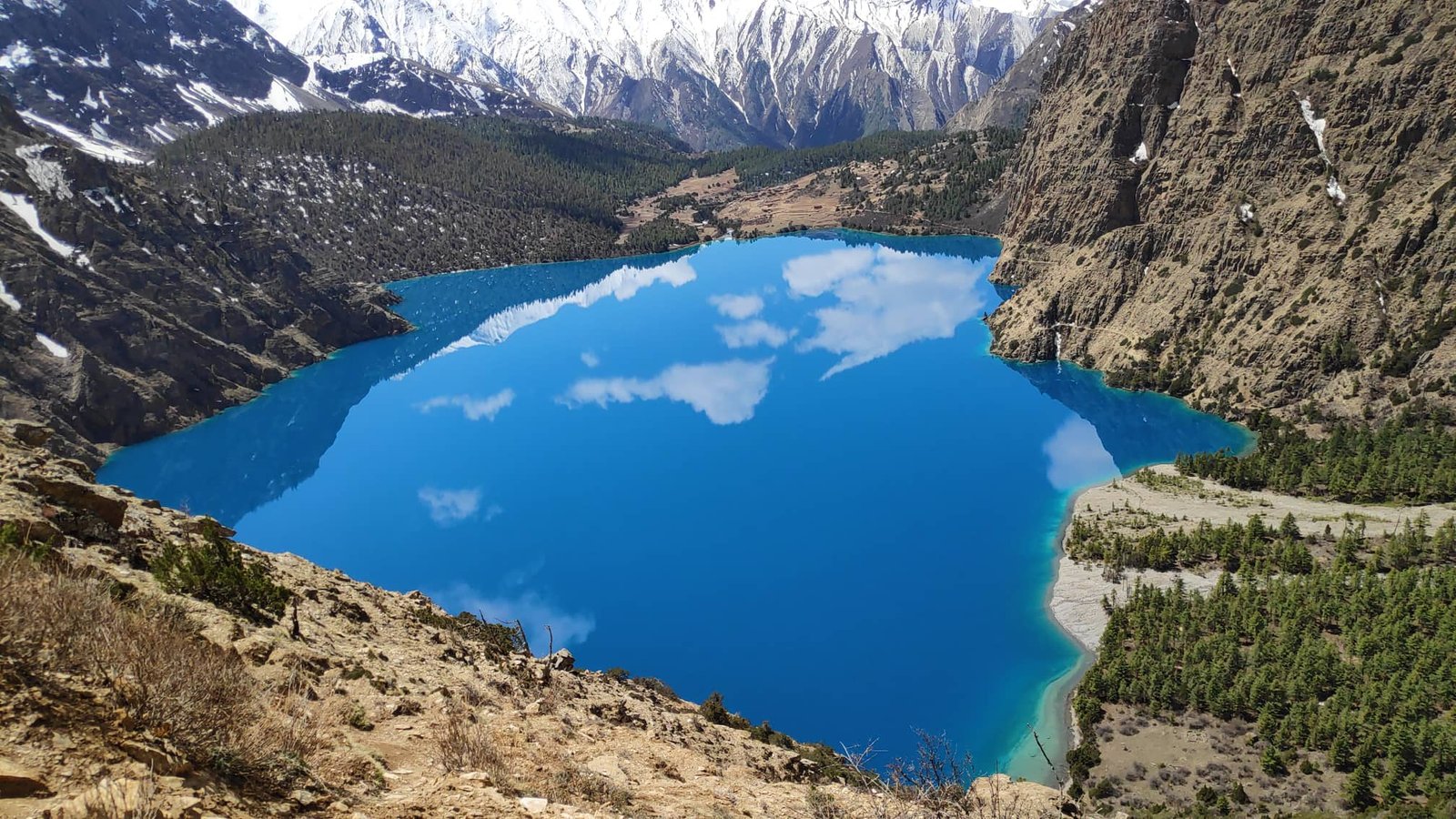
Upper Dolpa sits north of the Himalaya in the rain shadow of Dhaulagiri, a high desert of gorges, monasteries and the turquoise water of Shey Phoksundo. Access is by air to Juphal or days of road, and the terrain beyond the villages is exposed, unmarked and, for much of the year, empty.
- Permits: Upper Dolpa requires a restricted-area permit of USD 500 per person for the first ten days, plus Shey Phoksundo National Park entry of NPR 3,000 and a TIMS card.
- Rules: restricted permits are issued only through a licensed Nepali agency, for a minimum of two trekkers, and a guide must accompany the group.
- Checkpoints: the route is policed at army and park posts that record permits and passports — the reason the group’s detours mattered.
- Weather: autumn is short. Once the first heavy snow arrives on the passes, an unguided group without communications is one injury or one whiteout away from a serious emergency.
The second Dolpa permit case in two days
The rescue and fines follow Monday’s news that the Department of Immigration had fined a Kathmandu trekking company, Garima Voyage Travels Tours and Treks Pvt Ltd, NPR 50,000 for attempting to take two Belgian nationals toward Dolpo Buddha Rural Municipality without a trekking permit. The department also asked tourism authorities to examine the guide’s conduct and licence, and warned agencies not to move tourists into any area without permits.
Two cases, one district, 48 hours: one commercial, one independent, both involving the same rule. Read the earlier report: Nepal fines Voyage Travels Rs 50,000 over Dolpo permit violation.
What trekkers should take from it
- A permit is a safety registration. The fee buys your name in a ledger that rescue coordination depends on. Without it, a search starts with a porter walking to the nearest village.
- Do not dodge checkpoints. District authorities treat deliberate avoidance as an aggravating factor, and the fine applies whether or not you are rescued.
- Take the weather warnings seriously. The Arnab advisories were issued days in advance; the group’s decision to walk in regardless is the reason this became a rescue story.
- Carry a way to call for help. A satellite messenger or a guide with a radio changes a two-day delay into minutes. There is no mobile coverage above the villages.
- Insure for helicopter evacuation. Travellers who break the rules may find their insurance void; even compliant trekkers need a policy that explicitly covers high-altitude rescue.
- Hire the guide. In Upper Dolpa it is not advisory — no agency, no guide, no permit.
Sources: District Administration Office, Dolpa (CDO Junu Hamal Dhakal), Tourism Mail, Everest Chronicle, Times of India and Artha Khabar. Permit rules as per Nepal’s restricted-area regulations; see the visas and permits guide for fees and the agency requirement.
Share this content: