Nepal’s Only Hunting Reserve Is Busy — and Most Visitors Are Not Hunting
KATHMANDU, November 11, 2026 (25 Kartik 2083) — Dhorpatan, the only reserve in Nepal where hunting is legal, is midway through its autumn season: seventeen trophy permits have been issued for blue sheep and Himalayan tahr, eleven foreign hunters are already working the high blocks and six more are expected before the season closes. The same reserve office counted about 37,000 visitors last year. Almost none of them carried a rifle. That split — a tiny, expensive hunting trade and a much larger trekking one, sharing one valley in the Dhaulagiri Himal — is the thing worth understanding about Dhorpatan this November.
Key facts
- Permits this season: 10 blue sheep (naur) and 7 Himalayan tahr (jharal).
- Eleven foreign hunters have arrived and six more are preparing to travel, according to reserve ranger Sagar Subedi.
- Last fiscal year: 21 blue sheep and 11 tahr taken across two seasons, generating Rs 41.7 million.
- One blue sheep was worth Rs 2 million to the government last year, per chief conservation officer Ananath Baral.
- The reserve covers 1,325 sq km across Baglung, Myagdi and Eastern Rukum, from roughly 2,850 m to 5,500 m, and was gazetted in 1987.
- Rules: seven hunting blocks, a 15-day limit per group, and reserve staff plus Nepali support staff on every hunt.
A quota of seventeen animals
Reports from Baglung this week put eleven foreign hunters inside the reserve, with six more due. The quota of ten blue sheep and seven tahr is set by the Department of National Parks and Wildlife Conservation, which awards the right to organise hunts to a company through competitive bidding and issues permits through that company. Hunters from the United States, Russia, Spain, Denmark, France and several African countries have been coming for years. Most do not walk in: they fly by helicopter straight to their block.
Seven blocks, fifteen days, one escort
The reserve is divided into seven hunting blocks — Surtibang, Phagune, Barse, Seng, Dogadi, Ghustung and Sundaha. A party hunts inside one assigned block for a maximum of 15 days. Reserve staff and Nepali support staff accompany each group, which is as much a monitoring function as a logistics one: a quota only holds if somebody is counting. A fresh census of blue sheep and tahr is being carried out this year and will feed into the next set of numbers.
Why one blue sheep is worth Rs 2 million
Dhorpatan’s economics are unusual and easy to state. A single blue sheep brought the state Rs 2 million last year, according to Baral. With 21 blue sheep and 11 tahr taken over two seasons, the reserve booked Rs 41.7 million — about Rs 1.3 million per animal on average. That figure is what makes Dhorpatan legible to a finance ministry: a protected area covering part of its own costs with 32 animals a year, where most parks ask trekkers for a few thousand rupees at a gate.
The other 37,000 visitors
The traffic in the valley looks nothing like that. Through the autumn, domestic visitors have been arriving by road through Baglung for the Tihar holidays and the settled weather, heading for the Dhorpatan valley itself, Nisel Dhor, Bukipatan and Jaljala. Punam Budhamagar, who runs a Pakha-thar community homestay in the area, told Ratopati that foreign guests come for the hunt while Nepali guests come for the walking and the views. The reserve office counted roughly 37,000 domestic and foreign sightseers last year and says domestic numbers are rising this fiscal year, with hotels and homestays around the valley expanding to meet them.
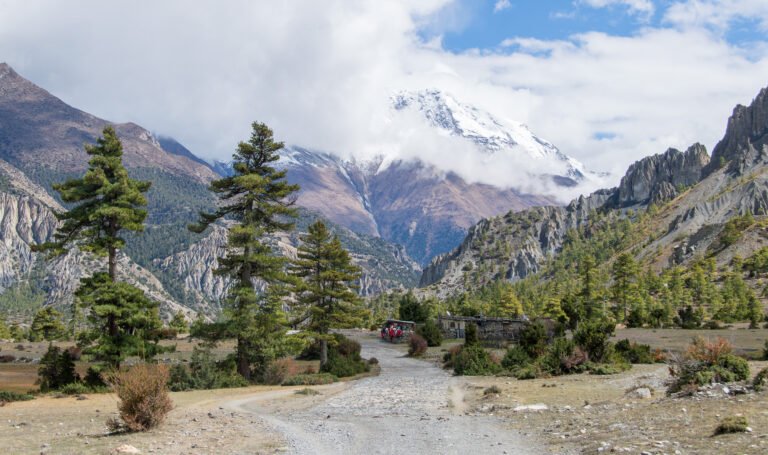
That second market matters more to Nepal’s tourism economy than the first, even though it generates far less money per head. Dhorpatan sits at the western edge of the trekking map, reached by road through Beni in Myagdi, and has never had the lodge infrastructure of the Khumbu or Annapurna circuits. What it has is open pasture above the treeline, a Tibetan settlement in the valley, and Magar and Chantyal villages.
The herd behind the quota
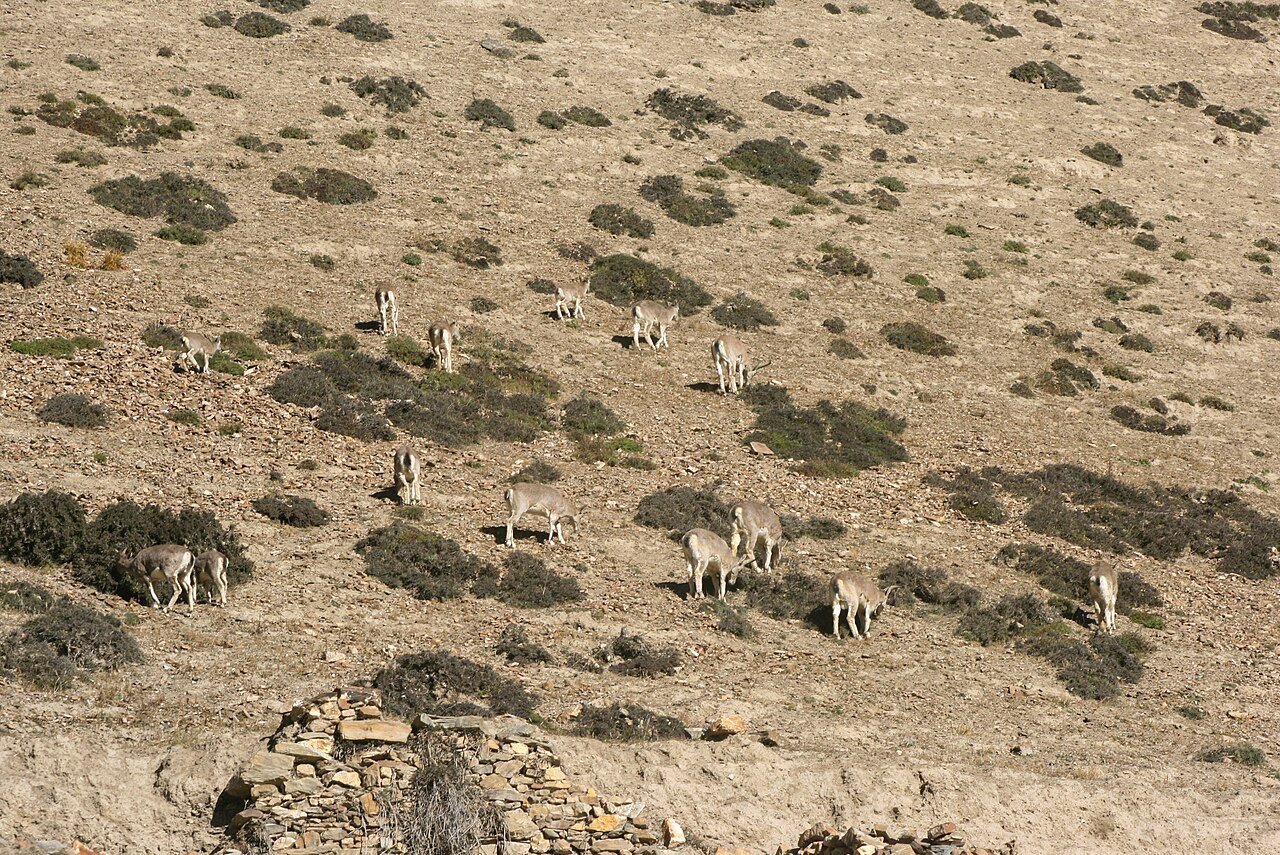
A quota is only as good as the count behind it, and the count is contested. A 2025 paper in the Journal for Nature Conservation by Thapa and colleagues traced the reserve’s blue sheep from 2,593 animals in 1979 to 1,290 in 2021, and found the ratio of young to adult females falling from 83 to 37 over the same period — weaker recruitment, in the authors’ reading. The same study reported that across the six fiscal years from 2017/18 to 2022/23, average annual management costs at Dhorpatan exceeded trophy-hunting revenue by roughly US$322,500.
The reserve’s own figures do not fully agree with one another. Baral is quoted putting the most recent census at about 1,200 blue sheep and 900 tahr. The census carried out in 2079 BS (2022) recorded 1,290 naur and 744 jharal, with annual quotas in recent years generally falling between 19 and 24 naur and 14 and 19 jharal. Both versions describe the same base — roughly a thousand blue sheep and several hundred tahr — but they are not the same numbers, and the honest reading is a range rather than a single figure.
The reserve is also counting more than its two trophy species. In May it began its first snow-leopard camera-trap survey, with 56 cameras spread across six blocks between 3,200 and 5,500 metres. Blue sheep are the main prey base for those cats, which is the awkward link in the whole arrangement: the animal that pays for the reserve is also the animal the reserve’s apex predator depends on.
The calendar does not agree either
Even the dates of the season are reported differently. Ratopati describes the first season as October to November and the second as February to April. OnlineKhabar, reporting the permit announcement in late September, had the first season running September to December and the second February to May. Tourism Info Nepal gave September to November. What the reserve describes in its own material is Ashoj to Mangsir and Falgun to Baisakh — in practice late September to mid-December, then February to May. Anyone planning around the hunting calendar should ask the reserve office directly; the published summaries differ by weeks.
What it means if you are going
Dhorpatan is not a national park and is not administered like one. Entry arrangements are handled through the reserve office in the Dhorpatan valley in Baglung district, so confirm requirements with that office before you commit to a route rather than assuming park rules apply. Our visas and permits guide covers the standard trekking paperwork, but Dhorpatan sits outside the park system and the reserve office is the authority that matters.
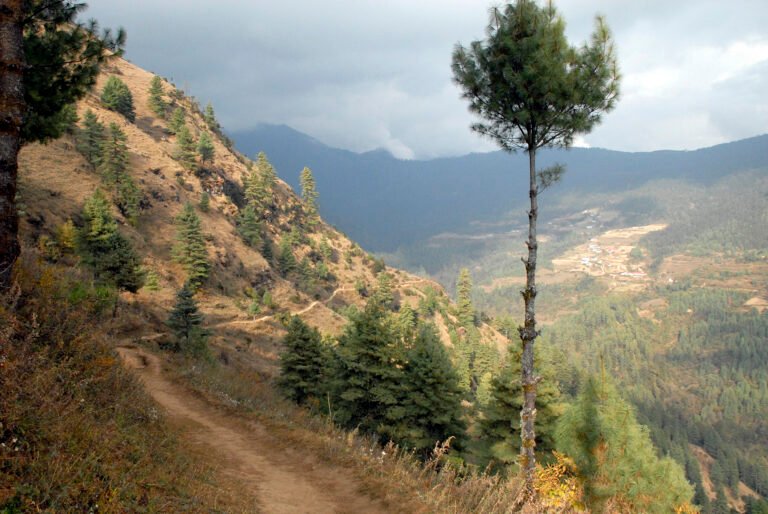
The walking is on patan — open, marshy alpine pasture — between roughly 2,850 and 5,500 metres. The valley floor feels gentle, which is the trap: nights are cold, weather turns fast, and the higher patans above Bukipatan and Jaljala need proper acclimatisation rather than a single push. Treat it as high-altitude walking from the moment you leave the road.
During the season, seven blocks are working areas. Ask which blocks are active and route around them. A hunt in progress is not somewhere to wander into, and the staff escorting a party are doing a job that depends on the area staying clear. Outside the blocks, the reserve is ordinary protected ground: blue sheep and tahr are the headliners, with goral, serow, red panda in the temperate forest and cheer pheasant, plus snow leopards that the camera traps record far more often than visitors see.
The ethical question is worth settling before you go rather than after. Hunting is not a sideline at Dhorpatan; it is the reserve’s founding mandate and the quota system is its conservation instrument. Whether that regime is ecologically and financially sustainable is disputed in the scientific literature — the falling blue-sheep count and the revenue shortfall are both part of the record — and visitors who object to trophy hunting should know they are walking through a landscape that is financed, in part, by it.
What it means for operators
Two calendars share one valley, and conflating them is the easiest mistake. An itinerary sold for October to December should be checked against block allocations before departure, because a route that is fine in February may cross a working block in November. Spring, the second season, is also the better window for the high patans; deep winter closes the upper ground and the helicopter traffic stops. Homestay capacity around the Dhorpatan valley is growing but still small — community homestays rather than lodges — so groups should book through them rather than assume beds. And sell the walking, not a wildlife guarantee: this is a working reserve, and its most reliable attraction is the pasture itself.
Sources: Ratopati, Kantipur, OnlineKhabar, Tourism Info Nepal, Department of National Parks and Wildlife Conservation (Dhorpatan reserve office), Journal for Nature Conservation (Thapa et al., 2025). Photo: Sharadgurung7711 / Wikimedia Commons, CC BY-SA 4.0.
Share this content: