Nepal Asks China to Reopen Tatopani as Overland Tibet Route Stays Shut
KATHMANDU, November 19, 2026 (3 Mangsir 2083) — Foreign Minister Shisir Khanal asked China this week to reopen the Tatopani border crossing immediately, putting on record a problem Nepal has not solved since the August floods: it has no working road link to China, and no date for getting one back.
The request came on Wednesday at the Ministry of Foreign Affairs in Singha Durbar, during a courtesy call by Yang Wanming, president of the Chinese People’s Association for Friendship with Foreign Countries. Yang said he would coordinate with the relevant Chinese authorities. He offered no timetable, and Beijing has announced nothing since.
For travellers the result is simple: there is no overland route between Nepal and Tibet this season. Rasuwagadhi–Kerung, the crossing foreign nationals used, has been shut since 26 August, when a flood down the Bhote Koshi destroyed the border post, the Miteri bridge and the customs village at Timure.
Key facts
- Foreign Minister Shisir Khanal asked China on 18 November to reopen Tatopani “immediately”; the Chinese side promised only to coordinate. No date has been given.
- Rasuwagadhi–Kerung has been closed since the 26 August flood. Tatopani has been shut to commercial traffic since 29 August, when China cited landslide risk on the Araniko Highway.
- Korala in Mustang is the only corridor still moving cargo, and snow is disrupting it. Freight to Kathmandu takes 25–26 days via Korala against 18–20 through the closed crossings.
- Nepal imported Rs 134.31 billion of Chinese goods in the first quarter of this fiscal year and exported Rs 670 million — a deficit of Rs 133.63 billion, up from Rs 104.70 billion a year earlier, per customs figures cited by The Rising Nepal.
- Work has begun on a Bailey bridge at Syaphrubesi, but engineers say six more are needed over the last 16 km to the border. No reopening date has been set.
- Tatopani is a cargo and bilateral crossing, not the checkpoint third-country tourists use. Reopening it would help traders and prices, not restore overland travel to Tibet.
What Khanal asked, and what he was told
Khanal told Yang that Rasuwagadhi had been closed by the floods and that Nepal’s other high Himalayan crossings cannot run at full capacity in winter, according to the foreign minister’s secretariat. Tatopani, he said, is the crossing closest to Kathmandu and therefore the most urgent.
“The Tatopani crossing is the closest to Kathmandu and is a symbol of the historic friendship between our two countries,” Khanal said, according to the Kathmandu Post. “It is therefore important to reopen it immediately to strengthen connectivity between Nepal and China.”
Yang’s answer, as relayed to several outlets, was that he would coordinate with the relevant authorities. Chinese ambassador Zhang Maoming attended, Radio Nepal reported. That is not a commitment.
Three crossings, and only one moving
Rasuwagadhi, about 190 km from Kathmandu, was upgraded to an international checkpoint open to third-country nationals and carried every overland Tibet and Kailash trip. The flood took out the Friendship Bridge, the customs yard at Timure, the immigration office and the police post. It had reopened only on 1 January after a similar flood in July 2025 kept it shut for nearly six months.
Tatopani, roughly 115 km from Kathmandu on the Araniko Highway, was closed to commercial traffic from 29 August. MyRepublica reported that China cited landslide risk on the highway; The Rising Nepal dates the halt to 30 August. It has opened twice — to let Nepalis stranded on the Chinese side come home, and for a three-day Dashain window.
That leaves Korala in Mustang, a high pass with thin infrastructure and no proper customs yard on the Nepali side, now under snow. It has absorbed the traffic and collected Rs 8.06 billion in customs revenue over two months, but traders call it a route of last resort.
The bill: 20 percent on garments
“The prices of garments and other goods imported from China have increased by 20 percent due to the closure of the two border points,” Bharat Karki, vice-president of the Nepal Trans-Himalayan Commerce Association, told MyRepublica. “Reopening Tatopani would provide some relief.”
Containers sit on the Chinese side while warehouse rent, container charges and bank interest run. One importer told the Kathmandu Post that goods dispatched in June reached Kathmandu only recently, and traders lost the Dashain, Tihar and Chhath season.
Beijing has not explained, and traders say so
The frustration in Sindhupalchok is not only the closure but the absence of a stated reason. China cited landslide risk on the Nepali approach road. At Monday’s meeting, traders questioned whether security concerns were also involved, noting Beijing has not said so publicly. Lawmaker Bharat Prasad Parajuli said Nepal was ready to give assurances if that were the issue, invoking the one-China policy.
“Traders and businesspeople have lost hope and are thoroughly frustrated,” said Buddha Raj Basnet, president of the district FNCCI chapter. He wants Beijing to either reopen the crossing or announce that it is closed for good. Before the 2015 earthquakes, he said, Nepal sent eight containers of green leafy vegetables through Tatopani each season; since then, not one bundle.
Nepal’s side of the road is also missing
Reopening Tatopani is not only diplomatic. The Araniko Highway needs work on about 26 km, and a 250-metre stretch at the Eco area is landslide-prone, Basnet said. On the Rasuwa road the damage is far worse. Engineer Saujanya Nepal of the Federal Road Supervision and Monitoring Office told Ratopati this month that foundation work for a Bailey bridge at Syaphrubesi is running at full speed. Beyond the bazaar, six more bridges are needed over the 15.7 km to Rasuwagadhi, three within the first 2.5 km; whether they will be concrete or temporary Bailey spans is undecided.
Department of Roads director general Vijay Jaisi said in late October that four Bailey bridges would be needed beyond Syaphrubesi and that no decision had been taken on relocating customs and immigration. A Nepali report in early November said the Chinese side had opened a temporary track to the frontier while the Nepali side remained broken.
The rebuilding is national in scale: 69 km of road, 37 motorable bridges and 53 suspension bridges were destroyed or damaged across Rasuwa, Nuwakot, Dhading and Gorkha, with permanent reconstruction estimated at Rs 73.34 billion. The 16 km Syaphrubesi–Rasuwagadhi stretch was being widened under a Chinese grant; about 7 percent was done before the flood removed the site itself. Local access is improving anyway — bus service began this week from Gatlang to the Phadke bridge at Syaphrubesi, INSEC reported.
What it means for travellers
Do not plan an overland Tibet trip. Kerung is closed with no announced date, and operators have paused itineraries that enter or leave Tibet by road. Kathmandu–Lhasa flights are running, take about 90 minutes, and are the only way to combine Nepal with a Tibet tour. Permits still come through a licensed Tibetan operator and a group visa obtained in Kathmandu.
Tatopani is not your border. Even when it operates, Tatopani–Khasa handles cargo and Nepali and Chinese nationals. The crossing upgraded for third-country nationals is Rasuwagadhi–Kerung, and that is the one that is broken.
Kailash is a spring proposition. The region closes for winter and normally reopens around May, so the loss of the overland approach bites hardest on 2027 bookings. Some operators report the Hilsa crossing in Humla, reached by helicopter from Simikot, is working; verify that with the operator rather than relying on it.
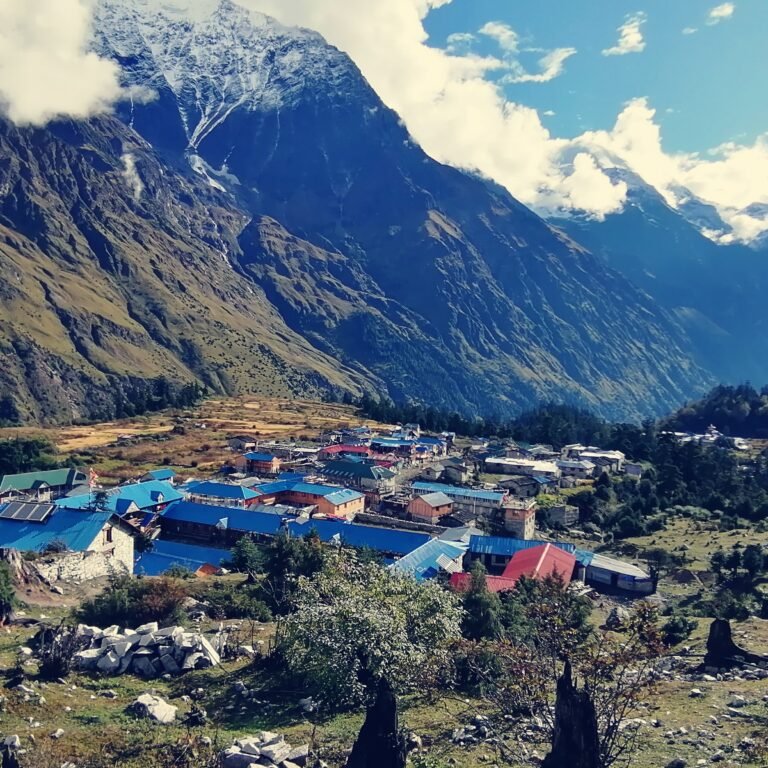
Langtang access is separate. Roads and buses now reach Syaphrubesi, the trailhead for Langtang and Gosaikunda, but the road beyond it toward the border no longer exists. Our Langtang region guide covers what is running, and our visas and permits guide covers the separate Tibet group visa.
What it means for operators
Agencies have already moved overland Lhasa and Kailash clients onto flights or refunded them. The risk now sits in spring 2027: with no announced date and a 16 km road to rebuild, selling an overland departure is a gamble on someone else’s construction schedule. Forwarders should treat Korala as the default, with Kolkata at 45–50 days as the fallback. Chinese arrivals reached 11,695 in October, up 73 percent year on year, Nepal Tourism Board figures reported by the Kathmandu Post show — almost all arriving by air.
What to watch, and what is unconfirmed
Three things would change the picture: an announcement from Beijing, completion of the Syaphrubesi bridge and a track to Rasuwagadhi, and a decision on where customs and immigration will sit when the crossing reopens. A Chinese technical team has been assessing the damage and Nepali officials say Beijing is positive about rebuilding. That is not a schedule.
Two details are contested: the date Tatopani closed to commercial traffic (29 or 30 August) and the number of bridges still needed beyond Syaphrubesi, which the Department of Roads put at four in October and engineers described as six in November.
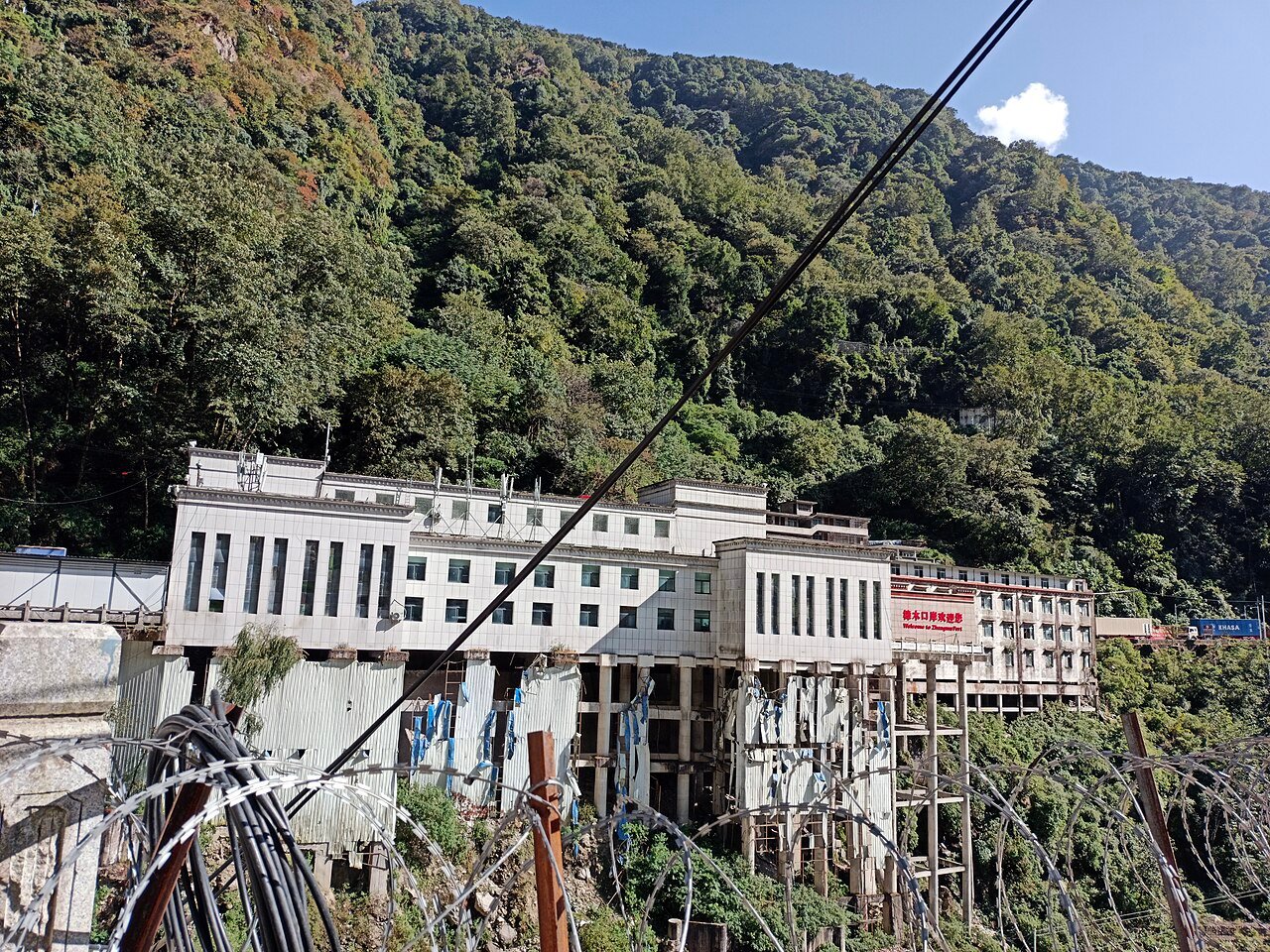
Featured image: the Zhangmu (Khasa) port on the Tibetan side of the Tatopani crossing, photographed in October 2025. Photo: Saddam19 / Wikimedia Commons, CC BY-SA 4.0.
Sources: The Kathmandu Post, MyRepublica, The Rising Nepal, Radio Nepal, Ratopati, Onlinekhabar, INSEC.
Share this content: