Pokhara’s Only International Flight Is Filling Up. The City Wants Delhi Next
KATHMANDU, November 18, 2026 (1 Mangsir 2083) — For most of the four years since it opened, Pokhara International Airport has been a domestic terminal with an international wing bolted onto it. Its single scheduled foreign service, flydubai’s daily rotation to Dubai, has now run for eight weeks, and the airport’s count through 15 November is the first hard evidence of what that route is doing: 7,655 passengers landed from Dubai and 4,602 departed on it in roughly 53 rotations — 12,257 people, of whom 1,035 arrivals and 884 departures were foreign nationals.
Pokhara reads those figures as an argument. Hoteliers, travel agents and the city’s mayor want Prime Minister Balendra Shah to press for a Pokhara–Delhi flight, and for the air-entry points that would make one possible, when he visits India on 22–23 November.
Key facts
- flydubai began daily Dubai–Pokhara flights on 23 September; the airport says one day has been lost since, to weather on 25 September.
- Through 15 November, 7,655 passengers arrived from Dubai and 4,602 left Pokhara for Dubai.
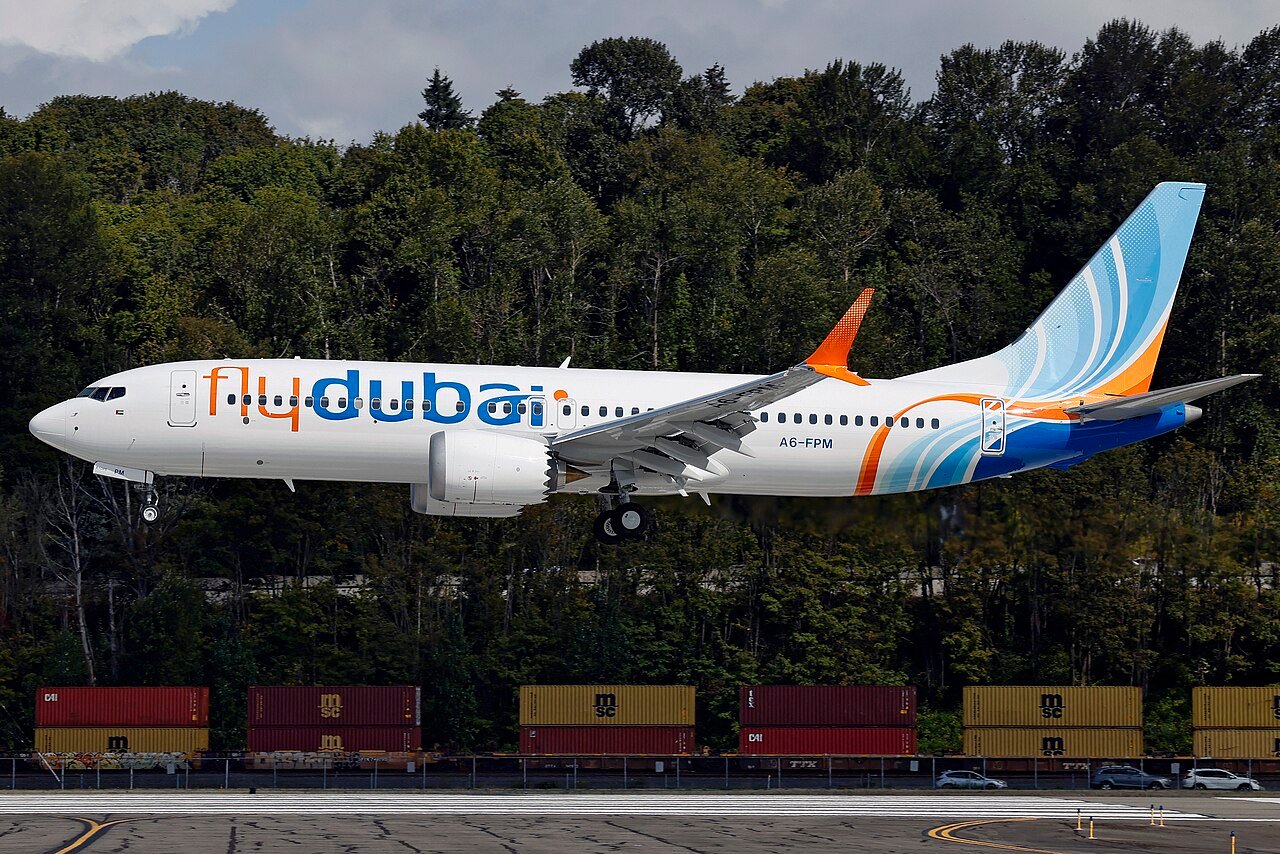
- Inbound flights averaged about 144 passengers on a 166-seat Boeing 737 MAX 8, an 87 percent load; outbound averaged about 87, or 52 percent.
- The fullest inbound flight carried 162 on 7 October; the fullest outbound carried 158 on 1 November.
- Airlines on the route pay no landing, parking or navigation fees until September 2028, and half the normal ground-handling charge.
- No Indian route has been granted and no airline has announced a Pokhara–Delhi schedule.
The first count that means something
Airport managers have released two snapshots. The first, covering the month to 23 October, showed 30 flights and 6,362 passengers — 4,521 arriving, 1,841 leaving — with an average of about 151 people on each inbound flight and 61 on each outbound one. General manager Jagannath Niraula called that month encouraging and credited Dashain and Tihar traffic from the Gulf.
The second, reported by the Kathmandu Post on 17 November from airport spokesperson Jasoda Subedi, extends the count to 15 November. Inbound traffic held its rate: about 136 arrivals a day over the 23 days after the first month, against 151 in the opening month. Outbound traffic nearly doubled to about 120 a day as Nepali workers, students and families flew back to the Gulf after the festivals. The average inbound flight has been close to nine-tenths full for eight weeks; the fullest carried 162 of 166 seats. The average outbound flight has been just over half full. Some reports list 165 seats; flydubai’s launch material says 166.
A busy import lane and a thinner export lane
That shape — full into Pokhara, half-full out — is normal for a Nepal–Gulf service, and better than the empty-airport predictions of September. It matches what the airline sold: a way for the Gulf’s Nepali workforce, and for travellers connecting through Dubai, to avoid a domestic hop from Kathmandu. flydubai sells the service under its Emirates codeshare, with through-checked bags to more than 140 destinations. Bookings are open to 30 October 2027.
Who is actually on the plane
The totals hide the part that matters for tourism policy. Of the 7,655 arrivals, 1,035 were foreign nationals — 13.5 percent, or roughly 19 to 20 foreigners on each arriving flight. That is close to what officials said at launch, when BBC News Nepali reported that each flight carried about 20 foreign passengers. The rest are overwhelmingly Nepali passports: migrant workers, students, families, and residents of Gandaki, Lumbini and Karnali who now begin international trips in Pokhara rather than Kathmandu.
Operators describe the effect in two registers, both in the same Kathmandu Post report. Laxman Subedi, president of the Hotel Association Nepal’s Pokhara chapter, says passengers flying out via Dubai arrive a day early and spend a night in the city, while those flying in stay and explore. Hari Bhujel of the Pokhara Tourism Council is sharper: visitors who once arrived through Kathmandu agents now land directly, so Pokhara’s hotels and trekking operators can sell to them without a middleman.
Sangeeta Paudel, president of NATTA Gandaki, is more careful. “Not much has changed in just two months,” she told the Post, while noting good loads and an expectation that visitors will use Pokhara as a starting point next season. Both readings fit the data: the route has repositioned Pokhara in international booking systems without yet adding many bed-nights in Lakeside. The plane is full of Nepalis, with a steady trickle of foreigners aboard.
A daily flight that is also being bought
The 87 percent inbound load is real, but it is not the whole reason the service survives. A Cabinet decision on 22 July extended incentives for airlines operating scheduled international flights from Pokhara and Gautam Buddha airport in Bhairahawa: full exemption from landing, parking and navigation charges and a 50 percent discount on ground handling, both to the end of Bhadra 2085, which falls in September 2028. Nepal Oil Corporation adds a fuel discount of USD 466 per kilolitre at Pokhara. The Civil Aviation Authority of Nepal estimates the package saves more than Rs 700,000 a flight, and its spokesperson told BBC News Nepali such waivers can cut an airline’s operating cost by about a fifth.
That is a subsidy for connectivity, and it is why a route with a half-empty outbound leg can survive a winter. It also explains the next demand, which is not another Gulf city but Delhi.
The Delhi ask, four days out
Pokhara’s constraint was never its runway. Almost every international flight into Nepal enters through one air-entry point at Simara in Bara, forcing aircraft from the west onto detours. Anand Raj Mulmi, a former president of the Federation of Nepalese Chambers of Commerce and Industry, puts the figure at nearly 90 percent of international flights and says the detours raise fares and keep Pokhara and Bhairahawa from operating at capacity.
Pokhara’s mayor, Dhanraj Acharya, wants Shah to return with an agreement to open three additional air-entry points besides Simara. Nepal has also asked India to approve a Pokhara–Delhi service, a request officials raised at director-general-level talks in Delhi on 13 November, according to Clickmandu. India has its own list: access to Nepali airspace for flights to Bagdogra and near Raxaul, which it wants settled as a package, as we reported on 17 November. None of that is a granted route. The visit dates are agreed in principle but not formally announced.
What it means for travellers and operators
Pokhara is now a real international gateway, from one city. The connections behind Dubai are the point: single-ticket itineraries to Europe, the Gulf and North America with bags checked through. Fares at launch started at NPR 80,500 return in economy, and flydubai’s Nepal manager, Navaraj Shahi, has said Pokhara fares run Rs 4,000–5,000 below Kathmandu on many routes. Heading for the Annapurna region? Price it before booking the usual connection.
One rotation a day means one point of failure. The single lost day so far was a weather cancellation in the first week. If you are joining a trek with a fixed start, build a buffer night in Pokhara rather than flying in the evening before.
Check the timetable, not the launch release. The original schedule had the aircraft landing at 18:15 and leaving at 19:15; Nepali aviation outlets reported in late October that the winter schedule pushed the rotation back by about 50 minutes. Confirm before booking transport.
From India, nothing has changed yet. There is no direct flight from any Indian city to Pokhara and no start date for one. The options remain a road crossing at Sunauli and the drive up, or a connection through Kathmandu or Delhi. Indian pilgrims heading for Muktinath will keep using them until a route is granted.
Arrival formalities are at Pokhara. Immigration and customs desks have been staffed since launch, so passengers on the Dubai flight clear into Nepal at Pokhara. Visa rules are unchanged; our visas and permits guide covers the paperwork.
What is not settled
The route has no second foreign carrier. No airline has announced a Pokhara–Delhi or Pokhara–Varanasi schedule, and Nepal’s requests for entry points have drawn a counter-request rather than an agreement. The foreign-national breakdown comes from one dataset reported by one newspaper; the totals are the airport’s own and have not appeared in a CAAN bulletin. Whether the flight has increased tourist numbers or merely rerouted them is contested by the operators quoted above, and two months of data cannot settle it. What is not contested is the arithmetic: a 166-seat aircraft has been landing in Pokhara nearly full, almost every evening, for eight weeks. For a city that spent four years explaining why its airport was empty, that is the first number going the right way.
Related: Nepal’s wish list for Delhi · the Bagdogra airspace swap · Pokhara · Annapurna region
Photo: Duncan Kirk / Wikimedia Commons, CC BY 4.0.
Sources: The Kathmandu Post, Tourism Mail, Onlinekhabar, myRepublica, BBC News Nepali, The Himalayan Times, Clickmandu, flydubai, Civil Aviation Authority of Nepal.
Share this content: