Two Helicopters Collide at Pheriche: Indian Tourist Killed, Three Injured
SOLUKHUMBU, November 4, 2026 (18 Kartik 2082) — An Indian tourist was killed and three people, including both pilots, were injured when two helicopters collided while attempting to land at the Pheriche helipad in Khumbu Pasanglhamu Rural Municipality-4, Solukhumbu, on Tuesday morning.
The dead man has been identified by the District Police Office, Solukhumbu, as Vasanth Kumar Balaramudu, 47, of Chennai in the Indian state of Tamil Nadu. He was a passenger aboard the Fishtail Air helicopter. The injured are Shailesh Kishan Patel, 49, a New Zealand citizen of Indian origin who was on the same aircraft; Fishtail Air captain Rabindra Prajapati; and Air Dynasty captain Prajjwal KC.
All three injured were airlifted by a Prabhu Helicopter to Nepal Mediciti Hospital in Lalitpur, where they were being treated on Tuesday evening. Balaramudu’s body was flown to Lukla. No fire broke out after the collision.
Key facts
- When: Tuesday, November 3, 2026, between 8:10 and 8:15 am local time. Police logs put it at 8:10; the Civil Aviation Authority of Nepal (CAAN) records 8:12.
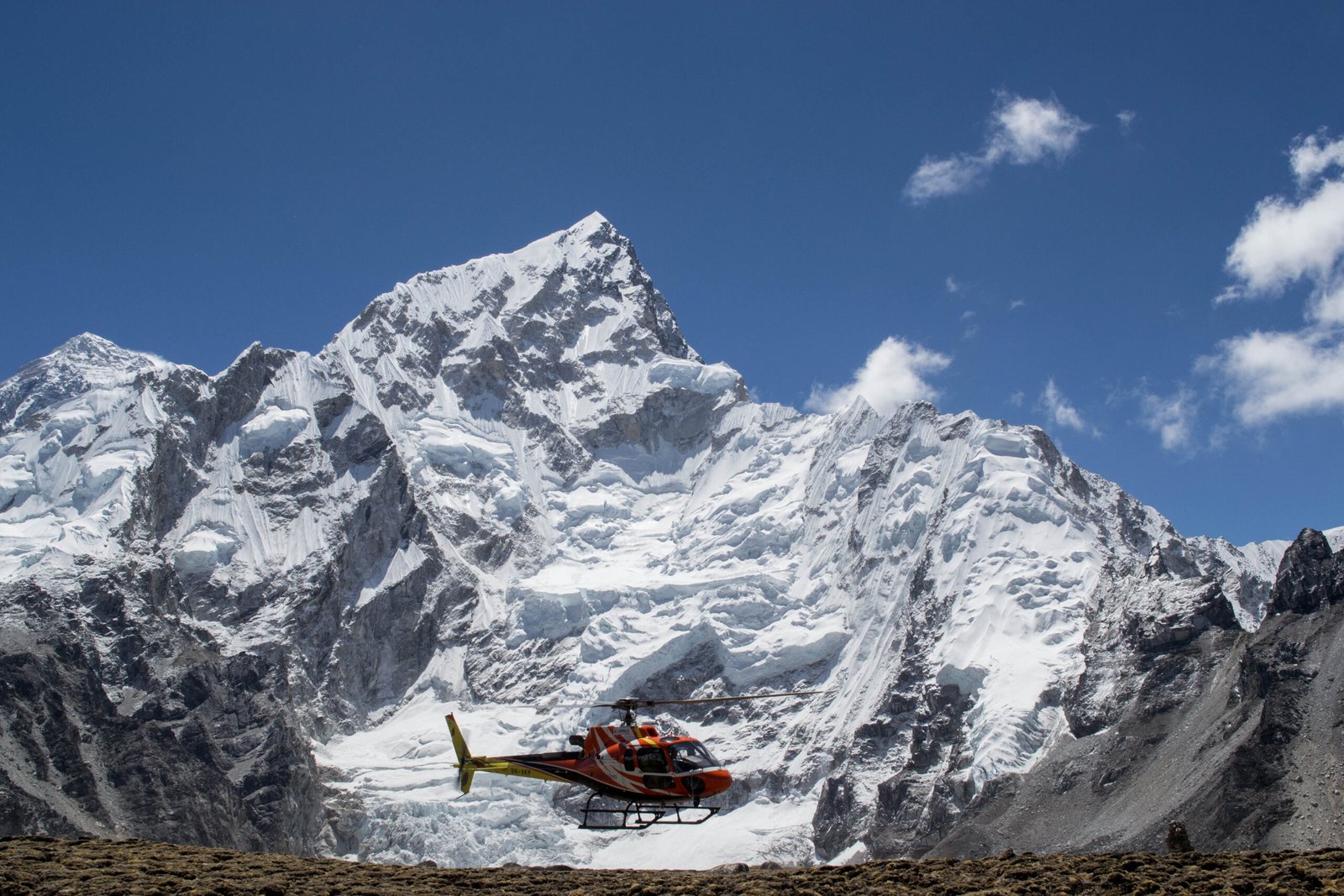
- Where: Pheriche helipad, Khumbu Pasanglhamu Rural Municipality-4, Solukhumbu — a trekking and acclimatisation stop at roughly 4,371 metres on the Everest Base Camp trail.
- What: Two Airbus AS350 helicopters collided while both were landing. The rotors of the Air Dynasty aircraft struck the cabin of the Fishtail Air aircraft.
- Aircraft: Air Dynasty’s 9N-AOD, which had flown from Lukla on a cargo flight carrying about 300 kg; Fishtail Air’s 9N-AJR, which had taken off from Gorakshep with two foreign passengers and its captain.
- Casualties: one dead, three injured. One passenger plus the captain were aboard the Fishtail aircraft; the Air Dynasty aircraft was on a cargo run.
- Investigation: CAAN has formed a five-member committee coordinated by director Prabhakar Chandra Mallik, including pilots and aircraft engineers.
What happened at Pheriche
Pheriche sits in the broad, wind-scoured valley below the Khumbu glacier, a day’s walk above Namche and below Lobuche. Its helipad handles a steady stream of cargo runs, passenger shuttles and rescue lifts during the autumn trekking season, when hundreds of trekkers walk the Everest Base Camp trail each week.
On Tuesday morning the weather was clear, with no significant wind and no snow obstructing the pad, according to a senior CAAN official quoted by the Kathmandu Post. Two helicopters arrived at the same time: one from Lukla with cargo, one from Gorakshep with two foreign passengers and a captain.
Video recorded at the pad and circulated widely on social media shows the Fishtail Air helicopter descending quickly towards the landing point. The two aircraft approached the same spot from opposing directions. The main rotor blades of the Air Dynasty helicopter struck the passenger compartment windows of the Fishtail aircraft while both were still airborne, close to the ground. The Air Dynasty helicopter then toppled over.
There was no fire. Ground staff are reported to have warned the descending helicopter, and the distance between the two aircraft at the moment of contact was small — a matter the investigation will measure rather than assume.
The two aircraft and their flight profiles
Both machines are Airbus AS350-series helicopters, the workhorse of Nepal’s mountain aviation sector, and both are registered to established Kathmandu operators with long records in the Khumbu.
- 9N-AJR, Fishtail Air Pvt Ltd. Flew from Gorakshep, near Everest Base Camp, carrying two foreign nationals and captain Rabindra Prajapati. Fishtail Air later said the injured passenger and its captain were in stable condition and out of danger.
- 9N-AOD, Air Dynasty Heli Service Pvt Ltd. Flew from Lukla to a helipad in Solukhumbu on a cargo flight with roughly 300 kg aboard, commanded by captain Prajjwal KC. The company confirmed that no one aboard its helicopter was killed and said it was cooperating with authorities.
Police and CAAN accounts agree that only the Fishtail aircraft was carrying foreign passengers. They diverge on one detail worth noting: police list both captains among the injured treated at Mediciti, while Air Dynasty’s statement does not acknowledge an injury to its pilot. That discrepancy should be resolved by the investigation.
What the regulator says
CAAN moved on two tracks within hours. On Tuesday its spokesperson, Bikram Raj Gautam, confirmed an investigation had begun; on Wednesday the authority constituted a five-member committee under director Prabhakar Chandra Mallik, drawing on pilots and aircraft engineers, and tasked it with establishing the causes and contributing factors and recommending measures to prevent a repeat.
The authority’s director general, Mukesh Dangol, described the likely failure mode in preliminary terms: miscommunication between the pilots. Pheriche lies outside the communication coverage of the air traffic control tower at Lukla, so helicopters operating above Lukla coordinate directly with one another by radio, and the responsibility for separation sits with each pilot in command.
A senior CAAN technical official told the Kathmandu Post that the Pheriche pad can hold six or seven helicopters at once, and that initial observations suggest both pilots closed on the same landing point. The official called it a serious lapse in pilot responsibility while stressing that the investigation will establish the cause.
What pilots who know the valley say
The question hanging over the case is how two helicopters can collide in clear weather at a landing site both crews knew well.
“In clear weather, in a large valley, with flights operating under visual flight rules, such a collision should be impossible,” retired Nepal Army brigadier general Gunjaman Lama, an experienced Super Puma pilot, told the Kathmandu Post. “It’s pure negligence.” He argued that pilots and ground staff both know how many helicopters are flying and where they are.
Retired colonel Pratigya Rana, a former pilot, pointed to two plausible factors: sun glare in the early morning and a communication lapse between the crews. Glare has figured in Nepali helicopter investigations before — the official inquiry into the June 2015 Mountain Air AS350 crash suspected glare had blinded the pilot before the aircraft struck a power line.
Aviation veterans quoted in the reporting ruled out commercial pressure as a direct cause, noting that flights in the Everest region are bound by number restrictions and operating procedures.
Reaction and repatriation
The Ministry of Culture, Tourism and Civil Aviation issued a statement expressing condolences and said it would act on the investigation’s findings. CAAN expressed condolences to Balaramudu’s family and wished the injured a speedy recovery.
The Indian Embassy in Kathmandu expressed condolences and said it was coordinating with Nepali authorities to arrange the early repatriation of the remains. The body has been taken to Lukla, the district’s air gateway, from where it will be moved to Kathmandu.
Both helicopter companies said they were cooperating with investigators and emergency services.
What is known, and what is not
Established: the time, location, aircraft identities, operators, flight profiles, the death of one passenger, injuries to three people, the absence of fire, the clear weather, and the fact that the rotor of one aircraft struck the cabin of the other while both were landing.
Not established: the exact distance and closing geometry between the aircraft; the content of the radio exchanges; whether glare, distraction, miscommunication or a combination of these played the decisive role; the final casualty tally if any of the injured deteriorate; and whether either operator’s procedures will be faulted.
CAAN has said it is recording the statement of the injured pilot. That statement, together with the committee’s analysis, is likely to be the first authoritative account of what the two crews believed was happening in the seconds before contact.
What it means for travellers booked on Everest helicopter flights
Helicopter operations in the Khumbu continued after the accident, and the investigation is focused on the crews and procedures rather than on the airworthiness of the fleet as a whole. For anyone holding a booking, four points are worth keeping in view.
- Flight profiles differ. Sightseeing tours, cargo runs, passenger shuttles from Gorakshep or Lukla, and rescue lifts share the same pads during peak season. Ask your operator which pad and which flight profile your booking uses.
- Insurance matters more than usual on helicopter legs. Confirm that your policy covers helicopter transport and high-altitude evacuation, and that the operator’s own passenger liability cover is current.
- Weather windows are short. In autumn, morning operations before the valley wind builds are the norm; delays are routine and rebooking is common.
- Ask about coordination. Above Lukla there is no tower. Operators with their own ground staff at the pads, and clear radio protocols between aircraft, are the ones managing the risk that this accident exposed.
Reporting for this article draws on the Kathmandu Post, OnlineKhabar, Nepal Police, The Himalayan Times, Annapurna Express, Makalu Khabar, Nepalnews, Tourism Times and Xinhua. Read our analysis of the regulatory gaps behind the collision: Khumbu carries 70 percent of Nepal’s helicopter business with almost no oversight on the ground.
Share this content: