Nepal’s Wish List for Delhi: Air Routes, Flights and an Ayodhya Train
KATHMANDU, November 8, 2026 (22 Kartik 2083) — Two weeks before Prime Minister Balendra Shah is due in New Delhi, Nepal’s connectivity wish list has become public: two additional air entry routes from India, three proposed direct flights linking its secondary airports with Indian pilgrimage cities, and a cross-border train to Ayodhya that has passed a trial run but has no start date.
Indian Foreign Secretary Vikram Misri ended a two-day visit to Kathmandu on November 5 with the two sides tentatively agreeing on November 22–25 for Shah’s first official bilateral trip, and talks with Prime Minister Narendra Modi expected on November 23. Aviation, railways and border infrastructure are the files most likely to produce something a traveller can use — if they produce anything at all.
Key facts
- Shah is expected in India from November 22 to 25; the dates are not formally announced.
- Nepal wants international air entry routes through Mahendranagar and Nepalgunj so Pokhara and Bhairahawa airports can be served without a long detour.
- Kathmandu has proposed direct flights on Bhairahawa–Kushinagar, Pokhara–Varanasi and Nepalgunj–Delhi.
- A Janakpurdham–Ayodhya trial run was held on November 5; no launch date or formal agreement exists yet.
- Tribhuvan International Airport is running at about 120 percent of capacity, according to Tourism Minister Khadak Raj Paudel.
What is on the table
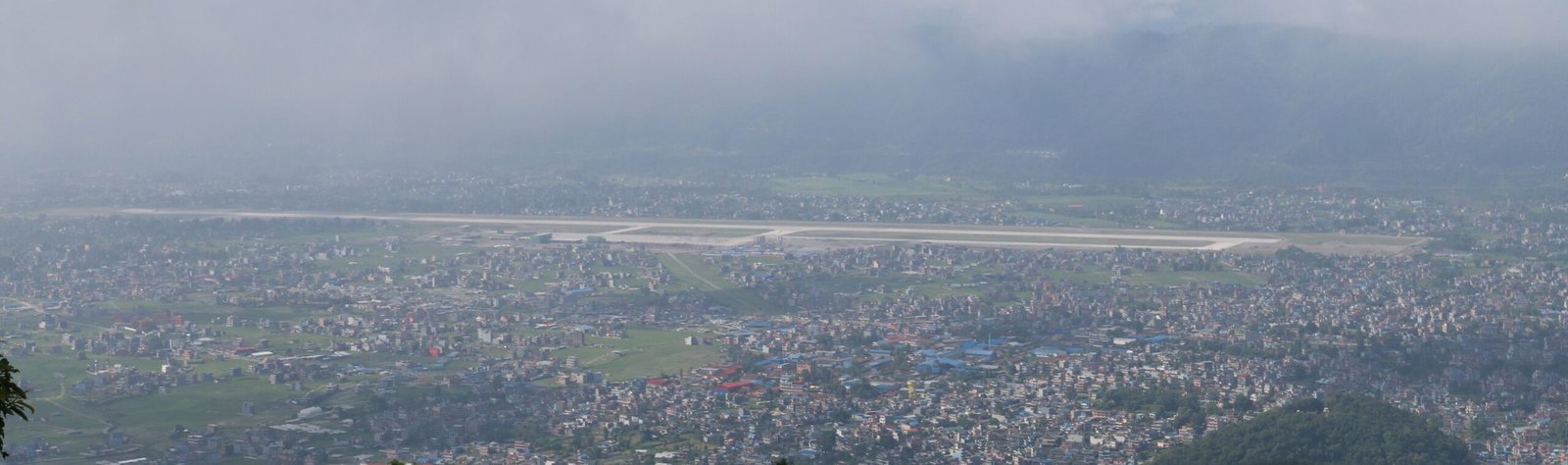
The Kathmandu Post reported on November 8 that Nepal is seeking additional air-entry routes through its western border, particularly at Mahendranagar and Nepalgunj, to improve access to Pokhara International Airport and Gautam Buddha International Airport in Bhairahawa. The same report said Nepal has proposed direct flights between Bhairahawa and Kushinagar, Pokhara and Varanasi, and Nepalgunj and Delhi, with a technical-level meeting planned.
The ambition is not new. Nepal has sought extra entry points since 2014, when the two governments agreed in a joint communique during Modi’s Kathmandu visit to add air routes serving the two new airports. A Post report on November 6 said India had responded positively to the latest request but that a final agreement was pending, with aviation officials due to hold technical talks before the visit.
Why one entry point is the bottleneck
Almost every international flight into Nepal enters over Simara in the central Terai. The Civil Aviation Authority of Nepal puts the share at about 90 percent. Only Simara is approved for two-way traffic; Mahendranagar, Bhairahawa, Janakpur and Biratnagar function as exit points for aircraft leaving Nepal, as BBC News Nepali reported.
The cost is distance. Tourism Ministry documents cited by the Post say a flight approaching Bhairahawa from the west must fly roughly 300 kilometres out of its way to enter over Simara and track back west, while a Pokhara-bound flight adds about 185 kilometres. That is fuel, crew hours and aircraft utilisation — the three things that decide whether an airline can sell a seat at a price a pilgrim or trekker will pay.
It also explains why the two new airports remain underused. Gautam Buddha opened in May 2022 and Pokhara was inaugurated in January 2023, yet scheduled international service is thin. Pokhara’s one regular foreign link is flydubai’s daily Dubai flight, launched on September 23; its general manager, Jagannath Niraula, told BBC News Nepali each 166-seat flight carries about 20 foreign passengers and no other foreign carrier has committed.
Three flights, three markets
The proposed routes serve different travellers. Bhairahawa–Kushinagar would feed the Buddhist circuit; Kushinagar, where the Buddha is said to have attained parinirvana, is a short drive from the Sunauli–Bhairahawa crossing and is reached by road today. Pokhara–Varanasi would link Nepal’s trekking hub with one of Hinduism’s holiest cities, now a road journey through Sunauli or a connection via Kathmandu or Delhi. Nepalgunj–Delhi would give western Nepal a direct link to the Indian capital, with onward connections for Kailash Mansarovar pilgrims who use Nepalgunj and Simikot as gateways.
One piece of border infrastructure is already scheduled: the two prime ministers are expected to inaugurate the integrated check post at Bhairahawa, where immigration and customs formalities for the Lumbini corridor are handled, alongside the police academy in Panauti and two bridges.
The Ayodhya train: trial done, timetable missing
On November 5 an Indian train ran from Jayanagar in Bihar to Kurtha station in Janakpurdham as a technical trial, and a 17-coach train was brought to Kurtha for inspection of tracks, signalling, security and platforms, according to Onlinekhabar and ABC News Nepal. Paribesh Parajuli, general manager of Nepal Railway Company, said officials from both sides were at Kurtha for an on-site assessment of safety and technical arrangements, but that no date has been fixed. The Kathmandu Post reported on November 6 that India had told Nepal its preparations were complete, and listed the railway among the projects the two sides expect to inaugurate during the visit.
Parajuli said a formal agreement on the launch date and administrative arrangements is pending. BBC News Nepali reported the plan for now is a weekly service, and that immigration and security arrangements are still being worked out: the Nepali section takes about an hour, but Parajuli said two to three hours of checks for one hour of travel would not be acceptable, while the Indian side has indicated clearance can be done in one and a half to two hours. Indian media report tickets will be sold through IRCTC and that citizens of either country can book.
One basic detail is disputed: the length of the route. Dainik Jagran and News18 Hindi describe a journey of about 464 kilometres between Ayodhya and Janakpur, while BBC News Nepali puts it at 604 kilometres. Nepal Railway has published neither. The existing Janakpurdham–Jayanagar service covers about 28 kilometres and crosses only a short stub of Indian territory; a through service to Ayodhya is a different proposition.
What officials say
The tourism ministry frames the air routes as a precondition for making the new airports work. Its spokesman, Jayanarayan Acharya, told BBC News Nepali that linking Pokhara and Bhairahawa with major Indian cities is a priority and that air connectivity will be on the agenda during the visit. Civil Aviation Authority of Nepal officials have said Nepal has raised the issue at every level and that the Indian side has not yet reached a decision.
Former officials warn against turning the trip into a shopping list. “Ask no favour and take no wish list along. Talk to the other side eye to eye as an equal counterpart,” former foreign secretary Madhu Raman Acharya told the Post, urging Kathmandu to concentrate on rebuilding trust. Ranjit Rae, a former Indian ambassador to Nepal, told the same paper the mood in New Delhi is positive and problem-solving after Misri’s visit.
The numbers behind the ask
Nepal received 132,814 foreign visitors in October, 3.4 percent more than a year earlier, according to Nepal Tourism Board figures. The United States was the largest source market for the first time with 17,437 arrivals, while Indian arrivals fell about 30 percent to 12,097, a decline operators have linked to the August floods and disruption of pilgrimage routes.
What it means for travellers
Nothing is bookable yet. No new route has been granted, no airline has announced a schedule on any of the three city pairs, and no date, fare or immigration procedure has been published for the Ayodhya train.
Buddhist circuit: Kushinagar is reached by road from the Sunauli–Bhairahawa border and will stay that way until a carrier commits to the route. Varanasi: the options today are a long road journey through Sunauli and Gorakhpur, or flying via Kathmandu or Delhi.
Janakpur: Janakpurdham is already reachable by rail from Jayanagar and by road from the border, and the Janaki Temple draws pilgrims year-round. Until Nepal Railway announces a start date, assume a road or rail-plus-road journey and allow time at the border, where checks for a through service are unsettled.
Kathmandu connections: the 120 percent figure is a fair warning. Domestic flights to Lukla, Pokhara and Bharatpur are tight in peak season, and one morning of fog cascades through the day. Keep a buffer night before an international departure, and check the Pokhara guide if your itinerary depends on the lakeside airport.
Operators: watch what follows the visit, not what precedes it. A signed air-route agreement, an airline schedule filing and a published train timetable are the only signals that matter; statements of intent have accumulated since 2014.
What is unconfirmed
The November 22–25 dates are agreed in principle but not formally announced, and some Indian reports have said November 22–24. India has not publicly confirmed it will grant new entry routes; Nepali officials describe the response as positive, which is not a decision. The train’s distance is reported differently, and there is no timetable, fare list or immigration procedure. Kathmandu’s request for a $2 billion package — $1 billion in concessional loans plus $1 billion in grants and reconstruction support — is also unresolved.
Sources: The Kathmandu Post, Onlinekhabar, BBC News Nepali, The Annapurna Express, myRepublica, Dainik Jagran, ABC News Nepal
Related on Travelling Nepal: visas and permits and start here.
Share this content: