Nepal UNESCO World Heritage Sites: The Complete 2026 Guide
Complete guide: Kathmandu Valley Heritage Guide
Nepal packs an extraordinary density of UNESCO-recognized heritage into a country the size of Arkansas. Four World Heritage Sites — two cultural, two natural — span the country from the lowland Terai to the roof of the world. The Kathmandu Valley alone holds seven monument zones within a single inscription, making it one of the most concentrated heritage areas on the planet. This guide covers every site, how to visit, what to expect, and what most travel guides leave out.
Key Takeaways
- Nepal has 4 UNESCO World Heritage Sites: Sagarmatha National Park, Kathmandu Valley (7 monument zones), Chitwan National Park, and Lumbini.
- The Kathmandu Valley site alone contains 7 distinct monument zones — you can visit most in 2–3 days.
- Entry fees range from NPR 150 to NPR 1,000 for SAARC nationals and NPR 1,000 to NPR 3,000 for foreign visitors (as of 2026).
- Best time to visit: October–November (clear skies, comfortable temperatures) or March–April (spring blooms, rhododendron season).
- All sites are open year-round; monsoon (June–September) brings fewer crowds but leeches in Chitwan and cloud cover in Sagarmatha.
Table of Contents
- Kathmandu Valley World Heritage Site (7 Monument Zones)
- Sagarmatha National Park
- Chitwan National Park
- Lumbini, Birthplace of the Lord Buddha
- Comparison Table: All 4 Sites at a Glance
- Planning Your Heritage Tour
- Frequently Asked Questions
1. Kathmandu Valley World Heritage Site
Inscribed: 1979 | Type: Cultural
The Kathmandu Valley UNESCO inscription is unique — it is a single World Heritage Site comprising seven monument zones spread across three districts. Together they represent the pinnacle of Newar art and architecture from the Licchavi (400–750 CE) through the Malla period (1200–1769 CE). The site was placed on the World Heritage in Danger list from 2003–2007 due to uncontrolled urban development, but was removed after significant conservation efforts. The 2015 earthquake damaged several zones; restoration is largely complete as of 2026.
1.1 Kathmandu Durbar Square (Hanuman Dhoka)
Location: Central Kathmandu, 10-minute walk from Thamel
Entry fee: NPR 1,000 (foreign), NPR 150 (SAARC)
Hours: 10:00 AM – 5:00 PM (ticket counter closes at 4:00 PM)
The historic seat of Nepal’s monarchy until the 19th century. The square is a living museum of pagoda-style temples, the old royal palace (Hanuman Dhoka), and the Kumari Ghar — home of the living goddess Kumari. The nine-storey Basantapur Tower offers panoramic views. The 2015 earthquake toppled several structures including the iconic Kasthamandap (the wooden pavilion that gave Kathmandu its name); reconstruction was completed in 2021.
Don’t miss: The Kumari’s daily window appearance (usually around 4:00 PM, no photography allowed inside the courtyard). The stone inscription in 15 languages on the wall of the old palace — installed by King Pratap Malla in 1664.
1.2 Patan Durbar Square
Location: Lalitpur (Patan), 5 km south of central Kathmandu
Entry fee: NPR 1,000 (foreign), NPR 250 (SAARC)
Hours: 10:00 AM – 5:00 PM
Often called the finest collection of Newar architecture in Nepal. The Patan Museum (housed in the old palace) is world-class — its bronze and gilt-copper collection is unmatched. The square has three main courtyards (Mul Chowk, Sundari Chowk, Keshav Narayan Chowk) and the Krishna Mandir, a stone temple carved entirely in the Shikhara style. Unlike Kathmandu Durbar Square, Patan’s temples are more tightly clustered and the square feels more intimate.
1.3 Bhaktapur Durbar Square
Location: Bhaktapur, 13 km east of Kathmandu
Entry fee: NPR 1,800 (foreign), NPR 500 (SAARC/Chinese)
Hours: 7:00 AM – 7:00 PM
The best-preserved of the three durbar squares. Bhaktapur is a pedestrian-only city core — no cars, no motorbikes — which makes it the most pleasant to explore. The 55-Window Palace, Vatsala Temple, Nyatapola Temple (Nepal’s tallest pagoda at 30 meters), and the Golden Gate are the highlights. The entry fee is higher because it includes the entire old city, not just the square. Arrive early (before 9:00 AM) to have the square nearly to yourself.
1.4 Boudhanath Stupa
Location: Hilltop west of central Kathmandu
Entry fee: NPR 200 (foreign), NPR 50 (SAARC)
Hours: 24 hours (ticket counter: 6:00 AM – 6:00 PM)
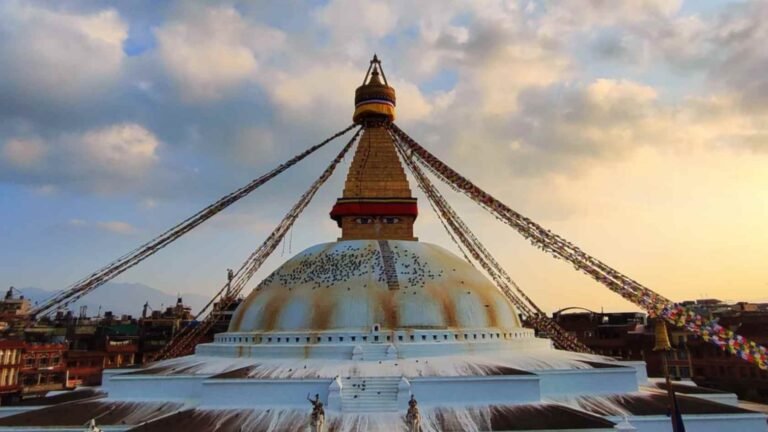
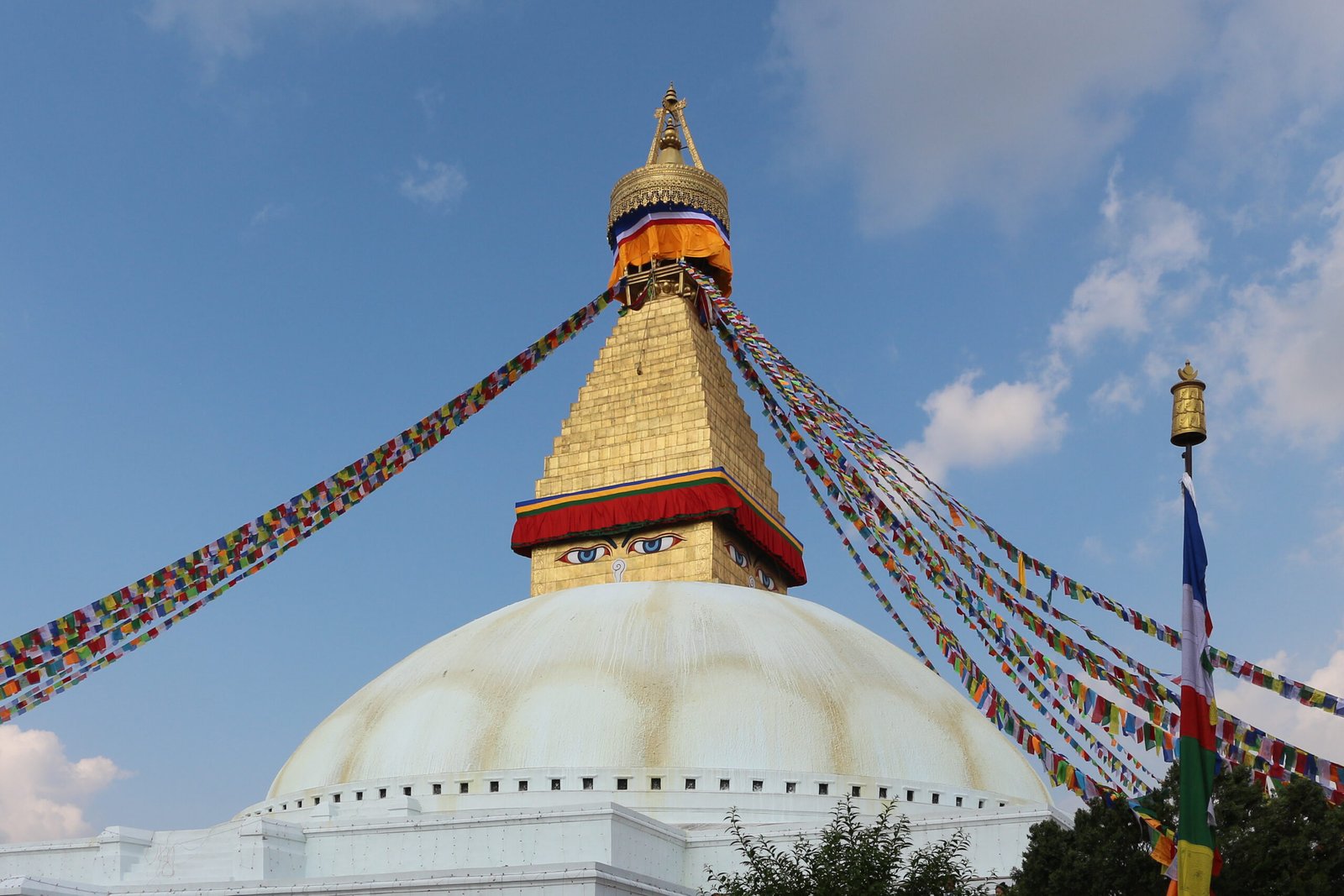
The oldest Buddhist stupa in Nepal, dating to the 5th century CE. The white dome with the all-seeing eyes of Buddha and the gilded spire is one of Nepal’s most photographed landmarks. Climb the 365 stone steps (one for each day of the year) past troops of resident rhesus macaques. The hilltop offers a 360-degree view of the Kathmandu Valley — best at sunrise or sunset. The surrounding complex includes monasteries, shrines, and a Tibetan Buddhist school.
1.5 Boudhanath Stupa
Location: Boudha, 8 km northeast of central Kathmandu
Entry fee: NPR 400 (foreign), NPR 100 (SAARC)
Hours: 24 hours (ticket counter: 7:00 AM – 6:00 PM)
One of the largest spherical stupas in the world, and the holiest Tibetan Buddhist site outside Tibet. The massive white dome (36 meters tall, 120 meters in diameter) dominates the surrounding square, which is ringed by monasteries, shops, and rooftop cafes. Walk the kora (circumambulation path) clockwise with pilgrims spinning prayer wheels. The stupa was severely damaged in the 2015 earthquake but rebuilt with international support and reconsecrated in 2016. Evening is magical — butter lamps are lit and monks chant.
1.6 Pashupatinath Temple
Location: Banks of the Bagmati River, 5 km east of central Kathmandu
Entry fee: NPR 1,000 (foreign), free for SAARC nationals and Hindus
Hours: 4:00 AM – 7:00 PM (inner temple: 5:00 AM – 12:00 PM, 5:00 PM – 7:00 PM)
Nepal’s most sacred Hindu temple, dedicated to Lord Shiva. The main pagoda-style temple (non-Hindus cannot enter) has a gilded roof and silver-plated doors. The real experience is on the ghats along the Bagmati River, where open-air cremations take place continuously. The atmosphere is raw and profound — this is a functioning temple, not a museum. The evening aarti (river worship ceremony) at 6:00–7:00 PM is spectacular, with priests performing synchronized fire rituals to chanting and bells.
1.7 Changu Narayan Temple
Location: Changu village, 15 km east of Kathmandu (Bhaktapur district)
Entry fee: NPR 300 (foreign), NPR 100 (SAARC)
Hours: 7:00 AM – 7:00 PM
The oldest temple in Nepal, with inscriptions dating to 464 CE (Licchavi period). Perched on a hilltop at 1,541 meters, it is the least visited of the seven zones — you may have it entirely to yourself. The temple is dedicated to Vishnu and features some of the finest stone, wood, and metal carvings in the valley. The 5th-century Garuda statue and the 7th-century Vishnu Vikranta (Vishnu striding across the universe) are masterpieces. Combine with a Bhaktapur visit — it is a 20-minute drive uphill from Bhaktapur.
2. Sagarmatha National Park
Inscribed: 1979 | Type: Natural | Area: 1,148 km²
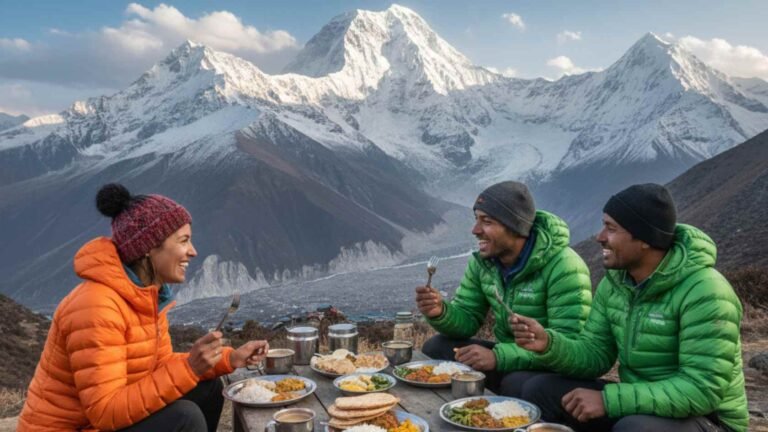
Home to Mount Everest (Sagarmatha in Nepali, “Forehead of the Sky”) and three other 8,000-meter peaks: Lhotse, Cho Oyu, and Makalu. The park ranges from 2,845 meters at Monjo to 8,848 meters at the summit of Everest. It protects a dramatic landscape of glaciers, deep valleys, and the Sherpa cultural landscape. The park is also a Important Bird Area with 118 recorded species including the Himalayan monal (Nepal’s national bird) and the blood pheasant.
Entry fee: NPR 3,000 (foreign), NPR 1,500 (SAARC) + NPR 2,000 Khumbu Pasang Lhamu Rural Municipality fee (as of 2026)
How to reach: Fly Kathmandu–Lukla (30 minutes, ~USD 180 one-way), then trek 2 days to park entrance at Monjo. No road access.
Best time: October–November (clearest skies, best Everest views) and March–May (warmer, rhododendrons blooming).
3. Chitwan National Park
Inscribed: 1984 | Type: Natural | Area: 952 km²
Nepal’s first national park and its premier wildlife destination. Chitwan protects one of the last populations of the one-horned rhinoceros (~700 individuals as of the 2021 census) and the Royal Bengal tiger (~128 individuals). The park also hosts leopards, sloth bears, gharial crocodiles, and over 540 bird species. It was originally a royal hunting reserve; King George V and his party shot 39 tigers and 18 rhinos here in 1911. Today it is a conservation success story — rhino numbers have rebounded from fewer than 100 in the 1970s.
Entry fee: NPR 2,000 (foreign), NPR 1,000 (SAARC) per day + guide fee (~NPR 1,500–2,500/day)
How to reach: 5–6 hour drive from Kathmandu (175 km) or 20-minute flight to Bharatpur + 30-minute drive.
Activities: Jeep safari, canoe ride on the Rapti River, guided jungle walk, elephant breeding center visit, Tharu cultural program.
Best time: October–March (dry season, animals congregate near water sources). March–April can be hot (35°C+). Park closes during monsoon (typically mid-June to mid-September).
4. Lumbini, Birthplace of the Lord Buddha
Inscribed: 1997 | Type: Cultural
The most important Buddhist pilgrimage site in the world. Lumbini is where Queen Mayadevi gave birth to Siddhartha Gautama around 623 BCE, beneath a sal tree in the Lumbini Garden. The site centers on the Mayadevi Temple, which houses the marker stone pinpointing the exact birthplace, and the Ashoka Pillar — erected by Emperor Ashoka in 249 BCE with an inscription confirming this as Buddha’s birthplace. The Sacred Garden also contains the Puskarini pond where Mayadevi bathed before giving birth.
The surrounding Lumbini Development Zone (6 km × 2 km) contains monasteries built by Buddhist communities from over 20 countries — the Chinese Monastery, Thai Monastery, German Monastery (Tara Foundation), and the striking World Peace Pagoda are highlights. The entire zone is a no-vehicle area; you walk or hire a cycle rickshaw.
Entry fee: NPR 200 (foreign), NPR 100 (SAARC) for the Sacred Garden
How to reach: 25-minute flight Kathmandu–Bhairahawa (Gautam Buddha International Airport) + 30-minute drive, or 8–9 hour drive from Kathmandu (280 km).
Best time: October–March (pleasant temperatures). Buddha Jayanti (April/May, full moon of Baisakh) is the biggest festival — thousands of pilgrims, special ceremonies.
Comparison Table: All 4 Sites at a Glance
| Site | Type | Year | Foreign Entry Fee | Best Season | Min. Time Needed |
|---|---|---|---|---|---|
| Kathmandu Valley (7 zones) | Cultural | 1979 | NPR 200–1,800 per zone | Oct–Nov, Mar–Apr | 2–3 days |
| Sagarmatha National Park | Natural | 1979 | NPR 3,000 + NPR 2,000 local | Oct–Nov | 12–16 days (trek) |
| Chitwan National Park | Natural | 1984 | NPR 2,000/day | Oct–Mar | 2–3 days |
| Lumbini | Cultural | 1997 | NPR 200 | Oct–Mar | 1–2 days |
Planning Your Heritage Tour
Can you visit all 4 sites in one trip?
Yes, but it takes 3–4 weeks. A realistic itinerary:
- Days 1–3: Kathmandu Valley monument zones (all 7 are accessible by road within 1 hour of each other).
- Days 4–5: Fly/drive to Chitwan, 2 nights of safari.
- Days 6–7: Drive to Lumbini (3 hours from Chitwan), 1–2 nights.
- Days 8–22: Fly to Lukla, trek to Everest Base Camp and back (14–15 days standard itinerary).
If you are short on time, the Kathmandu Valley sites + Chitwan + Lumbini can be done in 7–10 days. Sagarmatha requires a dedicated trek.
Entry fees update (2026)
Fees listed are as of August 2026 and are subject to change. SAARC nationals (India, Bangladesh, Sri Lanka, Pakistan, Bhutan, Maldives, Afghanistan) pay significantly lower rates at most sites. Chinese nationals pay a special rate at Bhaktapur (NPR 500, same as SAARC). Always carry passport-sized photos for trekking permits if combining with Sagarmatha.
What most guides don’t tell you
- Kathmandu Durbar Square is free after 5:00 PM — the ticket counter closes but the square remains open. You can walk through freely in the evening, though museums and the palace interior will be closed.
- Boudhanath is best at dusk. The butter lamps, chanting monks, and the stupa lit against the darkening sky create an atmosphere that daytime visitors miss entirely.
- Changu Narayan has a homestay program. You can overnight in the village and experience Newar rural life — far more rewarding than a rushed 30-minute visit from Bhaktapur.
- Chitwan’s buffer zone lodges are better value. Lodges inside the park are expensive (USD 300+/night). Buffer-zone lodges in Sauraha offer the same safari access at a fraction of the cost.
- Lumbini is not just the Sacred Garden. The international monastery zone is a 3 km walk/bike ride and takes a full day to explore properly. Most day-trippers miss it entirely.
Frequently Asked Questions
How many UNESCO World Heritage Sites are in Nepal?
Four: Sagarmatha National Park, Kathmandu Valley (7 monument zones), Chitwan National Park, and Lumbini. The Kathmandu Valley site is a single inscription but contains seven distinct monument zones, so you will often hear “10 UNESCO sites in Nepal” — this counts the seven Kathmandu Valley zones separately.
Which is the most visited UNESCO site in Nepal?
The Kathmandu Valley monument zones collectively receive the most visitors. Within the valley, Swayambhunath and Boudhanath are the busiest. Chitwan National Park is the most visited single-site destination outside the valley, with over 180,000 visitors annually (pre-2020 figures).
Do I need a guide to visit these sites?
Not for the Kathmandu Valley zones or Lumbini — they are self-explorable with a good guidebook or this article. Chitwan National Park requires a licensed guide for all jungle activities (jeep safari, jungle walk) — this is a park regulation, not optional. Sagarmatha National Park technically requires a licensed guide for trekking as of the 2023 TIMS card mandate, though enforcement varies.
Are the sites accessible for travelers with limited mobility?
Mixed. Lumbini’s Sacred Garden and the main monastery zone are flat and wheelchair-accessible. Bhaktapur Durbar Square and Patan Durbar Square have relatively flat terrain. Swayambhunath requires climbing 365 steps (there is a road to the top for vehicles, but the final approach still has stairs). Boudhanath is flat and accessible. Chitwan safari vehicles are not wheelchair-adapted. Sagarmatha trekking is not accessible.
What is the best time of year to visit all four sites?
October–November is the sweet spot: clear skies for Everest views, comfortable temperatures in the Terai (Chitwan/Lumbini), and the Kathmandu Valley at its most pleasant. March–April is the second-best window — warmer in the lowlands but excellent for rhododendron blooms in the hills.
Are there any Nepal sites on the UNESCO Tentative List?
Yes. As of 2026, Nepal has submitted 15 sites to the UNESCO Tentative List for future nomination, including the medieval town of Tansen, Khokana village, the Muktinath Valley cave architecture of Mustang, the medieval walled city of Lo Manthang, and the Ramagrama relic stupa. None have been inscribed yet.
Sources: UNESCO World Heritage Centre (whc.unesco.org), Nepal Tourism Board (ntb.gov.np), Department of National Parks and Wildlife Conservation (dnpwc.gov.np). Entry fees verified as of August 2026. Always check official sources before travel — fees and regulations can change.
Related guides
Share this content: