Birdwatching in Nepal: 903 Species, a Migrating Season — and a Count Anyone Can Join
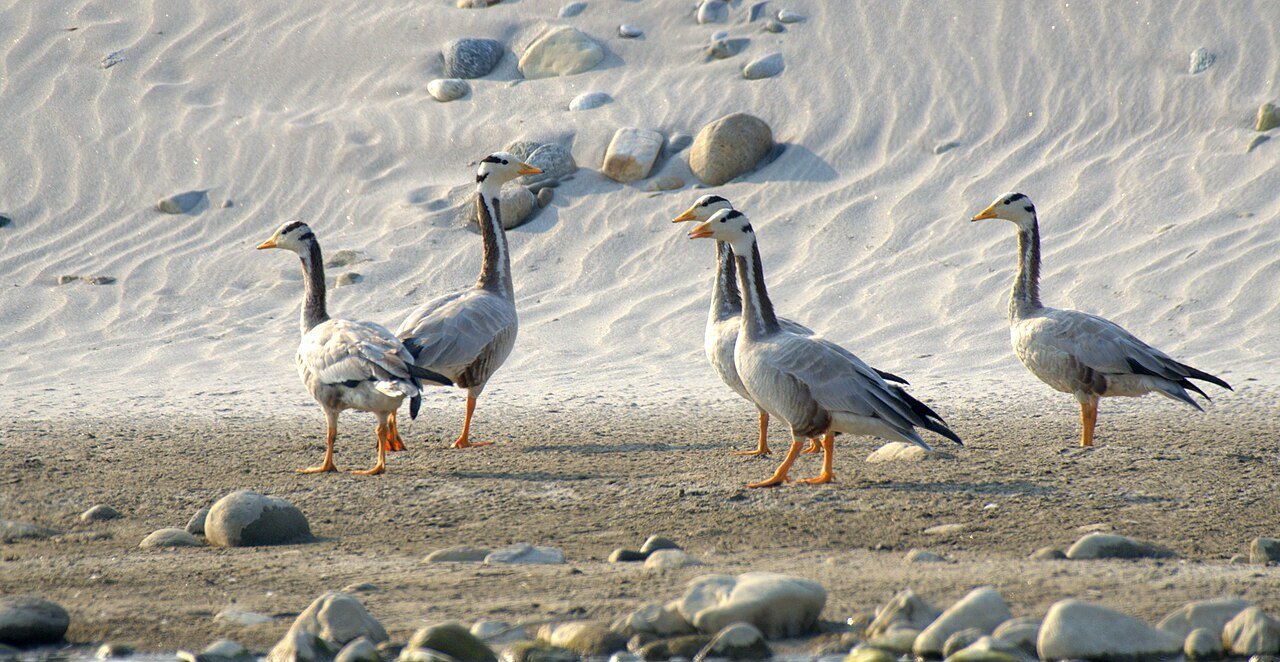
KATHMANDU, November 6, 2026 (20 Kartik 2083). The ducks are back on the Koshi. Since September, waterbirds have been arriving across Nepal’s wetlands, lakes and riverbanks from breeding grounds in Siberia, Tibet and Central Asia, among them red-crested pochards, gadwall, common teal, northern pintail and grey-headed lapwing. It is the start of a winter population that will build through December.
That makes this the best four weeks of the year to watch birds in Nepal. It is also the moment Bird Conservation Nepal (BCN) wants tens of thousands of ordinary people to spend half an hour looking at the birds in their own neighbourhood, and log them.
Key takeaways
- Nepal has recorded 903 bird species, roughly 8 percent of the world’s total.
- Winter migrants began arriving in September and the population builds through December, making the next four weeks the peak birding window.
- Bird Conservation Nepal’s Chhimeki Chara neighbourhood count lets anyone log birds in 15-30 minutes using a free app.
- Koshi Tappu Wildlife Reserve in Sunsari is the country’s flagship waterbird site.
- A garden checklist is real conservation data: distributed counts flag declines early and build a local constituency for wetlands.
The programme: Chhimeki Chara, the National Neighbourhood Bird Count
Chhimeki Chara, which means “neighbouring birds”, is BCN’s citizen-science campaign, built around a free app and a nationwide count held on the same weekend, twice a year, in summer and winter. It launched with its first national count on 18-21 February 2022, when about 460 users from roughly 55 districts submitted checklists. Since then it has run every six months, and BCN is currently inviting participation from across the country on its website.
The mechanics are deliberately low-barrier. You spend 15 to 30 minutes in your neighbourhood (a garden, a rooftop, a schoolyard or a riverbank) and record what you see through the app. The app carries a list of 100 common birds with identification notes for beginners, and allows records of about 700 other species for more experienced birders. Results are published openly, sorted by district and by species, with maps of what was reported and how many people took part.
“The involvement of citizen scientists in the bird count can have a significant impact on bird conservation efforts,” BCN’s chief executive, Ishana Thapa, said when the programme’s results were last summarised in detail.
What the count has already shown
The fourth edition, held from 1 to 8 June 2023, gives the clearest picture of the programme’s reach: 875 bird enthusiasts from 71 districts submitted 2,641 checklists, 65 percent more participants and 16 more districts than the winter count that January. More than 75 volunteers, mostly students, teachers and local organisation members, were mobilised to explain the campaign, and sessions were held in over 65 schools, community forest user groups, women’s groups and NGOs.
The results were revealing in an unglamorous way. Rock Pigeon topped the individual count, with 10,253 birds reported by 79.4 percent of participants, followed by House Sparrow, with 8,727 individuals recorded by 63 percent of users. Bagmati Province led participation, then Koshi and Gandaki, with Kathmandu the busiest district ahead of Lalitpur and Sunsari.
“In comparison to the previous bird count, not only the number of participants but also the quality of data submission had increased,” said Arend van Riessen, a member of the data review team and an adviser to BCN.
The gaps matter too. After that count, BCN identified six districts (Bajura, Dolpa, Salyan, Pyuthan, Rukum East and Dolakha) where it still needed new ways to bring people in. A count is only as good as its coverage, and Nepal’s birds live across 77 districts, not just the three that report most.
Why a garden checklist is conservation data
Nepal has recorded 903 bird species, around eight percent of the world’s total, according to the Nepal Ornithologists’ Association. That number keeps moving: a new species for the country, the Red-necked Grebe, was added from Bulbule Lake in Surkhet, and records such as the endangered yellow-rumped honeyguide continue to come from under-watched districts.
The pressure on those birds is concentrated in the same wetlands the winter migrants depend on. Surveyors counted 96,565 aquatic birds across Nepal’s major wetlands in the 2025 waterbird census, in a landscape where drainage, encroachment, sand mining, poaching and changing rainfall are all taking a toll.
“Protecting wetlands, securing food sources and preventing habitat destruction are essential to safeguarding migratory birds and conserving biodiversity,” said Laxman Poudel, executive director of the Nepal Ornithologists’ Association.
Against that, a distributed army of beginners with phones is genuinely useful. Counts establish baselines, flag declines early, and create the political pressure that a single research paper does not. It also builds the constituency: most people who count a species once start noticing it afterwards.
Where the birds are this month
- Koshi Tappu Wildlife Reserve, Sunsari: the country’s flagship waterbird site, and the easiest place in Nepal to see large duck and goose flocks, plus the wild water buffalo herd. Barju Lake nearby and the Saptakoshi riverbanks are reliable.
- Chitwan: the lakes and riverine forest hold both waterbirds and the iconic lowland species such as storks, hornbills, bee-eaters and jungle fowl. Birding pairs naturally with a Chitwan National Park safari.
- Bishazari Tal and Jagadishpur Reservoir: Ramsar sites in Chitwan and Kapilvastu, both good for wintering ducks.
- Ghodaghodi Lake, Kailali and Shuklaphanta: the far-west wetland complex, quieter and under-visited.
- Kathmandu Valley: Taudaha, the Bagmati and Manohara floodplains, and Shivapuri’s forest edges. Not glamorous, but the valley is where most participants in the neighbourhood count live, and the data proves it. For trip planning, see the Kathmandu Valley heritage guide.
- Pokhara: Phewa and Begnas lakes, plus the forested ridge above, for mid-hill species.
- Ilam, far east: the Naya Bazar-Choyatar area, now being promoted as a birdwatching destination. In August, an expedition led by researcher and photographer Deven Kharel recorded 74 species there, including the endangered yellow-rumped honeyguide at about 2,500 m.
Birdwatching sites in Nepal at a glance
| Site | Region | Best for | Peak season |
|---|---|---|---|
| Koshi Tappu Wildlife Reserve | Sunsari, eastern Terai | Large duck and goose flocks; wild water buffalo | November-February |
| Chitwan National Park | Chitwan, central Terai | Storks, hornbills, bee-eaters and jungle fowl plus waterbirds | October-March |
| Bishazari Tal and Jagadishpur Reservoir | Chitwan and Kapilvastu | Wintering ducks at two Ramsar sites | November-February |
| Ghodaghodi Lake and Shuklaphanta | Kailali, far west | Quiet wetland birding away from the crowds | November-February |
| Kathmandu Valley | Bagmati | Urban and forest-edge species; the count’s heartland | Year-round |
| Phewa and Begnas lakes | Pokhara, Gandaki | Mid-hill species and winter waterbirds | November-February |
| Naya Bazar-Choyatar | Ilam, far east | Rare mid-hill species including the yellow-rumped honeyguide | Spring and autumn |
The new record that shows why under-watched places matter
Kharel’s yellow-rumped honeyguide, photographed in Choyatar Community Forest in Sandakpur Rural Municipality-5, is the kind of find that turns a forest into a birding destination. “For researchers like us, finding such rare birds in Nepal is a major achievement,” he said.
The species is unusual: it feeds on abandoned honeycombs left by cliff bees, can digest wax that neither humans nor most other birds can process, and is a brood parasite, laying its eggs in other birds’ nests. It is classified as endangered in Nepal.
“Our area is famous for red panda observation, and birdwatching can be another attraction when red pandas are not seen, so we are working on it,” said Kumar Gurung, a ward member in Sandakpur. “This is becoming a spot where many rare birds can be easily seen, and we hope this will attract tourists.”
How to start this week
- Go early. The first two hours after sunrise are when birds are most active and the light is best.
- Binoculars, not a camera. An 8×42 pair will show you more birds than a long lens. They cost far less than a telephoto and weigh nothing in a daypack.
- Half an hour is enough. Stand still in one place (a garden, a temple courtyard or a riverbank) and let the birds come back out. That is exactly the protocol the neighbourhood count asks for.
- Learn ten birds, not nine hundred. The app’s common-bird list is the right place to start; everything else follows.
- Follow the ethics. No playback of recordings for endangered species, no feeding, no approaching nests, keep a respectful distance, and use a licensed guide inside national parks (entry fees apply: NPR 1,500 a day in Chitwan, NPR 3,000 in the mountain parks).
- Log it. A record you don’t submit contributes nothing. The Chhimeki Chara page and its public results dashboard are the entry points.
Frequently asked questions
How many bird species does Nepal have?
Nepal has recorded 903 bird species, around eight percent of the world’s total, according to the Nepal Ornithologists’ Association. The list keeps growing: the Red-necked Grebe was added from Bulbule Lake in Surkhet, and records such as the endangered yellow-rumped honeyguide continue to come from under-watched districts.
When is the best time to go birdwatching in Nepal?
The four weeks from early November through early December are the peak of the winter migration, when waterbirds arrive from Siberia, Tibet and Central Asia and settle on Nepal’s wetlands and rivers. The winter population builds through December, which is why the neighbourhood count is timed to this window.
What is the Chhimeki Chara National Neighbourhood Bird Count?
It is Bird Conservation Nepal’s citizen-science programme: a nationwide count held on the same weekend twice a year, in summer and winter, supported by a free app. Participants spend 15 to 30 minutes in their neighbourhood and record the birds they see; results are published openly by district and by species. The first national count ran on 18-21 February 2022 with about 460 users from roughly 55 districts.
Where is the best place for birdwatching in Nepal?
Koshi Tappu Wildlife Reserve in Sunsari is the flagship waterbird site and the easiest place to see large flocks, with Barju Lake and the Saptakoshi riverbanks nearby. Chitwan, the Ramsar wetlands at Bishazari Tal and Jagadishpur, the far-west lakes of Ghodaghodi and Shuklaphanta, the Kathmandu Valley and the Pokhara lakes are all reliable alternatives. For lake and alpine birding in the west, the Rara Lake trek guide covers Nepal’s largest lake, a habitat for high-altitude species.
Do I need a permit or guide to go birdwatching in Nepal?
Birding on public land, along riverbanks and in your own neighbourhood needs no permit. Inside national parks and reserves you must pay the entry fee and, in protected areas, use a licensed guide; entry fees are NPR 1,500 a day in Chitwan and NPR 3,000 in the mountain parks. Standard mountain guidance applies, so see the Nepal trekking safety and health guide before you travel to higher elevations.
What equipment do I need for birdwatching?
An 8×42 pair of binoculars will show you more birds than a long lens and costs far less. Go in the first two hours after sunrise, stand still in one spot, and start with the app’s list of 100 common birds rather than trying to learn all 903 species at once.
Nepal’s birding infrastructure is still thin compared with its trekking infrastructure: no national birding trail, few specialist guides outside Chitwan and Koshi Tappu, and almost no packaged itineraries. That is exactly why a programme built on ordinary people counting pigeons and sparrows in their own neighbourhood, twice a year, does more for the birds than another festival poster. It is also the cheapest wildlife experience in the country: free, local, and open any morning you choose.
Sources: Bird Conservation Nepal (Chhimeki Chara programme, count results, Bulbule Lake grebe record), The Himalayan Times (2023 count summary and BCN quotes), The Rising Nepal (migratory arrival, 25 October 2026; NOA figures), The Kathmandu Post (wetlands and waterbird counts, September 2026; Ilam honeyguide, August 2026), Nepal Ornithologists’ Association.
Share this content: