Nepalgunj’s Kantital Lake: A Tourism Dream Left to Weeds
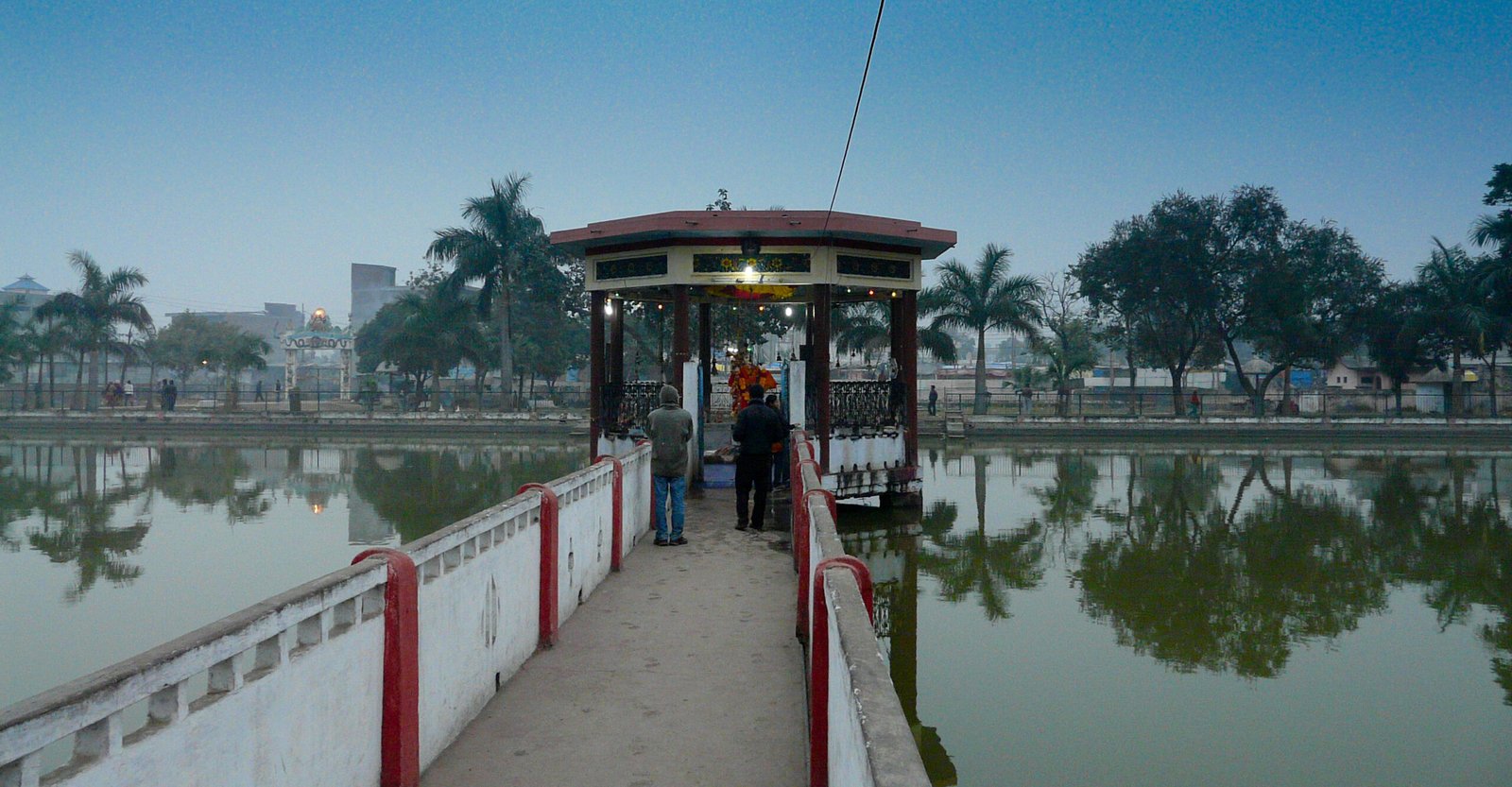
KATHMANDU, November 12, 2026 (Kartik 26, 2083) – Nepalgunj’s Kantital lake was meant to become the city’s flagship tourist destination. Eight years after the municipality approved an ambitious development plan, the lake is choked with weeds, its decorative railings are broken, and residents say it has turned into a night-time gathering place for drug users. The city has spent about Rs 10 crore on the project, and officials now say they will try again.
Key takeaways
- Kantital is a man-made lake inside Nepalgunj, in wards 21 and 22 of the sub-metropolitan city, spread over about 25 bighas of water and reed.
- Nepalgunj Sub-Metropolitan City began a plan in BS 2075 (2018) to develop it as the city’s main tourist attraction, and has spent about Rs 10 crore since.
- Local leaders say the railings and walkways are damaged and the lake area has been swallowed by bushes; the contracted operator blames vandalism.
- Conservationists describe Kantital as the best Sarus crane habitat in Banke district and a winter stop for more than 150 bird species.
- The municipality concedes past plans underperformed and says a new conservation and management plan is being drafted with stakeholders.
In this guide
- What is Kantital, and why does it matter?
- The plan that promised Nepalgunj a tourist lake
- What about Rs 10 crore actually built
- The bird habitat nobody is protecting
- After dark, the lake changes character
- What the municipality says now
- What it means for travellers heading to Banke and Bardiya
- How to visit Kantital responsibly
- Frequently asked questions

What is Kantital, and why does it matter?
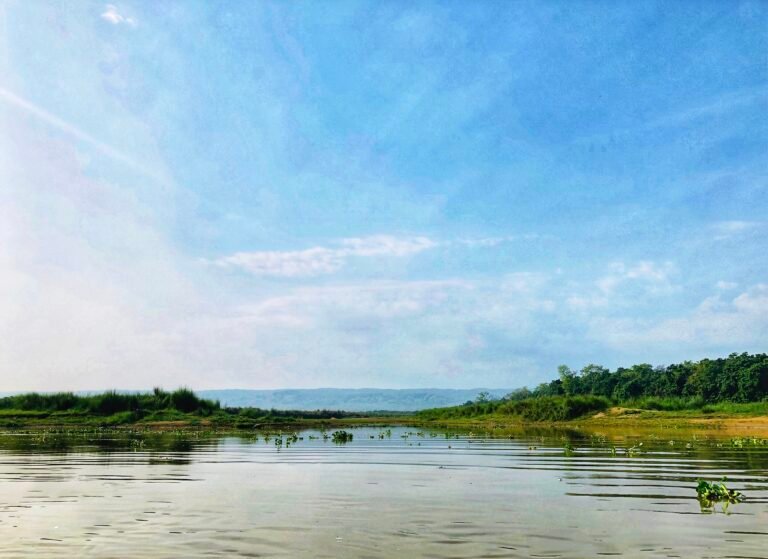
Kantital is a man-made lake in the middle of Nepalgunj, the headquarters of Banke district and the largest city in western Nepal’s Tarai plains. It lies across sub-metropolitan wards 21 and 22, a short drive from the Mahendra Highway, and covers roughly 25 bighas (about 17 hectares) of open water, margins and reed bed.
It is not a mountain lake, and it does not appear on most trekking itineraries. What makes it important is scarcity. Nepalgunj is a dense, fast-growing commercial city with very little public green or open water, and Kantital is one of the few remaining wetlands inside the urban boundary. Locals once used it for irrigation, and fish farming was practised there for years.
That matters beyond the city, because Nepalgunj is the gateway to two of Nepal’s premier wildlife destinations. Travellers bound for Bardiya National Park, Banke National Park or the Karnali floodplain usually pass through or stage in Nepalgunj, and the city’s own green infrastructure is part of what shapes the visitor experience of the region.
The plan that promised Nepalgunj a tourist lake
In BS 2075, which corresponds to 2018, Nepalgunj Sub-Metropolitan City set out to turn Kantital into the city’s leading tourist destination. The idea was straightforward and, on paper, sensible: a city with no lakefront would build one, with pathways, railings, landscaping and a viewing edge that would draw domestic day-trippers and give visitors a reason to spend a night in town before heading to the national parks.
Local reporting this week, carried by OnlineKhabar, Reporter’s Nepal, Ratopati and Nagarik News, confirms that the ambition never translated into a working destination. “The lake has lost its existence,” said Chet Bahadur Thapa, a community leader from Nepalgunj-22 in the Puraini area, describing a lake area filled with bushes and scrub.
What about Rs 10 crore actually built
According to the same reports, the sub-metropolitan city has spent about Rs 10 crore (roughly Rs 100 million, or about USD 740,000 at current rates) on local infrastructure and beautification. The visible result, residents say, is a set of decorative railings that have broken and a lake fenced off from the public by its own weeds.
Thapa told reporters that Kantital is not only physical infrastructure: it is also ecologically significant, with a natural habitat that supports a range of bird species. Conservation and environment activists have repeatedly urged the municipality to restore the lake and protect its natural form, he said, but so far the appeals have not produced a concrete response.
There is also a maintenance dispute. Fun Bahadur Gurung, who holds the operating contract for the lake and is committed to paying the sub-metropolitan city Rs 28 lakh in annual revenue, said the railings and other infrastructure at the lake site may have been broken by drug users. He pointed to vandalism rather than simple wear as the likely cause of the damage.
The bird habitat nobody is protecting
Kantital’s real value may never have been as a promenade. Survey work by conservation groups has repeatedly found it to be one of the most productive bird sites around Nepalgunj, and a key habitat for the endangered Sarus crane.
In a July 2025 feature published by Kailash Khabar, conservationist Ashish Chaudhary, president of Friends for Wild Wildlife Conservation, said there is no comparable wetland anywhere near Nepalgunj. “There is a suitable environment here not only for nature lovers but for animals and birds,” he said, adding that birds keep returning from abroad each year precisely because the site has survived so long.
Researchers from the Bird Conservation Society and the Nepal Birdwatchers’ Association recorded 32 resident bird species, plus visiting birds, in a single 90-minute observation. Site-level counts suggest the lake supports about 62 species in summer and roughly 153 species in winter, when migrants arrive from as far as Siberia, northern China, Thailand, Malaysia, Indonesia and Africa. The Sarus crane, listed on Nepal’s protected-species schedule, finds some of its best remaining nesting habitat here, alongside the Rapti riverbank and Mankhol in Banke district.
| Kantital by the numbers | Figure |
|---|---|
| Area | About 25 bighas (roughly 17 hectares) |
| Spent by the municipality since 2018 | About Rs 10 crore |
| Bird species in winter | About 153 |
| Bird species in summer | About 62 |
| Resident species logged in one 90-minute survey | 32 |
| Annual operating revenue contracted to the city | Rs 28 lakh |
Chaudhary and other conservationists have argued that the lake could be developed as a bird park, a botanical garden or a biodiversity park with ticketed entry, rather than as a boating venue. An earlier attempt to run motorboats on the water was abandoned after locals and activists objected, and a wooden boat still sits unused at one edge of the lake. Their warning is direct: if Kantital is lost to encroachment, the protected bird species that rely on Banke district wetlands lose one of their last urban refuges. For a wider picture of how Nepal watches its bird population, see our guide to birdwatching in Nepal.
After dark, the lake changes character
The neglect has a second, harder cost. Residents say the overgrown lake area becomes risky at night, and that Kantital has become a safe gathering spot for drug users. Suspicious activity in the evenings has frightened people living around the lake, Thapa said.
That finding is significant for anyone considering a visit. A wetland with no lighting, no staff, no boundary control and seasonal weed growth is not a safe evening destination, particularly for a solo traveller or a family. Until the site is restored and managed, Kantital is a place to visit in daylight and in company, if at all.
What the municipality says now
Nepalgunj Sub-Metropolitan City does not dispute the failure. Municipal spokesperson Pramod Rijal acknowledged that the earlier plans did not deliver the expected results. “The plans made in the past could not produce the expected results,” he told reporters, adding that the city is preparing to hold detailed discussions with stakeholders and institutions to design an effective new plan for the sustainable conservation and management of Kantital.
Citizen leader Krishna Prasad Shrestha framed what is at stake. Kantital, he said, was once expected to open the door to Nepalgunj’s tourism and economic prosperity, and it needs to be conserved now.
What the new plan should contain is not a mystery to the people who know the lake best. Conservationists want a protected wetland core, a birdwatching and interpretation area, a walking edge that is actually maintained, and revenue from low-impact visitor facilities rather than from motorised boating. The alternative, they warn, is that the same cycle repeats: an announcement, a contract, a broken railing, and another round of weeds.
What it means for travellers heading to Banke and Bardiya
For most foreign visitors, Kantital will not be the reason they travel to western Nepal. They come for Bardiya National Park, for the Karnali river systems, for tiger and elephant country, or to cross into India through Gaddachauki, one of the busiest overland entry points in the region. Western border tourism has been growing sharply, as we reported when Gaddachauki arrivals jumped 223 percent.
But the state of a city’s public spaces shapes a visitor’s first and last impression of a region, and that is where Kantital matters. A city that cannot maintain a 25-bigha lake at its centre is also a city where the surrounding tourism circuit has to work harder to attract repeat stays. If the municipality’s new plan succeeds, Nepalgunj could gain a genuine half-day stop for the growing number of travellers passing through on the way to the parks.
Access to the parks themselves continues to change. Drivers and tour operators should note that travel through Banke National Park on the Mahendra Highway runs under a revised time-card system, which we covered in our guide to the Banke National Park highway time-card rules.
How to visit Kantital responsibly
If you are in Nepalgunj and want to see the lake for yourself, a little planning goes a long way:
- Go early. The first two hours after sunrise are the best time. Bird activity peaks, the light is flat, and the site is busiest with walkers and joggers, which reduces the safety concerns reported after dark.
- Do not go after dark. Residents describe the overgrown area as a night-time drug gathering spot. There is no lighting or security.
- Bring binoculars and a local guide. A local birdwatcher will find more species in an hour than you will in a morning on your own, and will steer you to the Sarus habitat without disturbing nesting birds.
- Stay on the margins. The reed and lotus beds are the reason birds use the lake. Keep to the edges, keep noise down, and do not push into the water margin.
- Expect no facilities. There are no reliable toilets, cafes or ticket counters at the site today. Carry water and take your rubbish out with you.
- Plan it as a stop, not a destination. Kantital works as a morning add-on to a Nepalgunj stay, or a leg-stretch before a Bardiya National Park safari, not as a full day out.
For a broader look at travelling safely and staying well in Nepal, including heat, water and wildlife precautions in the Tarai, see our Nepal trekking safety and health guide.
Frequently asked questions
Where is Kantital located?
Kantital is a man-made lake inside Nepalgunj, the headquarters of Banke district in western Nepal’s Tarai. It lies across wards 21 and 22 of Nepalgunj Sub-Metropolitan City, a short distance from the Mahendra Highway.
How much has Nepalgunj spent on Kantital?
Local reporting on November 12, 2026 put the figure at about Rs 10 crore (roughly Rs 100 million) spent on infrastructure and beautification since the development plan began in BS 2075 (2018). Residents say the railings and pathways are now broken and the lake area is overgrown.
Is Kantital worth visiting?
For birdwatchers, yes, as an early-morning stop. The lake supports dozens of resident species and a strong winter population of migrants, including Sarus cranes. For general travellers, it is currently a weedy municipal lake with no facilities, so it is best treated as a brief stop rather than a destination.
Is Kantital safe?
Residents describe the lake area as becoming risky after dark and say it has become a gathering spot for drug users. Visit in daylight, ideally in the morning and with others, and avoid the area at night.
Why is Kantital important for wildlife?
It is one of the last wetlands inside Nepalgunj and one of the best remaining habitats for the protected Sarus crane in Banke district. Surveys have recorded about 153 bird species in winter and about 62 in summer, with 32 resident species logged in a single 90-minute count.
What happens next for the lake?
Nepalgunj Sub-Metropolitan City says it will draft a new conservation and management plan after consulting stakeholders. Conservationists want a protected wetland core with birdwatching facilities and low-impact, ticketed visitor infrastructure.
Sources
- OnlineKhabar (Nepali), November 12, 2026 – municipality spent about Rs 10 crore; ward leaders and operator statements.
- Reporter’s Nepal (Nepali), November 12, 2026 – Kantital “stranded” after Rs 10 crore spend; becoming a drug haunt.
- KChakhabar aggregation, November 12, 2026 – same report carried by Ratopati, Nagarik News, Pradesh Khabar and OnlineKhabar.
- Kailash Khabar (Nepali), July 4, 2025 – Kantital’s bird habitat, Sarus crane significance and abandoned motorboat plan.
Published November 12, 2026. All figures as reported by the cited outlets and attributed to the named officials and local leaders.
Share this content: