A Weekly Train Will Link Janakpur and Ayodhya From 23 November. Fares and Immigration Are Still Missing
KATHMANDU, November 15, 2026 (29 Kartik 2083) — Indian Railways has approved a weekly train between Janakpur Dham in Nepal and Ayodhya in Uttar Pradesh, a service that would join the two Ramayana cities on a single ticket across roughly 600 km of track. The Ministry of Railways announced the approval in New Delhi on Saturday, 14 November. Within a day, Indian officials were briefing that the train would be flagged off on 23 November. On the Nepali side, the company that owns the tracks it will use is more careful: it says the paperwork between the two governments is not finished.
- What: a weekly passenger train between Janakpur Dham (Madhesh Province) and Ayodhya Cantt (Uttar Pradesh), about 604 km, approved on 14 November 2026.
- Stops: Jaynagar, Madhubani, Shisho, Sitamarhi, Raxaul, Narkatiaganj, Gorakhpur, Basti, Mankapur and Ayodhya Dham, besides the two terminals.
- When: departures from Janakpur Dham on Saturdays, from Ayodhya Cantt on Mondays.
- On board: conventional LHB coaches with air-conditioned and sleeper accommodation, per Indian reporting.
- Not published: fares, timetable, or how immigration will be handled at the border.
- Flag-off: expected 23 November (7 Mangsir) by Prime Minister Narendra Modi and Prime Minister Balendra Shah, by video link.
- Nepal’s caveat: Nepal Railway Company says no formal agreement is signed and no start date is fixed.
Why this train matters more than its length suggests
Janakpur, the capital of Madhesh Province, is where the Ramayana places the birth of Sita; Ayodhya is where it places the birth of Ram. They anchor what Indian tourism ministries call the Ramayana Circuit, and pilgrims have moved between them for centuries — by road, by a change of trains, or by flying to Kathmandu and driving south.
A direct train removes the road segment entirely and puts one booking in front of travellers who today assemble three. It also reshapes Janakpur’s visitor economy, which runs on Indian pilgrims taking the short Nepali train north from the Jaynagar railhead in Bihar — currently Nepal’s only passenger railway.
What the ministry actually approved
The Ministry of Railways said the service covers approximately 604 km and stops commercially at Jaynagar, Madhubani, Shisho, Sitamarhi, Raxaul, Narkatiaganj, Gorakhpur, Basti, Mankapur and Ayodhya Dham in addition to its terminals. It will run once a week, originating from Janakpur Dham on Saturdays and Ayodhya Cantt on Mondays.
The statement framed the service around shared heritage rather than capacity, saying the train would use railway connectivity “to bring communities closer”. Indian reporting adds that it will use conventional LHB coaches with air-conditioned and sleeper accommodation — not a premium train set — which suggests it is planned for overnight pilgrims rather than day-trippers.
The 23 November flag-off
Indian officials say the two prime ministers will flag the train off virtually on 23 November. The inaugural run is to leave Ayodhya Dham, the new station near the Ram temple; the commercial service, when it begins, will originate at the older Ayodhya Cantt. Railway minister Ashwini Vaishnaw is expected at Ayodhya Dham for the ceremony.
Railway officials quoted by The Times of India said regular operations are expected within a week of the flag-off, with detailed timings and fares announced separately. Nepali outlets reported the date as 7 Mangsir.
The Nepali side is a step behind
Nepal Railway Company, which operates the tracks from the Indian border through Janakpur to Bhangaha, has been testing the route since early November. Its managing director, Parivesh Parajuli, said a 17-coach Indian train ran Jayanagar–Kurtha on 5 November as a trial, and that regular operations would be announced only after inspections and a formal agreement between the two governments.
Parajuli has described the intended shape of the service in more modest terms than the Indian announcement: weekly at first, one departure from Janakpur with the return the following day, Indian rolling stock initially with Nepali stock possible later, and a split in responsibility at the border, with Nepali agencies handling operations and security inside Nepal. Immigration and customs checkpoints at Jayanagar have been on the agenda since the first bilateral meeting in September, and platform work at Janakpur Dham station is under way.
Both can be true at once: a political flag-off does not by itself put a booked passenger in a seat.
Where the two accounts do not match
Distance. The Ministry of Railways and the Press Information Bureau put the route at approximately 604 km; at least one Indian broadcaster reported 464 km. The ministry’s figure is the one in its own release and repeated by The Hindu. The shorter figure has not been explained.
The name. Several Nepali outlets, and one Indian channel, called the service a Vande Bharat Express. The ministry’s release does not use that name, and Indian reporting on the rolling stock describes ordinary LHB coaches with sleeper and AC classes. Treat “Vande Bharat” as a label that has spread faster than the paperwork.
Whether it is running. India says approved, with a date; Nepal Railway says the agreement is pending. Proposed departure and arrival times have circulated in Hindi-language reports, but the ministry says the timetable is still to be announced and no fare has been published anywhere.
The line underneath it
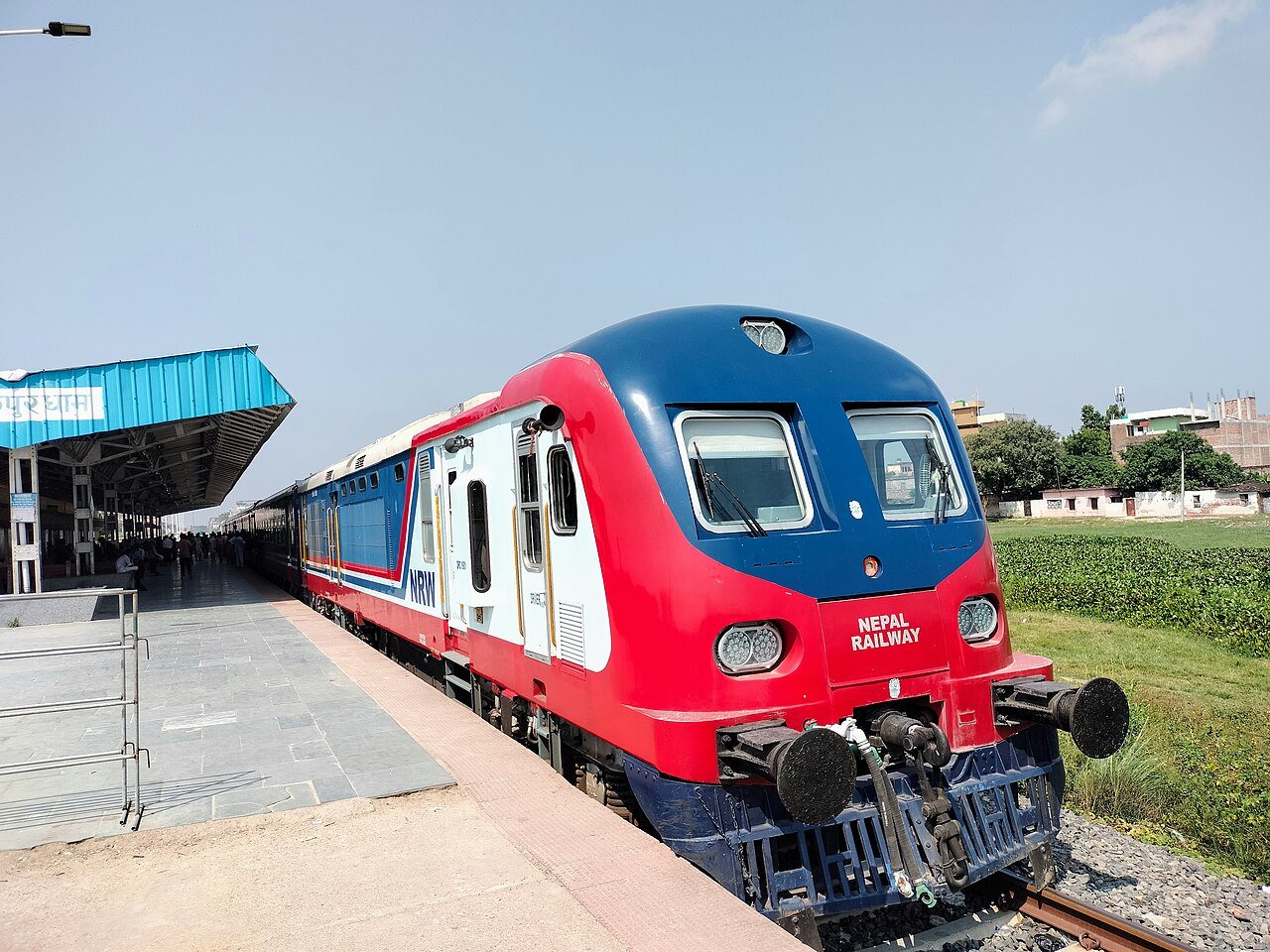
The train will use the Jayanagar–Janakpur–Kurtha section of the Jayanagar–Bijalpura–Bardibas line, built with Indian grant assistance. Passenger services opened in April 2022 to Kurtha and reached Bhangaha, also called Bijalpura, in July 2023; about 52 km of the planned 68.7 km are in service. Nepal Railway Company runs two five-car diesel-electric sets bought from Konkan Railway, each with one air-conditioned coach and seating for roughly 300, on two to three services a day that have lately carried around 3,000 passengers daily. Tickets are sold at counters, not online, and have stayed cheap: Rs 90 in the general coach and Rs 450 in AC when the line opened in 2022.
What it means for travellers
For Nepali and Indian citizens this is good news: a weekly train between two of the subcontinent’s most visited religious sites, with a sleeper class the existing short-haul service lacks. It is not yet bookable, and the details that decide whether it is usable are unpublished.
The most important of those concerns foreign passports. When Nepal and India finalised the standard operating procedure for cross-border rail in 2021, the director general of Nepal’s Department of Railways, Deepak Kumar Bhattarai, set out the arrangement: third-country nationals may travel on the railway inside Nepal but may not cross the border on it. India had wanted foreign nationals barred altogether; Nepal refused, and the compromise was a domestic-only right. Janakpur, Jayanagar and Inarwa are also not among Nepal’s designated entry and exit points for tourists.
Nothing published this week says that has changed, and neither the ministry’s release nor Nepal Railway Company has described an immigration procedure for the new train. Until the Department of Immigration says otherwise, a foreign passport holder should treat it as an internal Nepali service and cross at a designated road border — and anyone selling the route should get that in writing before taking money. Our visas and permits guide lists the legal crossings.
Frequency is weekly, so it suits a fixed itinerary: a missed train is a week, not a morning. And Janakpur’s season matters more than the launch date — Vivah Panchami, the re-enacted wedding of Ram and Sita that fills the town for a week, falls on 14 December 2026 (28 Mangsir), a Monday and one of the two weekly departure days, though no departure has been announced for it. Hotels near Janaki Mandir fill well before that.
What it means for operators
The obvious product is a two-country Ramayana itinerary that drops the road transfer: fly into Kathmandu, connect to Janakpur, cross by rail to Ayodhya, return via Lucknow or Varanasi. It has been sellable by road for years; the train makes it comfortable for the older pilgrims who make up much of the market. The constraints are equally clear: one departure a week makes the train a component of a longer package rather than a transport solution, the unresolved immigration question means it works cleanly only for Indian and Nepali passport holders, and nothing can be priced until the fare is published. Janakpur’s hotel stock is sized for road-borne pilgrims. Our Terai region hub covers the rest of the district.
What is still unknown
- Fares in either direction, and whether tickets are sold in Nepali rupees, Indian rupees or both.
- The timetable, including whether the run is overnight in one direction only.
- Where passengers clear immigration and customs, and whether foreign nationals may cross.
- Whether this is a permanent weekly train or a “special” that is later regularised, extended or dropped.
Most of it should be settled within a fortnight if the 23 November date holds. Until then: the approval is real, the route and weekly pattern are official, and the passenger experience does not yet exist. Plan a Ramayana circuit this winter with a cancellable road leg and watch for the fare notification; our getting to Nepal guide covers the rest.
Photo: Suyash.dwivedi / Wikimedia Commons, CC BY-SA 4.0
Sources: Press Information Bureau (Ministry of Railways), The Hindu, The Times of India, NepalNews, Hindusthan Samachar, Khabarhub, The Kathmandu Post (2021 standard operating procedure reporting).
Share this content: