Upper Mustang Trek 2026: Trekking the Last Forbidden Kingdom
Complete guide: Annapurna Region Treks: Complete Guide
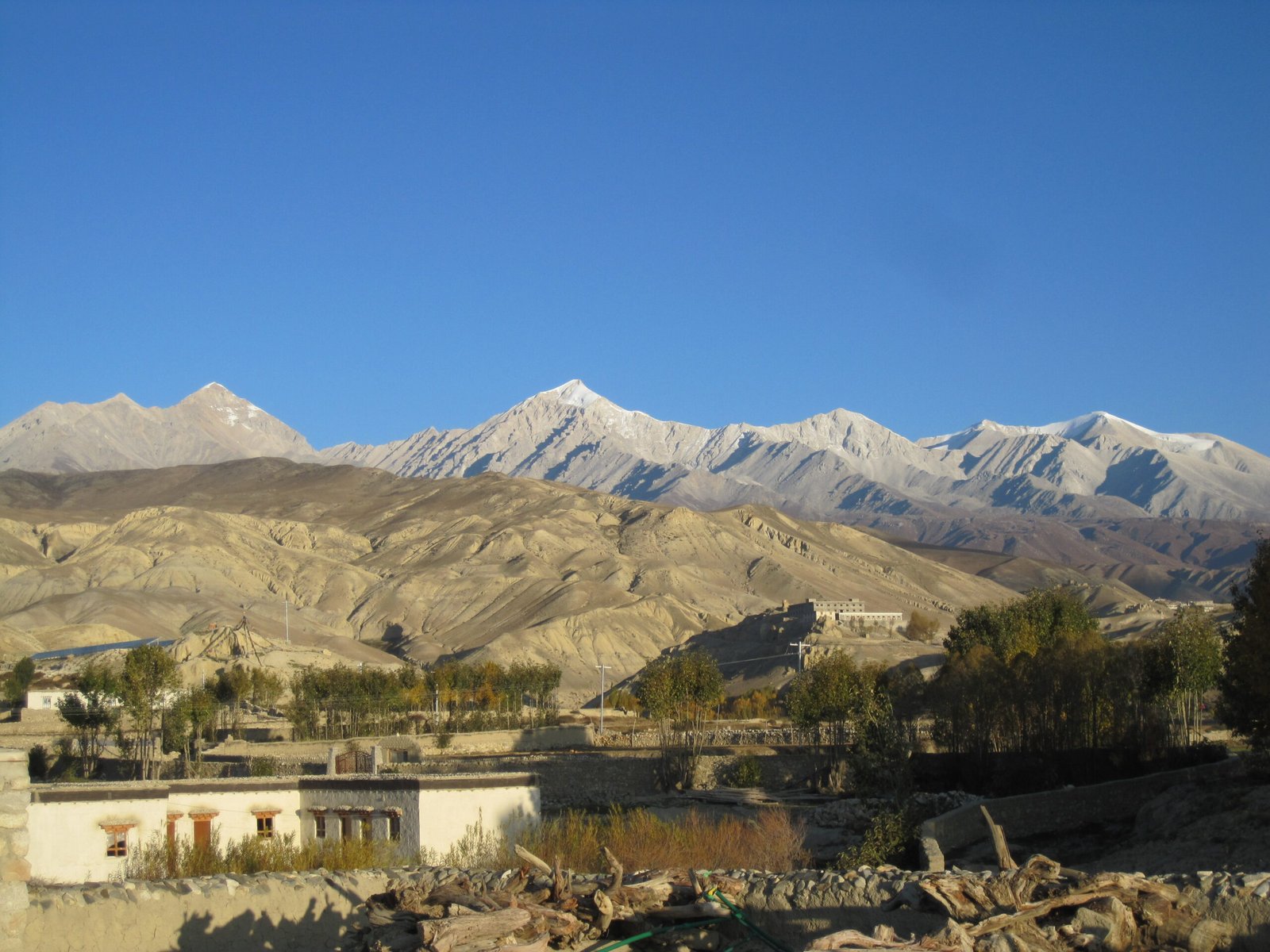
What is Upper Mustang? Upper Mustang is the former Kingdom of Lo: an arid, Tibetan-style trans-Himalayan region hidden behind the Annapurnas, centred on the walled capital of Lo Manthang. It stayed closed to outsiders until 1992 and remains a restricted area, which keeps visitor numbers tiny and one of the best preserved Tibetan Buddhist cultures in the world intact. Where most Nepal treks are about mountains, Mustang is about a kingdom: desert cliffs, cave dwellings, frescoed gompas and villages that still look like medieval Tibet. Here is the complete 2026 guide to planning it, including permits, itinerary, costs and culture. For the pilgrimage site on Mustang’s southern edge, see our dedicated Muktinath pilgrimage guide.
Where is Mustang, exactly?
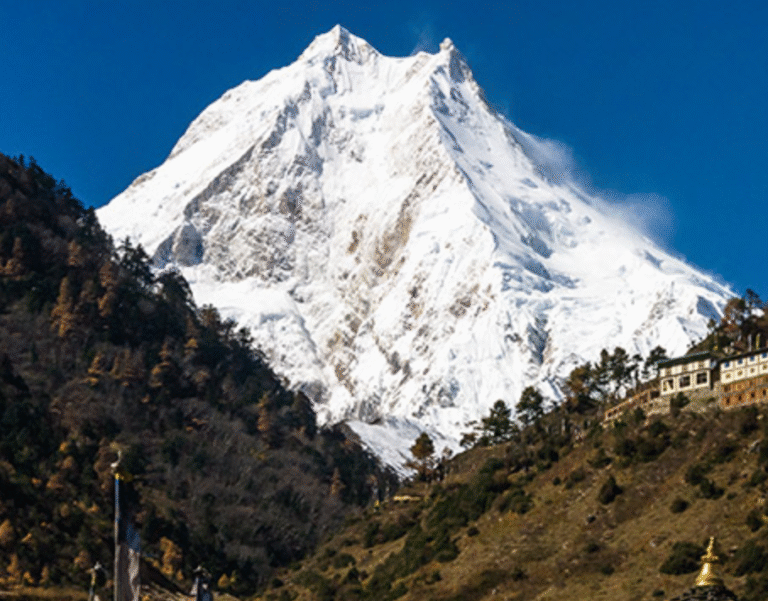
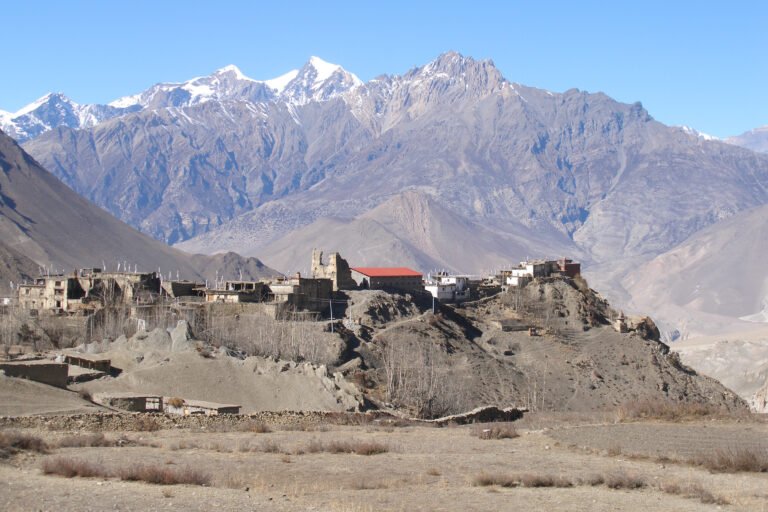
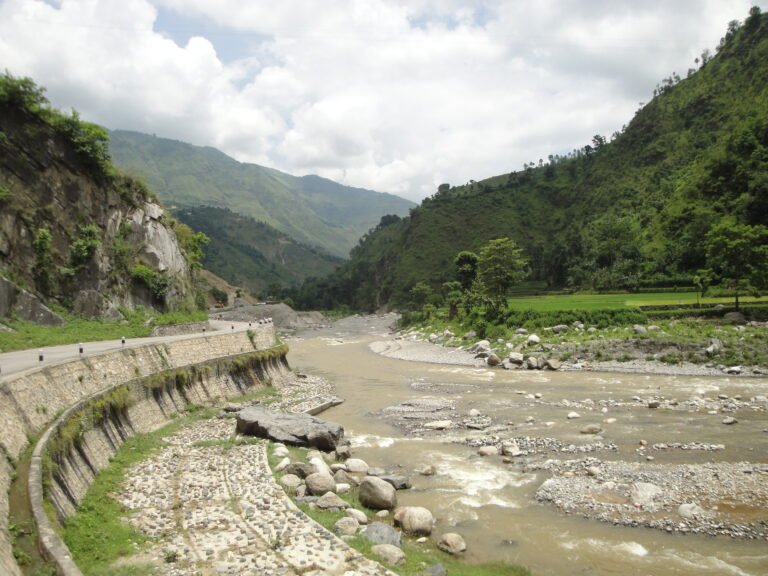
The Mustang district stretches north from the Annapurna and Dhaulagiri massifs along the Kali Gandaki valley to the Tibetan border. Kagbeni village marks the boundary: below it is Lower Mustang (open to all with normal permits, and covered in our Annapurna Circuit guide), above it is Upper Mustang, the restricted former kingdom of Lo. The region sits in the rain shadow of the Annapurnas, so it stays dry even while the rest of Nepal is drenched by monsoon. The landscape is high desert: red and ochre cliffs eroded into towers, and the deepest gorge in the world, carved by the Kali Gandaki between Dhaulagiri (8,167 m) and Annapurna I (8,091 m). Read more about the kingdom’s story in Unlocking the Kingdom of Lo.
Permits and cost (2026)
- Restricted-area permit: USD 500 for the first 10 days, then USD 50 per day thereafter. This is one of Nepal’s most expensive permits, a deliberate policy that funds conservation and limits footfall to protect the fragile culture.
- Guide plus group of two minimum: mandatory, as with all restricted areas. Solo trekking is not allowed; permits are issued only through a registered Nepali agency.
- ACAP and TIMS: an Annapurna Conservation Area Permit (about USD 20-30 for foreigners) and TIMS card are also required since you pass through the Annapurna region. See our full Nepal trekking permits guide for current fees and rules.
| Permit | Cost | Valid |
|---|---|---|
| Upper Mustang RAP | USD 500 | First 10 days |
| Extra days | USD 50/day | Per day beyond 10 |
| ACAP entry | ~USD 20-30 | Whole stay |
| TIMS card | ~USD 10-17 | Per trek |
Permits are arranged by your trekking agency before departure; carry four passport photos and originals of your passport and visa for the paperwork.
How to get there
Almost everyone starts from Pokhara. The quickest route is a 20-minute scenic flight to Jomsom, the administrative hub of Mustang, though flights are weather dependent and the early morning departures are the most reliable. The alternative is a long drive: a jeep from Pokhara to Jomsom takes 8 to 10 hours on the rough Beni-Jomsom road, with the dramatic Kali Gandaki gorge alongside you from Tatopani north. Many itineraries also fly or drive via Muktinath on the way up, pairing the two highlights of the region; see our Muktinath guide for that side trip.
Trek route and itinerary
From Jomsom the trail follows the Kali Gandaki north through the checkpoint at Kagbeni, then climbs out of the valley through Chhusang and Chele, over a series of low passes and through villages such as Syangboche, Ghami and Charang before reaching Lo Manthang at 3,840 m. Most plans run 10 to 14 days door to door.
| Plan | Days | Max altitude |
|---|---|---|
| Jomsom to Lo Manthang and return (walk in, fly out) | 10-12 | ~4,230 m (Chogo La) |
| Full circuit with Chhoser and Ghar Gompa extension | 14 | ~4,230 m |
| Jeep safari style tour from Pokhara | 5-7 | 3,840 m |
A typical 12-day walking itinerary looks like this: Jomsom to Kagbeni (3-4 hrs, 2,800 m), Kagbeni to Chele via the dramatic river trail and red cliffs of Tangbe, Chele to Syangboche over the 3,620 m Taklam La pass, Syangboche to Ghami past the longest mani wall in Mustang, Ghami to Charang with its dzong and red gompa, then Charang to Lo Manthang, where the walled city first appears across the desert plateau. Around Lo Manthang, allow a full day for the villages of Chhoser and Chhunup: the sky caves, the eerie cliff gompas of Jhong and Nyiphuk, and the sacred Chhoser cave complexes. Many groups then walk back out along the same line or drive back to Jomsom by jeep in a single long day. The trek is demanding for its length rather than its technicality: there are no glaciers or high passes, but there are long days on exposed jeep tracks and loose trails with daily altitude swings.
Lo Manthang: inside the walled capital
Lo Manthang is the emotional centre of the trek, a 15th-century walled city of whitewashed houses, three-storey monastery complexes and narrow alleys where children still play in the shadow of the former royal palace. The last king, Jigme Palbar Bista, lived until 2016, and the palace remains at the heart of town. Spend time in the monasteries: Jampa Gompa holds the tallest clay Buddha in Mustang, Thubchen Gompa contains some of the finest surviving 15th-century Tibetan murals in the world, and Chodey Gompa is the active monastic seat. The four-cornered city gates are still closed against the evening wind. You can also walk or ride horseback to the nearby villages of Chhoser and Chhunup, where entire cliff faces are punctured by thousands of man-made caves, some burial sites going back 2,000 to 3,000 years, some still lived in a century ago.
Culture: the last living piece of Tibet
The people of Upper Mustang, the Lobas, are ethnically and linguistically Tibetan, and daily life follows a rhythm that disappeared across the border decades ago: barley and buckwheat fields irrigated by snowmelt, salt-butter tea, polyandrous households of the past, and Bon-Buddhist festivals unchanged for centuries. The highlight is the Tiji Festival (Teeji), usually held in May: a three-day ritual in which masked monks reenact the subduing of a demon, accompanied by horns, drums and the fiercest dust-whirl of colour you will see anywhere in the Himalaya. If Tiji dates drive your plans, confirm them with your agency early; they shift with the lunar calendar and lodge space in tiny Lo Manthang sells out. Also unique to Mustang is its cave civilisation: an estimated 10,000 sky caves riddle the cliffs, and archaeologists continue to find manuscripts, murals and human remains inside them.
Teahouses, food and lodging
Upper Mustang now has enough comfortable teahouses and guesthouses along the main route that camping treks are optional rather than essential. Rooms are basic but clean, with shared squat or Western toilets and, in the better lodges, attached bathrooms. Food is dal bhat, thukpa (Tibetan noodle soup), momos, chowmein, tsampa, and the local treat: buckwheat pancakes with Tibetan butter tea. Prices rise steadily with altitude, roughly 1.5 to 2 times Pokhara levels in Lo Manthang, so budget accordingly. Our teahouse trekking guide covers what to expect and how to pack for lodge trekking. There is electricity in most villages, but hot water and charging become precious as you go north; bring a power bank.
Tour costs and budget
Because the permit and a licensed guide are compulsory, everyone effectively joins an organised trip. A typical all-inclusive 12 to 14-day Upper Mustang trek costs roughly USD 1,800 to 2,800 per person for a group of two, including the USD 500 permit, guide, porters, lodging, food, transport from Pokhara and return Jomsom flight. Prices in 2026 include the newly imposed local rural municipality fees. Jeep-only tours of 5 to 7 days from Pokhara run USD 1,300 to 1,800 depending on vehicle quality and group size. Groups of four to six push the per-person price down; the permit cost is fixed, but guide, porter and jeep costs divide.
Best time to go
May to October. Upper Mustang lies in the rain shadow, so it is one of the very few Nepal treks genuinely possible during the monsoon (June to August), when the region is at its greenest and the high passes are snow-free. May and early June are the festival window if you can time Tiji. September and October bring the clearest skies and warm days with cold nights. Winter (November to March) is brutally cold, water freezes, many lodges shut and the region is cut off by snow on the passes, so it is not a realistic trekking window. Our best time to visit Nepal guide puts Mustang’s seasons in national context.
Acclimatization and fitness
You sleep at 3,800 m by the end of the first week and cross passes above 4,000 m, but the profile is gradual, which is why altitude problems are rarer here than on rushed Everest itineraries. Moderate fitness is enough: there is no technical climbing, and days of 5 to 7 hours on dirt tracks and trails suit anyone who walks hills regularly at home. Build in the one acclimatization day at Lo Manthang that most itineraries include, hydrate aggressively in the dry desert air, and review the symptoms and descent rules in our altitude sickness guide before you go.
FAQ
Why is it so expensive?
The USD 500/10-day permit funds conservation and deliberately limits footfall to protect the fragile culture and scarce water supply. It is a deliberate trade: you pay for the privilege of walking through a living museum with a fraction of the crowds of Annapurna or Everest.
Can I go independently?
No. As a restricted area, Upper Mustang requires a licensed guide and a minimum of two trekkers, arranged through a registered agency. There is no independent, permit-free way in.
Can I drive instead of trek?
Yes. A rough jeep road now reaches Lo Manthang, and 4WD tours of 5 to 7 days round trip from Pokhara are a legitimate option for travellers short on time, though you trade trail intimacy for speed.
What should I pack?
Desert conditions mean wild temperature swings: sun protection, a windproof layer and a warm down jacket for evenings are all essential even in summer. Our trekking packing list covers the rest.
Is the Muktinath temple on the way?
Almost. Muktinath sits at Ranipauwa just below Kagbeni and most itineraries pass within a short detour of it; most groups visit it at the start or the end of the trip. See our complete Muktinath pilgrimage guide for darshan timings and what to expect.
Key takeaways
- Upper Mustang is a restricted former kingdom: USD 500 permit for 10 days, guide and two trekkers minimum, agency arranged.
- Best visited May to October; the rain shadow makes monsoon a genuinely good season, unlike everywhere else in Nepal.
- Lo Manthang, the sky caves and the Tiji Festival are the cultural payoffs; allow a full day around the walled city.
- Budget USD 1,800 to 2,800 all-inclusive for a 12 to 14 day trek, or take a 5 to 7 day jeep tour from Pokhara.
- Pair it with Muktinath and Lower Mustang to make the most of the permit logistics you are already paying for.
Featured image: Lo Manthang, via Wikimedia Commons (CC).
Related guides
- Annapurna Circuit trek 2026 guide
- Muktinath pilgrimage guide 2026
- Unlocking the Kingdom of Lo
- Nepal trekking permits: TIMS, ACAP, MCAP
Share this content: