Pokhara’s Peak Season Isn’t Happening: Hotel Occupancy Falls to 60% After Floods and Advisories
Update, November 6: National arrivals data released this week shows Nepal recorded 132,814 foreign visitors in October, up 3.4 percent on last year, even as Pokhara hotels ran at about 60 percent. The growth came almost entirely from long haul trekkers heading to Everest and Annapurna. Read the full October arrivals breakdown.
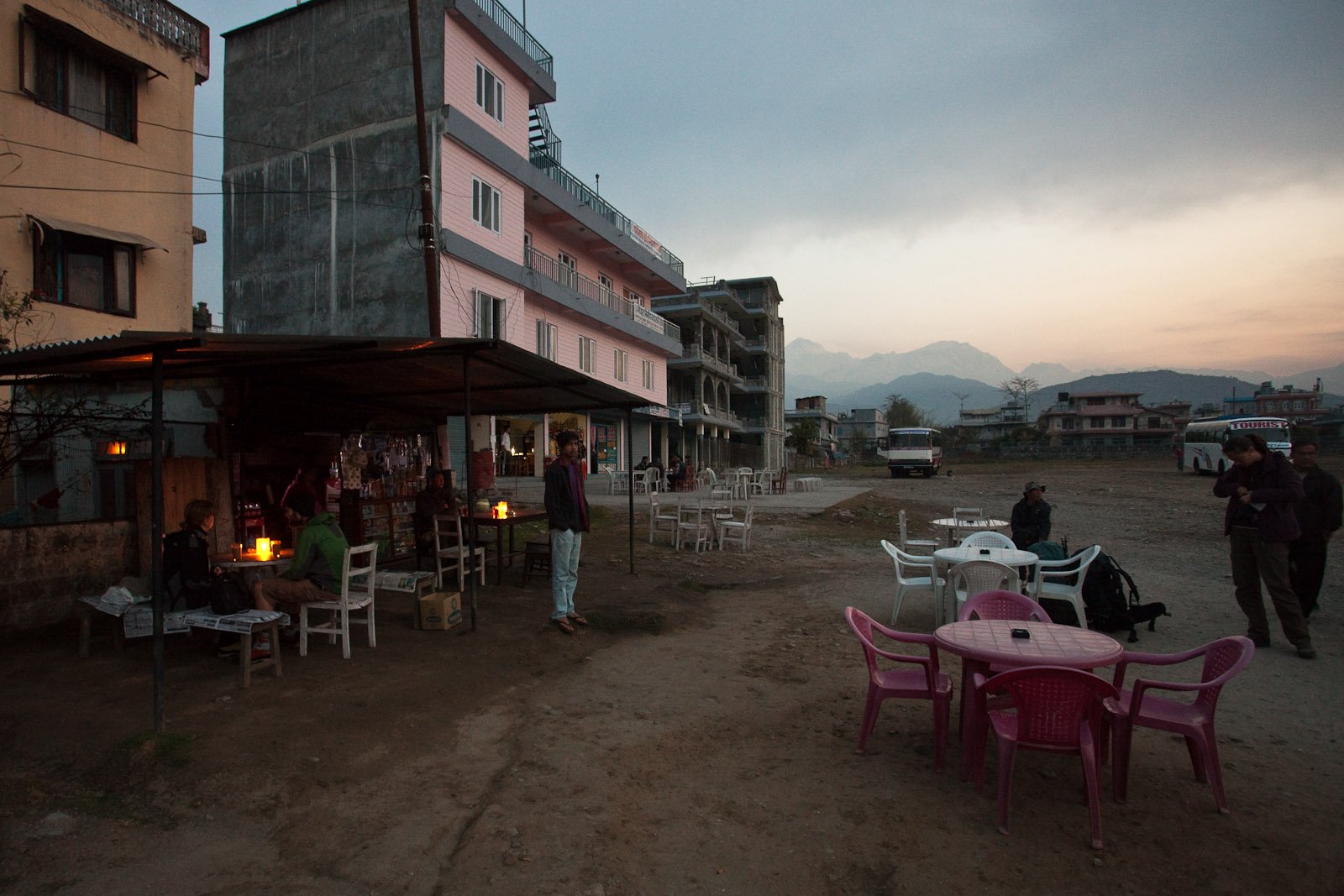
POKHARA, November 4, 2026 (18 Kartik 2082) — Kartik is supposed to be the busiest month of Pokhara’s year. This year the lakeside is quiet, and hoteliers are putting a number on it: occupancy is running at roughly 60 percent, against 90 to 95 percent in a normal autumn.
The cause is not the weather over Pokhara, which has been clear. It is the chain of floods, landslides, road closures and government travel advisories that has run from late August through October across Gandaki and beyond — and the way news of those disruptions has travelled abroad.
The numbers
- Occupancy: about 60 percent in Pokhara hotels this season, against 90–95 percent in previous years, according to hoteliers quoted by Ratopati.
- Domestic tourists: “very few” on the Lakeside strip, per the same reporting — the domestic market has not filled the gap left by foreign cancellations.
- Indian arrivals nationally: down 30 percent year on year in October, according to the Kathmandu Post — India being Nepal’s largest source market.
- The contrast: in May 2026 Nepal received 40,782 Indian visitors by air, the highest monthly figure on record.
What broke the season
The sequence began on Bhadra 10 (August 27, 2026), when the Bhote Koshi flooded, damaging roads and settlements along one of the main corridors into the northern trekking areas. Further floods followed on the Marsyangdi, the Kali Gandaki and the Budhi Gandaki. Roads in Manang and along the Kali Gandaki corridor — the spine of the Annapurna region — were washed out in places, and trekking routes in the Manaslu area were damaged by the Budhi Gandaki flooding.
Then came Cyclone Arnab, which brought heavy rain to Nepal from October 28 to 30, and with it a fresh round of warnings for high-altitude areas. Districts issued notices telling trekkers to stay out of the high mountains; the Department of Tourism urged caution; and the story of a disrupted Nepal went out internationally, in the middle of the booking window for the autumn season.
“It should have been better than last year, but our business was hit by floods and landslides during the peak season,” Hari Bhujel, chairman of the Pokhara Tourism Council, told Ratopati. “The government issued advisories. Major news reports emerged about the risks to tourism in Nepal, which led to a decrease in tourists. We are surprised by the decline.”
Laxman Subedi, chairman of the Hotel Association Pokhara, put it in simpler terms: “Tourists should be at their peak right now. It’s not that it’s completely ruined, but occupancy has decreased by half. From the flood in Bhote Koshi to Budhi Gandaki, the business has been severely hit.”
The advisory argument
The sharpest criticism from Pokhara’s tourism leadership is not about the floods themselves but about how the response was communicated. Bhujel argues the advisories were issued hastily and without regard to which routes were actually affected, and that blanket warnings deterred travellers bound for areas that were never at risk.
“The government’s intention might be good, but they have advised tourists not to visit places that are not at risk,” he said. “After issuing notices to avoid trekking and to recall those who have already gone, we had to call them back midway. It might be appropriate to stop tourists on uncontacted routes, but it is not right to stop them in places with homestays and villages. Tourists coming to Annapurna should not have been stopped midway by showing them the flood in Budhi Gandaki.”
That is a fair distinction, and it is one the industry has been making for years: Nepal’s trekking areas are not one place. A flood in one river corridor says little about conditions three valleys away, but a national-level advisory reads the same to a traveller in Europe deciding whether to book.
The Indian market is the bigger variable
Pokhara’s occupancy problem is compounded by a national one. The Kathmandu Post reported this week that Indian arrivals fell 30 percent year on year in October, and argued that Nepal has failed to convert its closest, cheapest market — a 90-minute flight, or an overland journey — into reliable volume.
The reasons are structural as much as seasonal: airfares that price out families, poor road conditions on the overland routes, and the August floods damaging confidence among exactly the kind of travellers — large family groups and organised pilgrimage parties — who need predictable transport and accommodation.
For Pokhara, which relies on Indian visitors for weekend and festival traffic, that drop lands directly on the same hotels already hit by foreign cancellations.
Parts of the map have reopened
The picture is not uniformly closed, and this is where travellers need better information than a headline. In Rasuwa, tourism activity along the Langtang and Gosaikunda routes resumed after a bailey bridge was built at Betrawati, reconnecting the road network, according to Lagani News — roughly two months after the Bhote Koshi flood shut the corridor. National park officials and local hoteliers there report domestic and foreign visitors returning daily.
Annapurna-region access has been restored on the main lines, with repairs continuing on sections damaged in Manang and along the Kali Gandaki. Manaslu’s trail repairs after the Budhi Gandaki flooding are still being assessed in places.
What this means if you are travelling in November
- Check the specific valley, not the country. Ask your operator which route, which bridges and which road sections you will use, and when they were last verified.
- Most November itineraries are running. Pokhara, Annapurna Base Camp, Mardi Himal, Poon Hill, Langtang and the Kathmandu Valley are operating; the disruption is concentrated on routes that were physically damaged.
- Build in a buffer. Road repairs and weather can still add a day, and domestic flights cancel in mountain weather.
- Prices are softer than usual. With occupancy at 60 percent, hotels in Pokhara are negotiable in a way they are not in a normal Kartik.
- Ask about contingency. A serious operator can tell you what happens if a road closes mid-trip — reroute, refund or wait.
What the industry is asking for
Pokhara’s tourism bodies are asking for two things: advisories that are geographic rather than national, and a live, credible source of route information that operators abroad can point to.
The Kathmandu Post’s editorial made the same point from the other side of the border: Nepal, it argued, must “communicate clearly that its major tourism destinations are accessible and safe” and provide “regular updates on road conditions, trekking routes, airports and disaster-affected areas.”
Until that exists, the cost of a single flooded river will keep being paid by hotels three valleys away — and by the porters, guides and drivers who depend on a season that arrived, this year, at 60 percent.
Sources: Ratopati (Pokhara occupancy and interviews), The Kathmandu Post (October Indian arrivals, May record, editorial), Lagani News (Langtang and Gosaikunda reopening), Nepal Tourism Board and district advisories. See our Pokhara guide and Annapurna region guide for current route information.
Share this content: