India Wants Nepal’s Eastern Airspace for Bagdogra. Nepal Wants a Route in Return
KATHMANDU, November 17, 2026 (30 Kartik 2083) — Nepal has told India it is willing to open part of its eastern airspace to international flights heading for Bagdogra, accepting a trade that New Delhi framed as a straight swap: an Indian air entry route for Bhairahawa in exchange for the use of Nepali sky over the eastern hills. The understanding, still unwritten, was worked out when a Civil Aviation Authority of Nepal team led by director general Mukesh Dangol met Indian aviation officials in New Delhi on Friday. It is now expected to be settled, or quietly parked, during Prime Minister Balendra Shah’s visit to Delhi on November 22–23.
Key facts
- India has asked Nepal for the use of its airspace for international flights to and from Bagdogra in West Bengal, and for flights linked to an airport India is building at Raxaul in Bihar.
- Nepali officials say they are positive about Bagdogra but need time and technical details before considering Raxaul.
- In return, India is described by officials as ready to grant an air entry route through Bhairahawa, which would let international flights reach Gautam Buddha International Airport without a long detour.
- India wants the two questions settled as a package. Nothing has been signed and no carrier has announced a route.
- Shah’s visit has been shortened to two days, November 22–23, with a 30-minute one-to-one with Narendra Modi.
What India asked for
The request was put at a director-general level meeting between the two countries’ aviation regulators, according to two officials at the Ministry of Culture, Tourism and Civil Aviation quoted by IANS. India proposed that Nepal allow its eastern airspace to be used by international flights operating to and from Bagdogra, the airport serving Siliguri, Darjeeling and Sikkim and the main aviation gateway to India’s northeast.
Bagdogra sits inside the Siliguri Corridor, the strip of Indian territory roughly 22 kilometres wide at its narrowest point. Indian officials also asked for the use of Nepali airspace near Raxaul, the Bihar town that faces Birgunj across the border, where India is building an airport.
A tourism ministry official quoted by The Kathmandu Post described the logic plainly: “India is building an airport in Raxaul and looking for our air space. But we politely denied it, telling them to send technical specifications. For Bagdogra, we are positive because India will use a small air space. So it is all about give and take between us.”
A government source quoted by Onlinekhabar framed it slightly differently: Nepal is open to the Bagdogra proposal and has asked for time to study the Raxaul one.
What Nepal wants in return
Kathmandu has been asking for additional air entry routes for more than a decade. In 2014, during Narendra Modi’s visit to Kathmandu, the two governments agreed in a joint communique to add routes serving the two international airports Nepal was then building. The pledge was never implemented.
Officials quoted by IANS said India has been ready to grant a route via Bhairahawa, close to Gorakhpur on the Indian side, which would allow international flights to reach Gautam Buddha International Airport. The Kathmandu Post’s sources put the emphasis elsewhere: New Delhi had recently shown a positive response to a route through Mahendranagar, and was positive about allowing entry routes through Mahendranagar, Janakpur and Bhairahawa at different altitudes.
The technical difference matters. A tourism ministry official told the Post that a Mahendranagar route would require aircraft to enter Indian airspace at a higher altitude, while the proposed Bhairahawa route would allow entry lower down, making it more suitable for ordinary take-off and landing. That is why Bhairahawa, not Mahendranagar, is the route airlines have pressed for. The two accounts do not agree on which is closest to agreement, and no official document names one.
Why the Bhairahawa route is the whole point
Almost every international flight into Nepal enters over Simara in the central Terai. The Civil Aviation Authority of Nepal puts the share at about 90 percent. Only Simara is approved for two-way traffic; Mahendranagar, Bhairahawa, Janakpur and Biratnagar function as exit points for aircraft leaving the country, as BBC News Nepali reported.
The cost is distance. Tourism ministry documents cited by the Post say a flight approaching Bhairahawa from the west must fly roughly 300 kilometres out of its way to enter over Simara and track back west, while a Pokhara-bound flight adds about 185 kilometres. That is fuel, crew hours and aircraft utilisation — the three things that decide whether an airline can sell a seat at a price a pilgrim or trekker will pay.
It also explains why the two new airports remain underused. Gautam Buddha International Airport opened in May 2022 and Pokhara International Airport was inaugurated in January 2023, but neither has attracted the scheduled international traffic they were built for. Pokhara’s only regular foreign link is flydubai’s daily Dubai flight, launched on September 23; its general manager, Jagannath Niraula, told BBC News Nepali that each 166-seat flight carries about 20 foreign passengers. Our report of November 8 set out Nepal’s full wish list.
A package deal, assembled at speed
India has insisted the two sides conclude an agreement as part of a package, according to the officials quoted by IANS, who added that Nepali officials had not expected a counterproposal of this kind and replied that they would need time to study it.
The timetable is tight. The tourism minister is due in India on Tuesday, and senior aviation officials from both countries are to hold virtual talks to clear the remaining technical points, according to the Post. Shah is now due to land in New Delhi on November 22 and return the next day, a shorter trip than the November 22–24 plan previously discussed. The two sides also expect to announce an economic package and to open or launch the Ayodhya–Janakpur railway, the police academy building in Panauti, a bridge in Darchula and the integrated check post at Bhairahawa.
The Raxaul question
The town sits directly across the border from Birgunj, Nepal’s busiest commercial gateway, and an airport there would put Indian aviation infrastructure within a few kilometres of Nepali territory — close enough to draw passengers who currently fly into Kathmandu or use Gautam Buddha International Airport.
Nepal’s response has been to ask for technical specifications rather than to refuse. Officials have not said what those specifications are, how long the review will take, or whether Raxaul would be considered separately. India’s insistence on a package makes that separation harder.
What it means for travellers and operators
Nothing is bookable, and travellers should not plan around any of this yet. No route has been granted, no airline has filed a schedule and no fares or timings exist. What follows is what would change if an agreement is announced on November 23.
- Flights to Bhairahawa. An entry route through Bhairahawa would remove the Simara detour that has made international service to Gautam Buddha International Airport uneconomic. If a carrier commits, Lumbini and the Buddhist circuit become reachable by flying into Bhairahawa instead of landing in Kathmandu and driving south. Watch for airline announcements after any deal, not before.
- Pokhara. A Bhairahawa entry route is also the one Nepal has argued would help Pokhara, since aircraft could approach from the south-west rather than tracking back from Simara. India has not given a clear response on dedicated routes for Pokhara, according to Onlinekhabar, so treat it as unresolved.
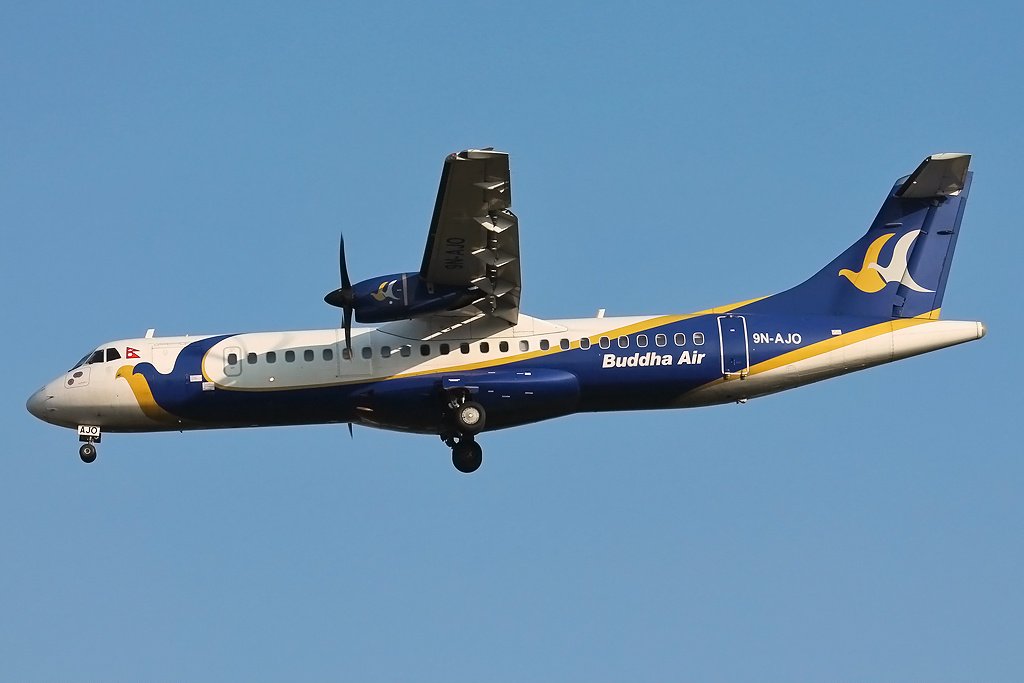
- Janakpur and the Ayodhya train. India asked Nepal about Buddha Air operating domestic flights between Janakpur and Bhairahawa, and the tourism ministry held talks with the airline on Sunday. If the Ayodhya–Janakpur train begins on November 23 as planned, a Janakpur–Bhairahawa air link would let pilgrims reach Lumbini without backtracking through Kathmandu. That is the more plausible short-term gain.
- Bagdogra is not a new passenger route for Nepal. The request concerns the use of Nepali airspace by aircraft flying to and from an Indian airport. It creates no traffic rights for Nepali carriers and no seats for travellers.
- Overflight is not a route. Airspace use means an aircraft may cross the portion of Nepali-controlled sky that an Indian arrival or departure has to pass through. An air entry route means Nepali-bound aircraft may enter the country from a new direction, at a defined altitude and on a published procedure. The swap trades one for the other, which is why they are being negotiated together.
What to watch
The joint statement, or its absence, on November 23. Three details will show whether anything real has changed: whether Mahendranagar, Bhairahawa or Janakpur is named as a granted entry route; whether the two sides publish a technical annexe rather than a sentence of intent; and whether India’s Raxaul request appears in the text. Until then, Kathmandu remains the gateway, Bhairahawa is reached overland from the Indian border, and the routes that would change that are still on the table rather than in the sky.
Sources: The Kathmandu Post, Onlinekhabar, IANS via SocialNews.XYZ.
Share this content: